
Yuma Arizona Real Estate Investment Guide For 2026
A comprehensive resource for investors targeting Arizona’s agricultural capital and military hub, where Marine Corps Air Station Yuma, MCAS Yuma Proving Ground, massive federal agricultural employment, a 90,000-strong snowbird population, and Arizona’s sunniest city combine to create one of the most diversified and recession-resistant rental markets in the state
Quick answers: Top 5 most searched Yuma investment questions ▼
Migration data: Where people are moving from to Yuma ▼
In This Guide
Click on any section to navigate directly to that content
1. Yuma Market Overview
Market Fundamentals
Yuma is Arizona’s most economically diversified investment market and one of the most underappreciated opportunities in the state. A city of 100,000 in the far southwest corner of Arizona, Yuma combines five distinct demand anchors that collectively produce a rental market more recession-resistant than any other comparable-sized Arizona city. No single employer or economic sector can collapse Yuma’s rental demand the way that Laughlin casino troubles could affect Bullhead City or mining downturns could affect Sahuarita.
Key fundamentals defining Yuma’s investment case:
- Population: 100,000+ city; 250,000+ metro including San Luis and surrounding area
- Military: MCAS Yuma (6,000 to 8,000 jobs), Yuma Proving Ground (Army test facility)
- Agriculture: 90 percent of US winter leafy greens; $3+ billion annual agricultural output
- Snowbirds: 90,000+ seasonal residents October through March
- Border Economy: San Luis, Arizona / San Luis Rio Colorado, Mexico crossing generates significant trade employment
- Healthcare: Yuma Regional Medical Center employing 3,000+
- Median Home Price: $285,000; Cap Rates 6 to 9 percent
The five-anchor diversification is what makes Yuma uniquely compelling for investors who understand that the greatest long-term risk in any real estate investment is employment collapse. Yuma’s five anchors never all suffer simultaneously. Military employment is federally guaranteed through economic cycles. Agriculture is tied to food supply fundamentals that do not fluctuate with stock markets. Snowbird demand follows demographic trends that are accelerating. Healthcare employment is recession-resistant by definition.
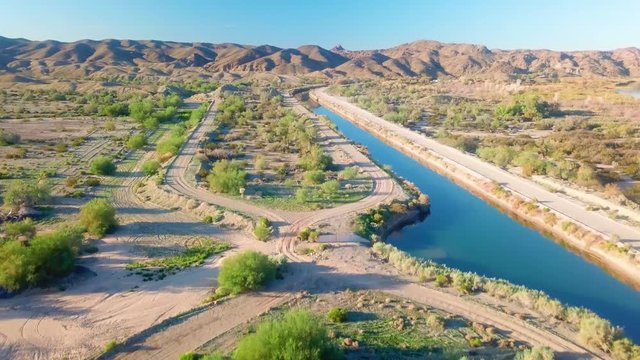
Yuma’s combination of military, agricultural, snowbird, healthcare, and border economy demand anchors creates Arizona’s most diversified and recession-resistant rental market
2026 Economic Outlook
- MCAS Yuma F-35 training operations continue expanding
- Yuma Proving Ground testing activity continuing with defense budget
- Agricultural output growing as leafy greens demand increases
- Snowbird market growing as Baby Boomer retirement cohort accelerates
- Border trade expansion with San Luis crossing improvements
The Five Demand Anchors: Why Yuma Is Different
🪖 Military (MCAS Yuma)
Marine Corps Air Station Yuma is home to Marine Aviation Weapons and Tactics Squadron One (MAWTS-1) and conducts extensive F-35 and advanced tactics training. This mission is deeply embedded in US military doctrine and essentially irreplaceable. The base generates 6,000 to 8,000 direct military and civilian jobs plus extensive contractor and support employment. BAH (Basic Allowance for Housing) for E-5 with dependents at MCAS Yuma sets a meaningful rent floor that protects landlords.
🌿 Agriculture
Yuma Valley produces approximately 90 percent of all winter leafy greens, including lettuce, spinach, and broccoli, consumed in the US and Canada from October through March. This is not a niche crop or a volatile commodity; it is the everyday salad and spinach supply for a continent. The agricultural management professionals, food processing workers, logistics operators, and USDA staff who sustain this year-round operation need quality housing.
❄️ Snowbirds
Yuma’s 90,000 annual snowbirds represent one of the largest seasonal residential concentrations in the United States. These are primarily Canadian and northern US retirees who have made Yuma their winter home for decades. The snowbird market supports an entire economy of RV parks, restaurants, golf courses, and furnished rentals that simply does not exist in most Arizona investment markets. This demographic cohort is growing as Baby Boomers enter retirement age.
🏥 Healthcare + Border Trade
Yuma Regional Medical Center employs 3,000+ healthcare workers and serves a regional population of 250,000. The US-Mexico border crossing at San Luis generates significant customs, logistics, and trade employment. These two anchors collectively provide another layer of stable employment that is independent of both military cycles and agricultural seasonality, rounding out Yuma’s diversification to five genuinely distinct demand drivers.
Historical Performance
| Period | Market Driver | Avg Annual Appreciation | Key Event |
|---|---|---|---|
| 2010-2016 | Military stability, agricultural consistency | 3-5% | MCAS Yuma F-35 transition begins; agricultural output steady; snowbird market stable |
| 2017-2019 | Defense spending growth, ag expansion | 5-8% | Increased MCAS Yuma activity; East Yuma Foothills development accelerates |
| 2020-2022 | Pandemic migration, remote worker discovery | 18-24% | Yuma’s affordability discovered by Phoenix buyers; military housing demand spikes |
| 2023-2024 | Rate normalization, diversified stability | 4-7% | Market moderates; military and agricultural employment sustain demand floor |
| 2025-2026 | Military expansion, growing snowbird cohort | 6-9% (projected) | Baby Boomer snowbird cohort peaking; defense spending sustaining MCAS investment |
📚 New to real estate investing? Master the fundamentals with our professional course Learn more →
2. Neighborhood Hotspots
Yuma Investment Neighborhood Map
Interactive map of Yuma’s investment neighborhoods. Green stars show top hotspots, blue circles mark established markets, and orange circles highlight emerging areas.
Core Investment Neighborhoods
Detailed Submarket Analysis: Yuma Neighborhoods
| Area | Price Range | Cap Rate | Primary Tenant Base | Best Strategy |
|---|---|---|---|---|
| East Foothills | $290K-$460K | 6-8% | Military families, ag management, professionals | Quality hold, military/professional rental |
| MCAS Adjacent (West) | $250K-$380K | 6.5-9% | Military families, MCAS staff | Military BAH rental, lowest vacancy |
| North Yuma / Healthcare | $260K-$390K | 6.5-8.5% | Healthcare workers, military, professionals | Diversified tenant base, stable income |
| Central Yuma | $230K-$340K | 7-9% | Mixed workforce, value-add renters | Cash flow focus, value-add, broad demand |
| Snowbird District | $240K-$390K | Seasonal strategy varies | Snowbirds (Oct-Mar), year-round workers | Seasonal furnished rental, snowbird income |
| South Yuma / Ag Area | $200K-$295K | 7-10% | Agricultural workers, processing staff | Maximum cash flow, agricultural housing |
| Somerton / San Luis | $170K-$260K | 8-11% | Agricultural, border economy workers | Lowest entry, highest yields |
Expert Insight: “Yuma is the market I recommend to investors who ask me what is the most stable place to put real estate capital in Arizona. It is not the most exciting market. It does not have Sedona’s views or Chandler’s tech employment. What it has is five genuinely distinct reasons for people to live and work there, all of which would have to fail simultaneously to collapse the rental market. In 25 years of working in Arizona real estate, I have not seen them all fail simultaneously even once. Military housing demand was strong in 2008 when the housing market collapsed. Agricultural employment continued when COVID shut down offices in 2020. Snowbirds came back the moment travel reopened. If stability and diversification matter to your investment thesis, Yuma is Arizona’s answer.” – Raymond Garcia, Southwest Arizona Investment Properties
3. Property Types
| Investment Goal | Best Property Type | Best Location | Minimum Capital |
|---|---|---|---|
| Maximum Stability | Military BAH rental near MCAS | West Yuma MCAS adjacent | $63,000-$95,000 |
| Seasonal Income | Snowbird furnished rental | West Yuma snowbird district | $60,000-$98,000 |
| Best Appreciation | East Foothills premium hold | East Yuma Foothills | $73,000-$115,000 |
| Maximum Cash Flow | High-yield Somerton / south Yuma | Somerton, south Yuma | $43,000-$65,000 |
Don’t guess the costs. Our Complete Renovation & Remodeling Cost Guide covers 400+ pages of project-by-project breakdowns with real contractor pricing ranges.
4. Cost Analysis
Sample Cash Flow Analysis: MCAS-Adjacent 3BR Military Family Rental
| Item | Monthly | Annual | Notes |
|---|---|---|---|
| Gross Rent | $1,750 | $21,000 | 3BR west Yuma MCAS adjacent, updated, good condition |
| Less Vacancy (5%) | -$88 | -$1,050 | Low vacancy near MCAS; PCS timing creates turnover but rarely extended vacancy |
| Property Taxes | -$178 | -$2,136 | Yuma County rate approximately 0.75% on lower assessed values |
| Insurance | -$105 | -$1,260 | Landlord policy; Yuma County rates moderate; no wildfire or flood premium typically |
| Property Management (9%) | -$158 | -$1,890 | Local Yuma management; military tenant familiarity important |
| Maintenance + CapEx (elevated) | -$263 | -$3,150 | 15% of rent; elevated AC reserve for extreme desert heat (similar to BHC though slightly less extreme) |
| Net Operating Income | $958 | $11,514 | Before mortgage; 3.8% cap rate on $300K property |
| Mortgage ($300K purchase, 25% down, 7.0%, 30yr) | -$1,497 | -$17,964 | On $225,000 loan balance |
| CASH FLOW | -$539 | -$6,468 | Modestly negative at 7%; breakeven at ~6.5%; positive at 6.0% |
| South Yuma scenario ($235K, $1,450 rent) | -$136 | -$1,632 | Near breakeven at 7%; clearly positive at 6.5% |
| Somerton scenario ($200K, $1,250 rent) | +$116 | +$1,392 | Positive cash flow at 7% at lowest Yuma entry point |
Yuma’s cash flow position in context: Yuma sits between Sahuarita’s cash flow advantage and Marana’s appreciation-oriented market in terms of monthly returns. The MCAS-adjacent scenario at $300,000 is modestly negative at 7 percent, improving markedly as price and loan balance decrease. The South Yuma and Somerton scenarios at lower prices show positive territory at 7 percent. The snowbird seasonal rental strategy adds an important income layer not captured in the standard long-term rental analysis above: a furnished west Yuma home generating $15,000 to $21,000 in snowbird season income then renting long-term for summer can achieve total annual income approaching $30,000 to $35,000 on a $280,000 property.
Expert Insight: “Military investors who come through Yuma on their own PCS assignment and then buy a house here before their next station are some of the savviest investors I work with. They know the MCAS market from the inside. They know what military families want in a rental, what BAH rates are, and which neighborhoods are close enough to base to be worth the premium. Three years later when the military moves them to their next station, they keep the Yuma house as a rental because the numbers work. After 15 years, they have a paid-down mortgage, 6 to 8 percent annual appreciation, and BAH-backed rents that have grown with military pay adjustments. It is the most reliable investment formula I have seen work consistently in this market.” – Patricia Navarro, Yuma Military Relocation and Investment Properties
5. Legal Framework
✅ Full Arizona 5-Star Landlord-Friendly Framework
Yuma and Yuma County operate under Arizona state landlord-tenant law with no local rent control, no just cause eviction requirements, and efficient Yuma County Justice Court proceedings. The same 5-day pay-or-quit, 25 to 35 day total eviction timeline applies fully. For military tenant-specific considerations, the Servicemembers Civil Relief Act requires lease clauses to accommodate PCS-based early terminations.
Arizona Landlord Law in Yuma
- Non-Payment Eviction: 5-day pay-or-quit notice. File Yuma County Justice Court on day 6. Hearing 2 to 3 weeks. Total 25 to 35 days.
- Lease Violation: 10-day notice to cure for material violations.
- Month-to-Month: 30-day notice, no cause required.
- Security Deposit: Maximum 1.5 months rent. Return within 14 business days.
- Rent Control: Prohibited statewide. Yuma cannot impose any restrictions.
- HVAC Habitability: AC maintenance is an emergency obligation in Yuma’s extreme summer heat. 110 to 115 degree summers make cooling failure a safety issue requiring immediate response.
Military and Seasonal Tenant Considerations
- SCRA Military Clause: Include Servicemembers Civil Relief Act provisions in all leases for MCAS Yuma military tenants. PCS orders are the most common early termination trigger. Standard 30-day notice with orders documentation. Budget for PCS-driven turnover once per 2 to 3 year tour cycle.
- Snowbird Lease Structure: Seasonal furnished rentals to snowbirds should use 30 to 90 day lease agreements for the October through March season. Clarity on furnished vs. unfurnished terms, utility responsibility (most Yuma snowbird rentals include utilities), and return date expectations prevents disputes at season end.
- Agricultural Seasonal Workers: Note that some south Yuma agricultural tenants may have seasonal income patterns. Verify year-round income sources or focus on agricultural management professionals rather than seasonal harvest workers for year-round lease stability.
- STR Registration: City of Yuma and County of Yuma require STR registration. Arizona state preemption protects STR rights. Simpler process than Sedona.
Key Resources
- City of Yuma: yumaaz.gov
- Yuma County Courts: yumacourts.com
- Arizona Landlord-Tenant Act: azleg.gov
- MCAS Yuma Housing Office: for BAH rates and military tenant guidance
6. Step-by-Step Yuma Investment Playbook
Choose Your Yuma Strategy
Military BAH Rental (Most Stable)
Buy west Yuma properties near MCAS. Rent to military families at BAH rates. The federal government effectively guarantees your rental income through the BAH system. Most recession-resistant rental income available in Arizona. Accept PCS-driven turnover every 2 to 3 years as part of the model.
Snowbird Seasonal Strategy
Buy a furnished west Yuma home in the snowbird district. Rent to Canadian and northern US retirees at $2,000 to $3,000 per month furnished from October through March. Convert to standard long-term rental or leave seasonally vacant in summer. Premium seasonal income from one of the US’s largest snowbird markets.
Diversified Yuma Hold
Buy north Yuma properties near healthcare corridor attracting military, healthcare, and agricultural management workers from Yuma’s diversified employment base. Broadest tenant pool in Arizona, least dependent on any single employer. Best long-term stability with five demand anchors supporting consistent occupancy.
High-Yield Somerton / South Yuma
Buy in Somerton or south Yuma at $170,000 to $240,000 for Yuma’s highest cap rates and only genuinely positive cash flow at 7 percent rates. Serve agricultural and border economy workers. Accept slightly more management intensity in exchange for the best return-on-capital ratios in the Yuma metro.
Build Your Yuma Team
- Yuma Military and Investment-Focused Agent: An agent who works specifically with military families and understands BAH rates, PCS timing, and MCAS Yuma’s rental market dynamics is essential. Ask specifically about their military relocation transaction volume.
- Arizona Real Estate Attorney: For LLC setup and SCRA-compliant military lease templates. Having a properly drafted military clause lease prevents disputes when PCS orders arrive.
- Yuma Property Manager with Military Experience: Property managers who have managed MCAS adjacent properties understand PCS turnover timing, BAH lease pricing, and military family expectations. This experience significantly reduces vacancy between military tenant turns.
- HVAC Contractor: As with all extreme heat Arizona markets, a reliable local HVAC contractor with emergency response capability is essential. Yuma summers reach 110 to 115 degrees and AC maintenance is non-optional.
- Snowbird Rental Specialist (if pursuing seasonal strategy): If targeting the snowbird market, a property manager or rental agent who specifically serves the Canadian and northern US seasonal rental market in Yuma has established connections and knows how to market furnished properties to this specific demographic.
Military BAH Tip: Before purchasing any Yuma property for military BAH rental, look up the current BAH rates for MCAS Yuma at defensetravel.dod.mil. BAH rates are updated annually in January. For an E-5 with dependents at MCAS Yuma, the BAH rate effectively sets the market rent ceiling that military families can afford. Properties priced slightly below BAH to allow for utilities attract military tenants quickly and result in near-zero vacancy during PCS season.
Yuma-Specific Due Diligence
Physical Inspection
- AC age, SEER rating, and condition (primary CapEx for desert climate)
- Evaporative vs. refrigerated AC (refrigerated essential in Yuma summer)
- Roof condition (extreme heat degrades materials)
- Stucco condition and window seal quality
- Pool equipment if present (common in Yuma)
- Irrigation system condition for any landscaping
- Water heater condition (Yuma water quality affects lifespan)
Market Due Diligence
- Verify current MCAS Yuma BAH rates for target rank group
- Confirm driving time to MCAS gate from specific property
- Research any planned MCAS Yuma mission or basing changes
- Verify school district assignment for military family targeting
- Check actual rental comps from local manager for specific area
- Assess flood zone if near Colorado River or irrigation canal
- Research snowbird market activity in west Yuma if pursuing seasonal strategy
Operate Successfully in Yuma
- BAH calendar awareness: Most military PCS moves to MCAS Yuma occur in June and July (summer PCS season) and December and January. Budget for 30 to 45 days of vacancy during PCS season transitions, and market aggressively from April for summer arrivals. A Yuma property manager who knows the MCAS PCS schedule will fill your property faster than a generic Yuma manager who does not.
- Snowbird marketing window: The snowbird rental market for the following October to March season fills primarily from July through September. Canadian and northern US snowbirds begin looking for their winter home in July. If you want to participate in the snowbird market, list your furnished property in late June or July for maximum selection by the snowbird community before they commit to RV parks or condos.
- AC and extreme heat: Yuma’s summers reach 110 to 115 degrees, somewhat less extreme than Bullhead City’s 115 to 120 degrees but still requiring elevated AC reserves and emergency maintenance planning. AC service every March before summer and a reliable local HVAC contractor relationship are non-negotiable.
- SCRA lease compliance: For every military tenant, include a proper Servicemembers Civil Relief Act provision in the lease. When a military tenant presents PCS orders, acknowledge receipt, confirm the 30-day notice period, and begin turnover preparation immediately. Military tenants who are treated professionally during PCS transitions frequently recommend your property to incoming MCAS colleagues, which is the best referral source in the military housing market.
7. Financing Options for Yuma
| Loan Type | Down Payment | Rate Premium | Best For | Yuma Note |
|---|---|---|---|---|
| Conventional Investment | 20-25% | +0.5-0.75% | Standard investment purchases | All Yuma properties well under conforming limit; standard approval |
| VA Loan (Owner-Occupied) | 0% | Standard VA rates | Military members buying their own home | Military members at MCAS Yuma can buy with $0 down; convert to rental at next PCS station |
| DSCR Loan | 20-25% | +1.5-2.5% | Self-employed investors | Somerton and south Yuma properties can achieve DSCR 1.0x at low price points |
| Cash Purchase | 100% | None | Maximum income, competitive offers | Excellent unlevered yields; Somerton cash purchases produce 7-10% unlevered returns |
| Portfolio / Local Bank | 20-30% | +1-2% | Multiple properties, Yuma-familiar lenders | Arizona Western College Credit Union and local banks familiar with Yuma agricultural and military market |
| New Construction Financing | 20-25% | Builder incentives | East Foothills new construction | East Yuma Foothills builders offer rate incentives; negotiate at contract |
VA Loan Strategy for Military Members: One of the most powerful Yuma investment strategies available to active duty military members stationed at MCAS Yuma is the VA loan live-then-convert approach. A military member can purchase a home in Yuma with their VA entitlement at 0 percent down, live in it during their MCAS tour, then convert it to a rental when they PCS to their next station. The resulting rental property has zero or minimal down payment, standard long-term rental income, and Arizona’s efficient landlord law protecting the investment. This strategy creates rental property in one of Arizona’s most recession-resistant markets with essentially no acquisition capital requirement. Spouses of military members who have their own income can purchase while stationed at MCAS Yuma, making this strategy accessible to virtually every dual-income military family.
8. Frequently Asked Questions

Knowledge Quiz: Yuma Real Estate Investment
Open Quiz
5 quick questions on what you just learned about Yuma investing
1) What are Yuma’s five distinct demand anchors that the guide identifies as making it Arizona’s most diversified rental market?
Answer: C
The guide identifies the five anchors specifically as: MCAS Yuma (6,000-8,000 military and civilian jobs), agriculture (90% of US winter leafy greens, $3+ billion annual output), snowbirds (90,000+ seasonal residents October through March), Yuma Regional Medical Center (3,000+ healthcare jobs), and the border economy (San Luis crossing and US-Mexico trade). The expert insight notes that “in 25 years of working in Arizona real estate, I have not seen them all fail simultaneously even once.”
2) How does the BAH (Basic Allowance for Housing) system create a rent floor that protects Yuma landlords?
Answer: B
The guide explains BAH is “set at approximately the 66th percentile of local rental costs” and “updated each January based on the prior year’s rental survey data.” This creates a rent floor because military families have BAH-backed purchasing power that is independent of economic conditions. The guide also notes that “unlike a private sector tenant whose income might fluctuate with employment, a military member’s BAH is set by law and paid with certainty every month.”
3) What is the VA loan live-then-convert strategy that the guide recommends for military members stationed at MCAS Yuma?
Answer: D
The guide explicitly describes this strategy: “A military member can purchase a home in Yuma with their VA entitlement at 0 percent down, live in it during their MCAS tour, then convert it to a rental when they PCS to their next station.” The guide calls this “the most reliable investment formula I have seen work consistently in this market” and notes it “creates rental property in one of Arizona’s most recession-resistant markets with essentially no acquisition capital requirement.”
4) What percentage of US winter leafy greens does Yuma produce, and why does this matter for real estate investors?
Answer: A
The guide states Yuma produces “approximately 90 percent of all winter leafy greens consumed in the United States and Canada from October through March.” The guide specifically highlights that beyond seasonal harvest workers, the agricultural economy supports “agricultural management professionals, food processing plant workers, trucking and logistics operators, and USDA inspection staff, all of whom need quality year-round housing.” This distinction between seasonal harvest workers and year-round agricultural professional employment is the key investment insight.
5) What did Yuma’s rental market performance during the 2008-2009 recession demonstrate about the five-anchor diversification thesis?
Answer: B
The guide states that “Yuma’s rental vacancy actually improved relative to Phoenix during 2008 to 2011 because the military and agricultural demand continued while Phoenix’s construction and real estate employment collapsed.” The guide concludes: “Yuma’s economic resilience in both 2008 and 2020 demonstrates that the diversification thesis is not theoretical; it has been tested and validated in two major economic disruptions within living memory.” This historical evidence is the strongest argument for the five-anchor investment thesis.
Work With a Local Expert in Yuma
We are building a verified network of real estate professionals across every market we cover.

About Our Expert Network
We are finalizing partnerships with verified real estate professionals specializing in the Yuma market, including MCAS Yuma military housing, snowbird seasonal rental management, agricultural professional housing, and the East Yuma Foothills growth corridor.
- MCAS Yuma BAH rental expertise and PCS timing knowledge
- Snowbird furnished rental market connections and marketing
- East Yuma Foothills new construction and premium market
- Five-anchor diversification investment analysis and guidance
- Full transaction support from search through closing
Services Covered
- Military BAH rental sourcing
- Snowbird rental setup
- East Foothills premium
- Buyer representation
- VA loan guidance
- Agricultural professional housing
- Legal and title referrals
- Military property management
- Financing connections
- 1031 exchange coordination
- Exit strategy planning
- Portfolio growth strategy
Get Connected or Join Our Network
Looking for a Yuma military or investment specialist? Reach out and we will connect you with the right professional.
Contact us at support@buildsandbuys.com
Find Specialized Yuma Real Estate Professionals
Ready to Invest in Yuma?
Yuma is Arizona’s most economically diversified rental market and one of the most genuinely recession-resistant investment opportunities in the entire state. Five distinct demand anchors, each independent of the others, produce a market where no single economic disruption can collapse demand the way a single-employer collapse can devastate a typical investment city. The combination of MCAS Yuma’s federal employment stability, 90 percent of US winter leafy greens, 90,000 annual snowbirds, healthcare employment, and border economy produces a rental market that was tested in 2008 and 2020 and came through both disruptions in stronger relative position than the broader Arizona market. For investors who prioritize long-term stability and recession resistance alongside solid returns, Yuma is Arizona’s answer.
Continue Your Research
Arizona State Guide
See how Yuma compares to Bullhead City, Kingman, and all other Arizona markets.
Sahuarita Guide
Compare Yuma’s military-agricultural model to Sahuarita’s mining-government cash flow focus.
144-Lesson Course
University-level real estate education covering financing, law, strategy, and management.
For further guidance, explore our State-by-State Investor guides, browse our expert articles, or follow our Step-by-Step Investment Guide.



