
Tyler Real Estate Investment Guide For 2026
A comprehensive resource for investors looking to capitalize on East Texas’s dominant regional healthcare, retail, and education hub in 2026
Quick answers: Top 5 most searched Tyler investment questions ▼
Migration data: Where people are moving from to Tyler ▼
In This Guide
Click on any section to navigate directly to that content
1. Tyler Market Overview
Market Fundamentals
Tyler has spent well over a century as East Texas’s dominant regional hub, historically known for its rose-growing industry and today serving as the commercial, healthcare, and educational center for a wide radius of surrounding rural counties. This regional draw function, pulling in a daytime population far larger than the city’s own residents, gives Tyler a genuinely stable economic base distinct from the boom-bust cycles seen in more single-driver Texas markets.
Key economic indicators that define Tyler’s investment case:
- Population: Roughly 108,000 city proper, serving as the commercial and healthcare hub for a much larger East Texas region
- Major Employers: CHRISTUS Trinity Mother Frances Health System, UT Health East Texas, University of Texas at Tyler, Tyler Independent School District, a substantial regional retail sector
- Median Household Income: Roughly $58,000, below the Texas state average but paired with a genuinely low cost of living
- Two Major Hospital Systems: CHRISTUS Trinity Mother Frances and UT Health East Texas both operate substantial regional medical campuses in Tyler
- No State Income Tax: A consistent benefit for the city’s healthcare, retail, and education sector workforce
- Rental Vacancy Rate: Generally under 6 percent citywide
Tyler’s economy benefits from genuine diversification within its regional hub role: substantial healthcare employment across two competing hospital systems, a dominant regional retail and shopping draw serving a rural catchment area far larger than the city itself, continued University of Texas at Tyler enrollment growth, and a historic rose-growing and horticultural identity that still supports the annual Texas Rose Festival and a modest ongoing tourism draw.
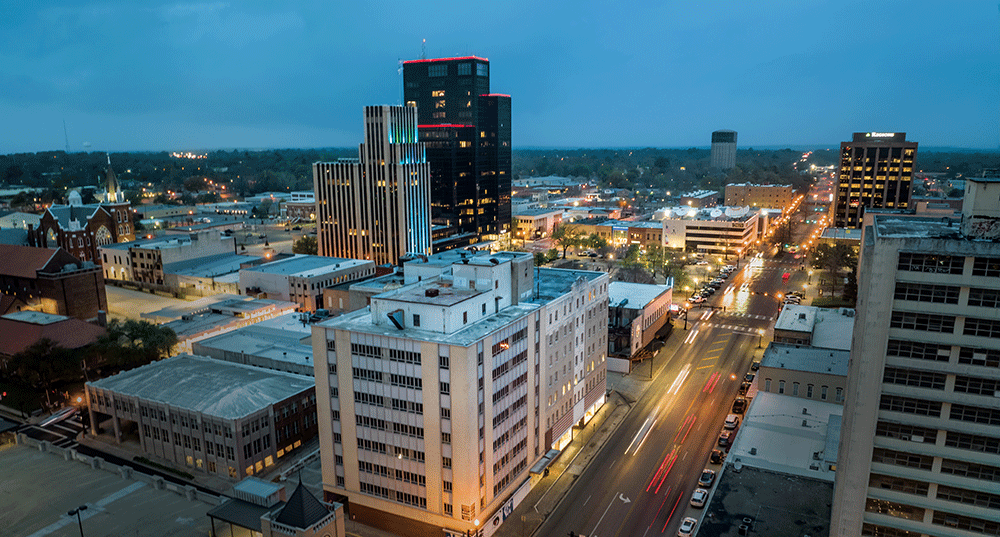
Tyler’s role as East Texas’s dominant regional healthcare and retail hub anchors one of the state’s most stable, low-volatility mid-size markets
2026 Economic Outlook
- Continued expansion at both CHRISTUS Trinity Mother Frances and UT Health East Texas
- Ongoing University of Texas at Tyler enrollment growth, particularly in nursing and health sciences
- South Tyler new construction continuing to absorb family relocation demand
- Continued regional retail draw from surrounding East Texas counties
- Downtown and Azalea District revitalization continuing at a modest, steady pace
Investment Climate
Tyler’s investment environment rewards a stable, income-focused approach rather than an aggressive appreciation bet. Successful Tyler investors tend to share a few characteristics:
- Regional hub awareness, understanding that Tyler’s rental demand draws from a much larger geographic area than the city’s own population would suggest
- Comfort with a healthcare-adjacent tenant base, including hospital staff, traveling nurses, and medical residents seeking both standard and furnished mid-term housing
- South Tyler school zone understanding for investors targeting the growing family-oriented suburban segment
- Realistic appreciation expectations, since Tyler’s growth trajectory is steady and dependable rather than explosive
- Appreciation for Texas’s landlord friendly legal environment, which removes much of the regulatory friction seen in coastal markets
Tyler will never deliver the appreciation trajectory of a fast-growing Austin or Houston suburb, but its role as an essential regional service hub gives it a demand floor that many faster-growing, single-driver markets lack. This makes Tyler a genuinely appealing option for investors prioritizing cash flow stability and lower volatility over maximum growth.
Historical Performance
| Period | Market Driver | Avg Annual Appreciation | Key Event |
|---|---|---|---|
| 2010-2014 | Steady regional hub demand, post-recession recovery | 2-3% | Continued hospital system expansion begins |
| 2015-2019 | South Tyler development, continued healthcare growth | 3-4% | University of Texas at Tyler continues expanding enrollment |
| 2020-2022 | Pandemic era migration, statewide price surge | 6-8% | Remote workers discover Tyler affordability and regional healthcare access |
| 2023-2024 | Rate normalization, continued South Tyler growth | 4-5% | South Tyler new construction continues absorbing demand |
| 2025-2026 | Continued regional hub demand, stable healthcare employment | 4-5% (projected) | Both major hospital systems continue steady regional expansion |
Tyler’s appreciation profile has run consistently modest but positive across nearly every economic cycle, reflecting the city’s fundamental role as an essential regional service center rather than a purely speculative growth market. A $245,000 Tyler property purchased today benefits from a demand base that draws from a genuinely wide East Texas region, not just the city’s own limited population growth.
Demographic Trends Driving Demand
- Regional Healthcare Hub Status – Two major hospital systems drawing patients, staff, and traveling medical professionals from across East Texas
- University of Texas at Tyler Growth – Continued enrollment increases, particularly in nursing and health sciences programs tied to the city’s medical sector
- Regional Retail Draw – Tyler’s role as the dominant shopping and commercial destination for a rural catchment area far exceeding the city’s own population
- South Tyler School Reputation – A genuine driver of family relocation from both within the region and from Dallas and Houston
- Rural East Texas Migration – Continued relocation from smaller surrounding counties seeking access to Tyler’s healthcare, retail, and education services
- Historic Rose Industry Heritage – A distinctive cultural identity supporting the annual Texas Rose Festival and modest ongoing tourism
📚 New to real estate investing? Master the fundamentals with our professional course Learn more →
2. Neighborhood Hotspots
Tyler Investment Neighborhood Map
Interactive map of Tyler’s investment neighborhoods. Green stars show top hotspots, blue circles mark established markets, and orange circles highlight emerging areas.
Core Investment Neighborhoods
Detailed Submarket Analysis: All Tyler Neighborhoods
| Neighborhood | Price Range (SFH) | Cap Rate | Growth Drivers | Best Strategy |
|---|---|---|---|---|
| South Tyler | $275K-$425K | 6.0-7.0% | Top schools, newer construction | Appreciation focused hold |
| Medical District | $185K-$300K | 7.5-9.0% | Dual hospital proximity, traveling nurse demand | Standard or furnished mid-term rental |
| UT Tyler Area | $165K-$260K | 7.5-9.0% | University proximity, growing enrollment | Student and staff rental |
| Downtown / Azalea District | $195K-$310K | 6.5-8.0% | Historic character, Azalea Trail heritage | Long term hold, light renovation |
| North Tyler / Value Corridor | $120K-$195K | 8.5-9.5% | Lowest entry point, value-add potential | Value-add, cash flow focus |
| Bellwood / Central Tyler | $155K-$245K | 7.0-8.0% | Established central location, healthcare proximity | Balanced buy and hold |
| Old South Tyler / Woldert | $185K-$290K | 6.5-7.5% | Mature established area, consistent demand | Long term hold |
| East Tyler / Lake Tyler Area | $175K-$285K | 6.5-7.5% | Lake proximity, established area | Balanced buy and hold |
| Southeast Growth Corridor / Loop 323 | $230K-$360K | 6.0-7.0% | Emerging growth corridor, newer construction | Appreciation focused hold |
Expert Insight: “The traveling nurse market is genuinely one of Tyler’s best-kept secrets for out of state investors. Both major hospital systems bring in a steady stream of traveling nurses on 13 week contracts, and a well-furnished, well-located property near either campus can command a meaningful premium over standard long-term rent, often with less wear and tear than you’d expect given the shorter stays. The key is having a management setup that can handle the furnished, mid-term turnover cycle rather than trying to force a standard 12 month lease model onto this tenant base.” – Patricia Youngblood, Broker, East Texas Medical Properties Group
3. Property Types
| Investment Goal | Best Property Type | Best Neighborhoods | Minimum Capital |
|---|---|---|---|
| Maximum Cash Flow | Furnished mid-term or value-priced SFH | Medical District, North Tyler | $24,000+ |
| Maximum Appreciation | New construction SFH | South Tyler | $55,000+ |
| Most Dependable Occupancy | SFH near hospital campuses | Medical District | $37,000+ |
| Lowest Absolute Entry Cost | Value-add SFH | North Tyler / Value Corridor | $19,000+ |
Don’t guess the costs. Our Complete Renovation & Remodeling Cost Guide covers 400+ pages of project by project breakdowns with real contractor pricing ranges.
4. Cost Analysis
Acquisition Cost Breakdown (Tyler)
| Expense Item | Typical Cost | Example ($245,000 Property) | Notes |
|---|---|---|---|
| Down Payment | 20-25% (investment) | $49,000-$61,250 | Standard for conventional investment financing |
| Closing Costs | 2-3% of price | $4,900-$7,350 | Title, escrow, lender fees, recording |
| General Inspection | $350-$550 | $425 | Foundation and HVAC condition especially important for pre-1990 North Tyler and Bellwood stock |
| Foundation Inspection | $325-$525 | $400 | Recommended for older homes given regional East Texas clay soil movement |
| Roof Inspection | $150-$300 | $225 | Hail is a recurring East Texas risk; verify insurance claim history |
| Furnished Rental Setup Cost | $12,000-$25,000 | $18,000 | If pursuing a traveling healthcare worker furnished rental strategy in the Medical District |
| Reserves (6 months) | 6 months expenses | $6,000-$8,500 | Emergency fund for vacancy and repairs |
| TOTAL MINIMUM ENTRY | ~27-45% of value | $60,325-$110,750 | Among the lowest entry costs of any Texas metro in this guide series |
Sample Cash Flow Analysis: Medical District Furnished Traveling Nurse Rental
| Item | Monthly | Annual | Notes |
|---|---|---|---|
| Gross Rent (furnished, blended) | $2,400 | $28,800 | 3BR, Medical District, furnished, marketed to traveling nurses on 13 week contracts |
| Less Vacancy (10%) | -$240 | -$2,880 | Reflecting turnover gaps between contract assignments, a genuine cost of the furnished mid-term model |
| Property Taxes | -$385 | -$4,620 | ~1.9% effective rate typical for Smith County |
| Insurance | -$135 | -$1,620 | Landlord policy including hail and wind coverage |
| Property Management (12%, furnished mid-term premium) | -$288 | -$3,456 | Furnished mid-term rental specialists typically charge a premium over standard long-term management |
| Maintenance + CapEx + Turnover Cleaning | -$216 | -$2,592 | 9% of rent, reflecting more frequent turnover cleaning than a standard annual lease |
| Net Operating Income | $1,136 | $13,632 | Before mortgage |
| Mortgage ($238,000 total cost including furnishing, 25% down, 6.75%, 30yr) | -$1,159 | -$13,908 | Principal and interest only |
| CASH FLOW | -$23 | -$276 | Approximately breakeven at 75% leverage; comfortably positive with 30% or more down |
| Cap Rate | 5.73% | NOI / Total Cost on this specific example; well-selected properties closest to either hospital campus can reach 8-9.5% | |
| Total Return (4.5% appreciation) | ~13% | Including appreciation and principal paydown |
This example illustrates the furnished traveling healthcare worker model at a conservative vacancy assumption; well-connected operators with a strong relationship to local hospital housing coordinators can often reduce vacancy gaps between assignments meaningfully below the 10 percent assumed here.
Expert Insight: “Tyler is a genuinely forgiving market for a first time out of state investor because the entry prices are so low relative to the rest of Texas. A mistake I see is investors assuming they need to chase the furnished traveling nurse niche to make the numbers work; a simple, well-maintained standard rental in North Tyler or Bellwood at these price points already clears 7 to 8 percent without any of the added management complexity. Save the furnished strategy for when you have the bandwidth to manage it properly.” – Gerald Whitfield, CPA, East Texas Real Estate Tax Group
5. Legal Framework
⚠️ Tyler Compliance Notice
Texas is one of the most landlord friendly states in the country, and Tyler has not layered any additional city level tenant protection ordinances on top of state law. This guide provides an overview only. Always consult a Texas licensed real estate attorney before acquiring rental properties, particularly if pursuing a furnished mid-term rental strategy targeting traveling healthcare workers.
Texas and Tyler-Specific Regulations
Tyler landlords operate under Texas Property Code with no additional municipal overlay:
- No Rent Control: Texas state law preempts any city, including Tyler, from enacting rent control ordinances of any kind.
- No Just Cause Eviction Requirement: Landlords may decline to renew a lease at term expiration for any lawful reason without needing to state cause.
- Three Day Notice to Vacate: The Texas default notice period for non-payment is three days unless the lease specifies otherwise.
- Security Deposits: No statutory cap on deposit amount. Landlords must return deposits, or provide an itemized list of deductions, within 30 days of move-out.
- No Source of Income Protection Statewide: Texas does not require landlords to accept Section 8 vouchers.
- No Rental Registration Requirement: Tyler does not require rental property registration or licensing.
- Furnished Mid-Term Lease Structuring: Furnished leases to traveling healthcare workers are generally structured as standard residential leases under Texas law rather than as short-term or hotel-style stays, though lease terms should be drafted carefully to reflect the specific mid-term arrangement.
Compliance Best Practices
While Tyler’s regulatory burden is light, disciplined operators, particularly those pursuing the furnished mid-term rental niche, still follow sound practices:
- Written Lease Agreements: Always use a written lease with clear rent amount, due date, late fee terms, and maintenance responsibilities spelled out, including furnishings inventory for furnished properties.
- Furnishings Inventory Documentation: For furnished mid-term rentals, maintain a detailed inventory list with photographs to protect against disputed damage claims at turnover.
- Move-In Documentation: Photograph or video the property condition at move-in to protect against disputed deposit deductions later.
- Timely Deposit Return: Return deposits or itemized deduction lists within the 30 day statutory window to avoid potential bad faith damages claims.
- Property Tax Protest: Smith County appraisal values can be protested annually; many Tyler investors successfully manage their assessed value through this process.
- Local Property Management: A locally based manager with specific traveling healthcare worker housing experience is strongly recommended for investors pursuing the furnished mid-term niche.
Useful Tyler Resources
- Smith County Appraisal District: smithcad.org
- Texas Apartment Association / Texas Property Code reference: texasapartmentassociation.org
- City of Tyler Development Services: cityoftyler.org
- Smith County Justice of the Peace Courts (eviction filings route through these courts): smith-county.com
| Regulation | Tyler / Texas Requirement | Comparison (Seattle, WA) | Investor Impact |
|---|---|---|---|
| Eviction | No just cause required; 3-day notice standard | Just cause required always | Significantly easier and faster to remove non-paying or problem tenants |
| Rent Control | Prohibited statewide by Texas law | 180 day notice for CPI-exceeding increases | Landlords may adjust rent at lease renewal without restriction |
| Screening | Landlord discretion within fair housing law | First-in-time rule | Landlords may select their preferred qualified applicant |
| Security Deposits | No cap; 30 day return requirement | Total move-in fees limited | Landlords can require larger deposits for higher risk tenants or furnished properties |
| Rental Registration | Not required | RRIO required (rolling cycle) | No administrative registration burden or inspection cycle |
6. Step-by-Step Tyler Investment Playbook
Define Your Tyler Strategy
Tyler rewards a clear-eyed, income-focused approach given its role as a stable regional hub rather than a rapid-growth market. Before buying, be clear on which of these strategies you are executing:
Furnished Traveling Healthcare Worker Play
Buy in the Medical District and furnish for traveling nurses and medical residents, capturing a meaningful rent premium at the cost of more intensive management.
South Tyler Appreciation Play
Buy in South Tyler, targeting the city’s strongest schools and clearest appreciation trajectory alongside continued new construction demand.
Standard Rental Cash Flow Play
Target standard 12 month leases in the Medical District or UT Tyler Area, capturing strong yields without the added complexity of furnished mid-term management.
Value-Add / BRRRR
Target dated North Tyler properties, renovate to increase rent and value, then refinance to redeploy capital into the next deal, benefiting from genuinely low East Texas construction costs.
Build Your Tyler Team
Tyler’s regional hub structure and healthcare-anchored demand make certain team relationships especially valuable:
- Tyler-Specialist Real Estate Agent: Should understand South Tyler school zone value and the specific demand dynamics near both hospital campuses.
- Property Manager with Traveling Healthcare Worker Experience: Especially valuable if pursuing the furnished mid-term niche, given the different systems and turnover cycle involved.
- Hospital Housing Coordinator Relationships: Building a relationship with hospital HR or housing coordination staff can create a direct pipeline of qualified traveling nurse tenants.
- Real Estate CPA familiar with Smith County protest procedures: For annual appraisal protests and depreciation strategy.
- Contractor Familiar with East Texas Building Conditions: Experience with regional clay soil movement and hail-related repairs matters for durable renovation choices.
Expert Tip: When considering the furnished traveling healthcare worker niche, ask your prospective property manager directly about their existing relationships with hospital housing coordinators or established traveling nurse housing platforms. A manager with these relationships already in place will fill vacancies between contracts meaningfully faster than one starting from scratch.
Tyler-Specific Due Diligence
Standard due diligence items plus these Tyler-critical checks:
Physical Due Diligence
- Foundation inspection given regional East Texas clay soil movement, especially for older North Tyler and Bellwood stock
- Roof condition and prior hail damage claim history
- HVAC system condition given East Texas’s humid summer climate
- Verify actual drive time to either hospital campus during peak shift-change hours if targeting healthcare worker tenants
- Assess durability of existing finishes if planning furnished mid-term conversion
- Water heater and plumbing age in older established housing stock
Financial and Regulatory Due Diligence
- Verify current Smith County appraised value versus purchase price
- Pull permit history for any additions or renovations
- Review current lease terms and rent roll if purchasing an occupied property
- Verify insurance quotes before closing given regional hail exposure
- Research South Tyler school ratings when evaluating rent comps for family-oriented properties
- Confirm current hospital system staffing and expansion plans when evaluating long term Medical District demand
Competing and Acquiring in Tyler
Tyler remains one of the less competitive markets in this guide series, giving prepared investors real advantages:
- Off-market sourcing in North Tyler: Direct mail and relationship-based sourcing can uncover off-market deals among long term owners in this more affordable, established area.
- Estate and inherited property sales: A meaningful share of Tyler’s older housing stock, particularly in North Tyler and the Azalea District, transfers through inheritance, often creating motivated seller situations.
- Builder relationships in South Tyler: Building direct relationships with local builders active in South Tyler can provide access to investor pricing on new construction inventory.
- Hospital system growth announcements: Monitoring announced expansions at either hospital system can signal upcoming Medical District rental demand growth ahead of broader market recognition.
- Pre-inspections in competitive submarkets: In desirable South Tyler school zones, conducting inspections before submitting an offer can allow for cleaner, more competitive bids.
Property Management in Tyler
Tyler’s stable, regionally-anchored tenant base makes standard rental management relatively straightforward, while the furnished healthcare worker niche requires more specialized systems. Key management focuses:
Tenant Screening Protocol
Without Texas-mandated first-in-time or source of income requirements, landlords have flexibility, but disciplined screening still matters:
- Verify income at 2.5 to 3 times monthly rent as a standard baseline for traditional leases
- For traveling nurse tenants, verify current contract assignment and agency directly where possible
- Run credit and criminal background checks consistently across all applicants
- Contact prior landlords directly rather than relying solely on written references
- Document all decisions to protect against disputes down the line
Typical Tyler Management Fees
- Standard single-family management: 8-10% of monthly rent
- Furnished mid-term healthcare worker management: 12-16% of monthly rent, reflecting added marketing and turnover complexity
- Leasing fee: 50-100% of one month’s rent
- Lease renewal fee: $100-$250 per renewal
- Turnover cleaning and furnishing refresh (furnished properties): Typically billed per turnover
7. Financing Options for Tyler
| Loan Type | Down Payment | Rate Premium | Best For | Tyler Note |
|---|---|---|---|---|
| Conventional Investment | 20-25% | +0.5-0.75% | Strong W-2 income, good credit | Tyler’s low price points make conventional financing especially accessible |
| DSCR Loan | 20-25% | +1-1.5% | Investors who want no income verification | Tyler’s strong cap rates make DSCR qualification comfortable across most neighborhoods, including the furnished mid-term niche |
| Portfolio Loan | 20-25% | +0.75-1.5% | Multiple properties, self-employed | Regional East Texas community banks are generally receptive to relationship-based portfolio lending, particularly for investors building a scaled portfolio |
| House Hacking (FHA) | 3.5% | Standard + MIP | Owner-occupying one unit of 2-4 unit property | A solid entry point for healthcare or university staff wanting to house hack near their employer |
| Hard Money (Bridge) | 15-25% | 9-12% rate | BRRRR acquisitions in North Tyler | Several East Texas hard money lenders are active given the concentration of value-add investor activity in this niche |
Tyler Financing Reality: Tyler’s combination of genuinely low entry prices and solid 6.5 to 9.5 percent cap rates makes it one of the more comfortable Texas markets for DSCR qualification in this guide series. Well-selected properties across nearly every neighborhood, including the specialized furnished traveling healthcare worker niche, routinely clear standard DSCR coverage ratios at conventional leverage, making Tyler a genuinely accessible entry point for investors newer to out of state investing.
8. Frequently Asked Questions

Knowledge Quiz: Tyler Real Estate Investment
Open Quiz
5 quick questions on what you just learned about Tyler investing
1) What historic industry gives Tyler part of its distinctive cultural identity, according to the guide?
Answer: B
The guide describes Tyler’s historic rose-growing and horticultural identity, which continues to support the annual Texas Rose Festival and a modest ongoing tourism draw.
2) According to the guide, what genuinely offsets Tyler’s apparent dependence on healthcare employment?
Answer: C
The guide explains that Tyler’s genuine regional hub diversification, two independently operated hospital systems, a dominant regional retail draw, and continued University of Texas at Tyler growth, provides real economic diversification beyond healthcare alone.
3) Which neighborhood does the guide identify as offering the strongest demand from traveling nurses and medical residents?
Answer: A
The Medical District, surrounding CHRISTUS Trinity Mother Frances and UT Health East Texas, is identified as drawing exceptionally dependable demand from hospital staff, traveling nurses on temporary assignment, and medical residents.
4) According to the guide’s expert insight, what mistake should new Tyler investors avoid?
Answer: D
The guide’s expert insight explains that Tyler is a forgiving market for first time out of state investors, and cautions against assuming the furnished traveling nurse niche is necessary, since a simple, well-maintained standard rental already clears strong yields without the added management complexity.
5) What does the guide say about DSCR loan qualification in Tyler?
Answer: B
The guide notes that Tyler’s combination of genuinely low entry prices and solid cap rates makes it one of the more comfortable Texas markets for DSCR qualification, with well-selected properties routinely clearing standard coverage ratios at conventional leverage.
Work With a Local Expert in Tyler
We are building a verified network of real estate professionals across every market we cover.

About Our Expert Network
We are finalizing partnerships with verified real estate professionals across every market featured on Builds and Buys. Each expert in our network is selected for their hands-on investment experience, local market knowledge, and commitment to helping buyers and investors make sound decisions.
Our local specialists offer:
- Proven experience with investment and income-producing properties
- Deep knowledge of local pricing, rental yields, and neighborhood dynamics
- Guidance on financing, legal structure, and due diligence
- Access to off-market and pre-market opportunities
- Full transaction support from search through closing
- Ongoing portfolio and property management referrals
Services Covered
- Property sourcing and acquisition
- Investment analysis and underwriting
- Buyer representation
- Market comparables and valuations
- Short-term and long-term rental strategy
- Value-add and renovation guidance
- Legal and title referrals
- Financing and lender connections
- Property management referrals
- Insurance and inspection referrals
- 1031 exchange coordination
- Exit strategy planning
Get Connected or Join Our Network
Looking for a local expert to help with your investment? Reach out and we will connect you with the right professional for your market and strategy.
Are you a real estate professional with a track record working with investors? We are always expanding our network of verified local experts.
Contact us at support@buildsandbuys.com
Find Specialized Tyler Real Estate Professionals
Ready to Invest in Tyler?
Tyler offers one of the most stable, dependable regional hub investment profiles in this entire guide series, anchored by its dominant role serving healthcare, retail, and education needs for a wide swath of East Texas at genuinely low entry prices. For investors who appreciate strong, consistent cash flow over aggressive appreciation, understand the genuine value of the traveling healthcare worker niche without overcomplicating a market that already performs well with standard leasing, and recognize Tyler’s regional hub diversification beyond healthcare alone, Tyler delivers one of the most accessible, low-volatility entry points in the entire Texas market, all within Texas’s landlord friendly legal framework.
Continue Your Research
For further guidance, explore our State-by-State Investor guides, browse our expert articles, or follow our Step-by-Step Investment Guide.



