
Superior Colorado Real Estate Investment Guide For 2026
A comprehensive resource for investors targeting one of Boulder County’s most strategically positioned towns, where genuine US-36 access to both Boulder and Denver meets the unique post-Marshall Fire rebuild dynamics that define Superior’s 2026 housing market
Quick answers: Top 5 most searched Superior investment questions ▼
Migration data: Where people are moving from to Superior ▼
In This Guide
Click on any section to navigate directly to that content
1. Superior Market Overview
⚠️ Essential Context: The Marshall Fire
On December 30, 2021, the Marshall Fire burned through parts of Boulder County including Superior and neighboring unincorporated Boulder County, destroying more than 1,000 structures across the broader fire area, with several hundred of those losses concentrated within Superior itself, primarily in the Original Town and Sagamore neighborhoods. This was one of the most destructive wildfires in Colorado history by structure count and remains the single most important historical fact any investor must understand before evaluating any specific Superior property. This guide addresses the fire’s ongoing investment implications directly and honestly throughout.
Market Fundamentals
Superior is a Boulder County town of approximately 13,000 residents positioned directly along the US-36 corridor connecting Boulder and Denver, roughly 10 to 15 minutes from Boulder’s tech and biotech employment base and 30 to 35 minutes from downtown Denver. This genuine dual-metro accessibility, combined with Boulder Valley School District access, has historically made Superior one of the most desirable smaller communities in the Denver-Boulder corridor. The December 2021 Marshall Fire fundamentally reshaped the town’s housing stock and market dynamics, destroying several hundred homes concentrated in specific neighborhoods while leaving other established areas entirely unaffected.
Key economic indicators:
- Population: 13,000+ and stabilizing following the post-fire rebuild period
- Major Employers (via commute): Google Boulder, Boulder biotech and aerospace firms, University of Colorado Boulder, downtown Denver employers via US-36
- Median Household Income: $135,000+, among the highest of any city in this Colorado series, reflecting Superior’s premium Boulder County positioning
- Median Home Price: $800,000, the highest of any city covered in this series, reflecting both Boulder County premium positioning and newer rebuilt construction values
- Boulder Valley School District (BVSD): Consistently rated among Colorado’s top districts
- US-36 Access: Boulder in 10-15 minutes, downtown Denver in 30-35 minutes
Superior’s economy is fundamentally a commuter economy oriented toward the Boulder-Denver corridor’s substantial technology, biotechnology, aerospace, and higher education employment base, rather than possessing significant local employment of its own. This is the same basic structure as Parker’s DTC orientation, but with Superior capturing two major employment centers rather than one, and at a meaningfully higher price point reflecting Boulder County’s premium positioning within Colorado.
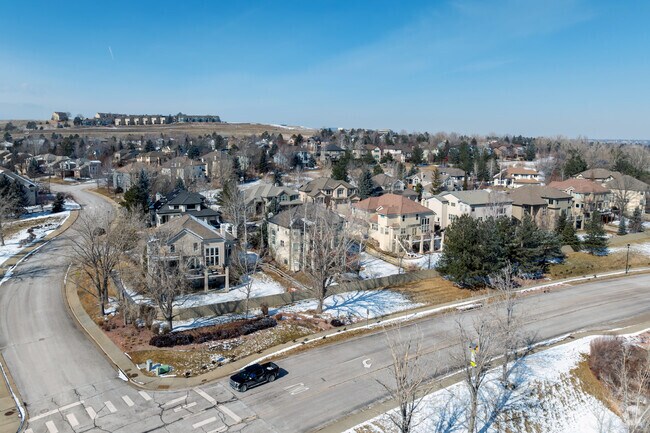
Superior’s US-36 position provides genuine dual-metro access to both Boulder and Denver, anchoring premium demand even as the town continues its post-fire rebuild
2026 Economic Outlook
- Continued rebuild activity in the fire-affected corridor approaching substantial completion
- Boulder tech and biotech sector continuing to drive regional housing demand
- Insurance market gradually stabilizing as rebuild-to-code construction becomes the norm
- US-36 corridor transit and infrastructure investment continuing
- Long-term monitoring of post-rebuild sales velocity and pricing recovery trajectory
Understanding the Marshall Fire’s Investment Implications
Any honest investment guide to Superior must address the Marshall Fire directly rather than glossing over it. Here is what investors need to understand:
- Scale and location of damage: The fire destroyed or severely damaged several hundred structures within Superior, with the heaviest concentration in the Original Town and Sagamore neighborhoods. Rock Creek, Coal Creek Ranch, and the McCaslin Boulevard corridor were largely or entirely unaffected.
- The rebuild has been substantial: A significant share of destroyed properties have been or are being rebuilt, generally to current, more wildfire-resilient building codes including non-combustible siding, ember-resistant venting, and defensible space requirements that did not universally apply to the pre-fire housing stock.
- Two distinct market segments now exist within Superior: Newer, code-current rebuilt construction in the previously affected corridor, and established, unaffected housing stock in neighborhoods like Rock Creek and Coal Creek that functions as a conventional premium Boulder County submarket.
- Insurance is a real, ongoing cost consideration: Property insurance availability and pricing across the broader Boulder County wildland-urban interface has been affected by the fire, requiring active insurance shopping and budget planning rather than assumption of standard rates.
- This is not a reason to avoid Superior, but it requires specific due diligence: Every investor evaluating a specific Superior property should determine whether that property was affected by the fire, whether it represents new rebuild construction or unaffected established stock, and should obtain a concrete insurance quote before finalizing any purchase decision.
The US-36 Dual-Metro Position
Superior’s investment case, independent of the fire recovery narrative, rests substantially on its genuine dual-metro accessibility via US-36 — a structural advantage shared by very few other Front Range communities:
Superior’s Dual-Metro Commute Profile
| Destination | Drive Time via US-36 | Key Employers |
|---|---|---|
| Boulder (downtown/Pearl St) | 10-15 min | University of Colorado Boulder, downtown professional services |
| Google Boulder Campus | 10-15 min | Google, surrounding tech corridor |
| Downtown Denver | 30-35 min | Denver’s broader downtown employment base |
| Denver Tech Center | 35-40 min | DTC corporate employment corridor |
This dual accessibility is structurally similar to Castle Rock’s I-25 midpoint position but oriented toward Colorado’s two most economically significant metro areas rather than Denver and Colorado Springs.
Historical Performance
| Period | Market Driver | Avg Annual Appreciation | Key Event |
|---|---|---|---|
| 2014-2021 | Boulder tech corridor growth, dual-metro access recognition | 8-12% | Superior establishes itself as a premium Boulder County alternative to Boulder proper |
| Dec 2021 | Marshall Fire | N/A — disaster event | Several hundred Superior structures destroyed, primarily Original Town and Sagamore |
| 2022-2024 | Rebuild period, market disruption and gradual stabilization | Variable by submarket | Substantial rebuild construction activity; unaffected neighborhoods continued normal appreciation |
| 2025-2026 | Rebuild substantially advanced, market normalization | 5-7% (projected, blended) | Rebuilt corridor and unaffected neighborhoods both showing stabilizing demand and pricing patterns |
Investors should treat the 2022-2024 period as a genuine market disruption rather than apply standard appreciation modeling across the fire event. Pre-fire and post-rebuild trend lines provide more reliable guidance than attempting to model continuous appreciation through the disruption itself.
Demographic Trends Driving Demand
- Boulder Affordability Overflow — Tech, biotech, and academic professionals priced out of Boulder proper but unwilling to fully leave the corridor specifically target Superior for its 10-15 minute Boulder access
- Boulder Valley School District — Among Colorado’s most highly regarded districts, anchoring durable family rental and ownership demand independent of the fire recovery narrative
- Dual-Metro Professional Flexibility — Households with one spouse working in Boulder and another in Denver, or hybrid workers who only occasionally commute to either city, specifically value Superior’s genuine dual accessibility
- Rebuild-Driven New Resident Interest — Buyers specifically seeking newer, code-current construction with modern systems are drawn to the rebuilt corridor
- Long-Tenured Unaffected Neighborhood Residents — Rock Creek and Coal Creek Ranch retain stable, long-term community continuity that supports conventional premium-market family rental demand
- Wildfire-Resilience-Conscious Buyers — A growing segment of buyers specifically values rebuilt-to-code construction with current defensible space and fire-resistant materials standards
📚 New to real estate investing? Master the fundamentals with our professional course Learn more →
2. Neighborhood Hotspots
Superior Investment Neighborhood Map
Interactive map of Superior’s investment neighborhoods. Green stars show top hotspots, blue circles mark established markets, and orange circles highlight emerging areas. Note that several neighborhoods shown were affected by the December 2021 Marshall Fire and now represent a mix of rebuilt new construction.
Core Investment Neighborhoods
Detailed Submarket Analysis
| Neighborhood | Price Range | Cap Rate | Fire Status | Best Strategy |
|---|---|---|---|---|
| Rock Creek | $750K-$1.1M | 4.0-5.0% | Unaffected | Long-hold premium family SFH |
| Coal Creek Ranch | $700K-$950K | 4.2-5.2% | Unaffected | Long-hold family SFH, balanced entry |
| McCaslin Boulevard | $450K-$650K | 4.5-5.5% | Mixed | Lower-capital entry, professional tenants |
| Original Town | $800K-$1.1M | 4.0-4.8% | Substantially rebuilt | New construction premium, verify rebuild status |
| Sagamore | $750K-$1.05M | 4.0-4.8% | Active rebuild | Monitor closely, verify completion/insurance status |
Expert Insight: “I tell every client the same thing about Superior: figure out which Superior you’re actually buying into before you fall in love with the school district numbers. Rock Creek and Coal Creek Ranch are a straightforward premium Boulder County investment, full stop. Original Town and Sagamore are a different conversation entirely — you’re buying new construction in a community that experienced a genuine tragedy, and the insurance quote you get before closing tells you more about the real cost of ownership than any comp sheet will.” — Janet Reyes, Broker, Boulder Valley Investment Properties
3. Property Types
| Investment Goal | Best Property Type | Best Neighborhoods | Minimum Capital |
|---|---|---|---|
| Simplest Due Diligence | Established unaffected SFH | Rock Creek, Coal Creek Ranch | $190,000+ |
| Newest Systems / Lowest Maintenance Risk | Rebuild construction SFH | Original Town, completed Sagamore lots | $200,000+ |
| Lower-Capital Entry | Condo/townhome | McCaslin Boulevard corridor | $120,000+ |
| Near-Term Opportunistic Demand | Standard rental with flexible lease terms | Any well-located Superior property | Varies |
Our Complete Renovation and Remodeling Cost Guide covers 400+ pages of project-by-project cost breakdowns with real contractor pricing ranges.
4. Cost Analysis
Acquisition Cost Breakdown (Superior)
| Expense Item | Typical Cost | Example ($800,000 Property) | Notes |
|---|---|---|---|
| Down Payment | 25% (investment) | $200,000 | The highest capital requirement of any city in this Colorado series |
| Closing Costs | 2-3% of price | $16,000-$24,000 | Boulder County title rates; standard Colorado closing structure |
| Insurance Quote (Critical Step) | Obtain before closing | N/A — process cost | Get a concrete insurance quote before finalizing purchase; do not assume standard rates given post-fire market conditions |
| Inspection + Radon | $600-$900 | $750 | Standard for both rebuild and unaffected properties; radon mandatory in Boulder County |
| Fire/Rebuild History Verification | Free-$200 | $100 | Confirm via county permit records and title history whether the property was affected/rebuilt |
| Reserves (6 months) | 6 months expenses | $20,000-$26,000 | Higher Superior rents and costs require proportionally larger reserves |
| TOTAL MINIMUM ENTRY | ~29-34% of value | $237,250-$271,750 | The highest capital requirement of any city covered in this Colorado series |
Sample Cash Flow Analysis: Rock Creek 4BR SFH (Unaffected, Established)
| Item | Monthly | Annual | Notes |
|---|---|---|---|
| Gross Rent | $3,400 | $40,800 | 4BR SFH, Rock Creek, established BVSD zone |
| Less Vacancy (3%) | -$102 | -$1,224 | Strong, stable BVSD-driven family demand |
| Property Taxes | -$429 | -$5,148 | ~0.64% of $800K assessed value (Boulder County rate) |
| Insurance | -$280 | -$3,360 | Elevated post-Marshall Fire wildfire-risk premium reflected; confirm with actual quote |
| Property Management (9%) | -$297 | -$3,564 | Boulder County PM rates |
| Maintenance + CapEx | -$204 | -$2,448 | Well-maintained established property; standard CapEx reserve |
| Net Operating Income | $2,088 | $25,056 | Before mortgage |
| Mortgage ($800K, 25% down, 6.75%, 30yr) | -$3,891 | -$46,692 | $600,000 loan, principal and interest |
| CASH FLOW | -$1,803 | -$21,636 | Significant negative carry, reflecting Superior’s premium positioning and elevated insurance costs |
| Cap Rate | 3.13% | NOI / Purchase Price | |
| Total Return (6% appreciation) | ~16% | Appreciation + principal paydown – negative carry |
The Superior reality: This example shows meaningfully higher negative carry than any other city in this Colorado series, driven by the combination of Superior’s premium price point and elevated post-Marshall Fire insurance costs. This is fundamentally an appreciation-and-stability investment requiring substantial capital reserves and a long time horizon, not a near-term cash flow strategy. Investors should only pursue Superior with full awareness of this negative carry profile and adequate financial cushion.
Insurance Shopping Is Not Optional in Superior: Given the documented post-Marshall Fire insurance market disruption across the broader Boulder County wildland-urban interface, every Superior investment analysis should be built around an actual obtained insurance quote rather than an assumed regional average. Premiums and carrier availability can vary significantly by specific property characteristics (construction materials, defensible space, proximity to open space or prior burn areas) and by carrier. Shop multiple carriers and confirm the quote is bindable before finalizing any purchase decision.
5. Legal Framework
✅ Superior Landlord Environment: Colorado State Law
Superior operates under Colorado state landlord-tenant law. No rent control, no mandatory source-of-income acceptance at the state level. Boulder County courts process evictions in line with standard Colorado timelines. The primary legal and practical considerations unique to Superior relate to disclosure obligations and insurance, not landlord-tenant law specifically.
Colorado State Law Essentials
- No Rent Control: Colorado preempts local rent control. Superior rents are entirely market-driven.
- Eviction Notices: 10-day pay-or-quit for non-payment, 3-day cure for violations, 21-day no-cause at lease end.
- Eviction Timeline: 30 to 45 days uncontested. Boulder County courts process in line with standard Colorado timelines.
- Security Deposit: No statutory cap. Return within 60 days (72 hours with written request).
- Boulder County Considerations: Boulder County and some Boulder County municipalities have at times explored or implemented tenant protection measures beyond base state law; verify current Superior-specific town ordinances given the regulatory environment can differ from less progressive Front Range jurisdictions.
Superior-Specific Considerations
- Wildfire Disclosure: Colorado law requires certain disclosures related to property history and material defects. For Superior properties, understanding and disclosing any prior fire damage or rebuild history is both a legal and practical necessity in any future resale or even rental marketing context.
- Defensible Space and Wildfire Mitigation: Superior and Boulder County have promoted defensible space and wildfire mitigation standards, particularly relevant for properties near open space or wildland-urban interface zones. Verify current requirements for any specific property.
- Insurance Disclosure to Tenants: While not always a strict legal requirement, transparent communication with prospective tenants about a property’s fire history and current insurance status is good practice in Superior’s specific market context.
- Short-Term Rentals: Superior regulates short-term rentals with permit requirements; verify current town ordinance specifics before pursuing any STR strategy.
- Boulder County Property Tax Appeal: File with the Boulder County Assessor during the standard biennial Colorado appeal window. Given Superior’s unique rebuild-driven valuation dynamics, working with an assessor or appraiser familiar with post-fire comparable sales methodology is valuable.
- Title Review for Rebuild Properties: For any rebuilt property, review the title history and any insurance claim or settlement documentation relevant to the rebuild, as part of standard due diligence.
| Issue | Superior Requirement | Investor Action |
|---|---|---|
| Fire/rebuild history disclosure | Required for material defects under Colorado law; good practice for transparency generally | Verify and document full property history before purchase and in future resale/marketing |
| Insurance availability | Market-driven; not a legal mandate but a practical necessity | Obtain bindable insurance quote before finalizing purchase |
| Defensible space | Promoted/required in specific zones; verify current ordinance | Confirm requirements with the town and maintain compliance |
| STR permitting | Permit required; verify current ordinance | Confirm with Superior town offices before pursuing STR strategy |
| Property tax appeal | Biennial window; Boulder County Assessor | File with comparable sales methodology appropriate to rebuild vs. unaffected status |
6. Step-by-Step Superior Investment Playbook
Choose Your Superior Strategy
Unaffected Premium Family Hold
Buy in Rock Creek or Coal Creek Ranch. The most straightforward Superior strategy, free of fire-related due diligence complexity. Target BVSD-seeking families for 4-6 year tenancies.
New Construction Quality Play
Buy completed rebuild construction in Original Town. Capture genuinely modern systems and wildfire-resilient materials. Requires specific verification of rebuild completion and insurance status.
McCaslin Lower-Capital Entry
Buy a condo or townhome along McCaslin Boulevard for the lowest Superior entry price. Target professional tenants prioritizing US-36 access and walkability over single-family space.
Near-Term Transitional Rental
Offer flexible 12-24 month lease terms to capture displaced original residents still completing their own rebuilds. A finite-duration but currently real demand category requiring lease flexibility rather than standard 12-month terms.
Build Your Superior Team
- Boulder County / Superior-Experienced Agent: Must have specific, current knowledge of which lots and blocks were affected by the Marshall Fire, current rebuild completion status, and the distinction between unaffected and rebuilt submarkets. This is non-negotiable local expertise for Superior specifically.
- Colorado Real Estate Attorney: For title review on any rebuild property, disclosure compliance, and LLC setup.
- Independent Insurance Broker (Not a Single Carrier): Given the post-fire insurance market disruption, work with a broker who can shop multiple carriers rather than relying on a single insurer’s quote, which may not reflect the most competitive available terms.
- Boulder County Property Manager: Ideally with specific experience managing both established and newer rebuild-corridor properties, understanding the different tenant expectations and maintenance profiles each requires.
- Appraiser Familiar with Post-Fire Comparable Sales: For accurate valuation and lending purposes, particularly important for rebuild properties where standard comparable sales methodology may need adjustment.
Superior-Specific Due Diligence
Fire and Rebuild-Specific Checks
- Verify whether the specific property was destroyed, damaged, or unaffected by the Marshall Fire via county records and title history
- For rebuild properties, confirm the construction completion date and obtain documentation of building code compliance
- Check the status of surrounding/adjacent lots for ongoing construction activity that could affect tenant experience
- Obtain a bindable insurance quote from at least two carriers before finalizing any purchase decision
- Review any available wildfire risk zone mapping for the specific property location
Standard Market and Regulatory Checks
- Radon test — mandatory; Boulder County carries moderate to elevated risk
- Verify BVSD attendance zone directly with the district
- Check HOA documents if applicable for any specific community
- Confirm US-36 commute times to both Boulder and Denver from the specific property
- Pull Boulder County Assessor record and compare to purchase price for appeal opportunity
- Confirm no active code violations through Superior town offices
Marketing Superior Properties: Honest, Differentiated Strategy
Dual-Metro and BVSD Marketing
Lead with Superior’s genuine structural advantages, which exist independent of the fire recovery narrative:
- Emphasize “10 minutes to Boulder, 30 minutes to Denver” prominently — this dual access is Superior’s most durable competitive advantage
- Lead with BVSD school district affiliation for family-targeted listings
- Post in Boulder tech and biotech employer community channels, given the substantial commuter overlap
New Construction Differentiation (Rebuild Properties)
- For rebuilt properties, honestly and proactively emphasize the modern construction quality, energy efficiency, and current building code compliance as genuine, marketable amenities rather than avoiding the topic
- Tenants increasingly value wildfire-resilient construction; framing this directly as a feature rather than something to hide builds trust and can support premium positioning
- Maintain transparency about property history in line with disclosure best practices, which builds long-term tenant trust and reduces future disputes
7. Financing Options for Superior
| Loan Type | Down Payment | Rate Premium | Best For | Superior Note |
|---|---|---|---|---|
| Conventional Investment | 25% | +0.5-0.75% | W-2 income, first Superior investment | Many Superior properties approach or exceed the conventional loan limit of $806,500, requiring jumbo financing for premium properties |
| Jumbo Investment | 25-30% | +0.75-1.25% | Properties above $806,500 | Standard for most Rock Creek and rebuild-corridor purchases given Superior’s premium pricing |
| DSCR Loan | 30-40% | +1.5-2.5% | Self-employed, portfolio investors | Superior’s low cap rates (4.0-5.0%) make standard DSCR qualification difficult; expect to need 35-40%+ down for most properties |
| Construction/Renovation Loan | Varies | Varies by lender | Investors purchasing a lot or partially completed rebuild | Relevant for any investor considering acquiring and completing a partially built rebuild lot; specialized financing required |
| Owner Move-Out to Rental | Original owner equity | Locked-in rate from purchase | Existing Superior homeowners relocating | Similar opportunity to other premium markets in this series for homeowners with sub-4% locked-in rates considering conversion to rental |
Insurance Cost Impact on Financing: Lenders increasingly factor insurance availability and cost into their underwriting for properties in wildfire-affected regions. A property with elevated or difficult-to-obtain insurance can affect debt-to-income calculations for conventional and jumbo loans, and certainly affects DSCR qualification given insurance’s direct impact on net operating income. Obtain your insurance quote early in the transaction process, ideally before or concurrent with your loan application, rather than as a late-stage closing item.
8. Frequently Asked Questions

Knowledge Quiz: Superior Colorado Real Estate Investment
Open Quiz
5 quick questions on what you just learned about Superior investing
1) Which Superior neighborhoods were directly and heavily affected by the December 2021 Marshall Fire?
Answer: C
The Marshall Fire’s heaviest damage within Superior was concentrated in the Original Town and Sagamore neighborhoods, while Rock Creek and Coal Creek Ranch were largely or entirely unaffected. This creates a genuinely bifurcated market that investors must understand at the specific property level, not assume based on Superior as a whole.
2) Why are Superior’s cap rates the lowest of any city in this Colorado series?
Answer: D
Superior’s 4.0-5.0% cap rates reflect Boulder County’s structurally premium pricing driven by land scarcity and dual-metro demand concentration, where prices rise faster than achievable rents can follow. Elevated post-Marshall Fire insurance costs further compress effective net operating income and yield beyond what the gross rent-to-price ratio alone suggests.
3) What specific due diligence step does the guide identify as essential before finalizing any Superior property purchase, given the post-fire insurance market?
Answer: B
The guide emphasizes that insurance shopping is not optional in Superior given the documented post-Marshall Fire market disruption across the broader Boulder County wildland-urban interface. Investors should obtain a bindable insurance quote from multiple carriers before finalizing any purchase, since premiums and availability vary significantly by specific property characteristics and carrier underwriting criteria.
4) What is the “post-rebuild transitional rental” opportunity the guide identifies as unique to Superior?
Answer: A
The post-rebuild transitional rental strategy targets original Superior residents whose homes were destroyed in the Marshall Fire and who are rebuilding on their original lots, typically needing 12 to 24 months of temporary housing during construction. This is a genuine, currently real but diminishing demand category tied directly to the remaining individual rebuild completion timelines, best captured through flexible lease terms.
5) According to the guide, what is the most important practical first step when evaluating any specific Superior property?
Answer: C
The guide explicitly warns against assuming a property’s fire status based on its neighborhood name alone, since even within heavily affected neighborhoods like Original Town and Sagamore, individual lot outcomes varied. Specific verification via county permit records, title history, and disclosure review at the individual address level is the essential first due diligence step for any Superior property.
Work With a Local Expert in Superior
We are building a verified network of real estate professionals across every market we cover.

About Our Expert Network
We are finalizing partnerships with verified real estate professionals across every market featured on Builds and Buys. Each expert is selected for hands-on investment experience, local market knowledge, and commitment to helping investors make sound decisions.
- Proven experience with investment and income-producing properties
- Deep knowledge of Marshall Fire impact areas and rebuild status verification
- Guidance on financing, legal structure, and due diligence
- Access to off-market and pre-market opportunities
- Full transaction support from search through closing
Services Covered
- Property sourcing and acquisition
- Fire/rebuild history verification
- Investment analysis and underwriting
- Buyer representation
- Insurance broker referrals
- Transitional rental strategy
- Title and disclosure review
- Financing and lender connections
- Property management referrals
- Inspection referrals
- 1031 exchange coordination
- Exit strategy planning
Get Connected or Join Our Network
Looking for a local expert to help with your Superior investment? We will connect you with the right professional for your strategy.
Contact us at support@buildsandbuys.com
Find Specialized Superior Real Estate Professionals
Ready to Invest in Superior?
Superior offers genuine dual-metro US-36 access to both Boulder and Denver, Boulder Valley School District quality, and a uniquely bifurcated market shaped by the December 2021 Marshall Fire that requires honest, specific due diligence rather than blanket assumptions. Investors who do the work of verifying individual property fire and rebuild history, obtain real insurance quotes before closing, and approach this market as a long-term, premium appreciation play rather than a cash flow strategy will find Superior offers access to one of Colorado’s most economically significant corridors at a meaningful, if still substantial, discount to Boulder proper.
Continue Your Research
Colorado State Guide
See how Superior compares to Boulder, Louisville, and other Colorado markets.
Step-by-Step Invest
Complete framework for building a real estate investment strategy from scratch.
144-Lesson Course
University-level real estate education covering financing, law, strategy, and management.
For further guidance, explore our State-by-State Investor guides, browse our expert articles, or follow our Step-by-Step Investment Guide.



