
St. Albert Real Estate Investment Guide For 2026
A comprehensive resource for investors looking at St. Albert, the established city on Edmonton’s northwest edge, where mature neighbourhoods, the Sturgeon River valley, and professional family demand produce some of the most stable rental tenancies in the Edmonton region in 2026. All figures in Canadian dollars.
Quick answers: Top 5 most searched St. Albert investment questions ▼
Migration data: Where people are moving from to St. Albert ▼
In This Guide
Click on any section to navigate directly to that content
1. St. Albert Market Overview
Market Fundamentals
St. Albert is a city of about 70,000 people on Edmonton’s northwest edge, one of the oldest communities in Alberta and consistently rated among the best places to live in Canada. The Sturgeon River and the Red Willow trail system run through the city, and its mature neighbourhoods, schools, and amenities attract professional families. For investors, St. Albert is a stable, premium rental market.
Key economic indicators that define St. Albert’s investment case:
- Population: About 70,000
- Employment: Edmonton commuters, local retail, healthcare, education, and municipal services
- Average Purpose Built Rent: About $1,864, up about 5.6% (CMHC, October 2025)
- Prices: Detached homes generally above the Greater Edmonton median of about $532,000 (May 2026)
- Property Tax: Roughly 0.95% of assessed value, verify each property
- No Provincial Sales Tax or Land Transfer Tax: Only Land Titles registration fees
St. Albert’s economy is largely residential and service based, tied to Edmonton employment. Government, healthcare, and education jobs in Edmonton give its tenant base more stability than resource towns.
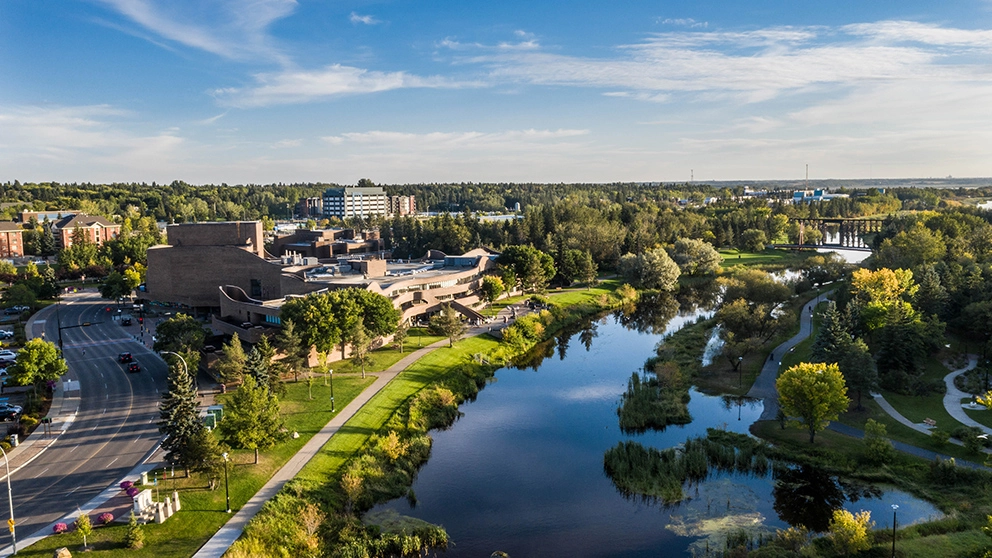
St. Albert sits on Edmonton’s northwest edge along the Sturgeon River
2026 Economic Outlook
- Steady family demand in established neighbourhoods
- Rents rising faster than Edmonton in 2025
- New communities growing in the north
- Slower population growth as migration cools
- Low turnover rental market
Investment Climate
St. Albert’s 2026 environment is stable, with strong family demand and rising rents. Successful investors here tend to share a few characteristics:
- Long holds with family tenants
- Suite strategy in older bungalows and bi-levels
- Quality focus to match tenant expectations
- School awareness when choosing locations
- Net return analysis that values low turnover
Alberta’s landlord friendly law and lack of land transfer tax apply, and St. Albert’s desirability supports values through softer periods.
Historical Performance
| Period | Market Driver | Price Trend | Key Event |
|---|---|---|---|
| 2010-2014 | Edmonton region growth | Steady gains | New north communities develop |
| 2015-2019 | Alberta downturn | Flat | More resilient than resource towns |
| 2020-2022 | Low rates | Recovery | Family demand strengthens |
| 2023-2024 | Migration surge | Solid gains | Inventory tightens |
| 2025-2026 | Balanced metro market | Stable | Rents rise about 5.6% in 2025 |
St. Albert has historically held its value better than higher yielding parts of the Edmonton region during downturns, which suits conservative investors.
Demographic Trends Driving Demand
- Edmonton Professionals – Government, healthcare, and education workers
- Young Families – Drawn by schools and trails
- Downsizers – Older residents renting before or after selling
- High Incomes – Above average household incomes
- Limited Rental Supply – Less new apartment supply than Edmonton
- Long Tenancies – Lower turnover than urban markets
📚 New to real estate investing? Master the fundamentals with our professional course Learn more →
2. Neighbourhood Hotspots
St. Albert Investment Neighbourhood Map
Interactive map of St. Albert’s investment neighbourhoods. Green stars show top hotspots, blue circles mark established markets, and orange circles highlight emerging areas. All figures in Canadian dollars.
Core Investment Neighbourhoods
Detailed Submarket Analysis: St. Albert Neighbourhoods
| Neighbourhood | Price Range | Cap Rate | Growth Drivers | Best Strategy |
|---|---|---|---|---|
| Akinsdale | $420K-$560K | 4.2-5.0% | Suite friendly stock | Legal suited bungalows |
| Grandin / Mission | $420K-$650K | 3.8-4.8% | Central, river access | Suite conversions, character homes |
| Braeside / Deer Ridge | $430K-$650K | 3.6-4.8% | Established family areas | Family rentals, suites |
| Erin Ridge / Oakmont | $500K-$750K | 3.5-4.3% | Family demand, retail | Family rentals |
| Jensen Lakes / Riverside | $520K-$800K | 3.4-4.2% | Newest stock, lake amenities | Low maintenance rentals |
| Downtown St. Albert | $220K-$420K | 4.5-5.5% | Walkability, river | Condo entry, verify fees |
Investor Insight: St. Albert rents rose faster than Edmonton’s in 2025, according to CMHC, because demand for family rentals in established suburbs stayed strong while most new apartment supply landed in Edmonton. That makes well located suited homes in St. Albert a solid defensive hold, even with thinner initial cash flow.
3. Property Types
| Investment Goal | Best Property Type | Best Neighbourhoods | Minimum Capital |
|---|---|---|---|
| Maximum Cash Flow | Legal suited home or duplex | Akinsdale, Grandin, Braeside | $130,000+ |
| Long Term Appreciation | Detached home in a family area | Erin Ridge, Oakmont, Deer Ridge | $140,000+ |
| Balanced Returns | Older home plus a new legal suite | Grandin, Mission, Akinsdale | $180,000+ |
| Lowest Management | Newer home with a legal suite | Jensen Lakes, Erin Ridge North, Riverside | $130,000+ |
Don’t guess the costs. Our Complete Renovation & Remodeling Cost Guide covers 400+ pages of project-by-project breakdowns with real contractor pricing ranges.
4. Cost Analysis
Acquisition Cost Breakdown (St. Albert)
| Expense Item | Typical Cost | Example ($540,000 Suited Home) | Notes |
|---|---|---|---|
| Down Payment | 20% minimum (rental) | $108,000 | Default insurance is not available on non owner occupied property |
| Land Transfer Tax | None in Alberta | $0 | A major advantage over Ontario and British Columbia |
| Land Titles Transfer Fee | $50 + $5 per $5,000 of value | $590 | Rate in effect since October 20, 2024 |
| Mortgage Registration Fee | $50 + $5 per $5,000 of mortgage | $485 | On a $432,000 mortgage |
| Legal Fees and Disbursements | $1,200-$1,900 | $1,500 | Real estate lawyer handles title, funds, and registration |
| Home Inspection | $450-$750 | $550 | Inspect both units and the suite separation |
| Sewer Line Camera Scope | $250-$400 | $300 | Recommended on older homes with mature trees |
| Appraisal and Title Insurance | $600-$1,000 | $750 | Lender appraisal plus title insurance where used |
| Setup and Initial Repairs | 0-5% of price | $2,000 | Locks, cleaning, smoke and CO alarms in both units |
| Reserves | 3-6 months of expenses | $11,000 | Vacancy, furnace, hot water tank, and winter repairs |
| TOTAL MINIMUM ENTRY | ~23% of value | $125,175 | No land transfer tax keeps Alberta entry costs low |
Sample Cash Flow Analysis: St. Albert Bungalow Home with Legal Suite
| Item | Monthly | Annual | Notes |
|---|---|---|---|
| Upper Unit Rent | $2,000 | $24,000 | 3BR main floor |
| Basement Suite Rent | $1,350 | $16,200 | 2BR legal basement suite |
| Gross Income | $3,350 | $40,200 | Utilities split between tenants |
| Less Vacancy (4%) | -$134 | -$1,608 | Low turnover family market |
| Property Taxes | -$428 | -$5,130 | About 0.95% of assessed value, verify on the 2026 tax notice |
| Insurance | -$192 | -$2,300 | Landlord policy covering two units |
| Property Management (8%) | -$268 | -$3,216 | Optional for local investors who self manage |
| Maintenance + CapEx (9%) | -$302 | -$3,618 | Two kitchens, two bathrooms |
| Net Operating Income | $2,027 | $24,328 | Before mortgage |
| Mortgage ($432,000, 20% down, 4.99%, 25yr) | -$2,510 | -$30,121 | Principal and interest, Canadian semi annual compounding |
| CASH FLOW | -$483 | -$5,793 | About -$215/month if self managed |
| Same deal at 30% down | -$169 | -$2,028 | About +$99/month if self managed |
| Cap Rate | 4.51% | NOI / Purchase Price (gross yield 7.4%) | |
| Total Return Year 1 (3% appreciation assumed) | ~15% | Cash flow + $8,986 principal paydown + $16,200 appreciation on $125,175 invested |
This is the honest St. Albert picture in 2026. A well bought legal suited home runs -$483 a month with full property management at 20% down, about -$215 a month if you self manage, and about $99 a month self managed at 30% down. Without the suite, the same house would rent for about $2,300 in total and run roughly -$1,312 a month after the mortgage, which is why the suite drives the strategy. The appreciation figure is an assumption, not a forecast. Rates and rents are examples only, so run your own numbers on every deal.
Investor Insight: Investors often underestimate how long St. Albert tenants stay. A family that signs a lease near their children’s school may stay five years or more. Lower turnover reduces vacancy, leasing fees, and repair costs, which can close much of the yield gap with Edmonton.
5. Legal Framework
⚠️ Alberta Compliance Notice
Residential tenancies in St. Albert are governed by Alberta’s Residential Tenancies Act, the Minimum Housing and Health Standards, the Alberta Human Rights Act, and the City of St. Albert land use and building rules. Alberta is landlord friendly, but the rules on notices, deposits, and inspections are strictly applied, and a defective notice can restart your timeline. This guide is an overview as of October 2026. Confirm current rules with Service Alberta, the City of St. Albert, and an Alberta real estate lawyer before you buy.
Alberta and St. Albert Regulations
The rules that matter most to St. Albert landlords:
- No Rent Control: There is no cap on the amount of a rent increase. Rent can rise only once every 365 days.
- Rent Increase Notice: At least three full tenancy months of written notice on a monthly periodic tenancy. Rent cannot be raised during a fixed term lease.
- Fixed Term Leases: A fixed term tenancy ends on its stated end date. The landlord is not required to renew, which gives Alberta landlords far more flexibility than in Ontario or British Columbia.
- Security Deposits: Capped at one month’s rent and placed in a trust account within two banking days. Interest is set yearly by the province, and the 2026 rate is 0%.
- Inspection Reports: Move in and move out inspection reports are mandatory. A landlord who skips them cannot deduct from the deposit.
- Deposit Return: Within 10 days after the tenant gives up possession, with an itemized statement for any deductions.
- Ending a Periodic Tenancy: A landlord can end a monthly periodic tenancy only for reasons set out in the Act, such as sale with vacant possession, landlord or family occupancy, demolition, or major renovation, with three full tenancy months of notice.
- Substantial Breach: A 14 day notice can be served for non payment or other substantial breach.
- St. Albert Land Use: St. Albert allows secondary suites in a number of residential districts with development and building permits. Confirm the district for each lot with the City of St. Albert.
Compliance Best Practices
Running St. Albert rentals smoothly comes down to documentation:
- Written Leases: Use an Alberta specific lease that reflects the Residential Tenancies Act. Any clause that conflicts with the Act is void.
- Inspection Reports: Complete and sign move in and move out reports with dated photos for every unit.
- Trust Account: Hold every security deposit in a dedicated trust account and track the provincial interest rate each year.
- Entry Notice: Give at least 24 hours written notice before entering, for a valid reason, at a reasonable time.
- Suite Legality: Keep development permits, building permits, and final inspections for every suite on file.
- Fair Screening: Apply consistent written criteria to every applicant in line with the Alberta Human Rights Act.
Useful St. Albert Resources
- Alberta Residential Tenancies: alberta.ca/renting-and-leasing
- Residential Tenancy Dispute Resolution Service: alberta.ca/rtdrs
- City of St. Albert planning and development: stalbert.ca
- CMHC rental market data: cmhc-schl.gc.ca
| Regulation | Alberta (St. Albert) | Ontario / British Columbia | Investor Impact |
|---|---|---|---|
| Rent Control | None | Annual guideline caps on most tenancies | Rents can be reset to market each year |
| Fixed Term Ending | Ends on the end date | Generally continues or converts to monthly | More control over who stays |
| Rent Increase Notice | 3 tenancy months, once per 365 days | Similar notice, but capped amount | Plan increases on a 12 month calendar |
| Security Deposit | Up to one month, held in trust | Ontario bans damage deposits. BC caps at half a month | Better protection against damage |
| Disputes | RTDRS or court | Provincial tribunals, often with long backlogs | Faster resolution in most cases |
| Land Transfer Tax | None. Registration fees only | Tiered tax, plus municipal tax in Toronto | Thousands saved on every purchase |
6. Step-by-Step St. Albert Investment Playbook
Define Your St. Albert Strategy
Be clear on which strategy you are executing before you shop in St. Albert:
Suited Home Buy-and-Hold
Buy a home that already has a permitted suite. Two rents, one title, and lender recognized income.
Add-a-Suite Value Add
Buy an unsuited home below market and add a legal suite to lift income and value.
Family Rental Hold
Rent a detached home to a long term family tenant and accept thinner cash flow for stability.
Townhome or Duplex Entry
Start with a well run townhome or a duplex to keep capital requirements low.
Build Your St. Albert Team
The right team keeps you out of the most common Alberta mistake, which is paying suite prices for a suite that is not legal:
- Investor Focused Realtor: Someone who can pull permit history, understands suite income, and knows local zoning.
- Mortgage Broker: Access to lenders with different rental income treatment, offset versus add back, which can change how much you qualify for.
- Alberta Real Estate Lawyer: Handles title, Real Property Report or title insurance, Land Titles registration, and condo document review.
- Suite Experienced Contractor: Knows fire separation, egress windows, smoke and CO interconnection, and municipal permit requirements.
- Property Manager: Licensed under the Real Estate Act and fluent in Residential Tenancies Act notices and RTDRS procedure.
- Accountant: For Capital Cost Allowance, suite construction cost treatment, and ownership structure.
Expert Tip: Ask any property manager you interview: “Walk me through how you serve a 14 day substantial breach notice and when you file with the RTDRS.” Then ask: “How do you handle the trust account and annual interest on security deposits?” Clear, specific answers mean they know Alberta law. Vague answers mean they do not.
St. Albert-Specific Due Diligence
Standard due diligence plus these local checks:
Physical Due Diligence
- Sewer line camera scope on older homes with mature trees
- Furnace and hot water tank age, since winter failures are emergencies
- Foundation cracks and grading, given clay soils and freeze thaw cycles
- Radon test, since many Alberta homes exceed the Health Canada guideline
- Vermiculite or asbestos in pre 1990 homes before any suite renovation
- Shingle and siding hail damage history
- Basement moisture and window well drainage
Regulatory Due Diligence
- Confirm development and building permits for any existing suite
- Check the land use district and the units allowed on the lot
- Review the Real Property Report with compliance, or arrange title insurance
- Review existing leases, deposits held, and inspection reports if tenanted
- For condos, review the reserve fund study, budget, minutes, and bylaws
- Confirm short term rental licensing and condo bylaws if planning STR
- Check GST status on new or substantially renovated homes
Buying in St. Albert’s 2026 Market
St. Albert is a steady family market in 2026. Strategies that work:
- Target older central homes: They offer the best suite economics.
- Verify the suite: Ask for permits and final inspections. Price unpermitted suites as single family homes.
- Keep your conditions: Financing and inspection conditions are standard.
- Check school catchments: Family tenants pay for school access.
- Use real rents: CMHC averages are a guide, but check current listings for your exact property type.
Property Management in St. Albert
In a smaller tenant pool, tenant retention and quick turnovers drive St. Albert returns:
Tenant Screening Protocol
Alberta lets landlords choose among qualified applicants, provided the process does not discriminate under the Alberta Human Rights Act. A strong process:
- Publish clear written criteria covering income, references, and credit
- Verify income with pay stubs or an employment letter
- Call at least two previous landlords
- Run a credit check with written consent
- Apply the same criteria to every applicant and keep records
Typical St. Albert Management Fees
- Single family management: 8-10% of monthly rent
- Suited homes: often 8-10% per unit
- Leasing fee: 50-100% of one month’s rent
- Lease renewal fee: $0-$250
- Winter readiness and furnace servicing billed separately
7. Financing Options for St. Albert
| Loan Type | Down Payment | Rate Context | Best For | St. Albert Note |
|---|---|---|---|---|
| Conventional Rental Mortgage | 20% minimum | Usually above insured rates | Most rental purchases | Must pass the federal stress test |
| Owner Occupied Suited Home | From 5% (insured) | Lowest available rates | House hacking: live upstairs, rent the suite | Best entry point for new investors |
| Owner Occupied 3-4 Units | From 10% (insured) | Insured rates | Owner living in one unit | Strong option where zoning allows multiple units |
| Credit Union / Portfolio | 20-35% | Varies by lender | Multiple properties, self employed | Alberta credit unions are active rental lenders |
| CMHC MLI Select (5+ units) | As low as 5% on qualifying projects | Insured multi unit rates | Larger rental builds and purchases | Requires affordability, energy, or accessibility commitments |
| Purchase Plus Improvements | 20% of total cost (rental) | Conventional rates | Buying and adding a legal suite | Funds held back until work is completed |
| Private / Alternative Lender | 20-35% | Higher rates plus fees | Short term renovation or bridge | Exit plan to conventional financing required |
St. Albert Financing Reality: As of September 2026 the Bank of Canada held its policy rate at 2.25%, and the average conventional five year fixed rate in Canada was about 5.1%, with the best insured rates near 4.1 to 4.4%. Rental mortgages require 20% down because default insurance is not available on property you do not occupy, and you must qualify at the higher of 5.25% or your contract rate plus 2%. How a lender counts rental income, either offsetting it against the mortgage or adding a portion to your income, can make a large difference to how much you qualify for. A broker who shops several lenders is worth it in this market.
8. Frequently Asked Questions

Knowledge Quiz: St. Albert Real Estate Investment
Open Quiz
5 quick questions on what you just learned about St. Albert investing
1) What is the minimum down payment on a St. Albert rental you will not live in?
Answer: C
Default insurance is not available on rental property you do not occupy, so lenders require at least 20% down, and you must still pass the federal stress test.
2) How did St. Albert purpose built rents change in 2025 according to CMHC?
Answer: B
CMHC reported the average St. Albert purpose built rent rising about 5.6%, with an average two bedroom rent of about $1,939.
3) Why can St. Albert compete with higher yielding Edmonton areas despite thinner cash flow?
Answer: B
Family tenants in St. Albert tend to stay longer, which reduces vacancy, leasing fees, and turnover repairs.
4) How often can rent be increased in Alberta, and how much notice is needed on a monthly periodic tenancy?
Answer: C
Alberta has no rent control. Rent can rise by any amount once every 365 days, with three full tenancy months of written notice on a monthly periodic tenancy, and cannot rise during a fixed term lease.
5) What does Alberta charge instead of a land transfer tax when you buy property?
Answer: C
Alberta has no land transfer tax. Buyers pay Land Titles registration fees on the transfer and the mortgage, which are small compared with land transfer taxes in Ontario or British Columbia.
Work With a Local Expert in St. Albert
We are building a verified network of real estate professionals across every market we cover.

About Our Expert Network
We are finalizing partnerships with verified real estate professionals across every market featured on Builds and Buys. Each expert in our network is selected for their hands-on investment experience, local market knowledge, and commitment to helping buyers and investors make sound decisions.
Our local specialists offer:
- Proven experience with investment and income-producing properties
- Deep knowledge of local pricing, rental yields, and neighbourhood dynamics
- Guidance on financing, legal structure, and due diligence
- Access to off-market and pre-market opportunities
- Full transaction support from search through closing
- Ongoing portfolio and property management referrals
Services Covered
- Property sourcing and acquisition
- Investment analysis and underwriting
- Buyer representation
- Market comparables and valuations
- Short-term and long-term rental strategy
- Value-add and renovation guidance
- Legal and title referrals
- Financing and lender connections
- Property management referrals
- Insurance and inspection referrals
- Secondary suite and permit guidance
- Exit strategy planning
Get Connected or Join Our Network
Looking for a local expert to help with your investment? Reach out and we will connect you with the right professional for your market and strategy.
Are you a real estate professional with a track record working with investors? We are always expanding our network of verified local experts.
Contact us at support@buildsandbuys.com
Find Specialized St. Albert Real Estate Professionals
Ready to Invest in St. Albert?
St. Albert offers Edmonton region investors a premium, low turnover rental market with rents that have outpaced Edmonton’s. Cash flow is thinner at today’s prices, so legal suites and careful purchase prices matter. For investors who value stable family tenants and a desirable address, St. Albert is one of the most dependable holds in Alberta.
Continue Your Research
Alberta Province Guide
See how St. Albert compares to Edmonton, Sherwood Park, Spruce Grove, and other Alberta markets.
Step-by-Step Invest
Complete framework for building a real estate investment strategy from scratch.
144-Lesson Course
University-level real estate education covering financing, law, strategy, and management.
For further guidance, explore our Canadian Province guides, browse our expert articles, or follow our Step-by-Step Investment Guide.



