Provo Real Estate Investment Guide For 2026
A comprehensive resource for investors targeting Utah’s most reliable student housing market, a revitalizing downtown corridor, and a tech workforce base anchored by Brigham Young University and the southern end of the Silicon Slopes corridor
Quick answers: Top 5 most searched Provo investment questions ▼
Migration data: Where people are moving from to Provo ▼
In This Guide
Click on any section to navigate directly to that content
1. Provo Market Overview
Market Fundamentals
Provo occupies a unique position in Utah real estate: it is simultaneously one of the state’s best student housing markets, a growing tech employment hub anchored by Qualtrics headquarters, and the city with the most active downtown revitalization story in Utah County. For investors, this multi-layered demand structure creates opportunities across several distinct strategies, from recession-proof BYU student rentals to appreciation-focused downtown loft investments targeting young professionals.
Key economic indicators defining Provo’s investment case:
- Population: 120,000+ city, 650,000+ metro area
- BYU Enrollment: 36,000+ creating a permanent student housing demand base
- Major Employers: Qualtrics (HQ), WordPerfect/Corel, Vivint Smart Home (nearby), Novabay Pharmaceuticals, Mountainland Applied Technology College, Utah Valley University (adjacent in Orem)
- Median Household Income: $58,000 city, $72,000 metro (buoyed by tech sector)
- Median Age: 24 (influenced strongly by BYU student population)
- Near-Campus Vacancy: Under 2% for BYU-approved properties year-round
Provo’s economy has matured beyond its university-town origins into a genuine tech employment center. The Qualtrics headquarters at the south end of downtown brings hundreds of high-income employees into the city’s rental market. Utah Valley University in adjacent Orem adds another 40,000 students to the broader rental pool. This combination of two university systems plus a growing tech sector creates multi-layered demand that insulates investors from single-source risk.
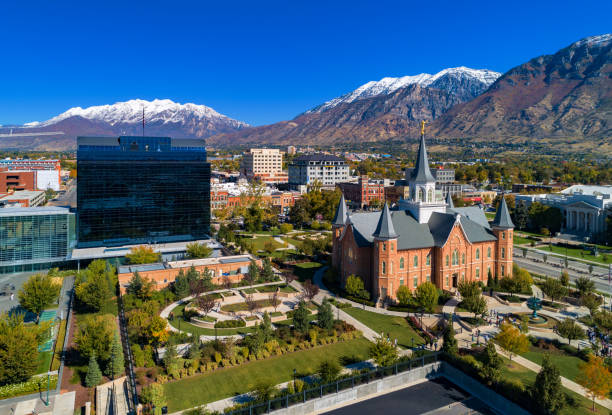
Provo’s revitalizing downtown and BYU campus create dual investment opportunities: stable student housing demand and an emerging professional residential market
2026 Growth Catalysts
- Downtown Provo Center Street mixed-use development continuing
- Qualtrics campus expansion adding professional rental demand
- BYU enrollment growth and campus expansion pushing housing demand further from campus
- Utah Valley Convention Center driving hotel and short-term rental demand
- FrontRunner commuter rail station improving north-south connectivity
Investment Climate
Provo’s investment climate is defined by a dual-track market. The student housing track near BYU offers the best cap rates in Utah County with recession-proof demand, but comes with higher management intensity from student turnover and BYU compliance requirements. The professional and downtown track offers lower initial yields but stronger appreciation as downtown investment continues and the tech workforce grows. Investors who succeed in Provo typically understand which track they are on:
- Student housing investors who master BYU’s approval process, by-the-room leasing, and the annual lease renewal cycle that drives the market
- Downtown appreciation investors who are buying ahead of the continued commercial development along Center Street and University Avenue
- Value-add operators who see older South Provo housing stock as the market’s best BRRRR opportunity at Utah County’s lowest entry prices
- Multi-family investors who recognize that Provo’s older housing stock contains more legal duplexes, triplexes, and fourplexes per capita than almost any other Utah city
Historical Performance
| Period | Market Driver | Avg Annual Appreciation | Key Event |
|---|---|---|---|
| 2010-2015 | BYU enrollment growth, early tech sector formation | 4-6% | Qualtrics founded in Provo; early Silicon Slopes recognition |
| 2016-2019 | Downtown revival, tech sector growth, housing shortage | 8-12% | Downtown Provo Renaissance; Qualtrics growth driving professional demand |
| 2020-2022 | Pandemic migration, BYU enrollment surge, record low inventory | 20-26% | Provo among fastest-appreciating mid-size cities in U.S.; student housing vacancy hit near zero |
| 2023-2024 | Rate adjustment, normalization | 4-8% | Student housing held better than family residential; downtown investment continued |
| 2025-2026 | Rate stabilization, downtown completion, enrollment growth | 9-14% (projected) | BYU enrollment milestone, downtown Center Street developments opening, Qualtrics campus expansion |
Demographic Trends Driving Demand
- BYU Enrollment Engine – 36,000 students who all need housing, most of whom cannot live on the severely limited campus housing stock, creating a structural and permanent off-campus housing shortage
- Mission Return Wave – Thousands of young adults returning from LDS missions every year form households and begin college, creating a predictable annual first-renter cohort unique to Utah
- Young Marriage Culture – BYU’s marriage rate generates consistent demand for 1 and 2 bedroom married student housing, an often-overlooked segment that commands premium rents relative to size
- Qualtrics Professional Base – Headquartered tech workers earning $80,000 to $150,000+ who choose to live in Provo’s improving downtown rather than commute from Lehi or Salt Lake
- UVU Adjacent Demand – Utah Valley University’s 40,000 students in neighboring Orem spill into south and east Provo for housing, broadening the student demand base beyond BYU alone
- Mountain Recreation Appeal – Provo Canyon access to Sundance Resort, American Fork Canyon, and Mount Timpanogos creates year-round outdoor lifestyle appeal that attracts remote workers and young professionals
📚 New to real estate investing? Master the fundamentals with our professional course Learn more →
2. Neighborhood Hotspots
Provo Investment Neighborhood Map
Interactive map of Provo’s investment neighborhoods. Green stars show top investment hotspots, blue circles mark established markets, and orange circles highlight emerging corridors.
Core Investment Areas
Detailed Submarket Analysis: Provo Neighborhoods
| Neighborhood | Price Range | Cap Rate | Growth Drivers | Best Strategy |
|---|---|---|---|---|
| BYU Campus Radius | $500K-$750K | 5.5-7.5% | Near-zero vacancy, by-the-room premium, BYU approval | By-the-room BYU-approved, maximum yield |
| Downtown / Center Street | $380K-$620K | 5.0-6.5% | Downtown revival, Qualtrics proximity, walkability | Urban appreciation, professional tenant targeting |
| BYU South / Bulldog | $450K-$650K | 5.5-7.0% | Student and married housing demand, duplexes | Multi-family, married student housing |
| Joaquin / East Bay | $420K-$620K | 5.0-6.5% | Qualtrics corridor, professional demand, downtown access | Professional rental, appreciation focus |
| Edgemont / East Provo | $550K-$850K | 4.0-5.0% | Mountain views, premium schools, constrained supply | Premium appreciation, luxury family rental |
| North University Ave | $430K-$620K | 5.5-6.5% | Campus to downtown corridor, foot traffic, mixed use | Mixed-use, student and professional blend |
| South Provo / Lakeview | $380K-$520K | 6.0-7.5% | Lowest entry, improving trajectory, downtown spillover | Best cash flow, value-add, BRRRR |
| Riverbottoms / River Road | $420K-$580K | 5.5-6.5% | River access, value-add, family demand | Value-add SFH, family rental |
Expert Insight: “The most consistent money in Provo over the past 15 years has been made by investors who bought multi-bedroom homes within 4 to 6 blocks of BYU campus, obtained the BYU-approved designation, and ran them on by-the-room leases. The vacancy rate on those properties averages under 1 percent annually. Students are lined up for approved housing months before the semester starts. The management is more active than a conventional rental but the economics compensate generously. Nothing else in Utah County produces a 6 to 7.5 percent cap rate on a $600,000 property consistently.” – Brad Larsen, Principal, Utah County Student Housing Partners
3. Property Types
| Investment Goal | Best Property Type | Best Area | Minimum Capital |
|---|---|---|---|
| Maximum Yield | BYU-approved 5-6BR by-the-room | BYU campus radius (north Provo) | $150,000+ |
| Best Cash Flow (no students) | Duplex or triplex | BYU south, downtown adjacent | $140,000+ |
| Best Appreciation | Downtown condo or loft | Center Street, East Bay | $100,000+ |
| Lowest Management | Married student 1-2BR or professional condo | BYU south, downtown | $95,000+ |
Don’t guess the costs. Our Complete Renovation & Remodeling Cost Guide covers 400+ pages of project-by-project breakdowns with real contractor pricing ranges.
4. Cost Analysis
Acquisition Cost Breakdown (Provo)
| Expense Item | Typical Cost | Example ($580,000 Property) | Notes |
|---|---|---|---|
| Down Payment | 25% (investment) | $145,000 | Standard investment loan; house hack with FHA at 3.5% |
| Closing Costs | 2-3% of price | $11,600-$17,400 | Title, escrow, recording; Utah County costs reasonable |
| Home Inspection | $400-$600 | $500 | Older Provo homes (1950s-1970s) near campus need thorough inspection |
| Radon Test | $150-$250 | $200 | Mandatory; Utah County has elevated radon |
| BYU Approval Inspection | $50-$150 | $100 | If seeking BYU-approved status; annual re-inspection also required |
| Initial Repairs / Compliance Upgrades | $5,000-$30,000 | $10,000-$30,000 | BYU-approved requires specific window coverings, laundry, and common area standards; older homes may need significant prep |
| Reserves (6 months) | 6 months expenses | $12,000-$16,000 | Lower needed given minimal vacancy in student housing |
| TOTAL MINIMUM ENTRY | ~30-35% of value | $179,400-$209,200 | BYU-approved target properties require more upfront prep investment but return it through premium rents |
Sample Cash Flow Analysis: BYU-Approved 5BR vs. Downtown Condo vs. South Provo Value-Add
| Item | BYU-Approved 5BR | Downtown Condo (1BR) | South Provo Value-Add |
|---|---|---|---|
| Purchase Price | $600,000 | $420,000 | $440,000 + $60K reno = $500K |
| Monthly Rent | $2,300 (5 rooms × $460) | $1,500 | $1,850 (post-renovation) |
| Property Taxes | -$350/mo | -$245/mo | -$292/mo |
| Insurance | -$130/mo | -$75/mo | -$110/mo |
| HOA / Condo Fee | $0 | -$180/mo | $0 |
| Property Management (10%) | -$230/mo | -$150/mo | -$185/mo |
| Maintenance + CapEx | -$230/mo | -$105/mo | -$148/mo |
| Vacancy | -$46/mo (2%) | -$60/mo (4%) | -$74/mo (4%) |
| Net Operating Income | $1,114/mo | $685/mo | $1,041/mo |
| Mortgage (25% down, 6.5%, 30yr) | -$2,842/mo | -$1,989/mo | -$2,369/mo |
| MONTHLY CASH FLOW | -$1,728 | -$1,304 | -$1,328 |
| Cap Rate | 2.23% | 1.96% | 2.50% |
| Total Return (12% appreciation) | ~22% | ~20% | ~23% |
The house hack path to positive cash flow: An investor who house-hacks a BYU-approved 5-bedroom home using an FHA loan at 3.5% down, occupies one room themselves, and rents the remaining four rooms at $460 each collects $1,840/month while paying approximately $2,700/month in mortgage and expenses. That investor’s effective housing cost is $860/month for a home in one of Utah’s most desirable university neighborhoods, while building equity in a rapidly appreciating asset. This is the most powerful entry strategy in the Provo market.
Expert Insight: “At current rates, the traditional investment loan math on Provo student housing is negative. But that misses the point entirely. The investors who consistently build wealth in this market are the ones who house-hack first, then refinance into an investment loan after 12 months when they can move out. Or they are investors with paid-off properties generating equity they can leverage at lower effective rates. The BYU market is the best collateral in Utah County. Banks love it because vacancy is essentially zero. I have investors who have refinanced Provo student housing four times in 15 years and now own five properties on the equity built from the first.” – Ashley Merkley, BYU Area Investment Specialist
5. Legal Framework
✅ Utah Law Applies, Plus the Critical BYU Approval System
Provo operates under Utah state landlord-tenant law with no additional municipal tenant protections. No rent control, no just-cause eviction requirement, and a 25 to 45 day non-payment eviction timeline. The unique legal variable in Provo is BYU’s housing approval system, which functions as a parallel regulatory layer that landlords must understand and manage separately from state law. BYU-approved status is not legally mandated but commercially essential for properties targeting the premium student housing segment.
Utah State Law Essentials
- No Rent Control: Prohibited statewide. Increase rents freely with proper notice.
- Non-Payment Eviction: 3-day pay-or-vacate notice. Court filing day four. Typical resolution 25 to 45 days.
- Lease Termination: 15-day notice for month-to-month. Fixed-term leases expire naturally.
- Security Deposits: No statutory cap. Return within 30 days with itemized accounting.
- Tenant Screening: Full landlord discretion within fair housing requirements.
- Semester Leases: Fixed-term leases ending at semester end (April 30, August 31) are fully enforceable in Utah. Students must honor the full lease term even if they leave mid-semester.
BYU Housing Approval System
BYU’s Approved Housing Program is the most important operational variable for near-campus investors:
- What BYU-approval means: The university has inspected and certified that the property meets standards for gender-separate housing, curfew compliance infrastructure, laundry access, common areas, and safety.
- Approval process: Submit application to BYU Off-Campus Housing office. Inspection scheduled within a few weeks. Annual re-inspection required to maintain status.
- Rent premium: Approved housing commands 10 to 20 percent higher rents than non-approved in the same location because BYU actively directs freshmen and students under 25 to seek approved housing.
- Gender separation: BYU-approved housing must be gender-separate. Men’s housing and women’s housing are separate certifications. Cannot mix genders in the same building.
- Curfew infrastructure: Approved housing must have lockable common area access; BYU curfew is midnight for most students.
- Annual renewal: Approval must be renewed each year. Failure to maintain standards results in de-listing, which immediately reduces rent potential and demand.
⚠️ BYU Approval Note: Buying a property that is currently BYU-approved does not guarantee it will remain approved under your ownership. The new owner must re-apply and pass inspection. Verify current approval status and understand exactly what physical upgrades were required to obtain it before purchasing.
| Regulation | Provo / Utah | Unique to Provo | Investor Impact |
|---|---|---|---|
| Eviction | 3-day notice; 25-45 day total | BYU students tend to honor leases; evictions rare | Lowest eviction rate of any Utah County submarket |
| BYU Housing Approval | Not legally required | Commercially essential for premium student housing tier | 10-20% rent premium and significantly lower vacancy |
| Semester Leases | Fully enforceable fixed-term leases | Semester-aligned April 30 / August 31 end dates standard | Predictable annual renewal cycle; plan for turnover costs in May and September |
| Rent Control | Prohibited statewide | No additional Provo city restrictions | Can raise rents each semester if desired |
| Gender Separation | Not legally required | Required for BYU-approved status | Must choose which gender your approved property serves; cannot convert mid-year |
6. Step-by-Step Provo Investment Playbook
Choose Your Provo Strategy
BYU Student Housing (Maximum Yield)
Buy a 4 to 6 bedroom home within 1 mile of BYU campus. Obtain BYU-approved status. Lease by the room on semester leases. Highest yields in Utah County with near-zero vacancy. Requires active management and BYU compliance knowledge.
Downtown Appreciation (Professional Focus)
Buy a condo or loft in downtown Provo’s revival corridor. Target Qualtrics employees and young professionals. Best appreciation trajectory in the city with lower management intensity than student housing.
Multi-Family Cash Flow
Buy an existing duplex, triplex, or fourplex in student-adjacent areas. Best cash flow in Provo outside of BYU-approved housing. Older Provo has more multi-family density than most Utah cities. Also suitable for house hacking.
South Provo Value-Add / BRRRR
Buy affordable south Provo homes below $500,000. Renovate kitchens and bathrooms. Refinance equity. Repeat. Best cash flow and BRRRR path in Utah County at Provo’s lowest entry price points.
Build Your Provo Team
- BYU Student Housing-Experienced Agent: Must know the BYU approval process, which neighborhoods qualify, and how to underwrite by-the-room rents. An agent without specific BYU housing experience will significantly undervalue or overvalue near-campus properties.
- BYU Off-Campus Housing Office: Contact directly before purchasing any property for which you intend to seek approval. They will tell you upfront whether a property is likely to qualify and what upgrades would be required.
- Provo-Experienced Property Manager: Student housing management in Provo is a specialized skill. By-the-room leasing, semester renewal cycles, BYU compliance tracking, and managing multiple young tenants in a single unit requires managers who do this specifically. Ask how many BYU-approved properties they currently manage.
- Utah County Real Estate Attorney: For LLC structuring and lease review. Student leases should have co-signer requirements (parents) on every individual room lease, which requires specific lease language.
Expert Tip: The most effective way to underwrite a near-campus Provo property is to call the BYU Off-Campus Housing office and ask three questions: Is this address in an approved zone? What would need to change to qualify? How many women’s versus men’s approved units are currently needed? The answers will tell you more about the property’s investment potential than any spreadsheet analysis.
Provo-Specific Due Diligence
Physical Checks
- Radon test (mandatory; elevated in Utah County)
- Plumbing condition (older near-campus homes often have galvanized pipes)
- Electrical panel capacity (older homes may have 100-amp service inadequate for modern loads)
- Bathroom count versus bedroom count (BYU-approved requires adequate bathroom ratios)
- Laundry access (in-unit or easily accessible on-site; BYU requirement)
- Window coverings condition (blinds and privacy are BYU requirements)
- Basement bedroom egress windows (if basement bedrooms are planned)
BYU and Market Checks
- Confirm current BYU approval status and gender designation
- Review past BYU inspection reports for ongoing compliance issues
- Verify distance from BYU campus (half-mile, 1-mile zones have different demand profiles)
- Check for any Provo city rental licensing requirements
- Review current rent levels against BYU Off-Campus Housing market data
- Confirm parking availability (students often have cars; inadequate parking is a leasing obstacle)
Managing BYU Student Housing
Student housing management in Provo has a predictable annual rhythm that successful investors plan around:
- October to December: Peak renewal season. Reach out to current tenants about renewing for the following year. Many students commit to housing 4 to 6 months in advance, so early outreach is critical to avoid vacancies in the spring.
- January to February: Fill any vacancies for spring semester through BYU’s housing website, KSL classifieds, and the university’s approved housing search portal.
- April 15 to May 1: Spring semester move-out. Budget for carpet cleaning, repainting, and small repairs. Typical turnover cost is $500 to $1,500 per bedroom annually.
- May to August: Summer housing is a separate rental period. BYU has summer semester but enrollment is lower. Decide whether to rent summer on a short-term basis or leave rooms vacant for fall cleaning.
- August 25 to September 5: Fall semester move-in. Biggest occupancy event of the year. Ensure all rooms are ready, inspected, and keys distributed before this window.
- Co-signer requirement: Always require a parent or guardian co-signer on every individual room lease. This dramatically reduces collection issues and late payment rates in student housing.
7. Financing Options for Provo
| Loan Type | Down Payment | Rate Premium | Best For | Provo Note |
|---|---|---|---|---|
| Conventional Investment | 25% | +0.5-0.75% | W-2 investors | Most Provo properties within conforming limits; standard investment pricing applies |
| FHA House Hack | 3.5% | Standard + MIP | Owner-occupant investors | Best entry strategy in Provo. Owner-occupy one room of a BYU-approved 5BR; rent the other 4. Dramatically improves cash flow at 3.5% down versus 25%. Must live there 12 months minimum. |
| FHA Multi-Family (2-4 units) | 3.5% | Standard + MIP | Duplex and triplex house hackers | Provo’s duplex and triplex density makes this ideal; owner-occupy one unit while renting others; very low entry capital |
| DSCR Loan | 25-30% | +1.5-2.5% | Self-employed, portfolio builders | Well-managed BYU-approved properties with by-the-room rent documentation may approach 1.0x DSCR; lenders vary on how they treat by-the-room income |
| Portfolio / Bridge | 20-30% | +1-2% | BRRRR operators, multiple properties | Value-add south Provo BRRRR strategy; hard money available from Utah County-focused lenders |
| Conventional (Multi-Family) | 25% | +0.5-1% | Duplex to fourplex investors | Provo’s multi-family stock qualifies for residential multi-family lending; DSCR often better than SFH due to multi-unit income |
DSCR and By-the-Room Lending Note: DSCR lenders vary significantly in how they treat by-the-room rental income. Some will underwrite the full 5-room income on a BYU-approved property; others will only credit a single whole-unit rent. Before financing a BYU student housing property, ask your lender specifically how they treat by-the-room income documentation. A lender who understands the market will use BYU Off-Campus Housing market data as comparable income support. A lender who does not will undervalue the income significantly and force you to an alternative financing structure.
8. Frequently Asked Questions

Knowledge Quiz: Provo Real Estate Investment
Open Quiz
5 quick questions on what you just learned about Provo and BYU area investing
1) What makes BYU-approved housing different from standard Provo rentals and why does it command higher rents?
Answer: C
BYU-approved housing is certified by the university to meet specific operational standards including gender-designated spaces, curfew-compliant infrastructure, laundry access, and safety standards. BYU actively directs students (especially freshmen and those under 25) to seek approved housing through its Off-Campus Housing search portal. This creates a premium demand tier with near-zero vacancy and rents 10 to 20 percent above non-approved properties in the same location. It is a private certification system that functions as a powerful commercial advantage for landlords who obtain and maintain it.
2) What is the guide’s recommended best entry strategy for first-time investors in Provo?
Answer: A
The guide explicitly identifies the FHA house hack of a BYU-approved 5-bedroom home as the most powerful entry strategy in Provo. At 3.5% down on a $600,000 property, the investor occupies one room while renting four rooms at $460 each, collecting $1,840/month. Their effective housing cost is approximately $860/month while building equity in a rapidly appreciating BYU-area asset. The FHA down payment of approximately $21,000 compares very favorably to the $150,000 required for a 25% conventional investment down payment on the same property.
3) What is the most important operational requirement for maintaining BYU-approved housing status?
Answer: D
BYU-approved status must be renewed annually through re-inspection by the university’s housing office. The specific requirements that must be continuously maintained include gender-designated common areas and bedrooms (men’s and women’s housing are separate certifications), curfew-compliant lockable common area access, on-site or nearby laundry access, proper window coverings on all bedroom windows, and adequate bathroom ratios. Failure to maintain any of these standards during the annual re-inspection results in de-listing, which immediately reduces both demand and rents.
4) How does Provo’s downtown revival create investment opportunity beyond the student housing market?
Answer: B
Downtown Provo’s revival is anchored by the Qualtrics headquarters and a growing independent restaurant, arts, and entertainment scene. This has created a second investment tier targeting young professionals (particularly Qualtrics and tech sector employees) who want walkable urban living at Utah County prices. These tenants are distinct from BYU students, have higher incomes, and are driving condo and loft appreciation in the Center Street and East Bay corridors that is separate from and additive to the near-campus student housing dynamic.
5) What is the key seasonal operational challenge in BYU student housing that investors must plan for?
Answer: C
The guide outlines the annual rhythm of BYU student housing management: lease renewals should be initiated in October through December for the following year, as students commit to housing 4 to 6 months in advance. Semester end in late April and late August triggers move-out, cleaning, touch-up painting, and small repairs at each cycle. Annual turnover cost runs $2,000 to $6,000 depending on unit size. The proactive renewal outreach in October is the most important operational task because waiting until spring to fill vacancies means competing against hundreds of other landlords simultaneously in a very short window.
Work With a Local Expert in Provo
We are building a verified network of real estate professionals across every market we cover.

About Our Expert Network
We are finalizing partnerships with verified real estate professionals across every market featured on Builds and Buys. Each expert is selected for their hands-on investment experience and commitment to helping investors make sound decisions.
Our local Provo specialists offer:
- Proven experience with BYU student housing, the approval process, and by-the-room leasing
- Deep knowledge of near-campus pricing, BYU approval zone mapping, and seasonal lease cycles
- Downtown Provo investment and Qualtrics corridor expertise
- Access to off-market near-campus properties and multi-family opportunities
- Full transaction support from search through closing
- Student housing property management referrals with BYU compliance expertise
Services Covered
- Property sourcing and acquisition
- Investment analysis and underwriting
- Buyer representation
- BYU approval process guidance
- By-the-room lease structuring
- Value-add and renovation guidance
- Legal and title referrals
- Financing and lender connections
- Student housing property management
- Insurance and inspection referrals
- 1031 exchange coordination
- Exit strategy planning
Get Connected or Join Our Network
Looking for a Provo student housing or investment specialist? Reach out and we will connect you with the right professional.
Are you a real estate professional specializing in BYU student housing, downtown Provo, or Utah County investment? We are always expanding our network.
Contact us at support@buildsandbuys.com
Find Specialized Provo Real Estate Professionals
Ready to Invest in Provo?
Provo is one of the most strategically interesting investment markets in the western United States. The BYU student housing segment offers yields that are genuinely rare in any western market, backed by a demand base that has shown near-zero sensitivity to economic cycles over decades. The downtown revival corridor offers appreciation driven by a professional renaissance that is still mid-cycle. The south Provo value-add market offers Utah County’s best cash flow at the region’s lowest entry prices. These three entirely different investment theses coexist within the same city, each with its own risk profile and operational requirements. Investors who understand which thesis they are executing and build the right team for it will find Provo one of the most rewarding long-term markets in Utah.
Continue Your Research
Utah State Guide
See how Provo compares to other Utah markets including Salt Lake City, Lehi, St. George, and Park City.
Orem Guide
Compare Provo to neighboring Orem’s UVU market and Geneva lakefront development investment opportunity.
144-Lesson Course
University-level real estate education covering financing, law, strategy, and management.
For further guidance, explore our State-by-State Investor guides, browse our expert articles, or follow our Step-by-Step Investment Guide.