
Powell Wyoming Real Estate Investment Guide For 2026
A comprehensive guide for investors targeting the Bighorn Basin’s agricultural and educational hub, where Northwest College’s steady enrollment, Heart Mountain’s historic significance, Yellowstone proximity 75 miles west, and one of Wyoming’s most stable agricultural economies combine to create a cash flow investment with unusual demand diversification for a town of 6,400
Quick answers: Top 5 most searched Powell investment questions ▼
Migration data: Where people are moving from to Powell ▼
1. Powell Market Overview
Market Fundamentals
Powell is the Bighorn Basin’s most underrated investment market. Sitting 25 miles east of Cody on US-14A, Powell has historically been overlooked by outside investors who go directly to Cody’s higher-profile tourism economy. That oversight has kept Powell’s prices accessible while the town’s genuine economic foundation, anchored by Northwest College, Bighorn Basin agriculture, and the growing Yellowstone corridor economy, has quietly delivered consistent appreciation and stable rental demand.
- Population: 6,400 city, 29,000 Park County
- Northwest College: Approximately 1,500 students, 300 employees; Powell’s most important economic anchor
- Agriculture: Bighorn Basin’s extensive irrigated farming; sugar beets, hay, barley, and livestock
- Powell Valley Healthcare: Regional hospital providing stable healthcare employment
- Heart Mountain: National Historic Landmark; growing heritage tourism anchor
- Yellowstone Distance: 75 miles to Yellowstone’s east entrance via Chief Joseph Scenic Byway
Powell is not trying to be Cody. It is a different kind of investment: stable college and agricultural demand at below-Cody prices, with gradual appreciation from Yellowstone corridor growth and the unstoppable dynamic of Cody becoming increasingly expensive.
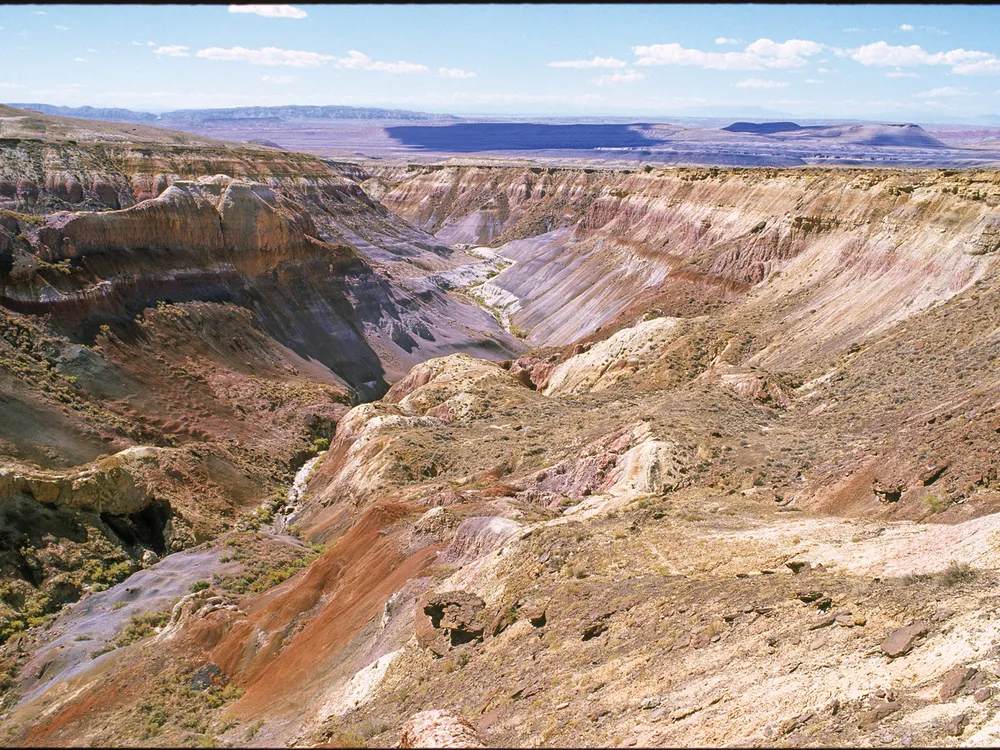
Heart Mountain dominates the Powell skyline while the Bighorn Basin’s irrigated farmland stretches in every direction, creating a setting that draws the agricultural professionals and educators who anchor Powell’s rental market
2026 Economic Outlook
- NWC enrollment stable with growing dual-credit and workforce programs
- Cody overflow buyers increasingly looking east to Powell
- Heart Mountain Interpretive Center visitation growing annually
- Bighorn Basin agriculture stable; irrigation infrastructure maintained
- Yellowstone corridor tourism lifting regional employment broadly
The Powell Investment Thesis: The Cody Alternative
Powell’s investment case in 2026 rests on a simple but powerful dynamic: Cody is becoming too expensive for the working professionals, educators, and agricultural managers who actually live and work in Park County year-round. As Cody’s median home price approaches $500,000 to $600,000 driven by tourism and lifestyle migration, the professionals who actually run the Bighorn Basin economy are increasingly finding Powell’s $295,000 median to be the rational choice. This price gap is Powell’s primary appreciation driver and it is structural.
- The NWC stability flywheel. Northwest College processes approximately 1,500 students annually and employs 300 people. Faculty and staff are educated, well-paid professionals who need quality housing for 5 to 10 year careers. Students create affordable rental demand near campus. The college’s workforce development and dual-credit programs are growing, meaning NWC’s economic footprint in Powell is expanding rather than static.
- Bighorn Basin agricultural stability. Park County’s irrigated agriculture has operated for over 100 years. Sugar beet, hay, barley, and livestock operations employ agricultural managers, equipment operators, and processing workers who need year-round housing in Powell. Unlike energy sector employment, agricultural employment in the Bighorn Basin does not track commodity prices in the same volatile way.
- Cody overflow appreciation driver. Every time a Cody home sells for $550,000 to a lifestyle buyer from Denver or Seattle, it reprices the expectation for what Wyoming outdoor lifestyle living costs. Park County professionals who cannot afford Cody increasingly turn to Powell. This is the same dynamic that drove Douglas appreciation as Casper became more expensive, and Riverton appreciation as Lander tightened.
- Heart Mountain heritage tourism. The Heart Mountain Interpretive Center is a nationally significant Japanese American incarceration site that draws an educated, historically-interested visitor demographic from across the country. These visitors discover Powell’s quality of life and affordable housing, creating a small but growing stream of relocation inquiries that supplements the professional migration.
Historical Performance
| Period | Driver | Avg Appreciation | Key Event |
|---|---|---|---|
| 2010-2018 | NWC and agricultural stability | 2-4% | Steady; Powell largely unknown outside Park County; consistent NWC demand |
| 2019-2021 | Cody prices rising; Powell discovery | 5-8% | Cody median approaching $450K; Park County professionals begin choosing Powell |
| 2022-2023 | Pandemic migration, Cody overflow | 9-13% | Powell median rose from $225K to $285K; Cody overflow buyers prominent |
| 2024-2025 | Sustained Cody overflow, NWC stability | 5-8% | Market normalizing at elevated level; demand from both NWC and Cody overflow consistent |
| 2026 | Cody gap widening, Yellowstone corridor | 5-8% projected | As Cody approaches $600K median, Powell gap widens; structural appreciation driver strengthens |
📚 New to real estate investing? Master the fundamentals with our professional course Learn more →
2. Neighborhood Hotspots
| Neighborhood | Price Range | Cap Rate | Key Driver | Best Strategy |
|---|---|---|---|---|
| NWC Campus Area | $265K to $360K | 6.5 to 8% | Faculty, staff, students; year-round cycle-independent demand | College-anchored hold; lowest vacancy in Powell |
| Downtown / Historic Core | $255K to $345K | 6.5 to 7.5% | Agricultural professionals, county workers, long-term residents | Quality buy-and-hold; best tenant profile balance |
| Heart Mountain Corridor | $280K to $420K | 6 to 7% | Heritage tourism, view premium, Cody overflow | Appreciation play; Cody overflow positioning |
| East Side Residential | $270K to $380K | 6 to 7% | Agricultural families, NWC staff, newer construction | Remote investor preferred; lower maintenance |
| Healthcare Area | $265K to $360K | 6 to 7% | Physicians, nurses, allied health; stable employment | Healthcare worker focus; very low turnover |
| Heart Mountain / Cody Corridor (Rural) | $280K to $600K | 5 to 7% mixed | Cody overflow, Yellowstone corridor, rural lifestyle | Appreciation-led; Cody price gap play |
Expert Insight: “The NWC faculty tenant is the best tenant I manage in Park County. These are PhDs and master-level instructors earning $55,000 to $80,000 a year who treat the home like their own, stay for four or five years, and never miss a payment. The challenge is finding them before they find a house to buy, because Powell’s prices are low enough that a lot of them eventually buy. I always tell landlords, offer a lease to an NWC faculty member and if they renew twice they are probably renting for life because they never quite pull together the down payment. That is your ideal tenant scenario.” – Linda Forsythe, Park County Real Estate Group
3. Property Types
NWC Faculty and Staff Target Home
The primary Powell strategy. Quality home near the NWC campus. Market specifically to faculty and staff through NWC’s HR and employee housing board. NWC professionals earn $55,000 to $80,000, are credit-worthy, and typically stay 3 to 6 years. This is Powell’s equivalent of Lander’s NOLS faculty strategy: same educated professional demographic, same long tenancy, lower price point.
NWC Student Housing
By-the-room rental properties near campus. NWC’s 1,500-plus enrollment creates consistent off-campus demand. Healthcare, nursing, and ag science programs attract adult learners who prefer house rentals over dormitories. Higher gross income than standard leases with more management involvement.
Agricultural Professional Housing
Quality homes targeting Bighorn Basin agricultural managers, agribusiness professionals, and extension service employees. These workers earn $60,000 to $90,000, have stable multi-year employment, and value quality housing near Powell’s amenities and agricultural service infrastructure.
Cody Overflow Value Positioning
Properties specifically marketed as the quality alternative to Cody at 35% lower prices. As Cody professionals are priced out of their own housing market, Powell becomes the logical choice. Market these homes with explicit Cody-to-Powell price comparisons and Yellowstone corridor lifestyle positioning.
Heart Mountain Heritage Tourism STR
Properties near Heart Mountain or the Interpretive Center corridor can capture growing heritage tourism visitors. The Heart Mountain Interpretive Center draws an educated, historically-oriented visitor demographic who prefer home-based accommodation. Growing season is May through October with peak in summer months.
Powell Valley Healthcare Worker
Properties near Powell Valley Healthcare target physicians, nurses, and allied health professionals who are among Powell’s most stable long-term tenants. The hospital draws professionals who relocate to Powell and typically stay 5 to 10 years, making healthcare worker housing one of Powell’s lowest-turnover rental strategies.
Our Complete Renovation & Remodeling Cost Guide covers 400+ pages of real contractor pricing ranges.
4. Cost Analysis
Acquisition Cost Breakdown ($295,000 Property)
| Item | Typical Cost | Example | Notes |
|---|---|---|---|
| Down Payment (25%) | 25% | $73,750 | Standard investment; 20% possible with strong credit |
| Closing Costs | 2 to 3% | $5,900 to $8,850 | Wyoming lean closing; Park County title fees modest |
| Inspection + Radon | $500 to $700 | $600 | Wyoming elevated radon; full inspection on any older Powell home |
| Initial Repairs | 0 to 7% | $0 to $20,650 | Older Powell homes may need HVAC, roof, and plumbing updates |
| Reserves (6 months) | 6 months | $8,000 to $11,000 | Powell’s NWC anchor provides better liquidity than most small Wyoming cities |
| TOTAL MINIMUM ENTRY | ~30 to 35% | $88,250 to $114,800 | Reasonable for Powell’s quality and demand stability |
Sample Cash Flow: NWC Area 3BR SFH (Faculty Tenant)
| Item | Monthly | Annual | Notes |
|---|---|---|---|
| Gross Rent | $1,500 | $18,000 | 3BR, NWC area, quality condition, faculty tenant |
| Less Vacancy (6%) | -$90 | -$1,080 | Conservative; NWC faculty tenants typically stay 3 to 6 years |
| Property Taxes | -$148 | -$1,770 | ~0.6% of $295,000; Wyoming’s low effective rate |
| Insurance | -$101 | -$1,212 | Landlord policy; Wyoming wind coverage important |
| Property Management (10%) | -$150 | -$1,800 | Local Powell manager; NWC tenant quality reduces management complexity |
| Maintenance + CapEx (7%) | -$105 | -$1,260 | Post-update home with quality systems |
| Net Operating Income | $906 | $10,878 | Before mortgage; cap rate 3.69% on $295K (full management) |
| Mortgage ($221,250 at 7%, 30yr) | -$1,473 | -$17,676 | 25% down conventional investment loan |
| Cash Flow (managed) | -$567 | -$6,798 | Negative with professional management at current rates |
| Cash Flow (self-managed, 4% vacancy) | -$147 | -$1,764 | Near-neutral with quality faculty tenant and self-management |
| Annual Appreciation (7%) | +$20,650 | At 7% on $295,000; within recent Powell trajectory | |
| Total Return on $73,750 Down (7% apprec.) | ~26% | Leveraged return at 7% appreciation; compelling for a stable market |
Powell’s cash flow math resembles Evanston and Lander: slightly negative with full professional management at current rates, near-neutral with self-management and a quality NWC faculty tenant. The investment case is primarily appreciation-driven, with the NWC anchor providing a uniquely stable cash flow foundation. At 7% appreciation, the leveraged return on the $73,750 down payment approaches 26% in year one, a compelling figure for a market with Powell’s tenant quality stability.
5. Legal Framework
Wyoming’s Full Landlord Advantage in Powell
Powell and Park County operate under Wyoming’s landlord-tenant framework with no local overlays. No rent control, no just cause eviction requirement, no rental registration, and no STR ordinance. The same Wyoming framework that makes every city in this guide investable applies fully and cleanly in Powell.
Wyoming Landlord-Tenant Essentials
- No Rent Control: Wyoming prohibits rent control statewide. Powell landlords raise rents freely as Cody overflow and NWC market rates rise.
- Eviction: 3-day notice to pay or quit. File unlawful detainer after 3 days. Park County courts process efficiently. Full eviction in 3 to 6 weeks.
- No Just Cause: Month-to-month ended with 30-day notice, no cause required.
- Security Deposits: Maximum 1.5 months rent. Return within 30 days with itemized deductions.
- Tenant Screening: Full landlord discretion subject to federal Fair Housing.
Powell-Specific Considerations
- No Rental Registration: City of Powell does not require landlord registration or operating licenses. Zero compliance overhead.
- No STR Ordinance: No specific STR regulations as of 2026. Wyoming lodging tax (4%) applies to stays under 30 days. Register with Wyoming DOR before any STR operation.
- Irrigation Water Rights: Some older Powell area properties have irrigation water rights associated with Bighorn Basin water allocations. Verify with Park County title company for any agricultural-adjacent properties.
- Property Taxes: Park County effective rate approximately 0.6% of assessed value; Wyoming’s standard low rate.
Useful Resources
- City of Powell: cityofpowell.com
- Park County Assessor: parkcounty.us
- Wyoming DOR: revenue.wyo.gov
- Wyoming AG Landlord Guide: ag.wyo.gov
6. Step-by-Step Powell Investment Playbook
Choose Your Powell Strategy
NWC Faculty Anchor Rental
Acquire a quality home near NWC campus. Register with NWC’s employee housing board. Market specifically to faculty and staff. Lock in an NWC professional at $1,400 to $1,700 per month on a multi-year lease. This is Powell’s lowest-vacancy, highest-quality tenant strategy and the most direct parallel to Lander’s NOLS faculty approach.
Agricultural Professional Target
Acquire a quality east side or downtown home with garage for equipment. Market to Bighorn Basin agricultural managers, extension service workers, and agribusiness professionals. These tenants are career-stable, well-paid, and have long-term ties to Park County agriculture.
Cody Overflow Appreciation Play
Acquire a property in the Heart Mountain corridor between Powell and Cody. Position as “Cody quality at Powell prices” with explicit price comparisons. As Cody’s median approaches $600,000, Powell’s $295,000 median becomes increasingly compelling for Park County professionals. Best appreciation upside in Powell.
Park County Portfolio Play
Acquire one Powell stability property and one Cody appreciation property. Powell provides NWC-anchored stable demand; Cody provides Wyoming’s strongest lifestyle appreciation. The paired approach captures both market profiles at combined capital requirements that are more accessible than two Cody properties alone.
Build Your Powell Team
- NWC HR and Employee Housing: Contact Northwest College’s human resources or employee services department before making your first offer. NWC often maintains housing referral lists for incoming faculty. Establishing this relationship is the highest-leverage action a Powell investor can take before buying.
- Local Real Estate Agent: Powell has a small but active agent market. Find one who specifically has investment experience and understands the NWC faculty tenant premium and the Cody overflow dynamic.
- Property Manager: Powell has local property management available, unlike the very small Wyoming markets. Interview managers specifically about their NWC tenant placement experience and their relationships with the agricultural professional community.
- Contractor: Powell has better contractor availability than Worland or Newcastle. Establish your maintenance contractor before your first purchase, as quality contractors in Powell are busy.
- Park County Agricultural Network: The Bighorn Basin agricultural community is tight-knit. A landlord who attends local agricultural events and is known in the farming community receives word-of-mouth referrals for agricultural professional tenants that no advertising platform can replicate.
Powell-Specific Due Diligence
Physical Due Diligence
- Radon test: Wyoming elevated; test every property
- Heating: Bighorn Basin winters are cold; inspect furnace and insulation
- Wind: Northeast Wyoming wind is significant; inspect for hail and wind damage on roof
- Irrigation rights: Verify for any agricultural-adjacent properties
- Broadband: Confirm fiber or cable for NWC faculty remote work needs
- Foundation: Bighorn Basin soils can have expansive clay issues; inspect for settling
Market Due Diligence
- Verify NWC employee housing demand through college HR contact before purchase
- Research Cody comparable prices to understand the Powell price gap
- Confirm rental comps through local property manager; Powell data is thin on national platforms
- Model base case at 6 to 7% vacancy; stress case at 12%
- Check Chief Joseph Scenic Byway and US-14A access for Cody corridor tenants
- Verify Heart Mountain Interpretive Center visitation trends for STR targeting
Marketing to NWC Faculty and Agricultural Professionals
- NWC faculty bulletin board and HR referral: NWC’s HR department and campus housing board are the most direct channels. Faculty search for housing before arriving in Powell; being on the college’s approved landlord list places your property in front of the entire incoming faculty cohort every hiring season.
- Academic year timing: NWC’s hiring cycle means faculty tenants search most actively in April through June for August move-ins. List NWC-area properties in April to capture this demand surge rather than renting to the first available tenant in a slower month.
- Agricultural professional networks: The Bighorn Basin Farm Bureau, the Park County agricultural extension office, and local cooperative meetings are where agricultural professionals hear about rental properties. A landlord who attends these events and is known as a quality housing provider receives referrals that no digital marketing can match in this community.
- Cody-to-Powell price comparison marketing: For properties in the Cody overflow corridor, lead with explicit price comparisons. “Quality home in Park County at 40% below Cody prices, 25 minutes from downtown Cody” is the most effective single sentence in Powell marketing for this target demographic.
7. Financing Options for Powell
| Loan Type | Down Payment | Rate Premium | Best For | Powell Note |
|---|---|---|---|---|
| Conventional Investment | 25% | +0.5 to 0.75% | W-2 income, strong credit | All Powell residential properties within conforming limits; most common approach |
| DSCR Loan | 25 to 30% | +1.5 to 2.5% | Self-employed, portfolio builders | Powell’s 6 to 7.5% cap rates are borderline for DSCR at current rates; verify with lender; city size of 6,400 passes most lender minimums |
| Portfolio Loan | 20 to 25% | +0.75 to 1.5% | Multiple properties, relationship banking | Park County community banks understand both Powell and Cody; portfolio lending across both markets possible |
| Hard Money (Bridge) | 15 to 25% | 9 to 12% rate | Value-add acquisitions | Wyoming and Montana hard money lenders serve Powell; Billings-based lenders most familiar with Bighorn Basin |
| USDA Rural Loan | 0% (owner-occupied) | Standard + fee | Owner-occupant investors | Powell itself may qualify; verify at usda.gov; rural areas around Powell definitely qualify |
Powell Financing Note: Powell at 6,400 residents comfortably passes most national DSCR lender minimum population requirements. The challenge is cap rate: 6 to 7.5% is marginal for DSCR qualification at current interest rates, similar to Evanston and Lander. Investors with strong W-2 income will find conventional financing the most straightforward path given Powell’s low absolute loan amounts on $295,000 properties. For Park County investors who want both Powell and Cody exposure, Park County community banks are the best relationship for portfolio lending across the two adjacent markets.
8. Frequently Asked Questions

Knowledge Quiz: Powell, Wyoming Real Estate Investment
Open Quiz
5 quick questions on what you just learned about investing in Powell
1) Why is Northwest College described as a counter-cyclical economic anchor for Powell?
Answer: C
Community college enrollment is a well-documented counter-cyclical phenomenon: when recessions hit and workers lose jobs or see incomes fall, enrollment in community college programs increases as people seek new skills and credentials. This means NWC’s enrollment and employment base tends to hold or grow during the Wyoming energy downturns that contract Gillette’s and Casper’s employment bases. Powell’s most important employer therefore provides meaningful protection against the economic cycles that drive boom-and-bust in pure energy markets.
2) What is the “Cody overflow” investment thesis for Powell?
Answer: B
The Cody overflow thesis is a structural appreciation driver: as Cody’s lifestyle migration pushes prices toward $600,000, the professionals who actually run the Bighorn Basin economy cannot afford Cody and turn to Powell’s $295,000 median. The same pattern drove Douglas appreciation as Casper became expensive, and Riverton appreciation as Lander tightened. Powell is earlier in this cycle than either of those comparisons, suggesting meaningful runway as the Cody-Powell gap continues to widen.
3) What is Powell’s parallel to Lander’s NOLS faculty strategy?
Answer: A
Both Lander and Powell have anchor institutions, NOLS and NWC respectively, that employ educated professionals who are genuinely ideal tenants: creditworthy, stable, care for properties, and stay for multi-year tenancies. The strategies are parallel: contact the institution’s HR before buying, market specifically to incoming employees, and lock in faculty or staff tenants at above-market rents that reflect their income levels. The difference is price: Powell NWC faculty properties at $295,000 are significantly more accessible than Lander NOLS properties at $375,000.
4) What makes Heart Mountain historically significant for Powell beyond its geological uniqueness?
Answer: D
Heart Mountain Relocation Center incarcerated over 10,000 Japanese Americans between 1942 and 1945, making it Wyoming’s third-largest “city” at the time. The Heart Mountain Wyoming Foundation’s Interpretive Center is nationally recognized for its scholarship and programming, drawing an educated, historically-oriented visitor demographic from across the country. These visitors discover Powell’s quality of life and affordability, creating a small but growing relocation pipeline that supplements the NWC and agricultural professional migration.
5) What is the recommended academic calendar timing for marketing to NWC faculty tenants in Powell?
Answer: B
NWC and most community colleges complete the majority of their academic-year faculty hiring in spring, with positions announced and accepted between March and May for August start dates. Faculty who have just accepted offers at NWC are actively searching for housing in Powell between April and June. Landlords who list their NWC-area properties in April and who are registered with NWC’s employee housing board capture this concentrated demand surge from the year’s highest-quality incoming faculty cohort. Listing in September when the academic year has already started means competing for a much smaller pool of late-arriving faculty.
Work With a Local Expert in Powell
We are building a verified network of real estate professionals across every market we cover.

About Our Expert Network
We are finalizing partnerships with verified real estate professionals across every market on Builds and Buys. Each expert is selected for their investment experience, local knowledge, and commitment to sound decisions.
- Experience with NWC faculty and agricultural professional tenant placement
- Deep knowledge of Powell and Cody market dynamics and the Cody overflow thesis
- Understanding of Park County’s Park County portfolio opportunities
- Full transaction support from search through closing
Get Connected or Join Our Network
Looking for a local expert in Powell or the Park County market? We will connect you with the right professional.
Contact us at support@buildsandbuys.com
Find Specialized Wyoming Real Estate Professionals
Ready to Invest in Powell?
Powell is Park County’s quiet story. While Cody collects the magazine coverage and the lifestyle buyer attention, Powell has been delivering what actually matters for investors: consistent NWC-anchored rental demand, stable agricultural employment, and appreciation driven by the inexorable dynamic of Cody becoming more expensive every year. The Heart Mountain skyline, the Bighorn Basin’s irrigated farmland, and the college town energy of a community that punches above its weight in education and culture have created something that patient investors recognize: a market with structural appreciation drivers, premium tenant demographics, and prices that still have meaningful room to run. Powell does not need to become the next Cody. It just needs to keep being itself as Cody keeps becoming more expensive.
Continue Your Research
Wyoming State Guide
See how Powell compares to Cody, Sheridan, and other Wyoming markets.
Step-by-Step Invest Guide
Complete framework for building a real estate investment strategy from scratch.
144-Lesson Course
University-level real estate education covering financing, law, strategy, and management.
For further guidance, explore our State-by-State Investor guides, browse our expert articles, or follow our Step-by-Step Investment Guide.



