Peoria Arizona Real Estate Investment Guide For 2026
A comprehensive resource for investors targeting one of the Northwest Valley’s most established and fastest-growing communities, where Lake Pleasant recreation, top employer diversification, and affordable entry prices create a compelling long-term investment case
Quick answers: Top 5 most searched Peoria investment questions ▼
Migration data: Where people are moving from to Peoria ▼
In This Guide
Click on any section to navigate directly to that content
1. Peoria Market Overview
Market Fundamentals
Peoria is the Northwest Valley’s most balanced and established investment market, offering what neither Glendale nor Surprise can fully deliver: a mature employment base, a genuine lifestyle differentiator in Lake Pleasant, a diversified community spanning everything from affordable south Peoria to the premium Vistancia master-planned development, and consistent appreciation with better cash flow than the East Valley. The city covers an extraordinary 175 square miles, making it one of Arizona’s geographically largest municipalities and ensuring continued development runway for years ahead.
Key economic indicators defining Peoria’s investment case:
- Population: 200,000+ and growing steadily with Northwest Valley expansion
- Major Employers: USAA (regional operations), Arrowhead Regional Medical Center, Peoria Unified School District, CVS Health, Subaru of America regional center, Fender Musical Instruments (HQ)
- Median Household Income: $78,000+ (above Arizona state average)
- Job Growth: 2.8% annually, driven by healthcare, finance, and logistics
- Lake Pleasant: 10,000-acre reservoir within city limits, a unique lifestyle asset
- Spring Training: Peoria Sports Complex hosts San Diego Padres and Seattle Mariners
Peoria’s economy is more diversified than many Phoenix suburbs. While it lacks a dominant single tech employer, the stability of USAA financial operations, Arrowhead hospital employment, and the broad retail and logistics corridor along the Loop 101 creates resilient demand across multiple tenant demographics, from young professionals to established families to retirees.
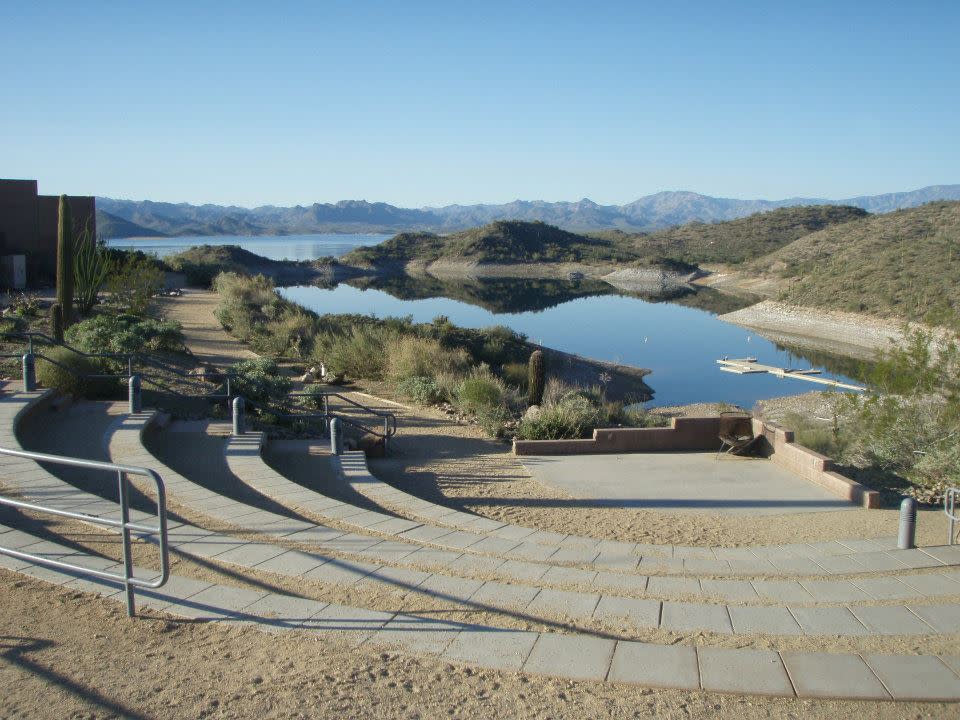
Peoria’s Lake Pleasant Regional Park provides a lifestyle anchor that no other Northwest Valley city can match
2026 Economic Outlook
- Loop 101 / Loop 303 interchange area attracting new commercial and industrial development
- Vistancia Phase 3 expansion adding premium residential inventory
- Arrowhead Medical Center expansion creating additional healthcare employment
- West Valley light rail extension planning stages that will eventually improve Peoria connectivity
- Spring Training tourism consistently driving hospitality and retail growth
Investment Climate
Peoria’s investment environment is distinctly more favorable for cash flow than Gilbert or Scottsdale, while offering better tenant quality than most of Glendale’s older stock. The city’s vast geographic spread means investors can target very different strategies within a single municipality:
- North Peoria / Vistancia for appreciation and premium family tenants
- Arrowhead corridor for professional renters, midterm corporate rentals, and stable long-term holds
- South Peoria / Union Hills for maximum cash flow and value-add opportunities
- Lake Pleasant vicinity for lifestyle-premium pricing and seasonal rental potential
Arizona’s landlord-friendly legal framework gives Peoria investors strong protections. No rent control, fast eviction timelines, and no just-cause requirements at lease expiration make operations simpler and lower-risk than in coastal markets. The primary risk for Peoria investors is the relatively long commute from north Peoria to major East Valley tech employment, which limits the pool of tech worker tenants compared to Gilbert or Chandler.
Historical Performance
| Period | Market Driver | Avg Annual Appreciation | Key Event |
|---|---|---|---|
| 2010-2014 | Post-recession NW Valley recovery | 5-8% | Vistancia master-planned development begins attracting premium buyers |
| 2015-2019 | California migration, NW Valley growth | 6-9% | USAA expansion and healthcare hiring supporting employment base |
| 2020-2022 | Remote work migration, pandemic demand | 20-27% | NW Valley absorption accelerated as buyers sought space and affordability vs East Valley |
| 2023-2024 | Rate normalization, market stabilization | 2-4% | Inventory rose modestly; Peoria held values better than outer suburbs |
| 2025-2026 | Rate stabilization, continued NW expansion | 5-8% (projected) | Loop 303 corridor development driving north Peoria commercial growth |
Demographic Trends Driving Demand
- California Relocations – Families and retirees from the greater LA and Bay Area seeking Peoria’s combination of affordability, safety, and lifestyle amenities
- Healthcare Worker Concentration – Arrowhead Regional Medical Center and a network of medical offices creating stable professional rental demand
- USAA Financial Professionals – USAA’s regional operations center brings financial services professionals who are quality long-term tenants
- Active Retiree Influx – Vistancia’s Trilogy community and other age-targeted developments attracting high-income retirees who rent before purchasing or choose rental for flexibility
- Spring Training Tourism – Consistent annual visitor demand near Peoria Sports Complex creates seasonal rental opportunities
- Northwest Valley Spillover – As Surprise and Goodyear grow, Peoria’s more established infrastructure and amenities attract buyers and renters who want more than a newer suburb can offer
📚 New to real estate investing? Master the fundamentals with our professional course Learn more →
2. Neighborhood Hotspots
Peoria Investment Neighborhood Map
Interactive map of Peoria’s investment neighborhoods. Green stars show top hotspots, blue circles mark established markets, and orange circles highlight emerging areas.
Core Investment Neighborhoods
Detailed Submarket Analysis: Peoria Neighborhoods
| Neighborhood | Price Range (SFH) | Cap Rate | Growth Drivers | Best Strategy |
|---|---|---|---|---|
| Vistancia | $480K-$750K | 5.0-6.0% | Resort amenities, Trilogy enclave, premium demographics | Premium hold, family and retiree rental |
| Arrowhead Corridor | $380K-$550K | 5.5-7.0% | USAA, Arrowhead Medical, retail hub, Loop 101 | Professional rental, midterm corporate, buy-and-hold |
| Lake Pleasant Parkway | $430K-$620K | 5.5-6.5% | Lake proximity lifestyle premium, recreation demand | Lifestyle premium hold, appreciation play |
| North Peoria / Happy Valley | $420K-$600K | 5.5-6.5% | New construction, schools, NW Valley growth | Buy-and-hold, family rental, new construction |
| Sports Complex Area | $350K-$500K | 6.0-8.0% | Spring Training, P83 entertainment, tourism | STR/MTR premium, buy-and-hold |
| Cactus / 75th Ave | $330K-$460K | 6.0-7.5% | Established community, Loop 101 access, value pricing | Cash flow hold, value-add |
| Union Hills / 83rd Ave | $300K-$425K | 6.5-8.0% | Best cash flow, Loop 101, working family demand | Maximum cash flow, BRRRR, value-add |
| Thunderbird / Olive (South) | $280K-$390K | 7.0-9.0% | Highest cap rates, value-add older stock | Value-add, BRRRR, cash flow maximum |
| Loop 303 / Far North | $420K-$580K | 5.5-6.5% | Growth corridor, new commercial, longest runway | Long-term appreciation, new construction hold |
Expert Insight: “The single most underappreciated opportunity in Peoria right now is properties within a half-mile of the Arrowhead employment corridor priced between $380,000 and $450,000. These homes attract USAA employees, healthcare workers, and retail managers who are stable, long-term tenants. Cap rates in this price band are running 6.5 to 7 percent, which is exceptional for the quality of tenant you are getting. Investors are so focused on the far north Vistancia premium that they overlook the Arrowhead sweet spot entirely.” – Maria Gonzalez, Northwest Valley Investment Realty
3. Property Types
| Investment Goal | Best Property Type | Best Neighborhoods | Minimum Capital |
|---|---|---|---|
| Maximum Cash Flow | Value-add SFH or older south Peoria stock | Thunderbird-Olive, Union Hills | $75,000+ |
| Best Appreciation | Premium SFH in Vistancia or North Peoria | Vistancia, Lake Pleasant Parkway | $130,000+ |
| Seasonal Income Premium | STR near Sports Complex | Peoria Sports Complex area | $90,000+ |
| Balanced Returns | Arrowhead corridor SFH or townhome | Arrowhead, Cactus 75th Ave | $100,000+ |
Don’t guess the costs. Our Complete Renovation & Remodeling Cost Guide covers 400+ pages of project-by-project breakdowns with real contractor pricing ranges.
4. Cost Analysis
Acquisition Cost Breakdown (Peoria, Arizona)
| Expense Item | Typical Cost | Example ($430,000 Property) | Notes |
|---|---|---|---|
| Down Payment | 25% (investment) | $107,500 | Standard for investment property financing |
| Closing Costs | 2-3% | $8,600-$12,900 | No Arizona real estate transfer tax; lower than most states |
| Home Inspection | $400-$600 | $475 | Include HVAC, roof, and pool inspection if applicable |
| Termite Inspection | $75-$150 | $100 | Required by most lenders. Active termites throughout Peoria. |
| Pool Inspection | $150-$300 | $200 | Many Peoria homes have pools; equipment replacement $5K-$12K |
| HOA Setup Fee | $150-$500 | $300 | Verify Vistancia and other community HOA rental rules before purchase |
| Initial Repairs | 0-8% | $0-$34,400 | New construction = $0. Older south Peoria value-add = significant. |
| Reserves (6 months) | 3-6 months expenses | $8,000-$15,000 | AC replacement is the primary Arizona reserve concern |
| TOTAL MINIMUM ENTRY | ~28-32% | $125,175-$170,875 | More accessible than Gilbert or Scottsdale entry requirements |
Sample Cash Flow Analysis: Arrowhead Corridor 3-Bedroom Single-Family
| Item | Monthly | Annual | Notes |
|---|---|---|---|
| Gross Rent | $2,050 | $24,600 | 3BR, 2BA, Arrowhead area, updated interior |
| Less Vacancy (5%) | -$103 | -$1,230 | Conservative Peoria vacancy estimate |
| Property Taxes | -$215 | -$2,580 | ~0.60% of $430K assessed value (rental classification) |
| Insurance | -$110 | -$1,320 | Landlord policy; Arizona rates favorable |
| HOA Fees | -$65 | -$780 | Typical Arrowhead area HOA |
| Property Management (9%) | -$185 | -$2,214 | Competitive Peoria PM rates |
| Maintenance + CapEx (8%) | -$164 | -$1,968 | AC service, general repairs, pool if applicable |
| Net Operating Income | $1,208 | $14,508 | Before mortgage |
| Mortgage ($430K, 25% down, 6.75%, 30yr) | -$1,866 | -$22,392 | P&I on $322,500 loan |
| CASH FLOW | -$658 | -$7,884 | Negative at current rates; total return story remains strong |
| Cap Rate | 3.37% | NOI / Purchase Price | |
| Total Return (7% appreciation) | ~17% | Including equity, appreciation, principal paydown |
Union Hills and Thunderbird-Olive properties at $300,000 to $380,000 produce significantly better cash flow, often approaching breakeven or slight positive at current rates. Investors prioritizing monthly income should start in south and central Peoria rather than the Arrowhead or Vistancia premium areas.
Expert Insight: “What most investors miss about Peoria is the Spring Training angle. Properties within a mile of Peoria Sports Complex that rent for $1,900/month long-term can generate $5,000 to $7,000 per month during the six-week spring training window from mid-February through the end of March. That one season alone can add $8,000 to $15,000 in annual gross revenue. Combined with a long-term tenant the rest of the year using a lease with a spring training STR clause, this is one of the most creative yield strategies available in the entire Phoenix metro.” – Tom Reyes, Peoria Sports District Investment Group
5. Legal Framework
✅ Arizona and Peoria: A Strongly Landlord-Friendly Environment
Peoria operates entirely under Arizona’s Residential Landlord and Tenant Act with no added local restrictions. Arizona prohibits rent control at all government levels, provides fast eviction timelines, and gives owners strong rights at lease expiration. Peoria’s town government is fiscally conservative and property-owner friendly. Investors from California and New York consistently cite Arizona’s legal environment as a primary reason for investing here.
Key Arizona Landlord Rights in Peoria
- No Rent Control: Arizona state law preempts any city from capping rents. Full pricing flexibility at every renewal.
- Fast Eviction: 5-day pay-or-quit for non-payment. Full process typically 3 to 6 weeks. No just-cause requirement.
- Security Deposit: Up to 1.5 months rent. Return within 14 business days of move-out with itemized deductions.
- Non-Renewal: Can decline to renew a lease without stating cause. 30-day notice for month-to-month.
- Short-Term Rentals: Arizona limits HOA ability to ban STRs entirely. Municipal registration and TPT tax collection required.
- Entry Rights: 2 days notice for non-emergency entry. Emergency entry permitted without notice.
Peoria-Specific Considerations
- STR Registration: Short-term rental properties must register with the City of Peoria and collect the Arizona Transaction Privilege Tax (TPT). Annual registration is straightforward and low-cost.
- Spring Training STR: Properties near Peoria Sports Complex can legally operate as STRs during Spring Training. Verify HOA rules if in a community; some prohibit short-term use regardless of state law.
- HOA Rental Restrictions: Vistancia and other master-planned communities have HOA rules that may include minimum lease terms and rental percentage caps. Always verify before purchasing.
- Trilogy at Vistancia: The 55+ active adult community requires at least one occupant to be 55 or older. Investors can buy but must rent only to qualifying tenants.
- Pool Compliance: All pools must meet Arizona barrier requirements. Ensure compliance before placing tenants; liability exposure is significant without proper fencing and self-closing gates.
- AC Habitability: Arizona courts treat functional air conditioning as a habitability requirement. Budget for prompt AC service; failure in summer is a legal emergency.
Key Resources
- City of Peoria: peoriaaz.gov
- Arizona Landlord Tenant Act: azleg.gov
- STR Registration: peoriaaz.gov/business
- Arizona Multihousing Association: azama.org
| Regulation | Arizona / Peoria Rule | Investor Impact |
|---|---|---|
| Rent Control | Banned by state law statewide | Full rent flexibility. Reset to market at every renewal. |
| Eviction (Non-Payment) | 5-day notice, then file immediately | 3 to 6 week resolution. Dramatically faster than coastal markets. |
| Security Deposit Cap | 1.5 months rent maximum | Reasonable damage protection. Return within 14 business days. |
| Lease Non-Renewal | No just-cause required | Can remove any tenant at lease end with proper notice. Strong owner control. |
| STR Regulation | Peoria registration + Arizona TPT tax required | Straightforward compliance. Spring Training STR is a viable and legal strategy. |
| Property Tax Rate | Rental Class 4, ~0.60-0.75% of assessed value | Among the lowest in any major U.S. metro area. Meaningful cost advantage. |
6. Step-by-Step Peoria Investment Playbook
Choose Your Peoria Strategy
Peoria’s geographic diversity and price range support four clearly distinct investment approaches:
Premium Hold (Vistancia)
Buy in Vistancia or North Peoria. Target family and retiree tenants. Accept lower cap rates for premium tenant quality, lowest vacancy, and strongest long-term appreciation. The Trilogy enclave offers an additional retiree rental niche.
Balanced Return (Arrowhead)
Buy in the Arrowhead employment corridor. Professional tenants, good cap rates of 6 to 7 percent, and stable annual appreciation. Best risk-adjusted return in Peoria for most investors.
Cash Flow Maximum (South Peoria)
Buy older stock in Thunderbird-Olive or Union Hills at $280,000 to $380,000. Run value-add renovations for $25,000 to $50,000. Achieve 7.5 to 9 percent cap rates. Best monthly income in the Peoria market.
Seasonal STR (Sports Complex)
Buy near Peoria Sports Complex. Rent long-term for 10 months, activate STR for Spring Training February through March at $4,000 to $8,000/month premium. Unique Peoria yield strategy unavailable anywhere else in the NW Valley.
Build Your Peoria Investment Team
- Northwest Valley Investment Agent: Peoria’s market differs substantially from the East Valley. Choose an agent with specific NW Valley investment track record who understands Vistancia HOA rules, the Arrowhead employment corridor, and Spring Training STR dynamics.
- Peoria-Familiar Property Manager: Verify HOA management experience. Vistancia’s Trilogy enclave requires age-verification compliance. Spring Training STR operators need a manager comfortable with seasonal switching between rental modes.
- HVAC Contractor on Contract: Critical in Arizona. Establish a maintenance relationship before an emergency in summer. Peoria’s summers are extreme and tenant law requires prompt AC repair.
- Arizona Real Estate Attorney: For entity structuring and lease compliance. Particularly important for Trilogy-eligible properties with the 55+ occupancy requirement.
- Reliable Pool Service (if applicable): Many Peoria homes have pools. Monthly pool service ($150 to $250) protects a significant asset and prevents costly equipment failures.
Peoria-Specific Due Diligence
Physical Checks
- Full inspection including HVAC age and condition
- Roof inspection (flat and tile roofs common)
- Termite inspection (required by lenders)
- Pool equipment condition if applicable
- Water softener condition (hard water throughout Peoria)
- Foundation check for older south Peoria stock
- Check for stucco cracks indicating settlement
Financial and Legal Checks
- HOA financials: reserve fund, pending assessments
- Verify HOA rental cap and current rental percentage
- Confirm Trilogy 55+ occupancy rules if applicable
- Property tax classification and rental rate
- Flood zone status (some Peoria areas near lake have changed)
- STR permit status if spring training strategy planned
- Title report review for liens and easements
Maximize Peoria-Specific Rental Premiums
- Lake Pleasant proximity: Properties within 5 minutes of Lake Pleasant Parkway and the lake access points command $100 to $300/month premiums from tenants who are active outdoor enthusiasts. Highlight boat storage availability if the property has RV parking or side access.
- USAA and medical corridor marketing: Specifically market furnished and unfurnished rentals to USAA employees, Arrowhead Medical Center staff, and traveling healthcare professionals. Corporate relocation departments at both institutions can be directly contacted for referral relationships.
- Spring Training premium: If near the Sports Complex, list on Airbnb and VRBO with spring training packages from November for the following February and March. Baseball tourists book months in advance and pay significant premiums for proximity.
- Garage and storage appeal: Peoria has a high rate of RV, boat, and recreational vehicle ownership. Properties with 3-car garages, RV gates, or extended driveways command rent premiums and attract stable long-term tenants who need storage space for their lifestyle.
7. Financing Options for Peoria
| Loan Type | Down Payment | Rate Premium | Best For | Peoria Note |
|---|---|---|---|---|
| Conventional Investment | 25% | +0.5-0.75% | W-2 income investors, good credit | Most Peoria properties fall within conforming loan limits; no jumbo needed in most cases |
| DSCR Loan | 25-30% | +1.5-2.0% | Self-employed, multiple properties | South Peoria and Arrowhead properties can qualify at 1.0x DSCR; check numbers carefully |
| FHA (House Hack) | 3.5% | Standard + MIP | Owner-occupying first investment | Excellent entry strategy; south Peoria offers lowest FHA acquisition costs in the NW Valley |
| Hard Money (Bridge) | 15-25% | 9-12% rate | Value-add BRRRR acquisitions | South Peoria value-add strategy commonly uses hard money for speed; refinance after renovation |
| Portfolio Loan | 20-25% | +1-1.5% | Scaling investors, 4+ properties | Arizona-based lenders including Western Alliance and National Bank of Arizona active here |
| 1031 Exchange | 0% (from exchange) | Standard rate | California investors selling appreciated property | Peoria is a common destination for 1031 exchanges from California; lower price points ease identification rules |
Peoria Financing Reality: Peoria’s median price of $430,000 is below the conforming loan limit, meaning most investors can use conventional rather than jumbo financing. This is a meaningful cost advantage over Scottsdale or North Gilbert. South Peoria value-add properties at $280,000 to $380,000 frequently qualify for DSCR loans at or above 1.0x coverage, giving investors more financing flexibility than in higher-priced submarkets. Peoria is genuinely accessible to investors with $80,000 to $130,000 in available capital.
8. Frequently Asked Questions

Knowledge Quiz: Peoria Arizona Real Estate Investment
Open Quiz
5 quick questions on what you just learned about Peoria investing
1) What unique investment strategy does Peoria’s Peoria Sports Complex enable that is not available in most Phoenix suburbs?
Answer: C
Peoria Sports Complex hosts the San Diego Padres and Seattle Mariners spring training. Properties within a mile of the complex can generate $4,000 to $8,000/month during the 6-week February through March window, dramatically above long-term rental rates. This seasonal STR premium is unique to Peoria, Surprise, and Goodyear in the Phoenix metro.
2) What is the key occupancy rule investors must follow when renting a Trilogy at Vistancia property?
Answer: A
Trilogy at Vistancia is a 55-plus age-restricted community. Investors of any age can purchase, but at least one occupant must be 55 or older. This narrows the tenant pool but concentrates it into financially stable retirees who tend to be excellent long-term tenants with low wear and tear on properties.
3) Which Peoria neighborhood does the guide identify as offering the highest cap rates for cash flow-focused investors?
Answer: D
The Thunderbird-Olive corridor in south Peoria offers cap rates of 7 to 9 percent, the highest in the Peoria market. Older 1985 to 2000 housing stock at $280,000 to $390,000 purchase prices with value-add renovation potential makes this the go-to zone for investors prioritizing monthly income and BRRRR strategies over prestige or lifestyle premiums.
4) What does the guide say is the primary lifestyle differentiator that makes Peoria stand out from other Northwest Valley cities?
Answer: B
Lake Pleasant Regional Park is Peoria’s defining lifestyle asset, a 10,000-acre reservoir within city limits that no other NW Valley city can match. Properties near Lake Pleasant Parkway command $100 to $300/month premiums from tenants who are active boaters, anglers, and outdoor recreation enthusiasts.
5) According to the guide, what is the best value-add target corridor in Peoria for BRRRR investors in 2026?
Answer: C
The guide specifically identifies the Thunderbird-Olive corridor with homes built 1985 to 2000 as the best BRRRR opportunity in Peoria. Properties purchase at $280,000 to $370,000, renovate for $30,000 to $55,000, achieve ARV of $400,000 to $450,000, and refinance to recover most invested capital while holding a cash-flowing rental. The gentrification tailwind from Peoria’s northward demographic shift supports long-term appreciation.
Work With a Local Expert in Peoria
We are building a verified network of real estate professionals across every market we cover.

About Our Expert Network
We are finalizing partnerships with verified real estate professionals across every market featured on Builds and Buys. Each expert in our network is selected for their hands-on investment experience, local market knowledge, and commitment to helping buyers and investors make sound decisions.
- Proven experience with investment and income-producing properties
- Deep knowledge of local pricing, rental yields, and neighborhood dynamics
- Guidance on financing, legal structure, and due diligence
- Access to off-market and pre-market opportunities
- Full transaction support from search through closing
- Ongoing portfolio and property management referrals
Services Covered
- Property sourcing and acquisition
- Investment analysis and underwriting
- Buyer representation
- Market comparables and valuations
- Short-term and long-term rental strategy
- Value-add and renovation guidance
- Legal and title referrals
- Financing and lender connections
- Property management referrals
- Insurance and inspection referrals
- 1031 exchange coordination
- Exit strategy planning
Get Connected or Join Our Network
Looking for a local expert to help with your investment? Reach out and we will connect you with the right professional for your market and strategy.
Contact us at support@buildsandbuys.com
Find Specialized Peoria Real Estate Professionals
Ready to Invest in Peoria?
Peoria delivers what most NW Valley investors are looking for but rarely find in a single market: genuine lifestyle differentiation through Lake Pleasant, a diversified employment base, a legal environment that strongly favors property owners, and investment opportunities spanning every risk-return profile from premium Vistancia holds to high-yield south Peoria value-add plays. The Spring Training STR angle adds a yield premium that is unique to Peoria in the entire metro. Investors who understand Peoria’s geographic diversity and choose their submarket deliberately will find it one of the most rewarding destinations in Arizona.
Continue Your Research
Arizona State Guide
See how Peoria compares to Phoenix, Scottsdale, Gilbert, and other Arizona markets.
Step-by-Step Invest
Complete framework for building a real estate investment strategy from scratch.
144-Lesson Course
University-level real estate education covering financing, law, strategy, and management.
For further guidance, explore our State-by-State Investor guides, browse our expert articles, or follow our Step-by-Step Investment Guide.