
Liberal Real Estate Investment Guide For 2026
A comprehensive resource for investors looking to capitalize on the smallest and most diversified of the Golden Triangle beef markets, where a natural gas field adds a second economy, the Oklahoma line sits two miles south, and a duplex outperforms a house by a wider margin than anywhere else in Kansas
Quick answers: Top 5 most searched Liberal investment questions ▼
Migration data: Where people are moving from to Liberal ▼
In This Guide
Click on any section to navigate directly to that content
1. Liberal Market Overview
Market Fundamentals
Liberal is the seat of Seward County, sitting in the far southwest corner of Kansas roughly two miles from the Oklahoma line and about eighty miles southwest of Dodge City. It is the smallest of the three Golden Triangle beef processing cities and the most economically diversified, because underneath southwest Kansas sits the Hugoton gas field, one of the largest natural gas fields in North America. Beef and gas together give this city something Dodge City and Garden City do not have: two industries that do not move in step.
Key economic indicators that define the Liberal investment case:
- Population: approximately 19,000 to 20,000 in the city, roughly 21,500 across Seward County
- Major Employers: National Beef Packing, natural gas processing and field services across the Hugoton field, Southwest Medical Center, Liberal USD 480, Seward County Community College, Seward County government, and the retail base serving the tri-state panhandle area
- Median Household Income: roughly $52,000, frequently across two or more earners
- Median Home Price: approximately $135,000, the lowest of the three plant cities
- Vacancy Rate: approximately 5 to 7 percent
- Median Age: approximately 29, among the youngest in Kansas
Three features define this market. First, the second economy: gas processing and field services employ households that beef processing does not, which is real diversification, though gas is cyclical where beef is not. Second, the state line: Liberal sits at the corner of three panhandles and its labour market genuinely crosses into Oklahoma, which is an opportunity and a legal boundary at the same time. Third, scale: at roughly 19,000 people this is meaningfully smaller than its two neighbours, which means thinner contractor availability, thinner management, and a genuinely thin resale market.
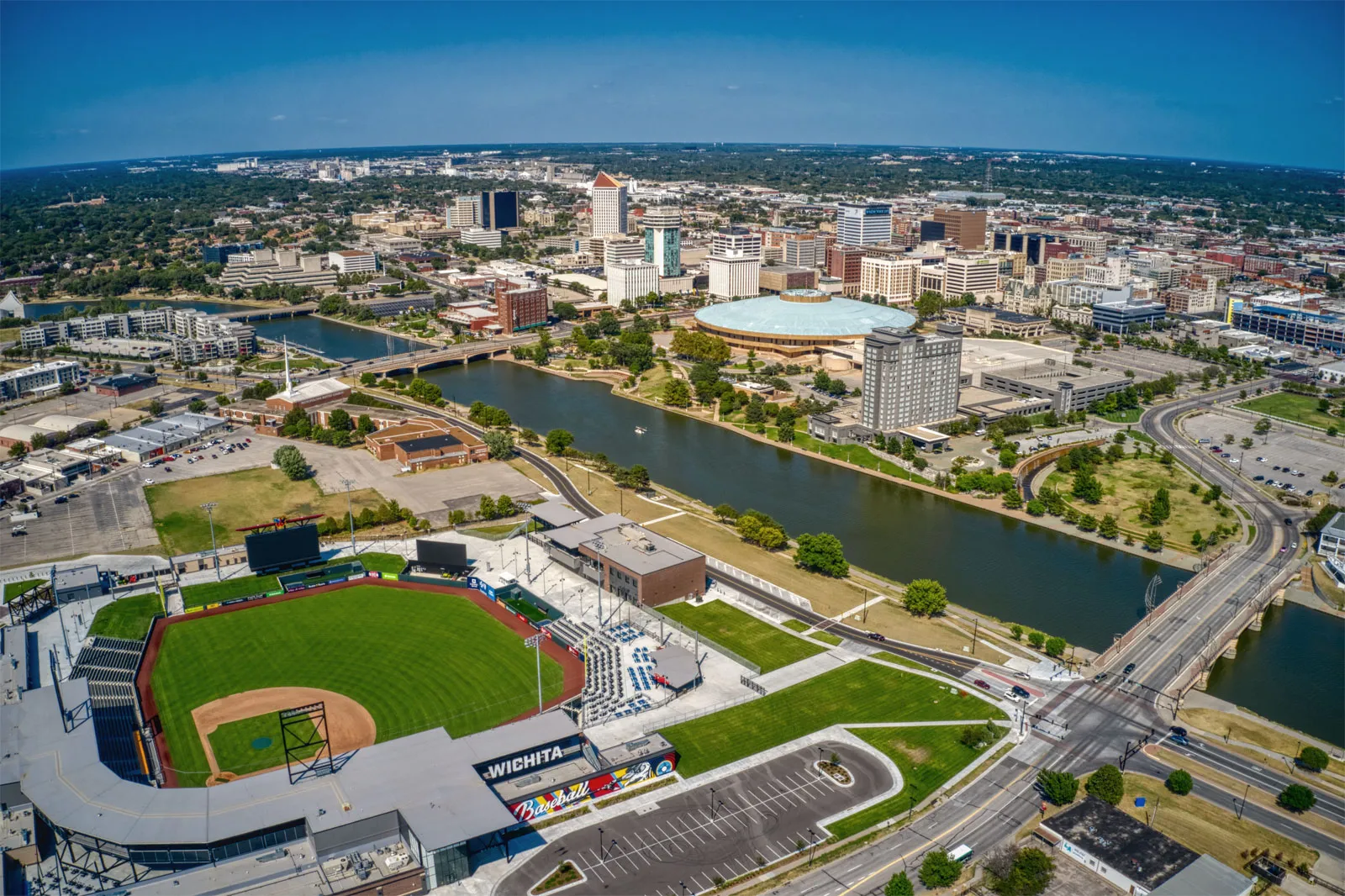
Liberal is the smallest and most economically diversified of the three Golden Triangle plant cities
2026 Economic Outlook
- Beef processing at National Beef remaining the largest single employer, running multiple shifts year round
- Hugoton gas field activity providing a second employment base that moves independently of beef
- Southwest Medical Center and Seward County Community College anchoring non industrial employment
- A tri-state labour market spanning the Kansas, Oklahoma, and Texas panhandles
- Commercial air service from Liberal Municipal Airport, unusual for a city this size
- Ogallala Aquifer decline remaining a long term consideration for the surrounding agricultural base
Investment Climate
Liberal rewards investors who buy structure rather than property and who understand where the state line sits. Successful investors here tend to share these characteristics:
- A preference for small multi-family, because in the lowest priced and lowest appreciating of the three plant cities, two units under one roof does far more work than a single house
- Spanish capability, personally or through a manager, in a majority Spanish speaking market as across the Golden Triangle
- Clarity about jurisdiction, since Kansas and Oklahoma landlord law differ materially and the border is two miles away
- Awareness of mineral rights, because in a major gas field severed mineral interests are common and belong in your title review
- Local presence or a genuine local partner, because this is the smallest market covered in this series so far
- Realistic exit expectations, since a city of 19,000 has a genuinely thin buyer pool
The market’s advantage is a combination the other two plant cities cannot match: the lowest entry prices in the Golden Triangle, the deepest small multi-family inventory, and two industries rather than one. The sample duplex in this guide produces $180 a month self managed and holds at $52 under professional management, which is the second strongest managed figure in this entire Kansas series behind only Pittsburg. For an investor who wants actual cash in pocket rather than a projection, that matters.
The honest limitations are scale and appreciation. At 2.5 percent, appreciation here is the lowest in the series, which drops total return to 11.6 percent even with strong cash flow. Liberal is also the smallest market covered so far, and everything that follows from that is real: fewer contractors, fewer property managers, longer waits on materials, and a thin resale market when you eventually sell. Gas cyclicality adds volatility that beef alone does not have. This is a cash flow market, and it should be underwritten as one.
Historical Performance
| Period | Market Driver | Avg Annual Appreciation | Key Event |
|---|---|---|---|
| 2010-2014 | Strong gas activity alongside plant employment | 2-4% | Both economies running at once, tightening housing across the county |
| 2015-2019 | Gas downturn offset by plant employment | 0-2% | Energy prices fall and field employment thins while the plant carries the rental market |
| 2020-2022 | Essential industry status, record low rates | 7-12% | Food processing operates throughout while housing reprices nationally |
| 2023-2024 | Rate shock, rising insurance costs | 1-3% | Southwest Kansas insurance premiums rise sharply and compress margins |
| 2025-2026 | Normalization, dual employment base | 2-3% (projected) | Plant and gas employment supporting rents against flat population growth |
Over a 20 year window Liberal has produced roughly 2 percent average annual appreciation, the lowest in this Kansas series. A $90,000 house purchased in 2006 is worth roughly $130,000 to $145,000 today. That is a modest return and it is the honest reason this guide builds its sample deal around a duplex rather than a house. The row worth studying is 2015 to 2019: energy prices fell, gas field employment thinned, and appreciation went flat, while the rental market held because the plant kept running. That is diversification working exactly as it should, and it is also a preview of what the reverse would look like.
Demographic Trends Driving Demand
- Beef Processing Employment – The National Beef facility running multiple shifts year round and providing the steady half of this city’s employment base
- Hugoton Gas Field Activity – Gas processing and field services across one of the largest natural gas fields in North America, providing a genuine second economy that beef does not touch
- Tri-State Labour Market – A workforce that moves across the Kansas, Oklahoma, and Texas panhandle borders, including toward the large processing operation at Guymon in the Oklahoma panhandle
- Established Immigrant Communities – Decades of settlement creating networks that hold households here independently of any single employer
- Regional Service Centre Role – Southwest Medical Center, Seward County Community College, commercial air service, and the retail base for the tri-state area
- Very Low Entry Pricing – A median home price around $135,000, the lowest of the three plant cities, supporting investor activity that higher priced markets do not
📚 New to real estate investing? Master the fundamentals with our professional course Learn more →
2. Neighborhood Hotspots
Liberal Investment Neighborhood Map
Interactive map of Liberal and Seward County investment areas. Green stars show top hotspots, blue circles mark established markets, and orange circles highlight emerging areas.
Core Investment Neighborhoods
Detailed Submarket Analysis: Liberal and Seward County
| Area | Price Range | Cap Rate | Primary Tenant Pool | Best Strategy |
|---|---|---|---|---|
| Old Town / South Liberal | $45K-$95K | 9.5-13% | Plant and gas workforce | Highest yields, value add, hands on management |
| Satanta | $55K-$115K | 9-12% | Agricultural, gas, local hospital | Small town hold, Haskell County, very thin resale |
| Cimarron River Corridor | $55K-$110K | 9-11% | Workforce | Value add, verify flood zone before offering |
| Kismet | $60K-$120K | 8.5-11% | Local, Liberal commuters | Small town hold, USD 483, minimal competing supply |
| Downtown / Kansas Avenue | $70K-$130K | 8.5-11% | Mixed local, some visitor | Historic renovation, walkable niche, very low entry |
| East Liberal / Plant Corridor | $75K-$140K | 8.5-11% | Plant and gas workforce | Workforce rentals, duplexes where available, deepest demand |
| Guymon, Oklahoma | $80K-$155K | 8-10.5% | Plant workforce | Oklahoma law applies. Get state specific advice before buying. |
| Hugoton | $85K-$160K | 8-10% | Gas industry, county government | Stevens County seat, gas field centre, accept cyclical exposure |
| Central Liberal | $90K-$155K | 8-10% | Mixed across all employers | Small multi-family value add, the core Liberal strategy |
| Southwest / Airport Corridor | $95K-$165K | 7.5-9.5% | Gas field, mixed local | Mixed hold, airport and gas field access |
| West Liberal | $110K-$185K | 7-8.5% | Local families | Steady family hold, established streets, lower turnover |
| North / Medical & College | $135K-$230K | 6.5-8% | Healthcare, college, professionals | Non industrial tenants, best local diversification |
| Northwest / Country Club | $160K-$270K | 5.5-6.5% | Physicians, plant and gas management | Premium hold, strongest resale, verify exit liquidity carefully |
Expert Insight: “People come here from Wichita or Kansas City and they want to buy a house, because that is what they know. In this town a house is a fine investment and a duplex is a better one, and the price gap between them does not reflect the income gap. We are the cheapest of the three plant cities and we appreciate the slowest, so if you are counting on the property to make you money you have picked the wrong market. Buy the income. The other thing I say twice to everyone: the Oklahoma line is two miles from downtown. Your tenants cross it, your contractors cross it, and if you decide to buy something over there you are under a completely different set of landlord rules. That is not a technicality. Get Oklahoma advice for Oklahoma property.” – Alma Delgado, Investment Broker, Tri-State Property Group
3. Property Types
| Investment Goal | Best Property Type | Best Neighborhoods | Minimum Capital |
|---|---|---|---|
| Best Cash Flow | Renovated duplex or small multi-family | Central Liberal, east Liberal, downtown | $62,000+ |
| Lowest Entry Cost | Old Town value add, or a property in Kismet or Satanta | Old Town, south Liberal, Kismet, Satanta | $22,000+ |
| Lowest Industrial Exposure | Professional rental near the hospital or college | North Liberal, northwest Liberal | $55,000+ |
| Highest Yield | Workforce rental near the plant corridor | East Liberal, Old Town, south Liberal | $32,000+ |
| Single Family Preference | Four or five bedroom family home | East Liberal, central Liberal, west Liberal | $52,000+ |
Don’t guess the costs. Our Complete Renovation & Remodeling Cost Guide covers 400+ pages of project-by-project breakdowns with real contractor pricing ranges.
4. Cost Analysis
Acquisition Cost Breakdown (Liberal)
| Expense Item | Typical Cost | Example ($135,000 Property) | Notes |
|---|---|---|---|
| Down Payment | 20-25% standard | $27,000-$33,750 | The lowest median price of the three plant cities produces the lowest down payment |
| Mineral Rights and Severance Check | $0-$400 | $0-$400 | Specific to a major gas field. Severed mineral interests are common here and belong in your title review. |
| Insurance Quote on the Actual Address | $0 | $0 | The heaviest expense variable. Ask specifically how they rate a duplex, since multi-family is often priced differently. |
| Contractor Availability Check | $0 | $0 | The smallest market covered so far. Confirm someone can actually start before you close. |
| Flood Zone Determination | $0-$50 | $25 | Essential toward the Cimarron River drainage north of the city |
| Closing Costs | 2-3% of price | $2,700-$4,050 | Title, escrow, lender fees, recording. Kansas closings handled by title companies. |
| General Inspection | $400-$700 | $550 | Higher on a duplex than a house. Book early because the inspector pool here is very small. |
| Roof and Hail Damage Assessment | $0-$300 | $200 | Southwest Kansas takes serious hail. Roof age is the largest single insurance variable. |
| Utility Metering Verification | $0 | $0 | Free, and critical on any multi-family. Separately metered units versus one meter changes your expense line materially. |
| Sewer Lateral Scope | $200-$350 | $275 | Critical in Old Town and downtown, and worth doing under heavy multi-unit use |
| Radon Test | $125-$200 | $150 | Kansas records high radon readings statewide. Mitigation runs $900-$2,000. |
| Electrical and Plumbing Assessment | $200-$450 | $300 | Undersized panels and galvanized lines are common, and a duplex has two of everything to check |
| Permit History Review (Multi-Family) | $0 | $0 | Free. Confirm any conversion from single family to duplex was actually permitted before you rely on the second unit’s income. |
| Initial Repairs | 0-35% of price | $0-$47,250 | Near zero on north Liberal inventory, substantial on Old Town and duplex conversions |
| Reserves (6 months) | 6 months plus a full hail deductible | $9,000-$13,500 | Size for the deductible and for the longest repair timelines of the three plant cities |
| TOTAL MINIMUM ENTRY | ~29-78% of value | $40,000-$105,300 | The lowest entry floor of the three plant cities, and note a duplex carries a larger renovation than a house |
The mineral rights note, which is specific to this market: Liberal sits over the Hugoton gas field, and in an area with a century of oil and gas activity, mineral interests are frequently severed from the surface estate. That means the person selling you the house may not own what is underneath it, and someone else may hold rights that come with access provisions. On a city lot this is usually a title curiosity rather than a problem, but it is worth understanding rather than discovering, and on any parcel with acreage it matters considerably more. Ask your title company to flag severances specifically rather than assuming they will surface on their own. On the tax side, Seward County produces an effective rate around 1.7 to 2.0 percent of market value, comparable to Dodge City and Garden City.
Sample Cash Flow Analysis: Central Liberal Duplex Value Add
Deal structure: $135,000 purchase of a 1960s side by side duplex in central Liberal, two units of two bedrooms each. $30,000 renovation (both kitchens, both bathrooms, durable flooring, paint throughout, roof replacement, electrical service upgrade, partial repipe, two furnace and air replacements, radon mitigation), $4,000 closing. Total basis $169,000. After repair value approximately $188,000. Both units rented at $800 for $1,600 total. Liberal USD 480.
| Item | Monthly | Annual | Notes |
|---|---|---|---|
| Gross Rent | $1,600 | $19,200 | 2 units at $800. A single family house at this basis would produce roughly $1,225. |
| Less Vacancy (6%) | -$96 | -$1,152 | Slightly above Dodge City, reflecting gas cyclicality. Note a duplex spreads vacancy across two units rather than concentrating it. |
| Property Taxes | -$290 | -$3,478 | ~1.85% effective on the post renovation value. 18% of gross rent. |
| Insurance | -$200 | -$2,400 | Higher than a single family house because multi-family rates differently, plus southwest Kansas hail |
| Maintenance + CapEx (10%) | -$160 | -$1,920 | Two kitchens, two baths, and two mechanical systems to maintain. Do not underprice this line on a duplex. |
| Net Operating Income (self managed) | $854 | $10,250 | Before mortgage |
| Property Management (8%) | -$128 | -$1,536 | Drops NOI to $726/month or $8,714/year |
| Mortgage ($101,250 at 7.0%, 30yr, 25% down) | -$674 | -$8,088 | Principal and interest only, financed on the purchase price with renovation paid in cash |
| CASH FLOW (self managed, 25% down) | +$180 | +$2,160 | Strong, and second only to Pittsburg and Leavenworth in this series |
| CASH FLOW (professionally managed, 25% down) | +$52 | +$624 | The second strongest managed figure in this entire Kansas series, behind only Pittsburg’s $125 |
| Cap Rate | 6.1% self managed / 5.2% managed | NOI divided by total basis of $169,000 | |
| Total Return Year One (25% down, self managed) | ~11.6% | $2,160 cash flow plus $1,025 principal paydown plus 2.5% appreciation on $188,000, on $67,750 invested | |
| Immediate Forced Equity | $19,000 | $188,000 ARV less $169,000 total basis. Verify comparable duplex sales, which are thin here. |
At 11.6 percent this is the lowest total return in the series, and the reason is entirely in the appreciation line: 2.5 percent on $188,000 contributes $4,700 where Leavenworth’s 5 percent on $240,000 contributes $12,000. Liberal will not appreciate you into wealth. But look at the two cash flow rows, because they tell a different story. $180 a month self managed and $52 with a manager taking eight percent puts Liberal second in this entire series on managed cash flow, behind only Pittsburg. The lesson is the same one Pittsburg taught with by the room leasing, arrived at from a different direction: in a low priced market the structure generates the return, not the building. Pittsburg does it with four leases in one house and a great deal of management work. Liberal does it with two units under one roof and far less. If you want money arriving every month rather than a projection about 2035, that trade is worth understanding.
Expert Insight: “Two free checks matter more on a duplex than people expect, and both happen before you write the offer. The first is the meters. A separately metered duplex where each tenant pays their own gas and electric is a different investment from one on a single meter where you are paying utilities for two households and hoping they are careful. That difference can be a hundred dollars a month and it does not show up in a listing. The second is the permit history. There are conversions out there where somebody split a house into two units without ever pulling a permit, and if you are financing on the strength of that second unit’s income you want to know that before closing rather than after. Both calls are free and both take an afternoon.” – Reid Callahan, CPA, Kansas Real Estate Advisory
5. Legal Framework
⚠️ Liberal Compliance Notice
Kansas state landlord law applies uniformly statewide, and everything in this guide assumes Kansas property. The Oklahoma line is two miles south of downtown Liberal, and Oklahoma has its own landlord tenant statute with different notice periods, different deposit rules, and different eviction procedures. If your portfolio crosses that line you are operating under two bodies of law and you need advice specific to each. Other items requiring care: federal fair housing compliance in a majority Spanish speaking market, permit history and utility metering on any multi-family, severed mineral interests in a major gas field, and flood plain status toward the Cimarron River. This guide provides an overview as of 2026 only. Always confirm current requirements with a licensed attorney in the relevant state before acquiring rental property.
Kansas Regulations, and the Oklahoma Boundary
The governing statute for Kansas property is the Kansas Residential Landlord and Tenant Act at K.S.A. 58-2540 and following:
- Nonpayment of Rent: 3 day written notice to pay or vacate under Kansas law. Oklahoma’s notice requirements differ. Do not carry your Kansas process across the line.
- Lease Violations: 14 day written notice to cure, with termination effective 30 days from notice if the breach is not remedied.
- Month to Month Termination: 30 days written notice by either party under Kansas law.
- Security Deposits: Capped at one month’s rent unfurnished, one and a half months furnished, plus an additional half month for pets. Oklahoma’s deposit rules are not the same.
- Landlord Entry: Reasonable notice required, generally interpreted as 24 hours, at reasonable times except in emergency.
- No Rent Control: Kansas law preempts municipal rent control.
- Court Venue: Seward County District Court sits in Liberal. Oklahoma property is heard in Oklahoma courts under Oklahoma procedure.
- Multi-Family Permitting: Confirm any conversion from single family to duplex was properly permitted before relying on the second unit’s income.
- Mineral Rights: In a major gas field, severed mineral interests are common. These are separate property and may carry surface access provisions.
- Federal Fair Housing: Prohibits discrimination on the basis of race, colour, national origin, religion, sex, familial status, and disability. Applies identically on both sides of the state line.
- Federal Lead Paint Rules: Mandatory disclosure on all pre 1978 housing, which is most of this city.
Compliance Best Practices
Liberal operating risk sits in jurisdiction, multi-family specifics, and screening consistency:
- Know Which State Your Property Is In, and Act Accordingly. Two miles is not a buffer. If you buy in Oklahoma, get Oklahoma counsel, use Oklahoma lease forms, and learn Oklahoma’s notice periods before you need them. Running a Kansas process on an Oklahoma property will cost you a case.
- Verify Utility Metering Before You Offer on a Duplex. Separately metered units versus one shared meter can be a hundred dollars a month in expenses, and it is invisible on a listing.
- Pull the Permit History on Any Converted Multi-Family. Free, and it protects the income you are financing against.
- Use Written, Posted Screening Criteria and Apply Them Identically. Document every decision. In a majority Spanish speaking market, criteria available in both languages widen your reach without changing your standard.
- Ask Your Title Company to Flag Mineral Severances Specifically. In a century old gas field they are common, and you want to understand them rather than discover them.
- Quote Insurance Before Removing Contingencies, and ask specifically how the carrier rates a two to four unit building versus a single family house.
- Verify Flood Plain Status toward the Cimarron River drainage north of the city.
- Be Reachable Outside Business Hours. Both the plant and the gas field run shifts.
Useful Liberal and Seward County Resources
- City of Liberal: cityofliberal.org
- Seward County Appraiser for parcel and valuation data
- Seward County District Court in Liberal for eviction filings
- Seward County Register of Deeds for deeds, liens, easements, and mineral severances
- City of Liberal building and code enforcement for permit history and multi-family requirements
- Kansas Corporation Commission for oil and gas records across the Hugoton field
- Kansas Statutes K.S.A. 58-2540 for the Residential Landlord and Tenant Act
| Regulation | Liberal / Kansas | Two Miles South, in Oklahoma | Investor Impact |
|---|---|---|---|
| Governing Statute | Kansas Residential Landlord and Tenant Act | Oklahoma’s own landlord tenant statute | Different notice periods, deposit rules, and eviction procedure. Get state specific advice. |
| Court Venue | Seward County District Court in Liberal | Oklahoma district courts under Oklahoma procedure | A portfolio spanning the line means two court systems and two sets of forms |
| Fair Housing | Federal law applies | Federal law applies identically | The one thing that does not change at the line. Written criteria applied to everyone, both sides. |
| Mineral Rights | Commonly severed in the Hugoton field | Also common across the Oklahoma panhandle | Ask title to flag severances specifically rather than assuming they surface |
| Insurance Environment | Severe hail, percentage based deductibles, multi-family rated separately | Comparable panhandle exposure | The heaviest expense variable, and higher again on a duplex |
| Property Tax Burden | ~1.7-2.0% effective, resets on sale | Different assessment system entirely | 18% of gross rent in Kansas. Do not assume Oklahoma comparability. |
6. Step-by-Step Liberal Investment Playbook
Define Your Liberal Strategy
The first strategy here is the one that makes this market work. The rest are supporting positions:
Small Multi-Family Value Add
Buy a tired duplex or fourplex and renovate it. In the cheapest and slowest appreciating of the three plant cities, two units under one roof produce cash flow a single house cannot, and it survives professional management where most small market deals do not.
Plant and Gas Workforce Hold
Acquire affordable housing serving both industrial employers. The lowest entry cost of the three plant cities, and a tenant base drawn from two industries rather than one, which is Liberal’s structural advantage.
Non Industrial Professional Hold
Acquire near Southwest Medical Center or Seward County Community College and rent to households tied to neither the plant nor the gas field. Lower yields, and the only genuine insulation from this city’s two cyclical employers.
Tri-State Regional Position
Build a small portfolio across the panhandle labour market, potentially including Oklahoma. Genuine geographic diversification within one drive time, and it requires operating under two states’ landlord law deliberately rather than accidentally.
Build Your Liberal Team
This is the smallest market covered in this series, which makes the team the binding constraint more than anywhere else:
- Contractor, Secured Before the Property: Deliberately first. In a city of 19,000 the trade pool is genuinely thin, and there is no interstate. Confirm someone can start on your timeline before you close.
- Bilingual Property Manager or Equivalent Capacity: Ask directly whether they advertise, screen, and handle maintenance calls in Spanish. In a majority Spanish speaking market this determines how much of the pool you reach.
- Independent Insurance Agent Who Writes Multi-Family: Not all do, and duplexes rate differently from houses. Ask about this specifically before you find the property.
- Title Company That Will Flag Mineral Severances: Common in a century old gas field and easy to overlook.
- Kansas Attorney, and an Oklahoma One If You Cross the Line: Two states means two sets of lease forms, notice periods, and eviction procedures. Do not improvise this.
- Community Bank Lender: Essential at these price points and this distance. They will also lend on small multi-family where national programs may not.
- Real Estate CPA: For depreciation, entity structure, and Seward County valuation appeals.
Expert Tip: When you interview an insurance agent here, lead with the question of whether they can write a two to four unit building rather than asking about rates. A meaningful number of carriers that will happily insure a single family rental in southwest Kansas will not write small multi-family, or will rate it as commercial. Since the duplex strategy is the whole case for this market, discovering that during underwriting rather than after you are under contract matters. Ask it first, get the answer in writing, and then talk about price.
Liberal Specific Due Diligence
Standard due diligence items plus these Liberal critical checks:
Regulatory and Financial
- Utility metering on any multi-family. Free, and it can be a hundred dollars a month. Separately metered or shared changes the deal.
- Permit history on any converted duplex. Free, and it protects the income you are financing against.
- Confirm the property is in Kansas, which sounds absurd until you remember the line is two miles from downtown and some listings serve both sides.
- Insurance confirmation for multi-family, not just a generic landlord quote.
- Mineral severance review through your title company, specifically requested.
- Current valuation and appeal history, since your tax basis resets on sale.
- Flood zone determination toward the Cimarron River drainage.
- Comparable sales, and note duplex comparables in a city this size are genuinely scarce, which tightens your appraisal ceiling.
Physical Due Diligence
- Two of everything on a duplex. Two furnaces, two water heaters, two kitchens, two bathrooms. Budget the inspection accordingly and do not accept a single family scope.
- Shared systems. If one furnace or one water heater serves both units, that is a materially different property and a materially different expense profile.
- Roof age, layer count, and hail claim history. The largest single insurance variable in southwest Kansas.
- Sound separation between units, which affects tenant retention more than most investors expect in a converted duplex.
- Sewer lateral scope, critical in Old Town and downtown and under multi-unit use.
- Electrical service and panel capacity for each unit separately.
- Radon testing on every property.
- Asbestos in floor tile, pipe wrap, and siding on pre 1980 properties.
Sourcing Deals in Liberal
Out of area competition here is close to nonexistent, and the inventory that matters most is the hardest to find. Channels that work:
- Hunt duplexes deliberately rather than waiting for them. Small multi-family is the whole case for this market and it rarely lists prominently. Tell every agent and every lender you know exactly what you are looking for.
- Look for single family houses suitable for conversion, and price the permitting properly. A house with a good layout in the right zoning can become the duplex you could not find.
- Retiring landlords. The single best source in a city this size. Small landlord populations mean portfolios move as blocks, often with tenants in place, and being known locally is how you hear first.
- Properties that failed on insurance. An old roof in a severe hail market kills retail deals repeatedly, and multi-family that carriers declined sits even longer.
- Direct mail to long tenured owners via the Seward County Appraiser records in central and east Liberal, filtered for multi-unit parcels.
- Community bank relationships. Local lenders know what is coming available, will write small multi-family, and understand the market in a way a national underwriter will not.
Property Management in Liberal
At $52 a month under an 8 percent fee, Liberal is one of only two markets in this series where professional management leaves a genuinely comfortable margin. That gives you a real choice:
Tenant Screening Protocol
Kansas caps your deposit at one month, so screening is your protection. Apply written criteria identically to every applicant:
- Verifiable gross household income of at least 3 times monthly rent, counting all adult earners, since multi earner households are common here
- Direct employer verification, noting that the plant, gas field contractors, the hospital, the school district, the college, and county government are all straightforward to confirm
- Two prior landlord references, contacting the landlord before the current one, and noting that a tenant relocating from Oklahoma or Texas is entirely normal here
- Full credit and eviction records search covering Kansas, Oklahoma, and Texas, since applicants genuinely move across those lines
- Written, posted criteria available in English and Spanish, applied identically regardless of which language an applicant uses
- A documented occupancy standard grounded in legitimate health and safety considerations, applied the same way to every household
Typical Liberal Management Fees
- Single family management: 8-10% of monthly rent
- Small multi-family management: 6-9% of monthly rent, and often better value per door than single family
- Leasing fee: 50-100% of one month’s rent, charged per unit on a multi-family
- Lease renewal fee: $100-$200 per renewal
- Flat fee management: $85-$135 per door per month, which on a duplex can beat a percentage
- Maintenance coordination markup: typically 10% on vendor invoices, with meaningful trip charges in a remote market
- The manager pool here is the thinnest in this series. Interview everyone available, ask about multi-family experience specifically, and confirm language capacity.
7. Financing Options for Liberal
| Loan Type | Down Payment | Rate Premium | Best For | Liberal Note |
|---|---|---|---|---|
| Local Portfolio / Community Bank | 20-30% | +0.5-1.5% | Small multi-family, older stock, multiple doors | The most important tool here by a distance. Southwest Kansas banks will write duplexes at these price points where national programs will not. |
| House Hacking (FHA, 2 to 4 units) | 3.5% | Standard + MIP | Owner occupying one unit of a duplex | Exceptionally strong here. Occupy one side of a $135,000 duplex with 3.5% down and let the other side carry most of the loan. |
| Conventional Investment | 25% | +0.5-0.75% | Strong W-2 income, good credit | Note that conventional investment loans on 2 to 4 units typically require a higher down payment than single family. Confirm before you budget. |
| Cash Purchase | 100% | None | Buyers of Old Town, Kismet, or Satanta properties | Genuinely achievable at $45,000 to $115,000, the lowest entry in the Golden Triangle, and it solves the loan minimum problem entirely. |
| USDA Rural Development | 0% | Standard + guarantee fee | Owner occupants in eligible areas | Worth checking for Kismet, Satanta, and Hugoton. Income limits apply, owner occupied single family only. |
| FHA 203(k) Renovation | 3.5% | Standard + MIP | Owner occupants buying dated property | Available on 2 to 4 units with owner occupancy, which pairs well with the duplex strategy here. |
| DSCR Loan | 20-25% | +1.5-2.5% | Investors avoiding income documentation | Duplex rents clear coverage tests well, but most DSCR lenders will not write in a market this remote and small. Confirm coverage area first. |
| HELOC on Existing Equity | N/A | Variable | Funding renovations or cash purchases | Practical, since a full duplex renovation with two of every system often exceeds what purchase financing covers |
Liberal Financing Reality: Because the duplex strategy is the case for this market, financing here revolves around small multi-family rather than houses, and that changes things. Conventional investment loans on two to four units usually require more down than single family, so confirm the figure before you budget. Many national lenders and most DSCR lenders will not write in a city of 19,000 this far from a metro. And duplex comparable sales are genuinely scarce here, which tightens the appraisal ceiling on a renovation. The answer to all three is a southwest Kansas community bank, and it should be your first call. The standout opportunity, though, is FHA on a two to four unit building: an owner occupant can take one side of a $135,000 duplex with 3.5 percent down and let the other side carry most of the payment. In a market where the structure generates the return, that is about as efficient an entry into real estate as exists in Kansas.
8. Frequently Asked Questions

Knowledge Quiz: Liberal Real Estate Investment
Open Quiz
5 quick questions on what you just learned about Liberal investing
1) Why does this guide build its sample deal around a duplex rather than a house?
Answer: B
At 2.5 percent, appreciation here contributes $4,700 a year to total return where Leavenworth’s 5 percent contributes $12,000. When appreciation cannot carry you, income has to. The sample duplex produces $1,600 across two units and $180 a month self managed, where a single house at similar basis would produce roughly $1,225 and a much thinner result. Note duplexes actually cost more to insure, since multi-family rates differently.
2) What happens to your legal process two miles south of downtown Liberal?
Answer: D
The Oklahoma line is two miles from downtown, and it is a hard legal boundary even though it is soft in daily life. Kansas’s three day notice to pay or vacate is among the shortest in the country and does not travel south. Oklahoma property means Oklahoma statute, Oklahoma lease forms, and Oklahoma courts. Note that federal fair housing law is the one thing that applies identically on both sides.
3) What does the Hugoton gas field add to this market, and what does it cost?
Answer: A
Dodge City runs on two beef plants and Garden City on one. Liberal runs on a plant and an energy industry, which do not move together. The 2015 to 2019 period shows this working: energy prices fell, gas employment thinned, and the plant carried the rental market. But gas is cyclical where beef is not, so you are trading concentration risk for cyclical risk rather than eliminating risk. That shows up as a 6 percent vacancy assumption against Dodge City’s 5.
4) What two free checks matter most before offering on a Liberal duplex?
Answer: C
Separately metered units where each tenant pays their own gas and electric is a different investment from a single meter where you carry utilities for two households, and that gap can be a hundred dollars a month while never appearing on a listing. Separately, conversions sometimes happen without permits, and if you are financing on the second unit’s income you want that answer before closing. Both checks are free and both can change what you offer.
5) How does Liberal rank in this Kansas series on total return and on managed cash flow?
Answer: B
Low appreciation drags total return to the bottom of the series, but the duplex structure produces $180 a month self managed and holds at $52 with a manager taking eight percent, behind only Pittsburg’s $125. That is the same lesson Pittsburg teaches through by the room leasing, reached from a different direction: in a low priced market the structure generates the return. Liberal just does it with two units and far less management work.
Work With a Local Expert in Liberal
We are building a verified network of real estate professionals across every market we cover.

About Our Expert Network
We are finalizing partnerships with verified real estate professionals across every market featured on Builds and Buys. Each expert in our network is selected for their hands-on investment experience, local market knowledge, and commitment to helping buyers and investors make sound decisions.
Our local specialists offer:
- Proven experience with investment and income-producing properties
- Deep knowledge of local pricing, rental yields, and neighborhood dynamics
- Guidance on financing, legal structure, and due diligence
- Access to off-market and pre-market opportunities
- Full transaction support from search through closing
- Ongoing portfolio and property management referrals
Services Covered
- Property sourcing and acquisition
- Investment analysis and underwriting
- Buyer representation
- Market comparables and valuations
- Short-term and long-term rental strategy
- Value-add and renovation guidance
- Legal and title referrals
- Financing and lender connections
- Property management referrals
- Insurance and inspection referrals
- 1031 exchange coordination
- Exit strategy planning
Get Connected or Join Our Network
Looking for a local expert to help with your investment? Reach out and we will connect you with the right professional for your market and strategy.
Are you a real estate professional with a track record working with investors? We are always expanding our network of verified local experts.
Contact us at support@buildsandbuys.com
Find Specialized Liberal Real Estate Professionals
Ready to Invest in Liberal?
Liberal produces the lowest total return in this Kansas series and one of the strongest monthly cash flows, and both facts come from the same place. Appreciation here is 2.5 percent, so the property will not make you money. The structure will. A duplex at $135,000 throwing off $1,600 across two units generates $180 a month self managed and holds at $52 with a manager, which almost no small Kansas market manages. Add a natural gas field that gives this city a second economy its Golden Triangle neighbours do not have, and you have a genuine income market. Verify the utility metering and the permit history before you offer, ask your insurance agent whether they will even write multi-family before you go looking, remember the Oklahoma line is two miles south and takes its own body of law with it, and buy the income rather than the building. Do that and the smallest of the three plant cities will pay you every month.
Continue Your Research
Kansas State Guide
See how Liberal compares to Wichita, Dodge City, Garden City, and other Kansas markets.
Garden City Guide
The largest of the Golden Triangle markets, with the Holcomb school district advantage.
144-Lesson Course
University-level real estate education covering financing, law, strategy, and management.
For further guidance, explore our State-by-State Investor guides, browse our expert articles, or follow our Step-by-Step Investment Guide.



