
Lander Wyoming Real Estate Investment Guide For 2026
A comprehensive resource for investors targeting one of Wyoming’s most celebrated outdoor industry towns, where NOLS headquarters, Wind River Range access, a thriving climbing and cycling culture, and accelerating lifestyle migration combine to create a compelling appreciation story in 2026
Quick answers: Top 5 most searched Lander investment questions ▼
Migration data: Where people are moving from to Lander ▼
In This Guide
Click on any section to navigate directly to that content
1. Lander Market Overview
Market Fundamentals
Lander is Wyoming’s outdoor industry capital, a distinction that carries genuine real estate investment implications. Where most Wyoming towns attract lifestyle migrants based on general affordability and western appeal, Lander attracts a specifically identified demographic: serious outdoor athletes, NOLS alumni, wilderness educators, climbing guides, and outdoor recreation professionals who choose Lander because it is simply one of the best places in North America to pursue an outdoor lifestyle at an affordable cost.
Key economic indicators defining Lander’s investment case:
- Population: 7,500 city, 40,000 Fremont County
- NOLS Headquarters: National Outdoor Leadership School employs hundreds; attracts global outdoor education clientele
- Wild Iris Climbing: World-class limestone sport climbing drawing climbers from across North America
- Wind River Range Access: One of Wyoming’s premier wilderness areas accessible from town
- Popo Agie River: Quality fly fishing flowing through the city
- No State Income Tax: Full Wyoming advantage; significant for remote professionals
Lander is not the cheapest Wyoming market nor the highest-yielding cash flow market. It is the market with the strongest combination of appreciation momentum, premium tenant quality, and durable demand drivers that exist independent of energy sector cycles.
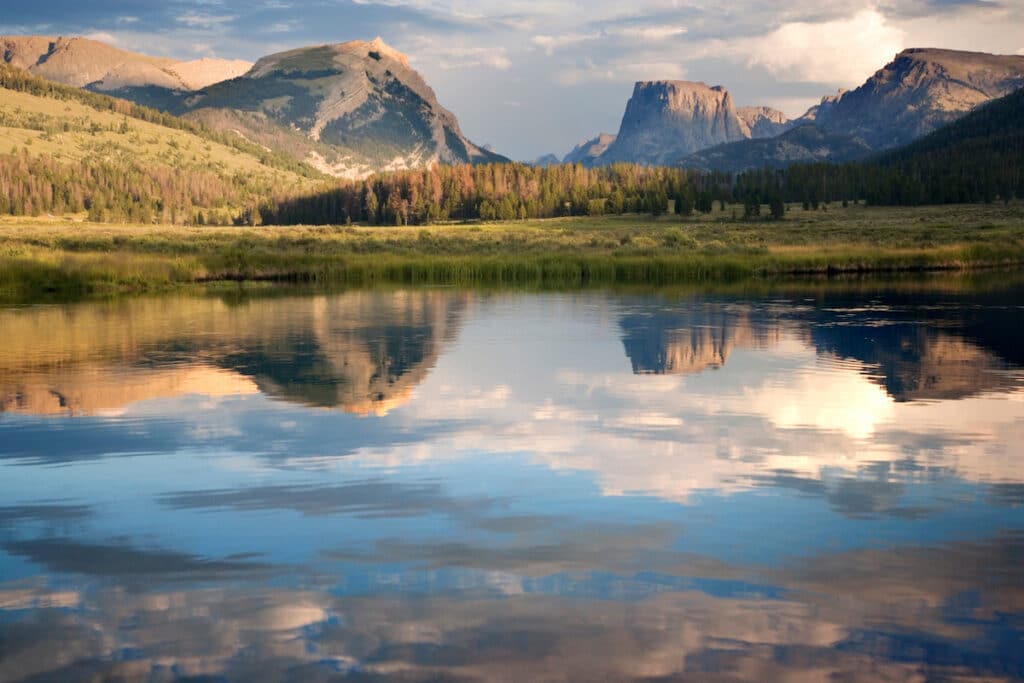
Lander sits at the base of the Wind River Range with the Popo Agie River running through town, providing the outdoor access that draws NOLS professionals and adventure athletes from across the country
2026 Economic Outlook
- NOLS enrollment expanding with growing outdoor education demand
- Wild Iris climbing area gaining increased national media coverage
- Lander Trail mountain bike network drawing cycling community nationally
- Remote worker in-migration accelerating as outdoor media profiles the town
- Wind River Range adventure tourism growing with national outdoor brand
Why Lander is Wyoming’s Outdoor Industry Investment Story
The investment thesis for Lander in 2026 rests on a recognition of how outdoor industry migration works. Unlike general lifestyle migration, outdoor-driven relocation is remarkably durable and self-reinforcing. When a climber discovers Wild Iris and decides to move to Lander, they tell other climbers. When a NOLS instructor completes a course and falls in love with the Wind River Range, they often stay. When an outdoor professional publishes a story about Lander in a national magazine, it generates a wave of similar relocations. This is a compounding, self-reinforcing migration pattern that does not require new economic development or external catalysts; it runs on the quality of the natural environment, which does not depreciate.
- The NOLS flywheel. NOLS processes thousands of students annually through multi-week wilderness courses. These students are educated, high-income individuals who spend weeks in and around Lander and form emotional connections to the place. A meaningful percentage return to visit, then to relocate. NOLS is essentially a continuous pipeline of potential Lander buyers operating at scale that no marketing campaign could replicate.
- The Wild Iris effect. Wild Iris Mountain Sports area is genuinely world-class limestone sport climbing. Climbers who discover it often rearrange their lives to be closer to it. The climbing community is small, wealthy, and highly networked; word-of-mouth drives relocations and purchases in ways that are disproportionate to Lander’s population size.
- The Colorado price differential. Boulder averages $850,000 to $1,000,000 for a modest home. Durango averages $650,000 to $800,000. Fort Collins averages $550,000 to $700,000. Lander averages $375,000 and has comparable or superior outdoor recreation for serious athletes. As Colorado’s outdoor towns become unaffordable, Lander captures the overflow.
- Limited supply geography. The Wind River Range to the west, the Popo Agie River corridor, and Sinks Canyon State Park limit Lander’s developable footprint. Supply constraints support prices in a way that flat-terrain markets cannot match.
Historical Performance
| Period | Market Driver | Avg Annual Appreciation | Key Event |
|---|---|---|---|
| 2010-2018 | NOLS stability, early outdoor migration | 3-5% | Quiet appreciation; Lander known within outdoor community but not yet nationally |
| 2019-2021 | National outdoor media discovery, early migration | 7-10% | Outdoor media begins naming Lander; Colorado climbers and cyclists arrive in meaningful numbers |
| 2022-2023 | Remote work acceleration, outdoor lifestyle premium | 13-18% | Median price jumped from $265,000 to $360,000; inventory depleted; multiple offers on quality properties |
| 2024-2025 | Rate normalization, sustained outdoor migration | 7-11% | Market cooled from peak frenzy but continued rising; demand consistently exceeds supply |
| 2026 | Continued outdoor discovery, NOLS pipeline | 8-12% (projected) | Lander entering mainstream outdoor media narrative; discovery still in progress |
Lander’s 50% appreciation from 2020 to 2026 rivals Buffalo’s trajectory and outperforms every Wyoming market except Jackson. The difference from pure energy markets is that Lander’s appreciation driver is structural and compounding rather than cyclical. The outdoor migration pipeline does not shut off when commodity prices fall; it runs on the quality of the natural environment, which is durable.
Demand Drivers in Detail
- NOLS (National Outdoor Leadership School) – Founded in Lander in 1965 and headquartered here today. Processes thousands of students through multi-week wilderness courses annually. Employs hundreds of full and part-time staff. Creates a continuous pipeline of outdoor professionals who visit, fall in love, and eventually relocate. This is Lander’s most powerful and irreplaceable demand driver.
- Wild Iris Mountain Sports – World-class limestone sport climbing accessible from Lander. Draws climbers from across North America and internationally. The climbing community is highly networked; when a climber relocates to Lander, they recruit others. Wild Iris is a national-caliber outdoor attraction that punches far above Lander’s population weight.
- Lander Trail Mountain Biking – The Lander Trail network connects urban Lander directly to wilderness terrain. Mountain biking has grown explosively as an outdoor activity, and Lander’s trail system is increasingly recognized nationally. Each recognition drives additional migration from the cycling community.
- Wind River Range Access – One of Wyoming’s premier wilderness areas, with Popo Agie Wilderness and Wind River Range high country accessible from Lander trailheads. Backpackers, climbers, anglers, and hunters all use Lander as their base, creating a steady visitor-to-resident conversion pipeline.
- Popo Agie River Fly Fishing – Quality trout fishing flowing directly through the city. The Sinks Canyon section near Lander is among Wyoming’s most accessible quality water. Fly fishing draws high-income sportsmen who increasingly choose to own rather than visit.
- Remote Worker In-Migration – Lander’s combination of outdoor access, affordability relative to Colorado, and Wyoming’s no-income-tax advantage makes it highly attractive to remote professionals. Each year, the migration cohort grows as more workers discover they can work from anywhere and choose Lander.
📚 New to real estate investing? Master the fundamentals with our professional course Learn more →
2. Neighborhood Hotspots
Lander Investment Neighborhood Map
Interactive map of Lander’s investment neighborhoods and surrounding Fremont County opportunities. Green stars mark top hotspots, blue circles show established markets, and orange circles highlight emerging areas.
Core Investment Neighborhoods
Detailed Submarket Analysis: Lander Neighborhoods
| Neighborhood | Price Range (SFH) | Cap Rate | Growth Drivers | Best Strategy |
|---|---|---|---|---|
| Downtown / NOLS Area | $350K to $550K | 5.5 to 7% | NOLS proximity, walkability, Popo Agie River, premium tenants | Appreciation-led hold, NOLS employee targeting |
| South Lander / Trail Access | $360K to $530K | 5.5 to 6.5% | Trail network, climbing community, Sinks Canyon, mountain biking | Outdoor community targeting, strongest appreciation |
| Established East Side | $340K to $490K | 5.5 to 6.5% | Family demand, schools, neighborhood stability | Family-focused, lower turnover, established neighborhood |
| West Lander New Development | $390K to $560K | 5 to 6% | Newer construction, mountain views, lower maintenance | Remote investor preferred, family rentals |
| North Lander / Hospital | $340K to $470K | 5.5 to 6.5% | Healthcare worker demand, stable year-round employment | Healthcare worker focus, stable buy-and-hold |
| Sinks Canyon Corridor (Rural) | $350K to $800K | 5 to 9% (mixed) | State park, climbing access, vacation rental demand | STR, outdoor community, vacation rental growth |
Expert Insight: “NOLS instructors are Lander’s ideal tenant demographic and most landlords have no idea how to specifically attract them. These are highly educated, often Masters-level professionals earning $55,000 to $85,000 a year who deeply respect the places they live, pay rent like clockwork, and typically stay 3 to 5 years. They are not looking for granite countertops. They want solid systems, reliable internet, a garage for gear, and proximity to trails. A $400,000 home that checks these boxes will rent for $1,900 to $2,100 a month to a NOLS employee who will be there for four years. That is genuinely competitive with any Wyoming market when you include the appreciation.” – Amy Whitfield, Lander Real Estate Associates
3. Property Types
| Investment Goal | Best Property Type | Best Location | Minimum Capital |
|---|---|---|---|
| Maximum Appreciation | Outdoor professional target home | South Lander trail access | $93,000 to $140,000 |
| Best Tenant Quality | NOLS employee target home downtown | Downtown / NOLS area | $92,000 to $140,000 |
| Best Total Return | Value-add renovation in prime location | Downtown or South Lander | $100,000 to $150,000 |
| Best Cash Flow / Lander Exposure | Riverton + Lander paired portfolio | Riverton SFH + Lander appreciation play | $155,000 to $240,000 (both) |
Don’t guess the costs. Our Complete Renovation & Remodeling Cost Guide covers 400+ pages of project-by-project breakdowns with real contractor pricing ranges.
4. Cost Analysis
Acquisition Cost Breakdown (Lander)
| Expense Item | Typical Cost | Example ($375,000 Property) | Notes |
|---|---|---|---|
| Down Payment | 25% (investment) | $93,750 | Standard for investment; 20% possible with strong credit |
| Closing Costs | 2 to 3% | $7,500 to $11,250 | Wyoming’s lean closing structure; Fremont County title fees are modest |
| General Inspection | $400 to $550 | $475 | Focus on HVAC, roof, and foundation; older homes near downtown need thorough review |
| Radon Test | $150 to $250 | $200 | Fremont County has elevated radon; test every property |
| Initial Repairs / Outdoor Upgrades | 0 to 8% | $0 to $30,000 | Gear storage, broadband upgrade, heating system if targeting outdoor professional tenants |
| Reserves (6 months) | 6 months expenses | $10,000 to $14,000 | Lander’s tenant pool is smaller; maintain meaningful reserves |
| TOTAL MINIMUM ENTRY | ~30 to 35% | $111,925 to $149,675 | Higher than cash flow markets; justified by appreciation trajectory |
Sample Cash Flow Analysis: Downtown Lander 3-Bedroom SFH (NOLS Employee Tenant)
| Item | Monthly | Annual | Notes |
|---|---|---|---|
| Gross Rent | $1,900 | $22,800 | 3BR, downtown area, updated for outdoor professional market |
| Less Vacancy (7%) | -$133 | -$1,596 | Conservative; NOLS tenants typically stay 3 to 5 years |
| Property Taxes | -$188 | -$2,250 | ~0.6% of $375,000; Wyoming’s low effective rate |
| Insurance | -$130 | -$1,560 | Landlord policy; Wyoming wind coverage important |
| Property Management (10%) | -$190 | -$2,280 | Local Lander manager; NOLS tenants reduce management complexity significantly |
| Maintenance + CapEx (7%) | -$133 | -$1,596 | Post-update home with quality systems; NOLS tenants maintain properties well |
| Net Operating Income | $1,126 | $13,518 | Before mortgage; cap rate 3.6% on $375K price |
| Mortgage ($281,250 at 7%, 30yr) | -$1,872 | -$22,464 | 25% down conventional investment loan |
| MONTHLY CASH FLOW | -$746 | -$8,946 | Negative at current rates; appreciation drives total return |
| Annual Appreciation (10%) | +$3,125 | +$37,500 | At 10% on $375,000; within recent Lander trajectory |
| Annual Principal Paydown | +$459 | +$5,508 | Year 1 principal reduction |
| TOTAL RETURN YEAR 1 (10% appreciation) | ~$34,062 | Appreciation + principal paydown – cash flow deficit | |
| Return on $93,750 Down | ~36% | Leveraged return on equity at 10% appreciation; compelling total return story |
Lander’s investment calculus is identical to Buffalo’s: the monthly cash flow is negative at current rates, but the leveraged total return on appreciation is extraordinary. A $375,000 property appreciating at 10% creates $37,500 in equity per year on a $93,750 down payment, a 40% gross return on equity before considering the modest monthly deficit. Investors who understand this math and have the income to carry the monthly shortfall are building wealth at a rate most markets cannot match.
Expert Insight: “Lander is the best-kept secret in Wyoming investment and it is not going to stay that way much longer. Every major outdoor publication is starting to write about it. When Outside Magazine or Gear Junkie profiles Lander as a top outdoor destination, you get a wave of readers who decide to visit, and a meaningful percentage of those visitors decide to stay. NOLS has been driving this quietly for 60 years. The outdoor media mainstream is now amplifying it. The investors who buy in the next 24 months will look back at this window the way Sheridan investors look back at 2018.” – James Caldwell, Wind River Investment Properties
5. Legal Framework
Wyoming’s Full Landlord-Friendly Advantage in Lander
Lander and Fremont County operate under Wyoming’s straightforward landlord-tenant framework with no local overlays. The same Wyoming advantages that apply in Douglas, Riverton, and Worland apply fully in Lander: no rent control, no just cause eviction requirement, no rental registration, and no source of income protections. Lander has one notable consideration not shared by most Wyoming markets: the Wind River Indian Reservation land status complexity applies to rural and some peri-urban properties in Fremont County, exactly as documented in the Riverton guide.
Wyoming Landlord-Tenant Essentials
- No Rent Control: Wyoming prohibits rent control statewide. Lander landlords raise rents freely as appreciation-driven market rates rise, with no bureaucratic approval.
- Eviction (Non-Payment): 3-day notice to pay or quit. File unlawful detainer after 3 days. Fremont County courts process cases efficiently. Full eviction typically completes in 3 to 6 weeks.
- No Just Cause Requirement: Month-to-month tenancies can be ended with 30 days notice, no cause required. NOLS instructors often work seasonal schedules; this flexibility is valuable for both landlords and tenants.
- Security Deposits: Maximum 1.5 months rent for unfurnished units. Return within 30 days with itemized deductions.
- Tenant Screening: Full landlord discretion subject to federal Fair Housing. Standard credit, income, and rental history screening fully permissible.
Lander-Specific Considerations
- No Rental Registration: The City of Lander does not require landlord registration or rental operating licenses. Zero compliance overhead.
- Short-Term Rentals: No specific STR ordinance in Lander as of 2026. Wyoming lodging tax (4%) applies to stays under 30 days. Register with Wyoming Department of Revenue before operating any STR, including Sinks Canyon area vacation rentals.
- Wind River Indian Reservation: Exactly as in Riverton, rural Fremont County properties may have Reservation land status complexity. Standard in-town Lander properties are fee simple with no complications. Verify land status with a Fremont County title company for any rural acquisitions.
- Water Rights: Rural properties may have water rights associated with irrigation. Always verify with a Wyoming water law attorney before any rural purchase.
- Property Taxes: Fremont County effective rate approximately 0.6% of assessed value; Wyoming’s competitive low rate applies fully in Lander.
Useful Lander Resources
- City of Lander: cityoflander.net
- Fremont County Assessor: fremontcountywy.gov
- Wyoming DOR (STR Tax): revenue.wyo.gov
- Wyoming Attorney General Landlord Guide: ag.wyo.gov
| Regulation | Wyoming / Lander Rule | Investor Impact |
|---|---|---|
| Eviction Speed | 3-day notice, 3 to 6 weeks total | Fast resolution; NOLS tenant quality makes this rarely needed |
| Rent Increases | Any amount; 30-day notice | Full flexibility; appreciation-driven rent increases permissible |
| Reservation Land Status | Verify for rural Fremont County properties | In-town Lander properties are standard fee simple; rural requires title verification |
| Short-Term Rentals | No local ordinance; Wyoming lodging tax applies | Permitted with tax compliance; Sinks Canyon and Wild Iris access STRs viable |
| Rental Registration | Not required in Lander | Zero compliance cost; no inspections or licensing overhead |
6. Step-by-Step Lander Investment Playbook
Choose Your Lander Strategy
NOLS Employee Anchor Rental
Acquire a quality home near downtown NOLS campus. Update gear storage, broadband, and heating. Market specifically to NOLS staff through the school’s HR and employee bulletin board. Lock in a 3 to 5 year NOLS employee who treats the property like their own. Accept negative carry as the cost of holding Lander’s appreciation trajectory.
Outdoor Professional Value-Add
Buy a dated home in a prime location at a discount. Renovate adding the specific features that outdoor professionals pay a premium for: gear room, reliable broadband, functional mud room, efficient heating. Rent at a meaningful premium to standard Lander market. Capture both forced equity and ongoing appreciation.
Sinks Canyon / Wild Iris STR
Acquire rural property with Sinks Canyon State Park or Wild Iris climbing access. Operate as a short-term rental for visiting outdoor recreation enthusiasts during peak seasons. Supplement with a long-term tenant in the off-season. Niche but growing with Lander’s national outdoor profile.
Fremont County Portfolio Play
Buy one Lander appreciation property and one Riverton cash flow property. The Riverton property generates $150 to $300 positive monthly cash flow that partially offsets Lander’s negative carry. This paired approach gives exposure to both Fremont County appreciation drivers while maintaining positive combined cash flow.
Build Your Lander Team
- NOLS Community Connection: Before hiring any formal team member, connect with the NOLS community in Lander. NOLS employees refer each other for housing, know which landlords are good to work with, and provide word-of-mouth marketing for quality rental properties that no paid platform can match. Attend a Lander community event and introduce yourself.
- Local Real Estate Agent: Lander’s agent market is growing. Find one who specifically understands the outdoor professional tenant demographic and can identify properties with the features (trail proximity, gear storage potential, broadband infrastructure) that this demographic prioritizes.
- Property Manager: Essential for remote investors. Interview Lander property managers specifically about their experience with NOLS employee tenants and their knowledge of the outdoor recreation rental premium.
- Contractor with Outdoor Sensitivity: Renovating for the outdoor professional market requires specific judgment: preserve original character where it exists, add functional gear storage, do not over-modernize in ways that feel inauthentic to the outdoor community. Find a contractor who lives in Lander and understands what the community values.
- Fremont County Title Company: Same consideration as Riverton: Reservation land status complexity in rural Fremont County requires a Fremont County-experienced title examiner for any rural property.
Lander-Specific Due Diligence
Physical Due Diligence
- Radon test: Fremont County elevated; test every property
- Heating: Wyoming winters are severe; inspect furnace condition
- Roof: Wind and hail damage prevalent in Lander Valley
- Broadband: Confirm fiber or cable internet availability at the specific address before purchase; this is a tenant requirement, not an amenity
- Gear storage potential: Assess whether a garage, basement, or outbuilding can serve as gear storage; this is a meaningful rent driver for outdoor professional tenants
- Trail proximity: Physically walk from the property to the nearest trailhead; marketing this proximity is a specific rent driver
Market and Legal Due Diligence
- For rural properties: verify Fremont County land status and Reservation boundary proximity
- Confirm fiber internet specifically at the property address
- Research current NOLS employee housing demand through property manager contacts
- Check Popo Agie River flood zone for any creek-adjacent properties
- Verify water rights for rural Fremont County properties
- Research comparable outdoor professional rental rates through local property managers; Lander’s premium rental market is not fully reflected in standard MLS data
Marketing to the NOLS and Outdoor Community
- Post at NOLS directly: NOLS’s HR department maintains employee housing boards and will often post approved landlord listings for incoming staff. Contact the school’s employee services department and register your property.
- Use outdoor community channels: Mountain Project (the climbing community’s main resource site), local outdoor club bulletin boards, and the Lander community Facebook groups all reach the specific demographic you want as tenants. Standard rental platforms like Zillow reach a broader audience but miss the outdoor professional specifically.
- Photograph trail access specifically: Show the actual trailhead nearest the property. Photograph the gear storage area. Show the mountain views if any exist. This is not standard landlord marketing; it is marketing to a specific outdoor community that makes housing decisions based on outdoor access above all else.
- Invest in broadband confirmation: List the confirmed internet provider and speed in your listing. This is a dealbreaker for remote workers; confirming it prominently attracts the highest-income tenant segment immediately.
- Price at the outdoor premium: A property with confirmed fiber, dedicated gear storage, and direct trail access in South Lander commands $200 to $400 above a comparable property without these features. Do not price to average; price to the outdoor professional premium you have created.
7. Financing Options for Lander
| Loan Type | Down Payment | Rate Premium | Best For | Lander Note |
|---|---|---|---|---|
| Conventional Investment | 25% | +0.5 to 0.75% | W-2 income, strong credit | Most Lander residential properties within conforming limits; standard access |
| DSCR Loan | 25 to 30% | +1.5 to 2.5% | Self-employed, portfolio builders | Lander cap rates of 5.5 to 7% may not fully support DSCR at 1.0x at current rates; verify before going under contract |
| Portfolio Loan | 20 to 25% | +0.75 to 1.5% | Multiple properties, relationship banking | Fremont County community banks understand Lander’s outdoor industry-driven market |
| Renovation / Construction Loan | 20 to 25% | +1 to 2% | Value-add projects | HELOC on existing equity typically more efficient for Lander renovation financing |
| Hard Money (Bridge) | 15 to 25% | 9 to 12% rate | Value-add acquisitions, competitive offers | Wyoming and Colorado hard money lenders serve Lander; useful for competitive offer situations |
| USDA Rural Loan | 0% (owner-occupied) | Standard + guarantee fee | Owner-occupants in eligible rural areas | Some Lander-adjacent rural areas qualify; check USDA eligibility map |
Lander Financing Reality: Like Buffalo, Lander’s 5.5 to 7% cap rates mean DSCR loans are marginal at current interest rates. Most Lander investors use conventional or portfolio loans and accept negative monthly cash flow as the price of holding an appreciating outdoor lifestyle asset. Investors who require positive day-one cash flow should look at Riverton for their Fremont County exposure. The most sophisticated approach is the Fremont County portfolio play: a Riverton property providing positive cash flow plus a Lander property providing appreciation, with the combined portfolio producing modest positive net cash flow while capturing both markets’ distinct return drivers.
8. Frequently Asked Questions

Knowledge Quiz: Lander, Wyoming Real Estate Investment
Open Quiz
5 quick questions on what you just learned about investing in Lander
1) Why is NOLS headquarters in Lander described as an irreplaceable real estate demand driver?
Answer: B
NOLS has been headquartered in Lander since 1965 and cannot be relocated because its Wind River Range curriculum is tied to this specific geography. It employs hundreds of year-round staff and processes thousands of students through courses, creating an ongoing pipeline of outdoor professionals who discover Lander and return to relocate. This self-reinforcing pipeline is unique to Lander among all Wyoming markets.
2) What single property feature generates the highest rent premium among outdoor professional tenants in Lander?
Answer: C
Outdoor professional tenants, NOLS instructors, climbers, skiers, and cyclists, all accumulate significant, expensive equipment that needs dry, secure, accessible storage. A dedicated gear room or weatherproof storage area commands $100 to $200 per month in rent premium, representing $1,200 to $2,400 annually on an installation cost of $2,000 to $8,000. This is among the highest ROI improvements available for the Lander rental market.
3) What is the “Fremont County portfolio play” described in the guide and why does it work?
Answer: A
Riverton offers 7 to 8% cap rates and positive cash flow; Lander offers 8 to 12% appreciation and premium tenant quality but negative monthly cash flow. Combining one property from each market in a paired portfolio produces modest overall positive or near-neutral cash flow while capturing appreciation from Lander and cash flow stability from Riverton. This is how the most sophisticated Fremont County investors approach the two complementary markets.
4) How does Wild Iris Mountain Sports create a migration pipeline for Lander?
Answer: D
Wild Iris is one of North America’s premier limestone sport climbing destinations, featuring hundreds of high-quality routes on exceptional rock. The climbing community is small, highly networked, and often structures life choices around climbing access. Climbers who visit Wild Iris encounter Lander’s affordability versus comparable Colorado climbing destinations and increasingly decide to relocate. Each relocation recruits additional climbers through community networks.
5) Why does the guide compare Lander’s investment trajectory to Sheridan circa 2018 rather than Jackson?
Answer: C
Jackson’s appreciation was driven by extreme luxury demand, geographic scarcity, and ultra-high-net-worth buyers creating a market most Wyoming investors cannot participate in. Sheridan’s 35 to 40% appreciation from 2019 to 2023 was driven by remote workers and lifestyle migrants from Colorado and California seeking western authenticity at affordable prices, exactly the same demographic driving Lander’s appreciation today. Lander is in the early stages of Sheridan’s 2019 trajectory, making it the more actionable comparison.
Work With a Local Expert in Lander
We are building a verified network of real estate professionals across every market we cover.

About Our Expert Network
We are finalizing partnerships with verified real estate professionals across every market featured on Builds and Buys. Each expert in our network is selected for their hands-on investment experience, local market knowledge, and commitment to helping buyers and investors make sound decisions.
- Proven experience with investment and income-producing properties
- Deep knowledge of local pricing, rental yields, and neighborhood dynamics
- Guidance on financing, legal structure, and due diligence
- Access to off-market and pre-market opportunities
- Full transaction support from search through closing
- Ongoing portfolio and property management referrals
Services Covered
- Property sourcing and acquisition
- Investment analysis and underwriting
- Buyer representation
- Market comparables and valuations
- Short-term and long-term rental strategy
- Value-add and renovation guidance
- Legal and title referrals
- Financing and lender connections
- Property management referrals
- Insurance and inspection referrals
- 1031 exchange coordination
- Exit strategy planning
Get Connected or Join Our Network
Looking for a local expert in Lander? Reach out and we will connect you with the right professional for your market and strategy.
Are you a real estate professional experienced in the Fremont County outdoor lifestyle market? We are always expanding our expert network.
Contact us at support@buildsandbuys.com
Find Specialized Wyoming Real Estate Professionals
Ready to Invest in Lander?
Lander is Wyoming’s outdoor industry capital and one of the most compelling appreciation investment stories in the Rocky Mountain region. The NOLS pipeline is 60 years old and growing. Wild Iris is internationally recognized and will continue drawing climbers who become residents. The Wind River Range will not diminish. The gap between Lander and comparable Colorado outdoor towns will compress over time. The investors who buy in the next 24 months will participate in an appreciation cycle comparable to what Sheridan delivered between 2019 and 2023. The outdoor community knows Lander is extraordinary. The national real estate investment community is just starting to notice. That window is closing but has not yet closed.
Continue Your Research
Wyoming State Guide
See how Lander compares to Riverton, Sheridan, and other Wyoming markets.
Riverton Guide
Understand the Riverton cash flow story to build the optimal Fremont County portfolio.
144-Lesson Course
University-level real estate education covering financing, law, strategy, and management.
For further guidance, explore our State-by-State Investor guides, browse our expert articles, or follow our Step-by-Step Investment Guide.



