Lakewood Colorado Real Estate Investment Guide For 2026
The complete investor’s guide to Colorado’s fourth-largest city, where mountain proximity, Colorado School of Mines demand, and the W Line light rail create a uniquely positioned market sitting between Denver’s urban intensity and the foothills lifestyle premium
Quick answers: Top 5 most searched Lakewood investment questions ▼
Migration data: Where people are moving from to Lakewood ▼
In This Guide
Click on any section to navigate directly to that content
1. Lakewood Market Overview
Market Fundamentals
Lakewood occupies a strategic position that no other Denver suburb can replicate: it sits at the precise intersection of urban connectivity and mountain access, two things that the majority of Colorado’s in-migration is specifically seeking. The W Line light rail delivers Lakewood residents to downtown Denver in 30 minutes while the western edge of the city sits 15 minutes from Red Rocks Amphitheatre and the I-70 mountain corridor.
This dual access premium is not theoretical. It manifests in Lakewood’s rental market as a consistent demand floor from two entirely different tenant groups: Denver commuters who want lower rents without sacrificing urban access, and outdoor-oriented professionals who specifically target mountain proximity as a non-negotiable lifestyle requirement.
- Population: 165,000+, Colorado’s fourth-largest city
- Major Employers: Lockheed Martin Space (Waterton Canyon campus), National Renewable Energy Laboratory (adjacent Golden), Colorado School of Mines (Golden), Denver Federal Center (largest federal office complex outside Washington DC), St. Anthony Hospital
- Median Household Income: $68,000
- Light Rail: W Line with 9 stations running from Lakewood to Denver Union Station
- Vacancy Rate: 4 to 5.5% citywide, tighter in W Line corridor and western foothills edge
The Denver Federal Center in Lakewood is one of the most overlooked demand anchors in the metro. With 26 federal agencies occupying over 2.5 million square feet and 6,000+ federal employees, it generates a stable, high-income renter and buyer base that does not fluctuate with private sector hiring cycles.
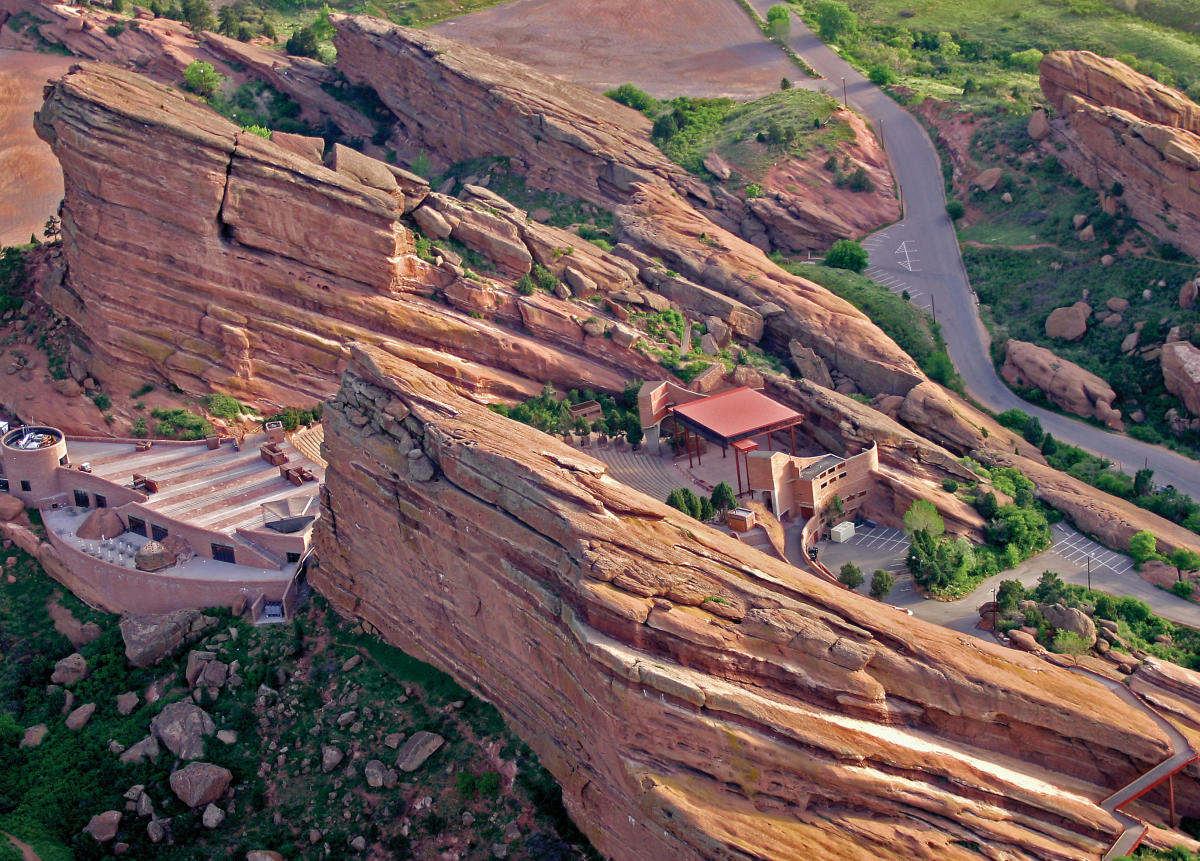
Lakewood’s western edge touches the foothills, delivering the mountain proximity premium that drives consistent rental demand from outdoor-oriented professionals
2026 Economic Outlook
- Lockheed Martin Space Systems expanding its Waterton Canyon campus with 500+ new positions
- NREL receiving $2.1B in federal clean energy research funding driving researcher hiring
- Belmar Phase 3 mixed-use development adding 400 residential units and tech office space
- W Line ridership increasing as Denver core rents push affordability-seekers westward
- Colorado School of Mines enrollment growing, increasing student housing demand into Lakewood
The Lakewood Investment Thesis: Three Demand Layers
Unlike markets that rely on a single anchor employer or demographic, Lakewood’s rental market is supported by three distinct and non-correlated demand layers that provide portfolio-level stability even when individual layers soften:
Layer 1: Denver Urban Spillover
W Line light rail makes Lakewood functionally part of Denver’s urban core for commuting purposes. Renters who want Denver employment without Denver prices. This layer grows proportionally with Denver rental price increases, creating a self-reinforcing demand driver as Denver gets more expensive.
Layer 2: Foothills Lifestyle Premium
Remote workers, outdoor recreation professionals, and lifestyle migrants from California and Texas who specifically target mountain proximity. Red Rocks, Bear Creek Lake Park, and the Green Mountain trail system create a lifestyle premium that is impossible to replicate in eastern Denver suburbs. This layer has grown steadily since 2020 and shows no signs of reversing.
Layer 3: Government and Research Employment
Denver Federal Center (6,000+ federal employees), Lockheed Martin Space (2,000+ engineers), and NREL (3,000+ researchers) create a government and defense-adjacent employment base that is highly recession-resistant. These employees need housing across all price tiers and represent the most stable demand layer in Lakewood’s rental market.
Historical Performance
| Period | Market Driver | Avg Annual Appreciation | Key Event |
|---|---|---|---|
| 2010-2014 | Belmar development maturing, W Line planning | 4-6% | Belmar establishes Lakewood as urban destination rather than bedroom suburb |
| 2015-2019 | W Line opens, Denver overflow accelerates | 8-13% | W Line completion transforms Lakewood’s transit connectivity; prices accelerate |
| 2020-2022 | Remote work migration, outdoor premium surge | 15-20% | Mountain proximity became a primary rental and purchase criterion; western Lakewood surged |
| 2023-2024 | Rate normalization | 2-5% | Market softened but foothills edge held better than eastern Lakewood |
| 2025-2026 | Rate stabilization, Lockheed and NREL expansion | 7-11% (projected) | Federal Center and defense sector growth driving steady western corridor demand |
📚 New to real estate investing? Master the fundamentals with our professional course Learn more →
2. Neighborhood Hotspots
Lakewood Investment Neighborhood Map
Interactive map of Lakewood’s investment neighborhoods. Green stars mark top hotspots, blue circles show established markets, and orange circles highlight emerging areas.
Core Investment Neighborhoods
Detailed Submarket Analysis
| Neighborhood | Price Range | Cap Rate | Primary Driver | Best Strategy |
|---|---|---|---|---|
| Belmar / W Line | $380K-$650K | 4.5-6.0% | Urban walkability, W Line transit, young professionals | Transit-oriented condo, young professional rental |
| Green Mountain / Rooney | $550K-$950K | 4.0-5.0% | Mountain proximity, outdoor lifestyle premium | Premium SFH hold, lifestyle rental positioning |
| Applewood / Daniels Park | $575K-$950K | 4.2-5.2% | Golden proximity, Mines and NREL employment, top schools | Executive SFH, family rental, long-term appreciation |
| Lakewood Historic / Eiber | $400K-$620K | 4.8-6.2% | W Line access, value-add mid-century stock | Value-add renovation, BRRRR, balanced returns |
| Federal Center Adjacent | $430K-$650K | 4.5-5.8% | 6,000+ federal employees, recession-resistant demand | Stable hold, government worker housing |
| Kendrick Lake / W Colfax | $380K-$560K | 5.0-6.5% | Denver adjacency, W Line access, improving demographics | Value-add, cash flow focus, early-stage improvement |
| Bear Creek / Morrison Road | $430K-$650K | 5.0-6.5% | Bear Creek access, foothills lifestyle at lower price point | Value-add, emerging foothills corridor |
| Wheat Ridge Border / Wadsworth | $390K-$570K | 5.5-7.0% | Wheat Ridge momentum, W Line access, affordability | Cash flow focus, BRRRR, value-add |
Expert Insight: “Investors consistently underestimate the value of the Denver Federal Center as a rental demand anchor. With 26 federal agencies and 6,000 employees, it generates housing demand from GS-7 through SES pay scale workers whose salaries range from $50,000 to $200,000+. Federal employees do not get laid off in recessions. They do not relocate when a company downsizes. They stay for careers, not quarters. Properties within a 10-minute drive of the Federal Center gate have outperformed broader Lakewood averages in every market downturn over the past 20 years simply because the demand foundation never wavers.” – Sandra Kline, Director, Jefferson County Investment Properties
3. Property Types
| Investment Goal | Best Property Type | Best Areas | Minimum Capital |
|---|---|---|---|
| Maximum Appreciation | Premium SFH in western foothills edge | Green Mountain, Rooney Valley | $145,000+ |
| Best Cash Flow | Small multi-family or value-add ranch | Lakewood Historic, Kendrick Lake, W Colfax | $105,000+ |
| Balanced Returns | Value-add ranch near W Line station | Lakewood Historic, Eiber, Belmar adjacent | $115,000+ |
| Stability Focus | SFH near Denver Federal Center | Federal Center adjacent neighborhoods | $115,000+ |
Our Complete Renovation and Remodeling Cost Guide covers 400+ pages of project-by-project breakdowns applicable to Jefferson County and the western Denver metro.
4. Cost Analysis
Acquisition Cost Breakdown (Lakewood)
| Expense Item | Typical Cost | Example ($525,000 Property) | Notes |
|---|---|---|---|
| Down Payment | 25% | $131,250 | Standard investment property in Colorado |
| Closing Costs | 2-3% | $10,500-$15,750 | Title, lender, recording, Jefferson County transfer |
| Inspection | $450-$700 | $550 | Sewer scope essential for pre-1985 Lakewood homes |
| Radon Testing | $150-$300 | $200 | Jefferson County elevated radon zone. Mitigation $800 to $2,500. |
| Hail Assessment | Part of inspection | $0 | Same hail exposure as Denver metro. Class 4 roof upgrade recommended. |
| Initial Repairs | 0-10% | $0-$52,500 | Mid-century ranch homes often need kitchen, bath, and systems updates |
| Reserves | 6 months | $11,000-$16,000 | Emergency fund for vacancy and repairs |
| TOTAL MINIMUM ENTRY | ~28-32% | $153,500-$216,000 | Moderate entry point relative to Denver proper |
Sample Cash Flow Analysis: Lakewood Historic 3BR Value-Add Ranch
| Item | Monthly | Annual | Notes |
|---|---|---|---|
| Gross Rent | $2,400 | $28,800 | 3BR renovated ranch near Belmar, W Line access |
| Less Vacancy (5%) | -$120 | -$1,440 | Conservative for renovated W Line property |
| Property Taxes | -$275 | -$3,300 | ~0.55% of $600K total cost (purchase + renovation) |
| Insurance | -$185 | -$2,220 | Landlord policy with hail endorsement |
| Property Management (9%) | -$216 | -$2,592 | Jefferson County management firms active in Lakewood |
| Maintenance and CapEx (8%) | -$192 | -$2,304 | Post-renovation, 8% reasonable for updated ranch |
| Net Operating Income | $1,412 | $16,944 | Before mortgage |
| Mortgage ($490K purchase + $80K renovation = $570K, 25% down, 6.75%, 30yr) | -$2,770 | -$33,240 | P and I on $427,500 financed |
| CASH FLOW | -$1,358 | -$16,296 | Negative but renovation added $80K to $120K in immediate equity |
| Cap Rate | 2.97% | NOI / total investment including renovation | |
| Total Return (10% appreciation on $570K) | ~22% | Including equity, appreciation, and principal paydown on total cost basis |
The renovation value-add is the key lever in this analysis. By purchasing a dated ranch at $490,000 and investing $80,000 in targeted renovation, the investor creates $80,000 to $120,000 in immediate ARV uplift, increases rents from approximately $1,950 (as-is) to $2,400 (renovated), and positions the property for refinancing to extract equity for the next acquisition. This is the Lakewood BRRRR cycle working as designed.
Expert Insight: “The Lakewood value-add ranch strategy is one of the most consistent wealth-building approaches in the Denver metro. The city has an enormous inventory of 1955 to 1975 ranch homes that were well-built but have aged interiors. Targeted renovations at $60,000 to $100,000 routinely generate $150,000 to $220,000 in ARV improvement. The math works because Lakewood buyers and renters in the post-renovation market are comparing to remodeled Denver properties at 20% higher prices. Lakewood captures the spillover demand while offering better returns on renovation capital.” – James Ortega, Jefferson County Investment Partners
5. Legal Framework
✅ Lakewood Regulatory Environment
Lakewood follows Colorado state landlord-tenant law without Denver’s additional municipal overlay. There is no just cause eviction ordinance, no first-in-time applicant rule, and no STR primary residence requirement at the intensity Denver imposes. Lakewood is among the most investor-friendly cities in the Denver metro for regulatory purposes, while still requiring compliance with Colorado’s meaningful statewide tenant protections.
Colorado State Regulations (Lakewood)
- Eviction: 10-day notice for non-payment. After notice period, file with Jefferson County Court. Uncontested evictions typically complete in 3 to 6 weeks.
- No Just Cause Requirement: Lakewood landlords can non-renew leases at expiration without cause. Significantly more flexible than Denver’s post-12-month just cause requirement.
- Rent Increase Notice: 60 days written notice required by Colorado state law. No Lakewood-specific overlay.
- Security Deposit: Return within 60 days with itemized deduction accounting. Failure triggers double deposit liability.
- Source of Income: Colorado statewide protection applies. Cannot refuse qualified Section 8 voucher holders.
- STR: Lakewood requires a Short-Term Rental License and annual renewal. Unlike Denver, Lakewood does not require primary residence for all STR categories, though specific zone regulations vary. Annual license fee is $100. Verify zoning for any planned STR property.
- ADU: Lakewood allows ADUs on most single-family lots consistent with Jefferson County zoning. ADU permitting through Lakewood Community Development, typically 3 to 8 months.
Compliance Best Practices
- Jefferson County Court Familiarity: Eviction filings go through Jefferson County District Court. Working with a Lakewood-experienced property manager familiar with local court procedures is recommended.
- Lease Templates: Use a current Colorado state-compliant lease. Update annually for any state legislative changes. Colorado tenant protections evolved significantly between 2021 and 2024.
- Hail Insurance: Jefferson County carries the same hail exposure as Denver. Landlord policy with explicit hail endorsement and reasonable deductibles is essential. Class 4 roofing upgrade standard recommendation.
- HOA Research: Lakewood has significant HOA density in newer planned communities. Any purchase in a planned community requires a full HOA document review for rental restrictions before closing.
- STR Compliance: If operating any STR, obtain Lakewood’s license before listing on any platform. Enforcement has become more consistent since 2023.
- Radon Disclosure: Colorado requires disclosure of radon test results to tenants. Test at acquisition and document results.
Useful Lakewood Resources
- Lakewood Community Development: lakewood.org/cdd
- Jefferson County Court (evictions): jeffco.us/courts
- Colorado Apartment Association: caahq.org
- Lakewood STR Licensing: lakewood.org/business
| Regulation | Lakewood (State Law) | Denver (Municipal) | Investor Impact |
|---|---|---|---|
| Eviction Cause | No just cause; non-renew freely | Just cause after 12 months | Lakewood significantly more flexible |
| Timeline | 3 to 6 weeks uncontested | 4 to 16 weeks with just cause disputes | Lakewood exposure to problem tenants is shorter |
| STR | License required; less restrictive | Primary residence required; highly restrictive | Lakewood more viable for investment property STR |
| Rent Increases | 60 days notice | 60 to 81 days for large increases | Minimal practical difference; plan 3 months ahead |
| ADU | Permitted on most lots; 3 to 8 months permit | Citywide reform; 3 to 9 months permit | Similar ADU opportunity in both jurisdictions |
6. Step-by-Step Lakewood Investment Playbook
Choose Your Lakewood Strategy
Foothills Premium Play
Buy in western Lakewood near Green Mountain and Bear Creek. Market specifically to outdoor lifestyle renters and remote workers. Accept slightly lower cap rates in exchange for the mountain proximity premium and superior long-term appreciation.
Value-Add BRRRR
Target dated mid-century ranch homes in Lakewood Historic, Eiber, or Kendrick Lake. Renovate, increase rents, refinance out equity. The most active investor strategy in Lakewood currently with the best risk-adjusted returns for experienced operators.
W Line Transit-Oriented
Purchase within 10 minutes walk of W Line stations. Market to Denver commuters who want lower rents without sacrificing metro connectivity. Best balance of immediate yield and long-term appreciation in the Lakewood market.
Government Stability Play
Focus on Federal Center and Lockheed Martin proximity. Target government and defense contractor employees who prioritize commute convenience and stability over urban amenities. Low vacancy, predictable rent growth, recession-resistant demand.
Build Your Lakewood Team
- Jefferson County Specialist Agent: Must understand the distinction between east and west Lakewood appreciation dynamics and have specific experience with mid-century ranch value-add transactions.
- Colorado Real Estate Attorney: For entity structuring. Lakewood’s regulatory environment is simpler than Denver’s but Colorado state law still requires careful lease compliance.
- Lakewood Property Manager: Verify familiarity with Jefferson County court eviction procedures and W Line corridor rental markets specifically.
- Renovation Contractor: For BRRRR and value-add strategies, your GC needs specific experience with 1950s to 1970s ranch homes. Mid-century construction has distinct structural and systems characteristics requiring experienced handling.
- Colorado CPA: Jefferson County’s 2-year assessment cycle creates regular property tax protest opportunities. A CPA familiar with Lakewood’s assessment patterns can reduce annual tax burden on value-add properties significantly.
Lakewood-Specific Due Diligence
Physical Checks
- Hail damage on roof and all exterior surfaces
- Radon testing mandatory in Jefferson County elevated zone
- Sewer scope for any pre-1985 construction
- Asbestos testing for any pre-1980 home planned for renovation (very common in Lakewood’s mid-century stock)
- Foundation check for bentonite clay soil movement in south Lakewood
- Original galvanized plumbing inspection in 1950s to 1960s homes; replacement often needed
Regulatory and Market Checks
- Confirm property is in Lakewood city limits versus unincorporated Jefferson County (different permitting authority)
- HOA review for any planned community purchase; rental restriction rates are high in Lakewood HOAs
- W Line walkability score: use RTD station maps to confirm actual walk time versus Google Maps estimate
- Verify ADU eligibility if that strategy is planned; confirm lot coverage, setbacks, and zoning classification
- Check for any open building permits or code violations through Lakewood’s online portal
Marketing to Lakewood’s Distinct Tenant Demographics
- Outdoor lifestyle renters: List Green Mountain and Bear Creek properties on Craigslist Denver outdoor section and local trail running, climbing, and cycling Facebook groups. The phrase “5 minutes to Bear Creek trails” consistently outperforms standard real estate listing language for this demographic.
- CSM students and faculty: Colorado School of Mines maintains an off-campus housing board. Listing there is free and highly targeted. Faculty and staff prefer Applewood and north Lakewood; students will commute from Belmar area if the price is right.
- Federal Center employees: Post in the Denver Federal Center employee intranet housing section and Jefferson County government employee Facebook groups. GS-scale employees are extremely stable tenants who appreciate proximity to the Federal Center gate.
- Denver W Line commuters: List on Zillow with explicit light rail references: “8-minute walk to W Line, 35 minutes to downtown Denver.” This language drives click-through rates from the Denver commuter demographic significantly higher than neighborhood-based descriptions alone.
7. Financing Options for Lakewood
| Loan Type | Down Payment | Rate Premium | Best For | Lakewood Note |
|---|---|---|---|---|
| Conventional Investment | 25% | +0.5-0.75% | Most Lakewood purchases under $806,500 | Most Lakewood SFH qualify for conventional conforming; western corridor executive homes may push toward jumbo |
| 203K Renovation Loan | 3.5% (owner-occ) | Standard plus MIP | Owner-occupying a value-add property during renovation | Excellent for house hacking Lakewood ranch homes; wraps renovation costs into single mortgage |
| DSCR Loan | 25-30% | +1.5-2.5% | Investors with non-W2 income | Some Lakewood multi-family and higher-yield corridors can achieve 1.0x DSCR at current rates |
| Hard Money Bridge | 15-25% | 9-13% rate | BRRRR acquisitions in value-add ranch corridors | Several Jefferson County hard money lenders active with 5 to 7-day close capability |
| Portfolio Loan | 20-30% | +1-1.75% | Scaling to 5+ Lakewood properties | Local Jefferson County banks and Colorado community lenders offer portfolio products to active investors |
| HELOC on Existing Equity | N/A | Prime plus 0.5-1.5% | Funding ADU construction or renovation on owned property | Investors with existing equity in appreciated Lakewood properties often use HELOC to fund next acquisition or renovation |
Lakewood Financing Note: The 203K renovation loan deserves special attention for Lakewood investors because it directly addresses the city’s primary investment opportunity: mid-century ranch homes needing modernization. An investor or house hacker who purchases a dated Lakewood ranch and uses a 203K loan can wrap both acquisition and renovation costs into a single mortgage at the lower owner-occupied rate, dramatically reducing the capital required to execute the value-add strategy. After the one-year owner-occupancy requirement is satisfied, the property converts to a rental with the renovation completed and equity built.
8. Frequently Asked Questions

Knowledge Quiz: Lakewood Colorado Real Estate
Open Quiz
5 quick questions on what you just learned about Lakewood investing
1) What was the Villa Italia mall site redeveloped into, and why does it matter for investors?
Answer: C
The 104-acre Villa Italia mall site was redeveloped into Belmar, Lakewood’s 22-block mixed-use urban district with retail, dining, offices, residential units, and a central park. The W Line Belmar station opened in 2013 and transformed the district’s connectivity to Denver. Belmar fundamentally repositioned Lakewood’s identity from a bedroom suburb to an urban destination, driving a decade of appreciation in surrounding neighborhoods.
2) What makes western Lakewood near Green Mountain distinct from eastern Lakewood as an investment?
Answer: B
Western Lakewood near Green Mountain and Bear Creek commands a 10 to 18% rental premium over comparable central Lakewood properties due to mountain proximity. Properties with Bear Creek Lake Park, Green Mountain trail system, and Red Rocks access at the doorstep attract remote workers and outdoor lifestyle professionals from California and Texas who specifically target this location. This premium has grown consistently since 2020.
3) Why does the guide specifically recommend asbestos testing for pre-1980 Lakewood properties?
Answer: D
Lakewood has an enormous stock of mid-century ranch homes built between 1955 and 1978 when asbestos was commonly used in floor tiles, popcorn ceilings, pipe insulation, roofing, and siding. Any renovation that disturbs asbestos-containing materials triggers Colorado abatement regulations. Testing costs $300 to $800 and abatement can run $2,000 to $40,000+ depending on scope. Investors who discover this mid-renovation without budget allowances face expensive delays.
4) What is the Denver Federal Center and why does it create recession-resistant rental demand?
Answer: A
The Denver Federal Center in Lakewood is the largest federal office complex outside Washington DC, housing 26 federal agencies across 2.5 million square feet and employing 6,000+ federal workers. Federal employees do not get laid off in recessions and rarely relocate due to corporate restructuring. Properties near the Federal Center have outperformed broader Lakewood averages in every market downturn over 20 years because this demand foundation is essentially immovable.
5) What is the 203K loan and why is it particularly well-suited to Lakewood’s investment opportunity?
Answer: C
The 203K is an FHA renovation loan that allows owner-occupants to purchase and renovate a property with a single mortgage at the lower owner-occupied rate and 3.5% down. It is particularly well-suited to Lakewood because the city’s primary investment opportunity is mid-century ranch homes needing modernization. A house hacker can purchase a dated ranch, wrap renovation costs into the loan, complete the renovation while living there, and after the one-year owner-occupancy requirement, convert to a rental with equity built and rents increased.
Work With a Local Expert in Lakewood
We are building a verified network of real estate professionals across every market we cover.

About Our Expert Network
We are finalizing partnerships with verified real estate professionals across every market on Builds and Buys. Lakewood specialists in our network bring specific expertise in mid-century ranch value-add renovation, W Line transit-oriented investment, and the foothills lifestyle rental market.
- Experience with Lakewood value-add ranch acquisitions and renovation management
- Knowledge of W Line corridor rental premiums and station-proximity data
- Familiarity with Jefferson County permitting for ADUs and renovation projects
- Access to off-market ranch homes in the Lakewood Historic and Eiber corridors
- Full transaction support from search through closing and property management referrals
Get Connected or Join Our Network
Looking for a Lakewood expert? We will connect you with the right professional for your strategy.
Contact us at support@buildsandbuys.com
Find Specialized Lakewood Real Estate Professionals
Ready to Invest in Lakewood?
Lakewood is the Denver metro’s most compelling mid-market investment story. The three-layer demand thesis of Denver urban spillover, foothills lifestyle premium, and government and defense employment stability creates a rental market that holds across multiple economic scenarios. The mid-century ranch value-add opportunity remains one of the best risk-adjusted renovation plays in the Mountain West. And the W Line light rail provides the transit connectivity that makes Lakewood genuinely competitive with Denver proper for young professional and commuter rental demand, at prices that still allow cash flow math to work.
Continue Your Research
Colorado State Guide
See how Lakewood compares to Denver, Aurora, Boulder, and Colorado’s resort and mountain markets.
Denver Guide
Compare Lakewood’s fundamentals to Denver proper to choose the right market for your capital and timeline.
144-Lesson Course
University-level real estate education covering financing, law, renovation strategy, and property management.
For further guidance, explore our State-by-State Investor guides, browse our expert articles, or follow our Step-by-Step Investment Guide.