
Gresham / Troutdale Oregon Real Estate Investment Guide For 2026
A comprehensive resource for investors targeting the Portland metro’s most accessible and undervalued market, where MAX light rail connectivity, a strong manufacturing employment base, and entry prices 30-40% below Portland proper create genuine cash flow opportunities that are increasingly rare in the Pacific Northwest
Quick answers: Top 5 most searched Gresham investment questions ▼
Migration data: Where people are moving from to Gresham ▼
In This Guide
Click on any section to navigate directly to that content
1. Gresham / Troutdale Market Overview
Market Fundamentals
Gresham is Oregon’s fourth-largest city and the Portland metro’s most underappreciated investment market. Situated directly east of Portland along the MAX Blue Line corridor, Gresham offers investors something genuinely rare in the Pacific Northwest: full Portland metro connectivity at entry prices 25-30% below Portland proper, combined with a regulatory environment meaningfully simpler than Portland’s complex landlord ordinance framework.
Key economic indicators defining Gresham’s investment case:
- Population: 115,000+ Gresham (Oregon’s 4th largest city), 25,000+ Troutdale and east Multnomah County
- Major Employers: Boeing Portland (manufacturing), Columbia Sportswear (distribution), Providence Mt. Hood Medical Center, Reynolds School District, Mt. Hood Community College, Multnomah County, Fred Meyer (regional distribution)
- Median Household Income: $58,000 (Gresham city), higher in east Gresham and Troutdale
- Median Home Price: $400,000, approximately 25% below Portland’s $530,000
- Transit: MAX Blue Line provides direct light rail to downtown Portland in 35-45 minutes with multiple stops across Gresham
- Vacancy Rate: Under 5% metro-wide, tighter near MAX stations
Gresham’s investment case rests on a straightforward thesis: the Portland metro’s largest workforce needs affordable housing within transit reach of Portland employment. Gresham delivers both, at prices that make cash flow achievable in ways that Portland’s inner neighborhoods cannot. Troutdale adds a distinct lifestyle and outdoor recreation dimension at even lower entry prices, rounding out the eastern Portland metro opportunity.
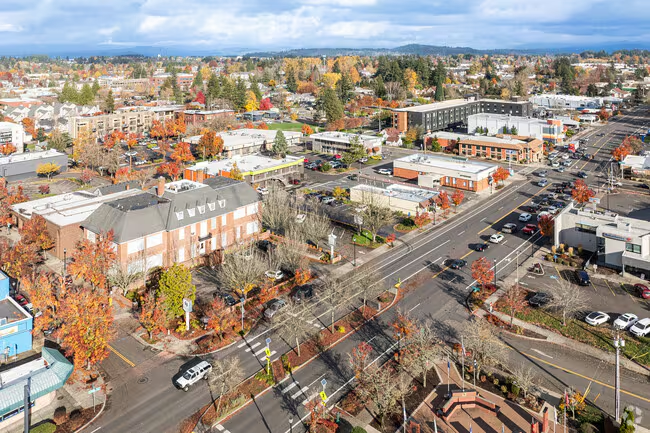
Gresham’s MAX Blue Line corridor and proximity to the Columbia River Gorge make it the Portland metro’s most accessible investment market
2026 Economic Outlook
- Gresham downtown revitalization investment attracting new retail and restaurants
- Mt. Hood Community College enrollment growth driving student housing demand
- Columbia River industrial corridor manufacturing expansion
- Providence Mt. Hood Medical Center adding healthcare employment
- Portland affordability pressure pushing more renters and buyers east
The Not-Portland Regulatory Advantage
Gresham’s single most important investment characteristic is frequently misunderstood by out-of-area investors: Gresham is NOT subject to Portland’s local landlord ordinances. This distinction is material and translates directly into lower compliance costs and simpler operations:
- No Portland 2-month relocation assistance: Portland requires 2 months of rent in relocation assistance when raising rents 10% or more or issuing no-cause terminations. Gresham does not.
- No Portland first-in-time screening rule: Portland landlords must offer tenancy to the first qualified applicant. Gresham landlords can select among qualified applicants using standard fair housing criteria.
- No Portland RRIO rental registration: Portland requires annual registration and inspection of all rental units. Gresham has no comparable program.
- No Portland mandatory written screening criteria disclosure: Portland requires written criteria to be posted before accepting any application. Gresham follows standard Oregon fair housing requirements only.
- Oregon statewide law still applies: SB 608 rent control (7% + CPI cap), just-cause eviction after 12 months, 31-day deposit return, and habitability maintenance requirements all apply in Gresham as statewide Oregon law.
The practical result: Gresham investors serve the same Portland metro rental market as Portland investors, at lower prices, with materially lower regulatory burden. This combination is available nowhere else in Multnomah County.
Historical Performance
| Period | Market Driver | Avg Annual Appreciation | Key Event |
|---|---|---|---|
| 2010-2014 | Post-recession recovery, manufacturing stability | 3-5% | Gresham downtown revitalization planning begins; MAX service improvements |
| 2015-2019 | Portland affordability overflow, MAX corridor investment | 7-11% | Portland overflow accelerates as Portland prices surge; Gresham becomes primary landing zone |
| 2020-2022 | Pandemic demand, remote work, inventory shortage | 13-18% | Gresham prices rise significantly but remain far below Portland |
| 2023-2024 | Rate normalization, market rebalancing | 1-3% | Market pauses; continued Portland overflow supports Gresham fundamentals |
| 2025-2026 | Rate stabilization, sustained Portland overflow, manufacturing growth | 3-6% (projected) | Downtown revitalization, Mt. Hood Community College growth, and Columbia industrial expansion |
Demographic Trends Driving Demand
- Portland Affordability Overflow – As Portland’s median price has risen above $530,000, Gresham at $400,000 continues to attract families and individuals who want Portland metro employment access at 25-30% lower housing cost. This flow is structural and ongoing.
- Columbia River Manufacturing Employment – The Columbia River industrial corridor along I-84 employs thousands in manufacturing, logistics, and distribution, creating stable working-class housing demand that is less volatile than tech-sector employment
- Mt. Hood Community College – 10,000+ students in Gresham create student housing demand, particularly for affordable 1-2 bedroom units within transit reach of campus
- Multicultural Community – Gresham is one of Oregon’s most diverse cities, with large Filipino, Hispanic, Vietnamese, and Russian communities creating neighborhood-specific tenant pools and business development that strengthens overall demand
- MAX Blue Line Permanence – The MAX Blue Line is permanent infrastructure that will continue to anchor Gresham’s connection to Portland employment for decades. Transit-adjacent properties benefit from a location advantage that compounds over long hold periods
- Gresham Downtown Revitalization – Significant public and private investment in Gresham’s downtown is improving amenities, walkability, and livability in the city core, gradually improving the professional tenant appeal that outer east Portland already enjoys
📚 New to real estate investing? Master the fundamentals with our professional course Learn more →
2. Neighborhood Hotspots
Gresham / Troutdale Investment Neighborhood Map
Interactive map of Gresham and Troutdale’s investment neighborhoods. Green stars show top hotspots, blue circles mark established markets, and orange circles highlight emerging areas.
Core Investment Neighborhoods
Detailed Submarket Analysis: Gresham and Troutdale Neighborhoods
| Neighborhood | Price Range | Cap Rate | Growth Drivers | Best Strategy |
|---|---|---|---|---|
| Rockwood / West Gresham | $300K-$440K | 6.5-8.5% | MAX access, workforce demand, density, affordability | Maximum cash flow, value-add, Portland metro’s best yield |
| Central Gresham / Downtown | $340K-$520K | 5.5-7.0% | Downtown revitalization, MAX, improving walkability | Best appreciation play in Gresham, balanced return |
| East Gresham / Pleasant Valley | $380K-$560K | 5.5-7.0% | Newer stock, family demographic, suburban quality | Family rental, lower management intensity, suburban hold |
| North Gresham / Industrial Adjacent | $310K-$450K | 6.5-8.5% | Boeing, manufacturing, Columbia industrial corridor | Workforce housing, manufacturing employee demand |
| Troutdale Historic | $330K-$500K | 5.5-7.5% | Columbia Gorge, outdoor recreation, lifestyle tenants | Lifestyle premium, outdoor recreation targeting |
| SE Gresham / Powell Valley | $360K-$520K | 5.5-6.5% | Powell Butte, MHCC, family demand, established stability | Stable family rental, MHCC student adjacency |
| Fairview / Wood Village | $330K-$480K | 6.0-7.5% | Boeing workers, Gresham adjacency, manufacturing | Workforce housing, slightly below Gresham pricing |
| Sandy / Boring (Outer East) | $300K-$450K | 6.5-9.0% | Most affordable in metro, Mt. Hood, remote workers | Highest cap rates, commuter workforce, rural appeal |
Expert Insight: “Rockwood gets a bad reputation from people who have never done the numbers. Yes, it requires a more hands-on management approach than inner Portland neighborhoods. But the cap rates are 6.5-8.5% in the Portland metro — that simply does not exist anywhere else in Multnomah County. I have clients who run Rockwood properties alongside inner SE Portland properties and the Rockwood cash flow funds the negative carry on their appreciation plays. The two strategies complement each other perfectly.” – Jason Reid, Principal, East Metro Investment Properties
3. Property Types
| Investment Goal | Best Property Type | Best Neighborhoods | Minimum Capital |
|---|---|---|---|
| Maximum Cash Flow | Workforce SFH or small multi-family | Rockwood, North Gresham, Fairview | $75,000+ |
| Maximum Appreciation | Central Gresham downtown-adjacent SFH | Downtown Gresham, MAX corridor | $87,000+ |
| Balanced Returns | East Gresham or Troutdale family SFH | East Gresham, Pleasant Valley, Troutdale | $95,000+ |
| Lowest Capital Entry | FHA house hack on duplex | West Gresham, Rockwood, Central Gresham | $11,000+ |
Don’t guess the costs. Our Complete Renovation & Remodeling Cost Guide covers 400+ pages of project-by-project breakdowns with real contractor pricing ranges.
4. Cost Analysis
Acquisition Cost Breakdown (Gresham)
| Expense Item | Typical Cost | Example ($400,000 Property) | Notes |
|---|---|---|---|
| Down Payment | 25% (investment) | $100,000 | 3.5% FHA available for owner-occupant house hackers on qualifying 2-4 units |
| Closing Costs | 2-3% of price | $8,000-$12,000 | Title, escrow, lender fees, recording |
| Home Inspection | $375-$550 | $450 | Older Rockwood and west Gresham stock warrants thorough inspection; deferred maintenance common |
| Sewer Scope | $175-$300 | $225 | Strongly recommended for pre-1985 west and central Gresham homes |
| Initial Repairs | 0-10% of price | $0-$40,000 | Older Rockwood stock often has significant deferred maintenance; budget conservatively for west Gresham |
| Reserves (6 months) | 6 months expenses | $8,000-$12,000 | Workforce housing can have higher turnover; slightly larger reserves advisable |
| TOTAL MINIMUM ENTRY | ~28-33% of value | $116,675-$164,775 | Lower than Portland inner neighborhoods due to lower purchase prices |
Sample Cash Flow Analysis: Rockwood SFH — Workforce Tenant, MAX Adjacent
| Item | Monthly | Annual | Notes |
|---|---|---|---|
| Gross Rent | $1,800 | $21,600 | 3BR SFH, Rockwood, updated, 0.3 miles to MAX station |
| Vacancy (5%) | -$90 | -$1,080 | Workforce housing can have higher turnover; 5% conservative estimate |
| Property Taxes | -$350 | -$4,200 | ~1.05% of $400K assessed value (Multnomah County) |
| Insurance | -$145 | -$1,740 | Landlord policy; Gresham rates comparable to outer Portland |
| Property Management (10%) | -$180 | -$2,160 | Oregon SB 608 compliance; Gresham-specialized manager preferred |
| Maintenance + CapEx (11%) | -$198 | -$2,376 | 11% for older Rockwood stock and workforce tenant wear |
| Net Operating Income | $837 | $10,044 | Before mortgage |
| Mortgage ($400K price, 25% down, 6.5%, 30yr) | -$1,903 | -$22,836 | P&I on $300,000 loan |
| CASH FLOW | -$1,066 | -$12,792 | Moderate negative carry; better than inner Portland comparables |
| Cap Rate | 2.51% | NOI / Purchase Price. Note: select inner-Rockwood properties with higher rents achieve near-breakeven | |
| Total Return (5% appreciation) | ~16% | Including equity, appreciation, principal paydown |
This analysis uses conservative rent assumptions for Rockwood. Properties closer to MAX stations, with updated interiors, or near the improving downtown corridor can achieve $1,900-$2,100/month for 3BR homes, significantly improving the cash flow picture. Adding a DADU at $100,000-$140,000 would add $1,100-$1,300/month in rental income, potentially pushing this property to near-breakeven or slightly positive overall — exceptional for any Multnomah County investment property.
Expert Insight: “The most underappreciated fact about Gresham investing is that the old housing stock in Rockwood is actually a feature, not a bug, for BRRRR investors. You can buy a 1970s SFH for $330,000, put $55,000 into it, and pull most of that renovation capital back out at refinance at a $430,000-$450,000 ARV. The rent goes from $1,500 to $1,900 after the renovation. That math works in Gresham in a way it does not in inner Portland where the after-repair values are already at the ceiling relative to rents.” – Angela Park, BRRRR Specialist, East Multnomah County Realty
5. Legal Framework
⚠️ Oregon Statewide Compliance Notice
Oregon SB 608 rent control and just-cause eviction requirements apply in Gresham and Troutdale. Gresham and Troutdale do NOT have Portland’s additional local ordinances, making the compliance environment significantly simpler. However, Oregon state law creates material obligations. Always consult an Oregon-licensed attorney before acquiring Gresham rental properties, and use a property management company with Oregon SB 608 compliance expertise.
Oregon Statewide Law (Applies in Gresham and Troutdale)
- SB 608 Rent Control: Annual increases capped at 7% plus prior year CPI. Oregon OEA publishes the combined cap each October. New construction within 15 years of certificate of occupancy is fully exempt from rent increase limits. New DADUs receive their own 15-year clock.
- Just Cause Eviction (after 12 months): Documented cause required after one year of tenancy. Non-payment, material violation, damage, and criminal activity are the primary allowable causes. 90-day no-cause notice required for qualifying situations.
- Relocation Assistance (State, limited): Oregon state law requires one month’s rent in certain qualifying no-cause termination situations. This is significantly less than Portland’s two-month requirement.
- Security Deposit Return: 31 days from move-out with itemized accounting. Documentation of all deductions is essential for workforce housing tenants who may dispute charges.
- Source of Income: Oregon statewide law prohibits discrimination based on housing vouchers. Gresham has a significant Section 8 population in west Gresham and Rockwood.
- Habitability Standards: 24-hour response for heat and water failures, 72 hours for appliances, 10 days for other repairs. Workforce housing creates higher maintenance call volumes than professional tenant properties.
What Portland Rules Do NOT Apply in Gresham
Gresham landlords do NOT face:
- Portland’s 2-month relocation assistance for 10%+ rent increases
- Portland’s first-in-time screening rule
- Portland’s mandatory written screening criteria disclosure
- Portland’s RRIO city rental registration requirement
- Portland’s Renter Services Office jurisdiction
- Portland’s winter eviction moratorium protections
Gresham-Specific Considerations
- Multnomah County jurisdiction: Gresham and Troutdale are in Multnomah County. Evictions are filed in Multnomah County Circuit Court, which serves both Portland and Gresham properties. The same court, judges, and processes apply.
- Section 8 / Housing Choice Vouchers: West Gresham and Rockwood have a significant voucher population. Oregon state law requires acceptance of qualifying voucher holders. The Housing Authority of Portland (HAP) administers vouchers for Gresham.
- Gresham City Codes: Gresham has its own city code requirements for rental properties separate from Portland’s. Review current Gresham Development Code for any property-specific requirements before acquisition.
Key Gresham Resources
- Oregon Rental Housing Association: oregonrentalhousing.com
- City of Gresham Development Services: greshamoregon.gov
- Housing Authority of Portland (vouchers): hapdx.org
- Multnomah County Circuit Court: courts.oregon.gov/multnomah
| Regulation | Gresham / Troutdale | Portland (for comparison) | Investor Impact |
|---|---|---|---|
| Rent Increases | 7% + CPI cap (SB 608) | Same cap + 2-month relocation at 10%+ | Gresham landlords can increase up to the cap without relocation assistance cost |
| Eviction | Just cause after 12 months; 90-day no-cause | Same + Portland relocation assistance | Lower financial exposure than Portland for tenant resolution |
| Screening | Standard fair housing; no first-in-time rule | First-in-time rule, mandatory written criteria | Simpler screening in Gresham; can select among qualified applicants |
| New Construction | 15-year rent control exemption (statewide) | Same statewide exemption | New DADUs especially advantaged; own 15-year clock |
| Rental Registration | No RRIO or city registration required | RRIO registration required | No registration burden in Gresham or Troutdale |
| Court Venue | Multnomah County Circuit Court (same as Portland) | Multnomah County Circuit Court | Same court process; Gresham evictions follow identical timeline to Portland |
6. Step-by-Step Gresham / Troutdale Investment Playbook
Choose Your Gresham Strategy
Gresham offers four distinct strategies, each with clear geographic alignment and distinct risk-return profiles:
Rockwood Maximum Yield
Buy workforce housing in Rockwood and west Gresham near MAX stations. Target the manufacturing worker, transit-dependent commuter, and working-class family demographic. Accept higher management intensity in exchange for the Portland metro’s best residential cap rates of 6.5-8.5%.
Downtown Gresham Appreciation
Buy near Gresham’s downtown revitalization corridor. Target the young professional demographic attracted by the improving walkability and amenities. Best appreciation play in the Gresham market with a 5-7 year horizon as downtown investment continues to transform the area.
East Gresham Family Rental
Buy in east Gresham or Troutdale and target the family demographic that has been priced out of inner Portland. Newer housing stock, better schools, and suburban amenities attract longer-term family tenants. Lower management intensity than Rockwood with balanced return profile.
Value-Add BRRRR (Rockwood / West Gresham)
Buy dated 1970s-1990s SFH or duplex in west Gresham at $320,000-$420,000. Renovate kitchen, baths, and exterior. Refinance at improved ARV. The lower purchase prices create more favorable BRRRR math than inner Portland, and Multnomah County contractor availability is strong.
Build Your Gresham Team
- Gresham / East Metro Investment Agent: Must understand the specific submarket dynamics of Rockwood versus east Gresham versus Troutdale, and be able to model cash flows using accurate Gresham-specific rent data rather than Portland metro averages that skew the numbers.
- Gresham-Experienced Property Manager: The single most important decision for Rockwood investors. Gresham’s west side requires a manager with specific experience in the workforce housing and Section 8 tenant market. Verify membership in Oregon Rental Housing Association and ask specifically about their Gresham portfolio size.
- Oregon-Licensed Real Estate Attorney: For lease compliance and Oregon SB 608 guidance. While Gresham’s compliance is simpler than Portland, proper Oregon lease templates and documentation practices are essential, particularly for workforce housing where tenant disputes can be more common.
- East Multnomah County Contractor: If pursuing value-add, build relationships with contractors who work in Gresham specifically. Contractor availability in the east metro is generally better than inner Portland, producing shorter renovation timelines.
- Oregon CPA: Gresham’s older housing stock creates significant depreciation opportunities. Component depreciation and cost segregation studies can dramatically improve after-tax returns on Rockwood value-add acquisitions.
Expert Tip: The single best way to evaluate a Gresham property manager is to ask them: “What is your current average days-to-lease for a 3-bedroom home in Rockwood?” and “What percentage of your Rockwood tenants are Housing Authority of Portland voucher holders?” A manager who cannot answer the first question precisely, or who is vague about their voucher experience, does not have the Gresham-specific expertise needed to maximize performance on west Gresham workforce housing.
Gresham-Specific Due Diligence
Physical Due Diligence
- Sewer scope for all pre-1985 west and central Gresham homes; clay line issues common
- Deferred maintenance assessment: Rockwood’s older stock is frequently sold with significant deferred maintenance from prior landlords. Budget conservatively.
- Electrical panel: older west Gresham homes may have undersized panels or older wiring systems
- Moisture and crawl space: Gresham’s wet climate creates moisture risk comparable to Portland
- Roof condition: moss damage is prevalent in older Gresham housing stock
- ADU feasibility for MAX-adjacent lots: confirm Gresham’s specific setback and lot coverage requirements
Market and Regulatory Due Diligence
- Verify current rent levels against Gresham-specific market data, not Portland metro averages
- Review existing lease terms and any active Housing Authority of Portland voucher agreements
- Pull permit history through City of Gresham Building Division records
- Confirm Oregon SB 608 new construction exemption status for newer properties
- Check Multnomah County flood zone maps for any Rockwood or north Gresham properties near Johnson Creek or other drainage channels
- Verify current tenant payment history through property manager if acquiring a tenanted property
Competing in Gresham’s Market
- Target Boeing and manufacturing corridor properties: Properties within easy commuting distance of the Boeing Portland facility in north Gresham and the Columbia River industrial corridor attract a stable, employed tenant base that is easier to manage than general workforce housing. Emphasize commute time to Boeing in all listing materials for north Gresham properties.
- Long-term owner outreach in Rockwood: Rockwood has many longtime property owners who have held for 15-20 years and may be ready to exit. Direct mail to long-term Rockwood property owners produces off-market acquisition opportunities at prices unavailable on MLS.
- Downtown revitalization early positioning: Properties near Gresham’s Main City Park and downtown arts district are appreciating faster than the Gresham average. Acquiring in this sub-corridor before the revitalization is fully priced in represents the best appreciation opportunity in the east metro.
- Troutdale outdoor recreation premium: Troutdale properties near the Sandy River confluence, Oxbow Regional Park access, and Historic Columbia River Highway can command a 10-15% rent premium from the outdoor enthusiast and lifestyle tenant demographic. List all Troutdale properties on outdoor recreation community platforms and highlight Gorge access specifically.
- Pre-inspection offers: In central and east Gresham, competitive multiple-offer situations occur for well-priced family homes. Pre-inspecting before offer submission ($375-$550) allows clean non-contingent offers that frequently win.
Property Management in Gresham
Workforce Housing Management Best Practices
- Thorough move-in documentation: Photograph every room and surface at move-in. Workforce tenants can be harder on properties and documentation protects deposit retention at move-out.
- Clear lease enforcement: Enforce lease terms consistently from day one. Workforce tenants respect clear boundaries when applied consistently and professionally.
- Proactive maintenance response: Respond to maintenance requests within the Oregon-mandated timelines and document every response. Prompt maintenance builds tenant goodwill and reduces emergency costs.
- Section 8 / HAP coordination: If accepting HAP vouchers, establish a direct contact at the Housing Authority of Portland for smooth payment processing and annual inspection scheduling.
- 30-day notice monitoring: Track lease expiration dates carefully in west Gresham. The rental market moves quickly and vacancies that sit more than 2-3 weeks are typically priced too high or not being marketed actively enough.
Typical Gresham Management Fees
- Single-family management: 9-12% of monthly rent
- Multi-family management (2-4 units): 8-10% of monthly rent
- Leasing fee: 50-75% of one month’s rent
- Lease renewal fee: $150-$275 per renewal
- HAP / Section 8 coordination fee: Some managers charge $25-$50/month additional for voucher coordination
7. Financing Options for Gresham / Troutdale
| Loan Type | Down Payment | Rate Premium | Best For | Gresham Note |
|---|---|---|---|---|
| Conventional Investment | 25% | +0.5-0.75% | Strong W-2 income, good credit | Virtually every Gresham and Troutdale property falls under the $806,500 conforming limit; same lenders as Portland |
| FHA (House Hack) | 3.5% | Standard + MIP | Owner-occupying one unit of 2-4 unit property | Gresham duplexes at $350,000-$480,000 qualify easily; FHA down payment of $12,000-$17,000 is among the lowest entry points in the Portland metro |
| DSCR Loan | 20-25% | +1.5-2.5% | No income verification investors | Rockwood and North Gresham properties with higher cap rates often qualify at 1.0x DSCR coverage; more viable than inner Portland where cap rates are too low |
| Portfolio Loan | 20-30% | +1-2% | Multiple properties, self-employed | Umpqua Bank, Washington Federal, and several Portland-area credit unions offer portfolio products for east Multnomah County |
| ADU / Construction Loan | 20-25% of total | +1-2% | Adding DADU to existing Gresham property | HELOC on existing equity often cheapest; Gresham’s lower land values make ADU ROI stronger than inner Portland |
| Hard Money (Bridge) | 15-25% | 9-12% rate | Rockwood or West Gresham BRRRR acquisitions | Several Portland metro hard money lenders active in Gresham; Rockwood value-add BRRRR is the primary east metro use case |
Gresham Financing Advantage: Every Gresham and Troutdale investment property falls under the $806,500 conforming limit, making standard conventional investment loans the primary tool with full lender competition and straightforward documentation. The same Portland-area lenders who work in inner Portland serve Gresham, with no jumbo financing complications. Gresham’s better cap rates also make DSCR loans viable for Rockwood and North Gresham properties in ways that rarely work in inner Portland’s lower-yield neighborhoods. For first-time investors, FHA house hacking on Gresham duplexes at $350,000-$480,000 requires as little as $12,000-$17,000 down, making it one of the lowest-capital entry strategies in the entire Portland metro.
8. Frequently Asked Questions

Knowledge Quiz: Gresham / Troutdale Real Estate Investment
Open Quiz
5 quick questions on what you just learned about investing in Gresham and Troutdale
1) What is Gresham’s single most important regulatory advantage over investing in Portland proper?
Answer: B
The guide’s most central regulatory point is that Gresham is an independent city not subject to Portland’s additional local landlord ordinances. Portland’s 2-month relocation assistance for large rent increases, the first-in-time screening rule, and the RRIO rental registration program do not apply in Gresham. Oregon’s statewide SB 608 rent control and just-cause eviction law still apply, but the compliance environment is materially simpler than Portland while serving the same Portland metro rental market.
2) What cap rates does the guide identify for Rockwood and why are they significant?
Answer: C
The guide identifies Rockwood cap rates of 6.5-8.5%, described as among the highest of any residential submarket in Multnomah County. This compares to inner Portland’s 3.5-4.5% cap rates for comparable properties. The guide’s expert quote notes that investors who run Rockwood properties alongside inner Portland properties often use the Rockwood cash flow to fund the negative carry on their Portland appreciation plays, treating the two as complementary strategies within the same metro.
3) What specific rent premium does the guide say MAX light rail access commands for Gresham properties within walking distance of a station?
Answer: A
The guide states that properties within a 10-minute walk (approximately 0.5 miles) of a Gresham MAX station consistently rent for 8-12% more than comparable properties without that transit proximity. For a $1,800/month home, that represents $150-$220/month in additional rent from a single location attribute. The guide also notes that MAX-adjacent properties have historically appreciated faster than the Gresham average, creating a compounding location advantage over long hold periods.
4) What makes Troutdale’s investment thesis distinct from Gresham proper?
Answer: D
The guide describes Troutdale’s distinct investment thesis as based on its Gateway to the Gorge position, attracting outdoor enthusiasts, cyclists, and lifestyle migrants who specifically want Columbia River Gorge access at an affordable price. This tenant demographic pays a 10-15% rent premium over comparable Gresham properties for Troutdale’s specific location character. The guide notes this is a lower-management tenant profile than Rockwood’s workforce housing, but serves a smaller and more specific market.
5) According to the guide, how does Oregon state law affect Gresham landlords regarding Housing Authority of Portland vouchers?
Answer: C
The guide explains that Oregon’s 2014 source of income law applies statewide, including Gresham. Landlords cannot legally refuse a qualified applicant solely because they have a Housing Authority of Portland voucher. The guide notes that Gresham’s west side and Rockwood have a significant voucher population and that landlords who accept HAP vouchers benefit from the government-guaranteed HAP payment portion arriving reliably on the 1st of each month, while the guide recommends establishing a direct HAP contact for smooth annual inspection coordination.
Work With a Local Expert in Gresham / Troutdale
We are building a verified network of real estate professionals across every market we cover.

About Our Expert Network
We are finalizing partnerships with verified real estate professionals across every market featured on Builds and Buys. Each expert in our Gresham network is selected for their hands-on investment experience in east Multnomah County, workforce housing management knowledge, and understanding of the MAX corridor’s influence on Gresham property values.
- Proven experience with Rockwood workforce housing and east metro investment properties
- HAP / Section 8 voucher program experience and Housing Authority of Portland coordination
- MAX corridor appreciation analysis and station proximity valuation
- Troutdale lifestyle tenant market knowledge and outdoor recreation positioning
- Full Gresham and Troutdale transaction support from search through closing
Services Covered
- Rockwood workforce housing sourcing
- MAX corridor property analysis
- Investment analysis and underwriting
- HAP / Section 8 coordination referrals
- Value-add renovation guidance
- Troutdale lifestyle positioning
- Legal and title referrals
- Financing and lender connections
- East metro property management referrals
- Insurance and inspection referrals
- 1031 exchange coordination
- Exit strategy planning
Get Connected or Join Our Network
Looking for a Gresham or Troutdale expert to help with your investment? Reach out and we will connect you with the right professional.
Contact us at support@buildsandbuys.com
Find Specialized Gresham / Troutdale Real Estate Professionals
Ready to Invest in Gresham / Troutdale?
Gresham and Troutdale are the Portland metro’s best-kept investment secrets. Full Portland metro employment access through MAX light rail. Entry prices 25-30% below Portland. Regulatory environment dramatically simpler than Portland’s complex landlord ordinance framework. Cap rates of 6.5-8.5% in Rockwood that do not exist anywhere else in Multnomah County. And a Troutdale lifestyle niche that no other east metro community can replicate. For investors who have been priced out of inner Portland appreciation or exhausted by Portland’s regulatory complexity, the east metro is the answer that has been sitting right next to Portland all along.
Continue Your Research
Oregon State Guide
See how Gresham compares to Portland, Bend, Eugene, Salem, and other Oregon markets.
Step-by-Step Invest
Complete framework for building a real estate investment strategy from scratch.
144-Lesson Course
University-level real estate education covering financing, law, strategy, and management.
For further guidance, explore our State-by-State Investor guides, browse our expert articles, or follow our Step-by-Step Investment Guide.



