
Flagstaff Arizona Real Estate Investment Guide For 2026
A comprehensive resource for investors targeting one of Arizona’s most unique and supply-constrained markets, where Northern Arizona University, year-round outdoor tourism, and a hard boundary of surrounding national forest create exceptional long-term appreciation and vacation rental performance at 7,000 feet elevation
Quick answers: Top 5 most searched Flagstaff investment questions ▼
Migration data: Where people are moving from to Flagstaff ▼
In This Guide
Click on any section to navigate directly to that content
1. Flagstaff Market Overview
Market Fundamentals
Flagstaff occupies a singular position in Arizona real estate: it is the only major Arizona city where geography permanently limits supply. The Coconino National Forest surrounds Flagstaff on all sides, creating a hard boundary that no amount of demand can push past. Combined with Northern Arizona University’s 30,000+ students, year-round tourism driven by the Grand Canyon and Arizona Snowbowl, and a growing remote worker population attracted by Flagstaff’s mountain climate and outdoor lifestyle, this supply constraint has produced one of Arizona’s most consistent long-term appreciation records.
Key fundamentals defining Flagstaff’s investment environment:
- Population: 77,000+ city; 145,000+ Coconino County metro
- Elevation: 6,909 feet; average summer high 82°F vs. Phoenix’s 108°F
- NAU enrollment: 30,000+ students; significant driver of rental demand
- Major employers: Northern Arizona University (6,000+ employees), Flagstaff Medical Center, BNSF Railway, City of Flagstaff, W.L. Gore & Associates, Lowell Observatory
- Supply constraint: Coconino National Forest prevents outward expansion; one of the hardest geographic supply ceilings of any U.S. city
- Tourism: Grand Canyon National Park (6M+ annual visitors, 80 miles north), Arizona Snowbowl ski resort, fall foliage, dark sky astronomy
Flagstaff’s investment narrative is defined by the intersection of university demand, outdoor tourism, and permanent land scarcity. Unlike Phoenix suburbs where new master-planned communities constantly add supply, every new resident of Flagstaff competes for an essentially fixed pool of homes. This dynamic has produced median home prices well above the Arizona average and an appreciation trajectory that has outperformed broader Arizona over multiple decades.
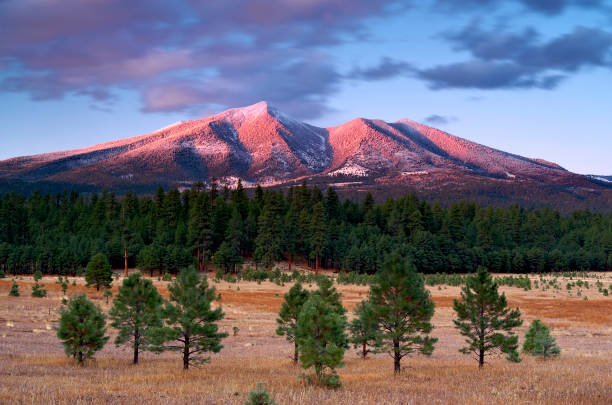
Flagstaff’s ponderosa pine forest, San Francisco Peaks backdrop, and Route 66 character create a mountain town investment environment unlike anywhere else in Arizona
2026 Economic Outlook
- NAU enrollment growth adding housing pressure in an already supply-constrained market
- Remote work migration from Phoenix and California continues post-pandemic
- Grand Canyon tourism recovering to and exceeding pre-pandemic levels
- Arizona Snowbowl expansion improving ski season capacity and visitor numbers
- Lowell Observatory dark sky tourism driving shoulder-season STR demand
Investment Climate
Flagstaff rewards investors who understand its dual nature: part university town with genuine student housing income potential, and part mountain resort with year-round tourism demand for STR. The key tension in the market is that high property prices relative to achievable long-term rents make conventional buy-and-hold cash flow analysis challenging, while the STR premium income and historic appreciation make total return metrics compelling. Successful Flagstaff investors typically:
- Think in total return accepting that cap rates on long-term leasing (4-5%) are below the mortgage rate at current entry costs, while appreciating that 10% annual appreciation on a $575,000 property generates $57,500/year in equity, dwarfing the carrying cost
- Leverage STR premium using vacation rental income during peak tourism periods to dramatically improve the cash flow profile of properties that would otherwise run negative on long-term leasing
- Understand forest adjacency recognizing that properties backing to or near National Forest command 15-25% premiums that are permanently protected from development pressure
- Operate seasonally managing STR properties with a winter ski season and summer Grand Canyon season strategy rather than expecting uniform year-round demand
- Build for the long hold committing to 10-15+ year holds to capture Flagstaff’s compounding appreciation in a market where supply cannot meaningfully increase
Historical Performance
| Period | Market Driver | Avg Annual Appreciation | Key Event |
|---|---|---|---|
| 2010-2014 | Post-recession recovery; NAU enrollment growth | 4-6% | Flagstaff recovers faster than Phoenix; supply constraint limits downside |
| 2015-2019 | STR platform growth; Phoenix second-home demand | 8-12% | Airbnb and VRBO legitimize Flagstaff as premier Arizona mountain STR market |
| 2020-2022 | Pandemic escape demand; remote work migration | 20-28% | Flagstaff becomes top-5 Arizona appreciation market; inventory near zero |
| 2023-2024 | Rate normalization; modest correction | 2-5% | Market pauses but supply constraints prevent meaningful price decline |
| 2025-2026 | Tourism recovery; ongoing remote worker demand | 8-12% (projected) | Pent-up demand and chronically low inventory driving renewed appreciation |
Flagstaff’s 20-year appreciation track record is exceptional. A $300,000 Flagstaff property purchased in 2005 is worth approximately $750,000-$900,000 today after absorbing the 2008 downturn, the 2023-2024 correction, and everything in between. The supply constraint is so fundamental that even significant national downturns have produced only modest temporary declines in Flagstaff prices, followed by rapid recovery driven by continued demand and zero new land availability.
Demographic Trends Driving Demand
- National Forest Supply Ceiling – The Coconino National Forest (1.8 million acres) surrounds Flagstaff on all sides. The city cannot expand outward. Every new job, new student, and new resident competes for existing housing inventory. This is the single most important structural factor in Flagstaff’s real estate market.
- NAU Growth – Northern Arizona University has grown from 18,000 students in 2000 to 30,000+ today. On-campus housing serves only a fraction, with thousands of students seeking off-campus housing in a market that cannot build outward to accommodate them.
- Phoenix Second-Home Market – With Phoenix metro population exceeding 5 million, the pool of Phoenix households with enough wealth to buy a Flagstaff second home continues to grow. At just 2.5 hours from Phoenix, Flagstaff is uniquely positioned as Arizona’s mountain escape for the state’s growing wealthy class.
- Grand Canyon Anchor Tourism – Grand Canyon National Park receives 6+ million visitors annually and is one of the most visited parks in the world. Flagstaff, 80 miles south, serves as a hub for canyon visitors who need more accommodation options than the park itself offers, sustaining year-round STR demand with a summer peak rather than a ski-season-only peak.
- Remote Worker Migration – Post-pandemic, Flagstaff has attracted significant migration from Phoenix and California. Remote workers priced out of California mountain towns (Lake Tahoe, Big Bear, Idyllwild) are discovering Flagstaff as a more affordable alternative with comparable outdoor recreation access.
- Healthcare and Research Employment – Flagstaff Medical Center, W.L. Gore (world-class research facility), and Lowell Observatory provide stable professional employment that creates long-term rental demand from non-student professional households.
📚 New to real estate investing? Master the fundamentals with our professional course Learn more →
2. Neighborhood Hotspots
Flagstaff Investment Neighborhood Map
Interactive map of Flagstaff’s investment neighborhoods. Green stars show top hotspots, blue circles mark established markets, and orange circles highlight emerging areas.
Core Investment Neighborhoods
Detailed Submarket Analysis: All Flagstaff Neighborhoods
| Neighborhood | Price Range | Cap Rate | Growth Drivers | Best Strategy |
|---|---|---|---|---|
| University Heights / South NAU | $450K-$700K | 5.0-7.0% | NAU proximity, walkable campus access, student demand | By-the-room student housing, value-add |
| Downtown / Railroad District | $480K-$850K | 4.5-6.5% (LTR); 7-10% (STR) | Tourism, Grand Canyon, Route 66 character, walkability | Premium STR, tourism-focused vacation rental |
| Cheshire / Continental Country Club | $550K-$950K | 4.0-5.0% | Golf, pine setting, professional tenants, appreciation | Premium long-term, executive rental, appreciation |
| Southside Flagstaff (Historic) | $400K-$650K | 5.0-7.0% | Arts district, NAU walkability, revitalization, value-add | BRRRR, STR, young professional rental |
| East Flagstaff / Butler Avenue | $420K-$680K | 4.5-6.0% | Professional demand, price value, remote workers | Balanced returns, professional tenants |
| West Flagstaff / Woodlands | $480K-$720K | 4.0-5.0% | Newer construction, family demand, good schools | Family buy and hold, newer stock |
| North Flagstaff / Fort Valley | $550K-$1.1M | 3.5-4.5% | Forest adjacency, mountain views, premium location | Pure appreciation, premium long-term rental |
| Pine Canyon / Flagstaff Ranch | $750K-$2M+ | 3.5-4.5% | Luxury gated, golf, Phoenix second-home demand | Luxury appreciation, seasonal Phoenix rental |
| Sunnyside / McPherson Park | $380K-$580K | 5.0-6.5% | Affordable entry, improving area, professional demand | Best value entry, appreciation upside |
| Route 66 East Corridor | $360K-$560K | 5.0-7.0% | Route 66 tourism, affordable entry, value-add | STR value-add, best cash flow entry |
Expert Insight: “The thing about Flagstaff that people miss is that you have two completely separate peak seasons for short-term rentals. You have a summer peak from May to September when Grand Canyon tourists flood the area, and you have a winter peak from December to March when Phoenix families come up for skiing at Snowbowl. Most mountain towns only have one of those seasons. Flagstaff has both, plus shoulder seasons in spring and fall that perform better than comparable mountain town markets because of dark sky tourism and NAU graduation weekends. The annual revenue floor for a well-positioned Flagstaff STR is dramatically higher than a one-season resort market.” – Tom Barrett, Flagstaff Vacation Rental Specialist
3. Property Types
| Investment Goal | Best Property Type | Best Neighborhoods | Minimum Capital |
|---|---|---|---|
| Maximum STR Revenue | Mountain character home, furnished | Downtown, Railroad District, Southside | $145,000+ plus $25,000-$40,000 furnishing |
| Best Student Housing Yield | 4BR SFH near NAU, by-the-room | University Heights, Southside | $120,000+ |
| Best Appreciation | Forest-adjacent SFH or luxury home | North Flagstaff, Pine Canyon, Fort Valley | $190,000+ |
| Most Accessible Entry | East Flagstaff or Route 66 East SFH | Sunnyside, Route 66 East, Butler Avenue | $100,000+ |
Don’t guess the costs. Our Complete Renovation & Remodeling Cost Guide covers 400+ pages of project-by-project breakdowns with real contractor pricing ranges.
4. Cost Analysis
Acquisition Cost Breakdown (Flagstaff)
| Expense Item | Typical Cost | Example ($575,000 Property) | Notes |
|---|---|---|---|
| Down Payment | 25% (investment) | $143,750 | Most Flagstaff properties above $575,000 require jumbo loans; conforming for properties below $726,200 |
| Closing Costs | 2-3% of price | $11,500-$17,250 | Arizona title company state; standard closing costs apply |
| Elevation Home Inspection | $500-$800 | $650 | Use Flagstaff-experienced inspector; elevation-specific issues include roof snow loads, heating systems, and wood-destroying organisms in pine forest |
| Snow Roof Inspection | Included in general or $150-$250 separate | $200 | Flagstaff receives 100+ inches of snow annually. Roof structural capacity for snow loads is critical and a common issue in older homes. |
| Heating System Inspection | $150-$300 | $200 | Natural gas or propane heating is essential; verify system age, capacity, and condition; failure in Flagstaff winter is an emergency |
| STR Furnishing (if applicable) | $25,000-$50,000 | $35,000 | Mountain-themed furnishing and outdoor living setup; hot tub install $6,000-$12,000 additional but significantly boosts STR revenue |
| Reserves (6 months) | 6 months expenses | $15,000-$22,000 | Flagstaff winter maintenance (snow removal, heating emergencies) requires higher reserves than Phoenix area properties |
| TOTAL MINIMUM ENTRY (LTR) | ~28-32% of value | $171,600-$199,850 | Add $35,000-$65,000 for STR setup; more capital required than comparable Phoenix-area investments |
Sample Cash Flow Analysis: Downtown Flagstaff 3BR Premium STR
| Item | Monthly Avg | Annual | Notes |
|---|---|---|---|
| STR Gross Revenue | $5,800 | $69,600 | $230/night blended avg; 60% occupancy; Grand Canyon summer peak $350-$500/night; ski season $250-$400/night |
| Platform Fees + STR Taxes | -$754 | -$9,048 | 3% host fee + ~12% Arizona STR tax |
| STR Management (28%) | -$1,395 | -$16,742 | Flagstaff STR managers; winter snow removal coordination adds complexity vs. Phoenix |
| Property Taxes | -$431 | -$5,175 | ~0.9% of $575K assessed value on investment classification |
| Insurance (mountain + STR) | -$220 | -$2,640 | Mountain STR policy with snow and freeze coverage; higher than desert Arizona |
| Winter Maintenance (snow, heating) | -$250 | -$3,000 | Snow removal service, heating system maintenance; no equivalent cost in Phoenix or Tucson |
| Supplies, Restocking, CapEx | -$300 | -$3,600 | Mountain STR consumables; hot tub chemical and maintenance included |
| Net Operating Income | $2,450 | $29,395 | Before mortgage |
| Mortgage ($575K purchase, 25% down, 7.0%, 30yr) | -$2,869 | -$34,428 | Loan amount $431,250; at $575K this is conforming eligible |
| CASH FLOW | -$419 | -$5,033 | Near-neutral; at 70%+ occupancy turns positive; appreciation ($57,500/yr at 10%) dwarfs the carrying cost |
| Total Return (10% appreciation) | ~36% | Appreciation ($57.5K) + principal paydown ($10K) – negative carry ($5K) on $143,750 invested capital |
Key note on Flagstaff STR seasonality: The monthly average above disguises a highly seasonal revenue pattern. Summer months (June-August, Grand Canyon peak) and ski season (December-March) each generate 2-3x more revenue than spring and fall. A well-managed Flagstaff STR might earn $10,000-$14,000 in July vs. $3,000-$4,000 in April. Understanding and pricing this calendar correctly, with minimum stays during peak periods, is the single most important skill for Flagstaff STR operators.
Expert Insight: “People who model Flagstaff STR as a flat monthly income are setting themselves up for surprises. July revenue can be 4x what April revenue is. The key is to have your July and August booked at $350-$500/night by February, your ski season booked at $250-$400/night by October, and then use dynamic pricing to maximize your spring and fall shoulder seasons. Operators who get that calendar right are generating 40-50% more annual revenue than operators who just put a flat price on Airbnb and hope for the best.” – Rachel Torres, Flagstaff STR Management Specialist
5. Legal Framework
✅ Arizona Law Protects Flagstaff STR Operators
Arizona’s ARS 9-500.39 prevents Flagstaff from banning short-term rentals despite the city’s attempts to more heavily regulate the industry. Flagstaff requires STR licenses, enforces noise and occupancy standards, and has added compliance requirements over time, but the fundamental right to operate a short-term rental is protected by state law. This is a meaningful advantage over comparable mountain markets like Sedona (Arizona, same protections), Telluride (Colorado, stricter), or South Lake Tahoe (California, near-prohibition).
Flagstaff STR Regulations (2026)
- City STR License Required: All Flagstaff STR operators must obtain a city business license and register with the STR program. Annual renewal required. Application includes property information, contact information, and acknowledgment of local regulations.
- Local Contact Requirement: Flagstaff requires a 24/7 locally available contact for all STR properties, either the owner if local or a designated property manager. This person must be able to respond to complaints within 30-60 minutes.
- Occupancy Limits: Maximum two guests per bedroom plus two additional (e.g., 8 guests maximum for a 3BR property). Compliance with this limit is a common source of guest complaints and potential license issues.
- Noise Ordinance: Flagstaff enforces quiet hours (typically 10pm-8am) strictly in residential zones. Guest violations can result in fines and license suspension.
- Parking Requirements: Off-street parking must be provided; no guest vehicles blocking streets or neighbor access.
- Insurance Requirements: Proof of STR-appropriate liability insurance required at license application; platforms like Airbnb provide some coverage but a dedicated policy is strongly recommended.
- HOA Restrictions: Some Flagstaff communities prohibit STR in CC&Rs, particularly newer planned communities and condo complexes. Always verify before purchasing with STR intent.
Landlord-Tenant Framework
- No Rent Control: Arizona’s statewide preemption prohibits local rent control. Flagstaff may not cap rent increases. Full market-rate flexibility for landlords at lease expiration.
- Eviction Process: Arizona’s 5-day pay-or-quit and 3-5 week total eviction timeline applies in Flagstaff. The process is identical to the rest of Arizona and significantly faster than comparable mountain markets in Colorado or California.
- Student Lease Considerations: NAU student leases follow the same Arizona by-the-room framework as ASU and UA. Individual room leases with parent co-signers are valid and enforceable. August-May lease terms are standard for NAU student housing.
- Winter Emergency Responsibilities: Unlike desert Arizona landlords, Flagstaff landlords have implied habitability duties that include maintaining adequate heating during winter. A heating system failure in January is an emergency requiring immediate response. Build response protocols and contractor relationships before you need them.
- TPT License: All Flagstaff landlords must register with the Arizona Department of Revenue for Transaction Privilege Tax. Combined rate in Flagstaff (state + city) is approximately 3.5-4.0% on long-term rental income; higher on STR income.
Key Flagstaff Resources
- Flagstaff STR Registration: flagstaffaz.gov/str
- Arizona DOR TPT License: azdor.gov
- Arizona Landlord-Tenant Act: azleg.gov
- Flagstaff Rental Housing: flagstaffaz.gov/housing
| Regulation | Flagstaff / Arizona | Telluride, Colorado (Comparison) | Investor Impact |
|---|---|---|---|
| STR Prohibition | State law prevents prohibition | Strict municipal limits on STR units and locations | More stable STR business in Flagstaff |
| Rent Control | Prohibited by state law | Colorado has local rent control authority | Full rent flexibility in Flagstaff |
| Eviction Process | 5-day notice; 3-5 weeks total | Varies; Colorado evictions often longer | Faster and lower cost in Flagstaff |
| Property Tax | ~0.9-1.1% assessed (investment) | ~0.5% (Colorado lower rates) | Colorado lower but Arizona entry prices also lower than comparable CO mountain towns |
| STR Tax Rate | ~12-13% combined | ~10-12% combined | Comparable STR tax burden |
| By-the-Room Legality | Permitted under Arizona law | Varies; Colorado has more complex framework | Simpler student housing operation in Arizona |
6. Step-by-Step Flagstaff Investment Playbook
Choose Your Flagstaff Strategy
Flagstaff’s dual university-and-tourism character means strategy selection is the most important decision you will make. The four primary approaches produce very different results:
Mountain Tourism STR
Maximum revenue ceiling. Buy character property near downtown or forest. Furnish to boutique mountain cabin standard with hot tub. Operate STR targeting Grand Canyon summer, ski winter, and events. Two distinct peak seasons create superior annual revenue vs. single-season mountain markets.
NAU Student Housing
Best income yield near campus. Buy 3-5BR near NAU south entrance. Lease by room on 9-12 month terms with parent co-signers. Higher rents than comparable Tucson properties due to Flagstaff cost of living premium. Positive or near-neutral cash flow achievable.
Professional Long-Term Hold
Passive income with appreciation. Buy 3-4BR in East Flagstaff or professional corridors. Target NAU faculty, medical center staff, and remote workers on 12-24 month leases. Accept slight negative carry in exchange for 10%+ appreciation in a permanent supply-constrained market.
Phoenix Second-Home / Hybrid
Personal use plus income. Buy quality home in premium location. Use personally during summer (escape Phoenix heat). Rent during ski season and spring. Common strategy for Phoenix families. Provides lifestyle benefit plus income to offset carrying costs.
Build Your Flagstaff Team
- Flagstaff-Specialist Investment Agent: Must have specific experience with both the student housing and STR segments of the Flagstaff market. Out-of-town agents often misunderstand the Flagstaff supply-constraint thesis and undervalue forest-adjacency premiums.
- Mountain STR Management Company: For STR strategy, find a Flagstaff-specific manager with documented winter operations experience. Ask how they handle snow removal, heating emergencies, and guest support during winter storms. This is not a question Phoenix STR managers can answer.
- Flagstaff-Experienced General Contractor: Elevation construction in Flagstaff is more expensive and requires specific knowledge of snow load, freeze-thaw cycles, and mountain building codes. Do not use Phoenix contractors for Flagstaff renovations.
- Heating System Contractor: A trusted HVAC and heating contractor is a critical relationship for any Flagstaff property owner. A natural gas or propane heating failure in January requires same-day emergency response. Establish this relationship before you need it urgently.
- Arizona Real Estate Attorney: For LLC setup, lease template review, and STR compliance documentation. Flagstaff’s more active STR enforcement makes documentation best practices more important than in less-regulated Arizona markets.
- Arizona CPA with Mountain STR Experience: STR properties have distinct tax treatment from long-term rentals. Cost segregation on a $575,000 STR can generate substantial Year 1 depreciation deductions. Find a CPA who has specifically done this analysis for Flagstaff or Arizona mountain STR properties.
Flagstaff-Specific Due Diligence
Elevation-Specific Physical Due Diligence
- Roof structural condition and snow load rating (Flagstaff receives 100+ inches of snow annually; older roofs may not meet current snow load codes)
- Heating system type, age, and capacity (natural gas or propane; verify BTU output for Flagstaff winter temperatures)
- Pipe insulation and freeze prevention in unheated spaces
- Wood-destroying organisms (mountain wood beetles are common in pine-adjacent properties)
- Foundation and drainage for spring snowmelt
- Driveway accessibility and snow removal practicality (critical for STR guest access in winter)
STR and Market Due Diligence
- Verify HOA CC&Rs specifically for STR prohibition before purchase
- Confirm current Flagstaff STR license availability for the specific neighborhood and zoning
- Research historical STR revenue for comparable properties using AirDNA or comparable market data
- Verify forest adjacency status and fire hazard zone designation (some forest-adjacent properties have insurance implications)
- Check any active city code violations or complaints history
- Confirm access to natural gas vs. propane only (natural gas allows easier STR operation; propane requires tank management)
Maximizing Returns in Flagstaff
- Grand Canyon Summer Pricing: Block July and August at $350-$500/night minimum 3-5 night stays, 6-12 months in advance. Grand Canyon visitors plan well ahead and the competition for quality Flagstaff STR during peak summer is intense. Under-pricing summer is the single most costly mistake Flagstaff STR operators make.
- Arizona Snowbowl Ski Season: December through March accounts for the second peak. Friday-Saturday ski weekends command $250-$400/night. The Snowbowl ski season, while variable with snowfall, draws Phoenix and Tucson families for 3-4 day weekend trips. Pre-block holiday weeks (Christmas-New Year, Presidents Day weekend, MLK Weekend) at 3-5x normal rates.
- Hot Tub as Revenue Multiplier: In Flagstaff more than any other Arizona market, a private hot tub is a revenue multiplier. It allows year-round use (winter hot tub in a snowy Flagstaff yard is a specific amenity guests seek and pay premium for), improves search visibility on Airbnb, and adds $30-$60/night to achievable rates. Hot tub installation costs $6,000-$12,000 and typically pays back within 12-18 months through higher rates and occupancy.
- NAU Academic Calendar Alignment: Structure all student leases to align with NAU’s academic calendar (typically mid-August through mid-May). This positions your units to re-lease during NAU’s spring move-in period when demand is highest. Avoid 10-month leases that leave you with summer vacancy.
- Forest Adjacency Marketing: If your property backs to or is within walking distance of National Forest trails, this is a major differentiator in STR marketing. Explicitly photograph and describe trail access, wildlife sightings, and the feeling of backing to an endless forest. This is a selling point unavailable in any Phoenix market and significantly improves both booking volume and achievable nightly rate.
7. Financing Options for Flagstaff
| Loan Type | Down Payment | Rate Note | Best For | Flagstaff Note |
|---|---|---|---|---|
| Conventional Investment | 25% | +0.5-0.75% | Strong W-2, 720+ credit | Properties at or below $726,200 conforming limit qualify; many entry-level Flagstaff investments qualify |
| Jumbo Investment | 25-30% | +0.5-1.0% | Properties above $726,200 | Premium Flagstaff properties (North Flagstaff, Pine Canyon, luxury corridor) require jumbo financing |
| DSCR Loan | 25-30% | +1.0-2.0% | Self-employed, STR income qualification | Flagstaff STR income using AirDNA market data can qualify at 1.0x DSCR; verify with specific lender |
| Second Home Loan | 10-20% | Standard (lower than investment) | Phoenix families buying Flagstaff second home with personal use intent | If buying as second home with personal use, far better rates than investment loan; must meet second-home occupancy requirements |
| Portfolio Loan | 20-30% | +1-2% | Multiple properties, complex income structures | Local Flagstaff and Northern Arizona lenders (National Bank of Arizona, Sunstate Federal Credit Union) offer portfolio products |
| Hard Money / Bridge | 20-30% | 9-12% rate | Value-add acquisitions, competitive market situations | Useful for value-add acquisitions near NAU; Flagstaff’s appreciation makes ARV refinance very viable |
| Cash-Out Refi / HELOC (Phoenix) | N/A (existing equity) | Standard conforming | Phoenix homeowners using primary home equity | Very common path; Phoenix homeowners with 2015-2022 appreciation cash out equity to buy Flagstaff property with minimal or no additional leverage |
Flagstaff Financing Reality: The second-home loan is the most underutilized tool for Flagstaff investors. If you are purchasing with genuine personal use intent (visiting for skiing, summer escape, NAU family weekends), you may qualify for second-home rates which are significantly better than investment property rates. The occupancy requirement is that you personally use the property for at least 14 days per year or 10% of total rental days, whichever is greater. This is easy to satisfy for Phoenix families who genuinely want a Flagstaff mountain escape. The rate difference between a second-home loan (similar to primary residence) and an investment loan (0.5-0.75% higher) can mean $150-$300/month in lower mortgage payments on a $550,000 Flagstaff property, dramatically improving cash flow dynamics. Always discuss this with your lender and understand the specific occupancy requirements before choosing your loan type.
8. Frequently Asked Questions

Knowledge Quiz: Flagstaff Real Estate Investment
Open Quiz
5 quick questions on what you just learned about Flagstaff investing
1) What is the primary structural reason Flagstaff real estate has appreciated more than most Arizona markets over the long term?
Answer: B
The Coconino National Forest (1.8 million acres) surrounds Flagstaff on all sides, meaning the city cannot expand outward the way Phoenix, Tucson, or Chandler can. Every new resident competes for an essentially fixed pool of existing homes. This permanent geographic supply ceiling has produced consistent long-term appreciation and protected the market from the severe corrections that hit Phoenix’s fringe suburbs where new supply can flood the market.
2) Why is summer Flagstaff’s busiest STR season, unlike most mountain resort markets?
Answer: D
Flagstaff benefits from two simultaneous summer demand drivers unique to its geography: Grand Canyon tourists who use Flagstaff as a base (summer is the Grand Canyon’s peak season), and Phoenix metro residents escaping 105-115°F summer heat (Flagstaff averages 82°F in summer). This creates summer STR demand that is actually stronger than ski season demand, reversing the typical mountain market pattern. July is typically the highest-revenue month for most Flagstaff STR properties.
3) What does the guide identify as the highest-ROI single amenity investment for a Flagstaff STR property?
Answer: C
The guide devotes an entire FAQ to this question. A quality hot tub in Flagstaff adds $30-$60/night to achievable rates and improves occupancy by 5-10% because Airbnb and VRBO searchers specifically filter for hot tub properties, especially in winter. Installation costs $6,000-$12,000 and pays back within 12-18 months through higher rates and bookings. A snowy Flagstaff deck hot tub is one of the most sought-after STR experiences in Arizona and is a differentiator unavailable in any Phoenix market.
4) What financing option does the guide identify as significantly underutilized by Flagstaff investors purchasing with genuine personal use intent?
Answer: A
The guide specifically calls out the second-home loan as the most underutilized financing tool for Flagstaff. Phoenix families buying a Flagstaff mountain escape with genuine personal use intent can qualify for second-home rates (similar to primary residence, significantly better than investment property rates), requiring only 10-20% down and saving $150-$300/month in mortgage payments on a $550,000 property. The occupancy requirement is personal use for at least 14 days per year or 10% of total rental days, easily satisfied by Phoenix families who genuinely want a Flagstaff mountain escape.
5) What elevation-specific operating cost does a Flagstaff landlord incur that Phoenix or Tucson landlords never encounter?
Answer: B
The guide’s FAQ on Flagstaff operating costs lists five elevation-specific cost categories absent from Phoenix or Tucson: professional snow removal ($800-$2,000/year), heating fuel ($1,500-$3,000/year for STR), roof maintenance for snow load ($500-$1,000/year), annual freeze-proofing ($300-$600/year), and forest pest/arborist service ($300-$600/year). Combined, these add $4,000-$9,000/year to operating costs compared to a comparable Phoenix property. These costs must be factored into all Flagstaff cash flow projections and investor expectations.
Work With a Local Expert in Flagstaff
We are building a verified network of real estate professionals across every market we cover.

About Our Expert Network
We are finalizing partnerships with verified real estate professionals across every market featured on Builds and Buys. Each expert in our network is selected for their hands-on investment experience, local market knowledge, and commitment to helping buyers and investors make sound decisions.
Our local specialists offer:
- Proven experience with investment and income-producing properties
- Deep knowledge of local pricing, rental yields, and neighborhood dynamics
- Guidance on financing, legal structure, and due diligence
- Access to off-market and pre-market opportunities
- Full transaction support from search through closing
- Ongoing portfolio and property management referrals
Services Covered
- Property sourcing and acquisition
- Investment analysis and underwriting
- Buyer representation
- Market comparables and valuations
- Short-term and long-term rental strategy
- Value-add and renovation guidance
- Legal and title referrals
- Financing and lender connections
- Property management referrals
- Insurance and inspection referrals
- 1031 exchange coordination
- Exit strategy planning
Get Connected or Join Our Network
Looking for a local expert to help with your investment? Reach out and we will connect you with the right professional for your market and strategy.
Are you a real estate professional with a track record working with investors? We are always expanding our network of verified local experts.
Contact us at support@buildsandbuys.com
Find Specialized Flagstaff Real Estate Professionals
Ready to Invest in Flagstaff?
Flagstaff is Arizona’s most genuinely supply-constrained market and one of only a handful of U.S. cities where geographic reality permanently prevents the new construction that erodes other markets. The combination of NAU student demand, Grand Canyon and ski tourism creating two distinct STR peak seasons, Phoenix second-home buyers with growing wealth, and the ponderosa pine mountain lifestyle that no amount of money can replicate in a desert suburb makes Flagstaff an irreplaceable part of any diversified Arizona real estate portfolio. Whether you are targeting mountain STR income, student housing yield, or pure long-term appreciation from a city that simply cannot grow outward, Flagstaff makes a compelling case.
Continue Your Research
Arizona State Guide
See how Flagstaff compares to Chandler, Scottsdale, Tempe, Tucson, and every other Arizona market.
Step-by-Step Invest
Complete framework for building a real estate investment strategy from scratch.
144-Lesson Course
University-level real estate education covering financing, law, strategy, and management.
For further guidance, explore our State-by-State Investor guides, browse our expert articles, or follow our Step-by-Step Investment Guide.



