Estes Park Colorado Real Estate Investment Guide For 2026
A comprehensive resource for investors looking to capitalize on Colorado’s most visited gateway town, sitting at the doorstep of Rocky Mountain National Park
Quick answers: Top 5 most searched Estes Park investment questions ▼
Migration data: Where people are moving from to Estes Park ▼
In This Guide
Click on any section to navigate directly to that content
1. Estes Park Market Overview
Market Fundamentals
Estes Park holds a unique position among Colorado investment markets: it is the sole gateway community to Rocky Mountain National Park, the third most visited national park in the United States. This is not a seasonal ski resort whose appeal rises and falls with snowpack and lift ticket prices. It is a permanent national asset that draws over 4.5 million visitors annually regardless of ski conditions, guaranteeing a demand base that few other small-town real estate markets can match.
Key fundamentals defining Estes Park’s investment case:
- Population: ~6,000 permanent residents in town; Larimer County ~375,000
- RMNP Visitors: 4.5M+ annually, concentrated May-October
- Denver Distance: 90 minutes, providing an enormous spontaneous-visit feeder market
- Major Employers: Tourism, hospitality, Rocky Mountain National Park, YMCA of the Rockies
- Elk Herd: 600-800 elk reside in and around town, a major draw creating year-round wildlife tourism
- Median Home Price: $650,000-$750,000 (town core and foothills properties)
Unlike pure resort markets, Estes Park benefits from being an authentic gateway community with a functioning local economy, year-round population, and a visitor base driven by one of America’s most enduring natural attractions rather than a manufactured amenity like a ski mountain.
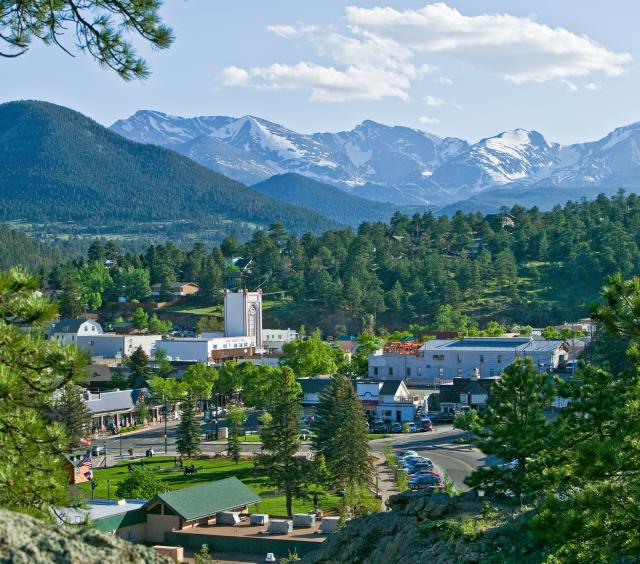
Estes Park sits at the base of Rocky Mountain National Park, driving one of Colorado’s most consistent tourism economies
2026 Economic Outlook
- RMNP timed entry reservation system managing peak crowds, extending shoulder season appeal
- Remote work migration permanently growing year-round population
- Trail Ridge Road improvements drawing even more summer visitors
- Estes Park downtown revitalization expanding dining and retail appeal
- Growing fall elk rut tourism lengthening high-demand season into October
Investment Climate
Estes Park’s STR market is one of Colorado’s most investor-accessible mountain markets. The combination of high visitor volume, moderate purchase prices relative to other Colorado resort towns, and a licensing environment that does not cap non-owner-occupied licenses (unlike Crested Butte and several other markets) makes entry achievable for a broader range of investors. Key characteristics of successful Estes Park investors:
- Summer seasonality focus, understanding that June-September is the revenue engine and planning accordingly
- Property differentiation, as the market rewards cabins with views, hot tubs, and wildlife proximity over standard residential properties
- Year-round marketing capability, leveraging winter snowshoeing, elk watching, and holiday visitors to reduce shoulder season losses
- Larimer County vs. town jurisdiction awareness, as properties outside town limits operate under different STR rules
- Long-term appreciation conviction, as RMNP’s permanent status provides the most durable demand anchor of any Colorado mountain market
Historical Performance
| Period | Market Driver | Avg Annual Appreciation | Key Event |
|---|---|---|---|
| 2010-2015 | Post-recession recovery, STR platform discovery | 3-5% | Airbnb launches; Estes Park cabins begin generating STR income |
| 2016-2019 | STR income discovery, RMNP visitor record years | 6-9% | RMNP hits 4.4M visitors (2017 record); STR income widely recognized |
| 2020-2022 | Pandemic outdoor recreation surge, remote work migration | 20-28% | National park visitation surges as indoor destinations close; inventory collapses |
| 2023-2024 | Rate normalization, volume correction | 3-5% | Transaction volume drops; prices hold on thin inventory |
| 2025-2026 | Rate stabilization, continued migration, RMNP improvements | 7-10% (projected) | Timed entry system improving visitor experience, extending appeal |
Key Demand Drivers
- Rocky Mountain National Park – America’s third most visited national park with 4.5M+ annual visitors, providing a permanent and growing tourism base that is not weather-dependent in the same way as ski resorts
- Denver Proximity – At 90 minutes from one of America’s fastest-growing metros, Estes Park captures an enormous spontaneous weekend visitor pool that no truly remote mountain market can match
- Elk Rut Tourism – September-October elk rut brings a second major tourism surge, with hundreds of elk bugling in town every evening and drawing wildlife photographers and nature lovers from across the country
- YMCA of the Rockies – A massive conference and family retreat center drawing 175,000+ guests annually, many of whom discover the town and return as independent visitors and buyers
- Geographic Supply Constraint – National park boundaries on three sides and steep terrain severely limit developable land, creating structural supply scarcity that supports prices
- Climate Resilience – National park tourism is more resilient to climate change than ski resort tourism, providing a more durable long-term demand thesis
📚 New to real estate investing? Master the fundamentals with our professional course Learn more →
2. Neighborhood Hotspots
Estes Park Investment Neighborhood Map
Interactive map of Estes Park’s investment areas. Green stars show top hotspots, blue circles mark established markets, and orange circles highlight emerging areas.
Core Investment Areas
Detailed Area Analysis
| Area | Price Range | Cap Rate | Growth Drivers | Best Strategy |
|---|---|---|---|---|
| Fall River Corridor | $650K-$1.5M | 6.0-8.0% (STR) | RMNP proximity, river, elk, premium rates | Maximum STR yield, premium cabin market |
| Downtown / Riverwalk | $500K-$950K | 5.5-7.0% (STR) | Walkability, year-round events, family demand | Year-round occupancy, condo entry point |
| Carriage Hills / Windcliff | $800K-$2.5M | 5.0-7.0% (STR) | Dramatic views, privacy, luxury cabin demand | Luxury STR, appreciation play |
| Fish Creek / South Estes | $600K-$1.2M | 5.5-7.0% (STR) | Mountain views, creek access, Lake Estes nearby | Balanced STR + appreciation |
| Lake Shores / Beaver Point | $500K-$850K | 5.0-6.5% (STR) | Lake Estes views, outdoor recreation, family market | Family STR, more accessible entry |
| Glen Haven / Rural Larimer | $400K-$750K | 5.5-7.5% | Affordability, acreage, Larimer County STR rules | Budget entry, mixed STR/LTR |
Expert Insight: “The guests who pay top dollar in Estes Park are not looking for luxury finishes or modern amenities the way ski resort guests are. They want authenticity: a creek running past the deck, a moose walking through the yard, or a panoramic view of Longs Peak at sunrise. A $700,000 cabin with creekside access and consistent elk sightings will outperform a $900,000 modern townhome every single time in this market. Know your audience, and buy the property your audience wants to book.” – Estes Park STR Property Manager
3. Property Types
| Investment Goal | Best Property Type | Best Area | Minimum Capital |
|---|---|---|---|
| Maximum STR Yield | Riverfront cabin, 3-4BR | Fall River corridor | $175,000+ |
| Lowest Entry STR | Downtown condo | Core Estes Park | $112,500+ |
| Maximum Appreciation | View cabin or luxury SFH | Carriage Hills, Windcliff | $200,000+ |
| Lowest Management | Long-term rental SFH | South Estes / Larimer County | $100,000+ |
Don’t guess the costs. Our Complete Renovation & Remodeling Cost Guide covers 400+ pages of project-by-project breakdowns with real contractor pricing ranges.
4. Cost Analysis
Acquisition Cost Breakdown (Estes Park)
| Expense Item | Typical Cost | Example ($750,000 Cabin) | Notes |
|---|---|---|---|
| Down Payment | 10-25% | $75,000-$187,500 | Second home: 10-20%; investment: 25% |
| Closing Costs | 2-3% | $15,000-$22,500 | Title, lender fees, recording; buyers pay own costs in Colorado |
| Inspection | $500-$900 | $700 | Include radon testing, septic inspection, well testing if applicable |
| Radon Mitigation | $800-$2,500 | $1,500 | Colorado has elevated radon levels; budget for mitigation if testing shows levels above 4 pCi/L |
| Well / Septic (if applicable) | $400-$1,500 | $800 | Many Estes Park properties outside town limits use well and septic; test both before closing |
| STR Furnishing Setup | $15,000-$40,000 | $22,000 | Full cabin furnishing, linens, kitchen supplies, hot tub if adding |
| STR License Fee | $150-$400/year | $250 | Town of Estes Park or Larimer County depending on location |
| Wildfire Insurance Premium | $3,000-$8,000/year | $5,000 | Colorado mountain properties face elevated wildfire risk; insurance costs have risen significantly |
| TOTAL MINIMUM ENTRY | ~18-30% of value | $135,000-$250,000 | More accessible than other Colorado resort markets |
Sample Cash Flow Analysis: Fall River Corridor Cabin (STR, 3BR)
| Item | Monthly Avg | Annual | Notes |
|---|---|---|---|
| Summer Peak Revenue (Jun-Sep, 4 months) | $9,500 | $38,000 | $375 avg nightly, 80% occupancy – RMNP peak season |
| Fall Elk Season (Sep-Oct) | $5,200 | $10,400 | $325 avg nightly, 65% occupancy – elk rut premium |
| Winter / Holiday (Nov-Mar) | $3,200 | $16,000 | $280 avg nightly, 45% occupancy – snowshoeing, holiday visits |
| Spring / Shoulder (Apr-May) | $1,800 | $3,600 | $250 avg nightly, 28% occupancy – slowest season |
| Gross STR Revenue | $5,667 | $68,000 | |
| Property Management (25%) | -$1,417 | -$17,000 | Resort town management; includes bookings, cleaning, maintenance coordination |
| Property Taxes | -$350 | -$4,200 | ~0.56% of $750K assessed value (Larimer County) |
| Insurance (wildfire + STR rider) | -$420 | -$5,000 | Wildfire risk drives premiums significantly higher than Front Range |
| Supplies, Maintenance, Repairs | -$420 | -$5,000 | STR wear, hot tub maintenance, seasonal prep, snow removal |
| Net Operating Income | $3,067 | $36,800 | Before mortgage |
| Mortgage ($750K, 20% down, 6.75%, 30yr) | -$3,891 | -$46,692 | Second home rate on $600,000 loan |
| CASH FLOW | -$824 | -$9,892 | Near-breakeven; much better than most Colorado resort markets |
| Cap Rate (STR basis) | 4.91% | NOI / Purchase Price; competitive for Colorado mountain market | |
| Total Return (8% appreciation) | ~27% | Including equity, appreciation on $750K, principal paydown |
This analysis demonstrates one of Estes Park’s key investment advantages over more expensive Colorado resort markets: the combination of a lower purchase price and strong summer STR revenue creates near-breakeven cash flow that is much more achievable than Crested Butte or Vail at equivalent quality levels. An investor with a 25% down payment instead of 20% would achieve positive monthly cash flow on this property. The hot tub addition (typically $8,000-$15,000 installed) would add $8,000-$15,000 in annual STR revenue, pushing this property to positive cash flow.
Expert Insight: “Estes Park is the most underrated STR market in Colorado relative to what you actually get. You are buying into a national park gateway with 4.5 million visitors a year, at prices 30-50% below Crested Butte or Steamboat, with cap rates that are better than either of those markets. The summer-heavy seasonality is real, but investors who price shoulder seasons correctly and maintain strong listing quality are regularly seeing positive cash flow that is genuinely rare in Colorado mountain real estate. The hot tub is not optional here, it is a revenue generator.” – Estes Park Real Estate Investor
5. Legal Framework
⚠️ Jurisdiction and Wildfire Risk Notice
Estes Park properties fall under two regulatory jurisdictions: the Town of Estes Park (within town limits) and Larimer County (outside town limits), each with separate STR licensing requirements. Additionally, Colorado’s increasingly severe wildfire environment has materially affected insurance availability and cost for mountain properties near Estes Park. The East Troublesome Fire (2020) and Cameron Peak Fire (2020) were both among Colorado’s largest wildfires ever recorded and burned areas near Estes Park. Always conduct wildfire risk assessment and confirm insurance availability before purchasing any mountain property in this region.
STR Regulatory Framework
- Town of Estes Park STR License: Required annually for all vacation rentals within town limits. No current cap on non-owner-occupied licenses (a significant advantage over many Colorado mountain markets). Good neighbor requirements apply: local contact number, noise rules, parking limits, occupancy maximums must be posted.
- Larimer County STR License: Required for properties outside town limits. Separate application, annual renewal, and fee structure. Generally considered more accessible and less restrictive than town regulations. Colorado compliance training required for licensees.
- Occupancy Limits: Both jurisdictions enforce maximum occupancy based on property size and septic capacity. Exceeding limits is a license violation. List accurately on platforms.
- Colorado State Framework: No rent control, no just cause eviction requirement (10-day notice for non-payment), no source of income protection at state level. Colorado is among the more landlord-friendly states in the Mountain West.
- Sales and Lodging Tax: Colorado state sales tax (2.9%) plus Larimer County and Town of Estes Park lodging taxes apply. Most platforms collect automatically; verify for direct bookings.
- RMNP Timed Entry: Rocky Mountain National Park’s reservation system manages visitor flows. This has not meaningfully reduced total visitation but has extended the season by making shoulder times more appealing. Good for STR investors.
Wildfire Risk and Insurance
Wildfire risk is the most material non-regulatory risk for Estes Park property investors. Key considerations:
- Fire Risk Zones: Many Estes Park area properties are in high or very high wildfire hazard severity zones as designated by Colorado DFPC. Verify the specific designation for any target property.
- Insurance Market Stress: Several major insurance carriers have withdrawn from Colorado mountain markets. Expect significantly higher premiums ($3,000-$8,000/year for a typical cabin) and mandatory defensible space compliance.
- Defensible Space Requirements: Colorado law requires property owners to maintain defensible space around structures. Non-compliance can affect insurance coverage and create liability.
- FORTIFIED Certification: Some investors are pursuing IBHS FORTIFIED certification for new construction or major renovations to qualify for better insurance rates. Worth investigating for significant renovations.
- Flood Risk (Big Thompson): Properties along the Big Thompson River corridor also face flood risk. The 1976 Big Thompson Canyon flood was catastrophic. FEMA flood zone designation review is mandatory for any riverfront property.
Key Regulatory Contacts
- Town of Estes Park: estes.org
- Larimer County STR: larimer.gov
- Colorado DFPC Wildfire: dfpc.colorado.gov
- RMNP Visitor Info: nps.gov/romo
| Regulation Area | Town of Estes Park | Larimer County | Investor Impact |
|---|---|---|---|
| STR License | Required, annual, no current cap | Required, annual, generally more accessible | More investor-friendly than many CO resort markets |
| Eviction | 10-day notice (non-payment) | 10-day notice (non-payment) | Standard Colorado process; landlord-friendly |
| Rent Control | None (Colorado prohibition) | None | No restriction on rent increases |
| Property Tax Rate | ~0.50-0.65% (Larimer County) | ~0.50-0.65% | Lower than Front Range suburban counties |
| Wildfire Code | Defensible space required | Defensible space required | Material cost and compliance obligation for all properties |
| Flood Zones | FEMA zones apply along Big Thompson | FEMA zones apply | Mandatory flood insurance for loans in designated zones |
6. Step-by-Step Estes Park Investment Playbook
Define Your Estes Park Strategy
Estes Park rewards investors who understand the summer-dominant tourism base and buy properties that the national park visitor demographic actually wants to book. The market has four viable approaches:
Premium Cabin STR
Buy a riverfront or view cabin. Add hot tub if not present. Run as a professional STR targeting RMNP visitors. Near-breakeven or positive cash flow achievable with 25%+ down. Best total returns in the market.
Second Home + STR Offset
Buy a personal mountain retreat and STR it during non-use periods. RMNP proximity means your family can use it for prime outdoor experiences while STR income covers substantial carrying costs. Most Estes Park second home buyers end up covering 60-80% of their mortgage through STR income.
Value-Add Cabin Renovation
Buy a dated cabin in a good location. Renovate the interior to modern standards, add a hot tub, update photography. STR revenue increases of 30-60% from quality renovation are common in this market. The before/after income differential funds significant renovation costs.
Workforce Long-Term Rental
Buy in South Estes or outlying Larimer County. Long-term rent to hospitality, park service, or local workforce. Near-zero vacancy year-round. Colorado’s landlord-friendly framework and no rent control make this a low-friction income strategy.
Build Your Estes Park Team
- Estes Park Local Real Estate Agent: Must have specific STR investment experience and actual data on STR revenue performance by neighborhood. Ask for revenue history on comparable properties they have sold to investors.
- Estes Park STR Property Manager: Interview specifically about average occupancy rates, shoulder season strategies, and their listing optimization approach. Ask for actual revenue statements from comparable cabins in their portfolio.
- Colorado Real Estate Attorney: For entity setup (LLC strongly recommended for wildfire liability protection), STR license review, and purchase contract review including wildfire and flood disclosures.
- Mountain-Experienced Inspector: Must test for radon, inspect septic systems (critical for rural properties), test well yield, assess fire hardening and defensible space compliance, and evaluate roof and structural load capacity for high-snow conditions.
- Insurance Broker with Colorado Mountain Experience: Contact an insurance broker before making an offer. Several carriers have exited the Colorado mountain market. Confirm insurance availability and cost for the specific property before the due diligence deadline.
Estes Park-Specific Due Diligence
Physical Due Diligence
- Radon test mandatory (Colorado mountain properties frequently elevated)
- Septic inspection and capacity review (STR guest loads can exceed older septic sizing)
- Well yield test if on well water
- Wildfire risk assessment and current defensible space compliance
- FEMA flood zone verification for any river or creek adjacent property
- Roof structural load and condition (high snowfall area)
- Freeze protection systems: heat tape, pipe insulation, thermostat-controlled minimums
- Hot tub condition if present (expensive to replace; $8,000-$20,000)
STR and Financial Due Diligence
- Request 2-3 years of actual STR platform revenue data from the seller
- Verify current STR license is transferable to new owner
- Confirm jurisdiction (town vs. county) and applicable licensing requirements
- Get insurance quote before due diligence deadline, not after closing
- Review HOA documents if applicable for STR restrictions or rental limits
- Verify access road conditions (some elevated properties have steep or dirt road access that limits certain visitor demographics)
- Confirm cell service and internet availability (critical for STR guests in mountain areas)
Maximizing STR Revenue in Estes Park
Estes Park STR success depends heavily on property differentiation and listing quality. Specific revenue-maximizing strategies for this market:
- Hot tub installation: If the property does not have one, budget $10,000-$20,000 to add it. Hot tubs generate $8,000-$15,000 in incremental annual STR revenue in Estes Park, making the investment typically recouped within 18 months.
- Wildlife feature marketing: Elk viewing decks, bird feeders, and meadow-facing windows are marketing assets. Guests pay premium rates for cabin experiences where wildlife encounters are probable. Feature this prominently in listings.
- Professional photography: Mountain view photography at sunrise or golden hour is worth the premium cost ($300-$600 for a professional shoot). First listing impression determines click-through rates on Airbnb and VRBO.
- RMNP timed entry pass guidance: The national park’s reservation system confuses many first-time visitors. Providing a property guide insert explaining how to obtain passes is a value-add that generates better reviews and repeat bookings.
- Winter marketing: Estes Park snowshoeing, wildlife watching, and the Stanley Hotel experience extend the shoulder season significantly. Invest in winter property photography and specifically market to this audience in November-December listings.
- Elk Fest / shoulder event targeting: Estes Park’s calendar includes Elk Fest (October), Snowshoe Shuffle (February), and the Estes Park Marathon (June). Build minimum stays around these events and price accordingly.
7. Financing Options for Estes Park
| Loan Type | Down Payment | Rate Premium | Best For | Estes Park Note |
|---|---|---|---|---|
| Second Home Conventional | 10-20% | +0.25-0.5% | Buyers planning personal use 14+ days/year | Best rates; most Estes Park buyers qualify given personal use plans. Most properties under $806,500 conforming limit. |
| Investment Property Conventional | 25% | +0.5-0.75% | Pure STR investors with no personal use | Higher down payment helps achieve cash flow breakeven at Estes Park price points |
| DSCR Loan | 25-30% | +1.5-2.5% | Self-employed, complex income | STR-based DSCR lenders can use projected STR income; at EP price points and STR yields, DSCR can work |
| Portfolio / Bank Statement | 20-30% | +1-2% | Business owners, high net worth | Several Colorado lenders have mountain resort experience; good for complex borrowers |
| Cash / 1031 Exchange | 100% | N/A | Competitive offers, exchange buyers | Estes Park is a common 1031 destination from Front Range investors; cash offers win |
| HELOC on Primary Residence | Varies | Prime + 0.5-1% | Front Range homeowners with equity | Very common source of down payment for Denver and Boulder-area buyers purchasing in Estes |
Estes Park Financing Reality: Unlike Crested Butte or Vail, many Estes Park properties fall within the conventional conforming loan limit ($806,500 in 2026 for most Colorado counties), meaning buyers can access standard conventional rates rather than paying the jumbo loan premium. This is a meaningful advantage that keeps financing costs lower and makes the cash flow math more achievable. Investors putting 25% down on a $750,000 property with strong STR income are among the most likely to achieve positive monthly cash flow of any Colorado mountain real estate market.
8. Frequently Asked Questions

Knowledge Quiz: Estes Park Real Estate Investment
Open Quiz
5 quick questions on what you just learned about Estes Park investing
1) How many annual visitors does Rocky Mountain National Park receive, making Estes Park a unique investment market?
Answer: C
Rocky Mountain National Park receives over 4.5 million annual visitors, making it the third most visited national park in the United States. This permanent, federally protected tourism anchor drives Estes Park’s STR demand and creates a more durable investment thesis than ski resort markets that face climate and economic risk.
2) What is Estes Park’s dominant revenue season for STR properties, and what percentage of annual income does it represent?
Answer: A
Summer (June through September) accounts for 55-65% of annual STR revenue in Estes Park, driven by RMNP peak visitation. Unlike ski resort towns that are winter-dominant, Estes Park’s summer peak is longer (4 months) but at lower per-night peaks. The fall elk rut (September-October) creates a second strong period, and winter is supported by snowshoeing and holiday visitors.
3) What specific property feature does the guide identify as generating $8,000-$15,000 in additional annual STR revenue in Estes Park?
Answer: D
A hot tub generates $8,000-$15,000 in additional annual STR revenue in Estes Park by reducing listing competition (filtering guests to a smaller inventory subset), adding $50-$150/night in per-night premium, dramatically improving shoulder season occupancy, and generating better reviews. Installation costs $10,000-$20,000, with a typical payback period of 1-2 years.
4) What is a critical non-regulatory risk that the guide says investors must address before closing on any Estes Park mountain property?
Answer: B
Wildfire risk and insurance availability is identified as the most material non-regulatory risk for Estes Park investors. The 2020 Cameron Peak and East Troublesome fires (both among Colorado’s largest ever) burned areas near Estes Park. Several major insurance carriers have exited the Colorado mountain market. Investors must confirm insurance availability and cost for the specific property before the due diligence deadline, not after closing.
5) What key STR licensing advantage does Estes Park have over Crested Butte and Breckenridge?
Answer: C
The Town of Estes Park currently has no cap on non-owner-occupied STR licenses, making it significantly more investor-accessible than Crested Butte (which caps non-owner-occupied licenses) and Breckenridge (which has implemented restrictions on non-owner-occupied STRs). This means investors can acquire a property, apply for an STR license, and operate without being subject to a waitlist or cap that could prevent STR income generation entirely.
Work With a Local Expert in Estes Park
We are building a verified network of real estate professionals across every market we cover.

About Our Expert Network
We are finalizing partnerships with verified real estate professionals across every market featured on Builds and Buys. Each expert in our network is selected for their hands-on investment experience, local market knowledge, and commitment to helping buyers and investors make sound decisions.
- Proven experience with STR income properties and RMNP gateway market
- Deep knowledge of STR licensing, wildfire risk, and seasonal revenue patterns
- Guidance on financing, entity structure, and STR compliance
- Access to off-market opportunities in this relationship-driven market
- Full transaction support from search through closing
- Property management referrals with verified Estes Park STR track records
Services Covered
- Property sourcing and acquisition
- STR revenue underwriting
- Buyer representation
- Market comparables and valuations
- Cabin renovation strategy
- Wildfire risk assessment guidance
- Legal and title referrals
- Financing and lender connections
- STR management referrals
- Insurance broker referrals
- 1031 exchange coordination
- Exit strategy planning
Get Connected or Join Our Network
Looking for a local expert for your Estes Park investment? Reach out and we will connect you with the right professional.
Are you an Estes Park or Larimer County real estate professional with STR investment experience? We are expanding our expert network.
Contact us at support@buildsandbuys.com
Find Specialized Estes Park Real Estate Professionals
Ready to Invest in Estes Park?
Estes Park offers something rare in Colorado mountain real estate: strong STR yields, a tourism anchor that is more durable than ski resort economics, lower entry costs than competing resort markets, and a licensing environment that does not cap investor access. The summer-dominant seasonality, wildfire insurance complexity, and well water and septic requirements for outlying properties require careful due diligence. But for investors who do that work, buy the right cabin in the right location, and partner with strong local property management, Estes Park consistently delivers some of the best risk-adjusted returns in Colorado’s mountain real estate landscape.
Continue Your Research
Colorado State Guide
See how Estes Park compares to Denver, Boulder, Fort Collins, and other Colorado markets.
Step-by-Step Invest
Complete framework for building a real estate investment strategy from scratch.
144-Lesson Course
University-level real estate education covering financing, law, strategy, and management.
For further guidance, explore our State-by-State Investor guides, browse our expert articles, or follow our Step-by-Step Investment Guide.