
Cottonwood Arizona Real Estate Investment Guide For 2026
A comprehensive resource for investors targeting Arizona’s emerging wine country and arts community, where Sedona-adjacent demand, Verde Valley charm, and dramatically lower price points create one of the state’s most compelling value investment opportunities
Quick answers: Top 5 most searched Cottonwood investment questions ▼
Migration data: Where people are moving from to Cottonwood ▼
In This Guide
Click on any section to navigate directly to that content
1. Cottonwood Market Overview
Market Fundamentals
Cottonwood occupies a unique and increasingly coveted position in Arizona’s real estate landscape: it offers the Verde Valley’s natural beauty, arts community, and Sedona-adjacent lifestyle at price points 40 to 60 percent below its famous neighbor just 20 minutes up the canyon. For years this gap was taken for granted. Beginning around 2019 and accelerating through the pandemic era, a growing wave of remote workers, retirees, and investors has discovered what Cottonwood offers and begun repricing the market accordingly.
Key fundamentals defining Cottonwood’s investment case:
- Population: 12,000+ city proper, 50,000+ Verde Valley metro area
- Location Advantage: 20 minutes from Sedona, 90 minutes from Phoenix, access to I-17
- Wine Industry: 20+ wineries and tasting rooms in Page Springs / Cornville corridor
- Major Employers: Verde Valley Medical Center, Cottonwood Unified School District, retail and tourism sector
- Median Home Price: $380,000 (versus $750,000+ in Sedona)
- Cap Rates: 5.5 to 7.5 percent long-term; 7 to 11 percent STR
Cottonwood is simultaneously a permanent residential market and an emerging tourism economy. The Verde Valley Wine Trail, the Alcantara Vineyard, the Page Springs corridor, and Old Town Cottonwood’s restaurant and gallery scene have transformed the city from a regional service hub into a destination in its own right. This transition from purely residential to tourism-adjacent is the investment thesis that drives both appreciation and STR income potential.
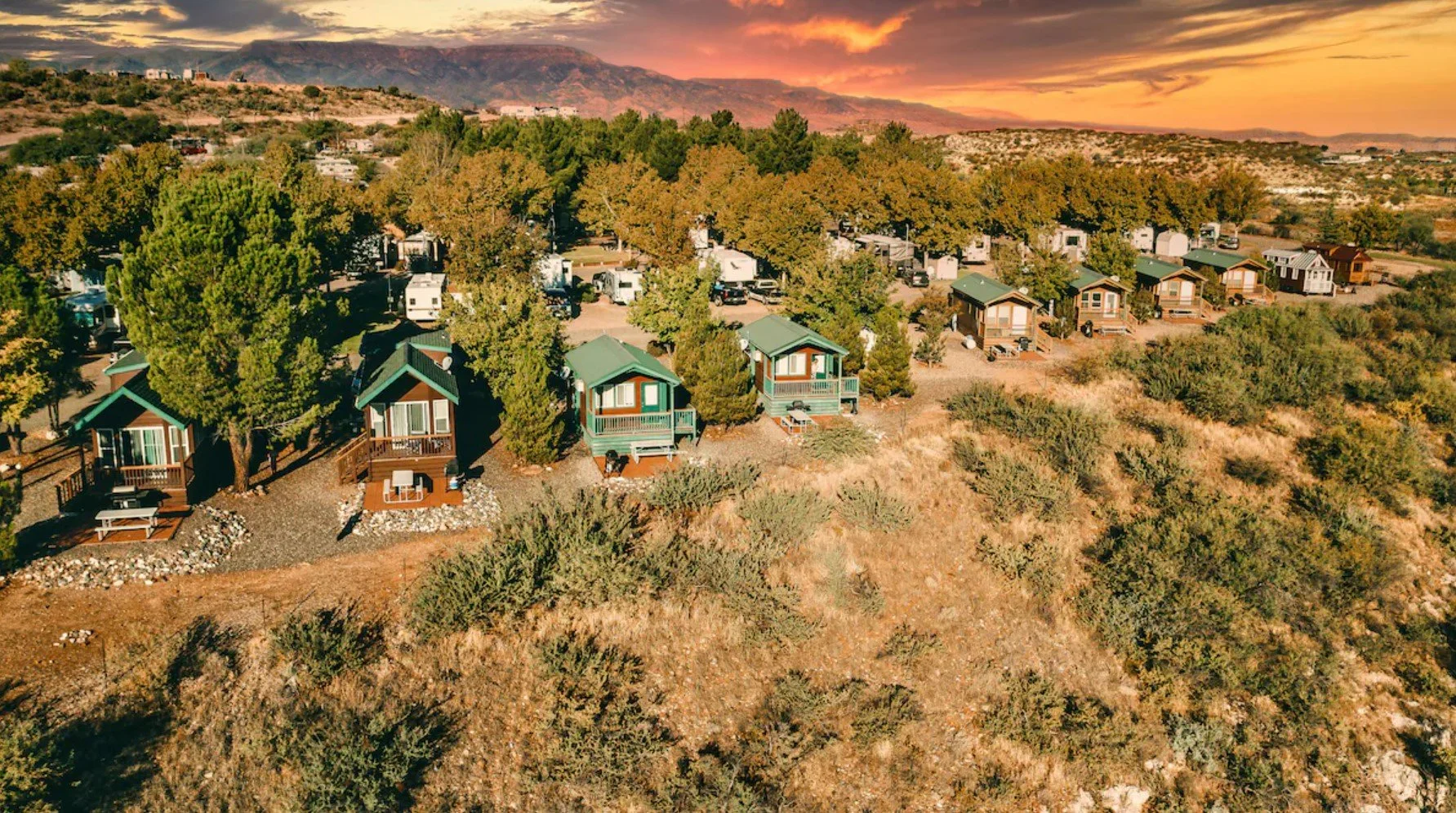
Cottonwood’s Verde Valley setting offers dramatic scenery and growing wine tourism at significantly lower price points than Sedona
2026 Economic Outlook
- Verde Valley wine industry continuing to earn national recognition
- Remote worker migration from Phoenix and California sustaining residential demand
- Sedona price appreciation pushing overflow buyers toward Cottonwood
- Old Town Cottonwood revitalization attracting new restaurants and retail
- Verde Valley Medical Center expansion adding healthcare employment
Investment Climate
Cottonwood’s investment environment combines the best elements of an emerging market with meaningful downside protection from multiple demand drivers. Unlike single-driver markets, Cottonwood benefits from at least four distinct demand sources:
- Wine tourism from the Verde Valley Wine Trail bringing Phoenix-area and Scottsdale visitors on weekend getaways with above-average daily spending
- Sedona spillover as Sedona’s prices and crowds push visitors toward Cottonwood as a quieter, more affordable Verde Valley alternative
- Remote worker migration from California and Phoenix seeking Verde Valley lifestyle at genuinely lower costs than northern Arizona alternatives
- Retiree demand for an active lifestyle community with healthcare access, cultural amenities, and outdoor recreation without Phoenix heat or Sedona premium pricing
Arizona’s landlord-friendly legal framework applies fully to Cottonwood. Yavapai County courts handle evictions efficiently, no local rent control exists, and the regulatory environment is straightforward. This legal backdrop combines with Cottonwood’s improving demand profile to create a strong investment environment for patient capital.
Historical Performance
| Period | Market Driver | Avg Annual Appreciation | Key Event |
|---|---|---|---|
| 2010-2017 | Regional service town, slow recovery | 2-5% | Verde Valley wine corridor beginning to develop; minimal investor attention |
| 2018-2019 | Wine country discovery, Sedona spillover | 6-9% | Old Town revitalization gains momentum; Sedona overflow buyers arrive |
| 2020-2022 | Pandemic migration, remote worker influx | 18-28% | Remote workers discover Verde Valley; Cottonwood inventory at historic lows |
| 2023-2024 | Rate normalization, stable tourism growth | 4-8% | Market moderates from peak; tourism demand sustains STR income |
| 2025-2026 | Wine country maturation, continued spillover | 7-11% (projected) | Verde Valley wine recognition growing nationally; Sedona prices sustaining spillover |
Demand Drivers Unique to Cottonwood
- Verde Valley Wine Trail – Arizona wine is earning serious national recognition, with Arizona Stronghold, Page Springs Cellars, Alcantara Vineyard, and 20+ additional producers drawing wine tourists who spend premium on accommodation, dining, and experiences
- Sedona Price Arbitrage – As Sedona’s median home price exceeds $750,000, buyers and renters who want the Verde Valley lifestyle increasingly choose Cottonwood at half the cost, creating a durable demand floor that rises with Sedona’s prices
- Old Town Cultural Revival – Old Town Cottonwood’s walkable Main Street with galleries, wine bars, farm-to-table restaurants, and artisan shops is transforming from a service corridor to a genuine destination district
- Verde Valley Recreation – Verde River access, Dead Horse Ranch State Park, Tuzigoot National Monument, and the nearby Mingus Mountain create outdoor recreation that draws visitors independent of the wine or Sedona association
- Healthcare Hub – Verde Valley Medical Center serves the entire region, creating stable healthcare employment that anchors the local economy against tourism fluctuations
- Remote Worker Permanence – Workers who moved to the Verde Valley during the pandemic have largely stayed, demonstrating that Cottonwood’s quality of life is genuinely retaining residents rather than serving as a temporary relocation
📚 New to real estate investing? Master the fundamentals with our professional course Learn more →
2. Neighborhood Hotspots
Cottonwood Investment Neighborhood Map
Interactive map of Cottonwood and Verde Valley investment neighborhoods. Green stars show top hotspots, blue circles mark established markets, and orange circles highlight emerging areas.
Core Investment Neighborhoods
Detailed Submarket Analysis: Cottonwood and Verde Valley
| Area | Price Range | Cap Rate | Growth Drivers | Best Strategy |
|---|---|---|---|---|
| Old Town Cottonwood | $320K-$560K | 6-9% STR / 5.5-7.5% LTR | Wine tourism, walkability, dining scene growth | STR wine tourism, value-add, long-term hold |
| Page Springs Wine Country | $380K-$750K | 7-11% STR gross | Winery proximity, Verde River, rural retreat appeal | Premium STR wine country positioning |
| Verde Village / Cornville | $310K-$520K | 5.5-8% | Creek access, residential stability, STR spillover | Balanced LTR / STR, buy-and-hold |
| Central Cottonwood | $280K-$430K | 5.5-7% | Healthcare employment, workforce demand, affordability | Long-term workforce rental, steady cash flow |
| Clarkdale | $250K-$420K | 5.5-7.5% | Historic tourism, railroad access, arts community | Value-add renovation, historic STR, affordable entry |
| Jerome (Mountain) | $400K-$900K | 8-14% STR gross | Ghost town tourism, National Historic Landmark, extreme supply limit | Premium STR, appreciation play, unique positioning |
| 89A Sedona Corridor | $350K-$650K | 6-10% | Cross-market demand, Sedona proximity, Verde River | STR cross-market, appreciation corridor |
Expert Insight: “The most underpriced asset in the Verde Valley right now is an Old Town Cottonwood bungalow within two blocks of Main Street. These properties generate $1,900 to $2,200 per month long-term from remote workers and healthcare staff, or $50,000 to $70,000 annually as a wine tourism STR. They are priced at $350,000 to $450,000 versus comparable character properties in Sedona at $900,000 to $1,500,000. As the Old Town dining and wine scene continues maturing, the price gap with Sedona’s Village of Oak Creek is going to compress significantly over the next 5 to 10 years.” – Maria Reyes, Verde Valley Investment Properties
3. Property Types
| Investment Goal | Best Property Type | Best Location | Minimum Capital |
|---|---|---|---|
| Maximum STR Income | Wine country STR with creek / winery access | Page Springs, Jerome | $95,000-$185,000 |
| Best Cash Flow | Workforce long-term rental | Central Cottonwood, Verde Village | $70,000-$110,000 |
| Balanced Returns | Old Town LTR or STR bungalow | Old Town Cottonwood | $80,000-$140,000 |
| Best Value-Add | BRRRR renovation in Clarkdale or central CW | Clarkdale, older Cottonwood stock | $55,000-$95,000 |
Don’t guess the costs. Our Complete Renovation & Remodeling Cost Guide covers 400+ pages of project-by-project breakdowns with real contractor pricing ranges.
4. Cost Analysis
Acquisition Cost Breakdown (Cottonwood)
| Expense Item | Typical Cost | Example ($390,000 Property) | Notes |
|---|---|---|---|
| Down Payment | 25% (investment) | $97,500 | 20% available with strong credit; most Cottonwood properties under conforming limit |
| Closing Costs | 2-3% of price | $7,800-$11,700 | Title, escrow, lender fees; Yavapai County recording |
| General Inspection | $300-$500 | $400 | HVAC condition critical; older homes common in Cottonwood and Clarkdale |
| Septic / Well Inspection | $200-$500 | $350 | Many rural Verde Valley properties use septic and well; inspect thoroughly |
| STR Furnishing (if applicable) | $12,000-$30,000 | $18,000 | Wine country aesthetic; quality furnishing improves reviews and nightly rates |
| Reserves (6 months) | 6 months expenses | $10,000-$15,000 | Positive cash flow reduces reserve requirement vs. Phoenix investment properties |
| TOTAL MINIMUM ENTRY | ~32-37% of value | $134,050-$173,450 | Far more accessible than Sedona or Scottsdale entry requirements |
Sample Cash Flow Analysis: Old Town Cottonwood 3BR Long-Term Rental
| Item | Monthly | Annual | Notes |
|---|---|---|---|
| Gross Rent | $2,100 | $25,200 | 3BR Old Town Cottonwood, updated, walk to Main Street |
| Less Vacancy (5%) | -$105 | -$1,260 | Conservative; Old Town demand strong from remote workers |
| Property Taxes | -$240 | -$2,880 | Yavapai County rate approximately 0.7-0.8% of assessed value |
| Insurance | -$120 | -$1,440 | Landlord policy; Yavapai County rates moderate |
| Property Management (9%) | -$189 | -$2,268 | Local Verde Valley management rates competitive |
| Maintenance + CapEx | -$210 | -$2,520 | 10% of rent; older homes require more reserve allocation |
| Net Operating Income | $1,237 | $14,832 | Before mortgage |
| Mortgage ($400K purchase, 25% down, 7.0%, 30yr) | -$1,995 | -$23,940 | On $300,000 loan balance |
| CASH FLOW | -$758 | -$9,108 | Modestly negative at 7% rate; positive at 6.0-6.5% or 20% down |
| Cap Rate | 3.7% | Long-term rental basis at purchase price | |
| STR Scenario (same property) | +$183 | +$2,196 | Based on $58,000 annual STR gross revenue; modestly positive cash flow |
The STR advantage in Cottonwood: The same property operated as an STR targeting wine tourism and Sedona spillover guests at $250 to $350 average nightly rate, with 185 to 200 occupied nights, generates approximately $55,000 to $65,000 in gross annual revenue. After expenses and management at 25 percent of gross, NOI improves to approximately $26,000 to $29,000 annually, turning the modestly negative long-term rental into a positive cash flow STR investment. This is the case for Old Town and wine country STR investors in Cottonwood.
Expert Insight: “What investors miss about Cottonwood is that you do not need to choose between cash flow and appreciation the way you do in Phoenix or Tucson. A well-selected Old Town property or a Page Springs wine country home can produce genuine positive cash flow as an STR while appreciating at 7 to 10 percent annually driven by Sedona spillover and wine tourism growth. That combination is essentially impossible to find anywhere in Scottsdale or the Phoenix metro at similar total returns. Cottonwood is where the numbers actually work the way real estate investment is supposed to work.” – Kevin Bradford, Verde Valley Investment Group
5. Legal Framework
✅ Cottonwood Operates Under Arizona’s Most Landlord-Friendly Legal Framework
Cottonwood and the broader Verde Valley operate under Arizona state landlord-tenant law with no additional local restrictions. No rent control, no just cause eviction requirement, efficient Yavapai County courts for any eviction proceedings, and STR rights protected by Arizona state law. The regulatory environment here is simpler than Sedona’s and more favorable than virtually any comparable California, Colorado, or Pacific Northwest market. For investors seeking legal clarity and operational simplicity, Cottonwood delivers.
Arizona Landlord-Tenant Law in Cottonwood
Verde Valley landlords operate under the Arizona Residential Landlord and Tenant Act through Yavapai County Justice Courts:
- Non-Payment Eviction: 5-day pay-or-quit notice. Court filing available day 6. Hearing within 2 to 3 weeks. Total timeline 25 to 35 days. Among the most efficient eviction processes in the country.
- Lease Violation: 10-day notice to cure or vacate for material violations. Immediate notice for non-curable violations.
- No-Cause Termination: 30-day notice to end month-to-month tenancy. No justification required.
- Security Deposit: Maximum 1.5 months rent. Return within 14 business days with itemized statement.
- Rent Control: Prohibited statewide. Yavapai County and City of Cottonwood cannot impose any rent restrictions.
- HVAC Habitability: Landlord must maintain working HVAC. Arizona’s climate makes HVAC an emergency maintenance obligation in summer.
- STR Rights: Protected by Arizona state preemption law. City of Cottonwood requires registration and compliance but cannot prohibit STRs.
Cottonwood STR Requirements
Short-term rental operation in Cottonwood is more straightforward than Sedona’s requirements, though still requires compliance:
- City STR Registration: City of Cottonwood requires STR operators to register their property. Annual renewal. Lower administrative burden than Sedona.
- Arizona Transaction Privilege Tax: Operators must collect and remit state and city TPT. Most major platforms (Airbnb, VRBO) collect automatically, but verify.
- Local Contact Requirement: Designate a local contact who can respond within a reasonable time. Out-of-state investors should retain a local property manager.
- Noise and Nuisance: Standard city noise ordinance applies. STR operators responsible for guest compliance.
- HOA Rules: Some Cottonwood communities have HOAs with rental restrictions. Verify before purchase, though HOAs are less prevalent here than in Phoenix metro communities.
- Rural Properties: Page Springs and Cornville wine country properties in unincorporated Yavapai County have fewer restrictions than city-of-Cottonwood properties.
Key Verde Valley Resources
- City of Cottonwood: cottonwoodaz.gov
- Yavapai County Courts: yavapaiaz.gov
- Arizona Landlord-Tenant Act: azleg.gov
- Arizona TPT License: azdor.gov
| Regulation | Cottonwood / Arizona | Sedona Comparison | Investor Impact |
|---|---|---|---|
| STR Registration | Required; straightforward process | Required + safety inspection + active enforcement | Lower compliance burden than Sedona |
| Eviction Timeline | 25-35 days | Same (both Arizona) | Fast, efficient resolution same as all Arizona markets |
| Rent Control | Prohibited statewide | Same (both Arizona) | Full market rent flexibility |
| HOA Prevalence | Lower than Phoenix metro; many non-HOA properties | HOAs common with STR restrictions | More non-HOA STR-eligible properties available |
| Rural Unincorporated | Yavapai County; fewer city restrictions | Mostly city jurisdiction | Page Springs / Cornville wine country properties have lighter regulation |
6. Step-by-Step Cottonwood Investment Playbook
Choose Your Cottonwood Strategy
Cottonwood’s multiple demand drivers create genuine flexibility. The four viable investment approaches:
Wine Country STR (Page Springs)
Buy in the Page Springs wine corridor with winery or creek access. Target the premium wine tourism market from Phoenix, Scottsdale, and national visitors. Highest STR income in the Verde Valley market. Requires active STR management and quality wine country aesthetic.
Old Town Cash Flow Hold
Buy a bungalow or SFH within walking distance of Old Town Main Street. Long-term rent to remote workers or healthcare staff at $1,900 to $2,400 per month, or operate STR targeting wine tourism. Balanced income and appreciation play with lowest management intensity of Cottonwood strategies.
Workforce Rental Buy-and-Hold
Buy 3-bedroom homes in central Cottonwood or Verde Village. Long-term rent to healthcare workers, teachers, and tradespeople at $1,700 to $2,200 per month. Positive cash flow achievable with conventional financing. Lowest management intensity, stable tenant base, steady appreciation.
BRRRR / Value-Add
Buy older homes in Clarkdale or central Cottonwood. Renovate to market standard. Rent at improved rates. Refinance and repeat. Cottonwood’s positive cash flow environment makes BRRRR viable with post-refinance cash flow that is impossible in most Arizona appreciation markets.
Build Your Cottonwood Team
- Verde Valley Investment-Focused Agent: Must understand the difference between wine country STR dynamics, Old Town appreciation drivers, and workforce housing demand. Ask specifically about their investor transaction volume in the area.
- Arizona Real Estate Attorney: For entity setup and lease templates. Less complex than Sedona given lower HOA prevalence, but entity structure is still important for liability protection.
- Verde Valley Property Manager: Local management is important in this market. A manager who understands the wine tourism calendar, the Sedona spillover demand pattern, and the local tenant pool will outperform a Phoenix-based manager significantly.
- Local Contractor: Rural properties in Page Springs and Cornville often involve septic systems, well water, and older construction. A Verde Valley-based contractor familiar with these systems is essential for accurate renovation budgeting.
- Arizona Investment CPA: For depreciation strategy, entity structure, and STR-specific tax treatment if you are operating vacation rentals.
Expert Tip: For wine country STR investors, ask your management company candidate which winery events and festivals they track for dynamic pricing. The Page Springs Harvest Festival, Verde Valley Wine Trail events, and seasonal winery releases create demand spikes that a tuned-in local management company will anticipate and price for. A generic property manager who does not track the wine tourism calendar is leaving 10 to 15 percent of annual revenue unrealized.
Cottonwood-Specific Due Diligence
Physical Due Diligence
- Septic system inspection (prevalent in Page Springs and Cornville rural properties)
- Well water test if property uses well water rather than city supply
- HVAC age and condition (Arizona desert climate standard)
- Flood zone verification for creek-adjacent properties
- Roof condition (older Cottonwood and Clarkdale homes may have aged roofing)
- Water rights documentation for rural acreage properties
- Fireplace / wood stove compliance (fire safety requirements)
Market Due Diligence
- Verify actual STR comparable revenue using AirDNA for the specific zip code
- Confirm walking distance to Old Town core if purchasing for walkability premium
- Research flood zone status for creek-adjacent properties (FEMA Map)
- Check for any HOA restrictions on STR operation
- Verify zoning for any commercial component (wine country properties near commercial zones)
- Review winery proximity and any new development that could affect views
- Confirm city utilities vs. well and septic for cost planning
Operate Successfully in Cottonwood
Key principles for successful Cottonwood investment operations:
- Position for wine country identity: STR properties in the Page Springs corridor should be explicitly positioned as wine country retreats, not generic Arizona vacation rentals. Include local wine maps, winery recommendations, wine glasses and a decanter, and partnerships with local wineries for guest discounts. This positioning commands 20 to 30 percent premium rates over generic Verde Valley listings.
- Track the wine tourism calendar: Verde Valley Wine Trail events, harvest festivals, winery release weekends, and wine-focused charity events create demand spikes. Pre-booking these dates at premium rates 3 to 6 months in advance is essential for maximizing annual revenue.
- Leverage Sedona positioning: Market Old Town and wine country STR properties as Sedona-adjacent experiences at dramatically lower nightly rates. Guests who could not afford Sedona’s $500+ per night properties will choose a $250 to $300 per night Cottonwood property that positions itself as the authentic Verde Valley experience adjacent to Sedona’s scenery.
- Quality matters for the remote worker long-term market: Remote workers choosing Cottonwood are often doing so intentionally, seeking quality of life rather than the cheapest available option. Properties with dedicated workspace, fast internet, and quality finishes command a rent premium from this segment and experience lower turnover.
7. Financing Options for Cottonwood
| Loan Type | Down Payment | Rate Premium | Best For | Cottonwood Note |
|---|---|---|---|---|
| Conventional Investment | 20-25% | +0.5-0.75% | Standard investment purchases under $806K | Most Cottonwood properties well under conforming limit; standard approval |
| DSCR Loan (STR Income) | 20-25% | +1.5-2.5% | Self-employed investors; STR revenue documented | Cottonwood’s STR revenue can support DSCR qualification given favorable price-to-income ratio |
| House Hacking (FHA) | 3.5% | Standard + MIP | Owner-occupying while renting rooms or units | Lowest entry; Cottonwood’s affordability makes house hacking accessible |
| Portfolio / Local Bank | 20-30% | +1-2% | Multiple properties; rural acreage; older structures | Local Arizona community banks may have better terms for rural Verde Valley properties |
| Hard Money / Bridge | 15-25% | 8-12% rate | BRRRR acquisitions; value-add projects | Arizona hard money lenders active; shorter Cottonwood renovation timelines than major metros |
| Cash Purchase | 100% | None | Maximum cash flow; competitive offers | STR yields 7-11% unlevered; attractive for income-focused investors without debt service |
| Second Home Loan | 10-20% | +0.25-0.5% | Personal vacation use property with STR income | Many investors buy Cottonwood as personal retreat with STR income; second home financing at better rates |
Cottonwood Financing Advantage: Unlike Sedona or Scottsdale where most properties require jumbo financing and DSCR qualification is difficult, virtually all Cottonwood properties fall well within the conventional conforming loan limit. DSCR loan qualification is also more feasible here than in Phoenix, because Cottonwood’s favorable price-to-rent ratio means STR income can cover debt service at 1.0x on properties in the $350,000 to $500,000 range. This gives Cottonwood investors access to financing tools simply unavailable in higher-priced markets, creating meaningful flexibility for both first-time and portfolio investors.
8. Frequently Asked Questions

Knowledge Quiz: Cottonwood Real Estate Investment
Open Quiz
5 quick questions on what you just learned about Cottonwood investing
1) What are the four distinct demand drivers that make Cottonwood’s market more diversified than single-driver markets?
Answer: C
The guide specifically identifies four demand drivers: Verde Valley wine tourism from the Page Springs corridor, Sedona spillover as Sedona’s prices push visitors and residents toward Cottonwood, remote worker migration from California and Phoenix, and retiree demand. This diversification provides meaningful downside protection compared to single-employer or single-driver markets.
2) By what percentage are Cottonwood home prices below Sedona’s median?
Answer: B
The guide states Cottonwood offers the Verde Valley lifestyle at price points 40 to 60 percent below its famous neighbor, just 20 minutes away. Cottonwood’s median home price is approximately $380,000 versus Sedona’s $750,000+. This gap is the fundamental arbitrage opportunity the guide identifies, noting that as Sedona prices continue rising, the spillover demand into Cottonwood creates a durable appreciation catalyst.
3) What makes Page Springs the premier STR investment location in the Cottonwood market?
Answer: A
The guide identifies Page Springs as “the heart of Verde Valley wine country” with Page Springs Cellars, Javelina Leap, and multiple acclaimed wineries. The wine tourism market from Phoenix and Scottsdale creates STR demand from visitors “who come specifically for the wine country experience” and who typically spend more per day than general vacation tourists. STR gross yields of 7 to 11 percent are achievable in this corridor.
4) What physical due diligence item is specifically called out as unique to Cottonwood and Verde Valley rural properties?
Answer: D
The guide specifically calls out septic system inspection and well water testing as Cottonwood-specific due diligence for rural properties in Page Springs and Cornville. The guide also notes in the FAQ that septic failure can cost $10,000 to $25,000+ and disrupt STR operations for weeks, making proper pre-purchase inspection and ongoing maintenance essential. This is the same issue noted for Sedona rural properties.
5) What does the cash flow analysis show about the STR strategy versus long-term rental for Old Town Cottonwood?
Answer: C
The guide’s cash flow table shows a $400,000 Old Town property producing negative $758 per month on a long-term rental basis at 7 percent rates. The same property operated as an STR generating $58,000 annual gross revenue produces approximately positive $183 per month after expenses and management at 25 percent. This $941 per month improvement in cash flow demonstrates why the STR strategy is central to the Cottonwood investment thesis.
Work With a Local Expert in Cottonwood
We are building a verified network of real estate professionals across every market we cover.

About Our Expert Network
We are finalizing partnerships with verified real estate professionals specializing in the Verde Valley market, including wine country STR investment, Old Town Cottonwood appreciation opportunities, and Jerome historic property transactions.
- Wine country STR revenue analysis and property selection
- Old Town Cottonwood market knowledge and appreciation tracking
- Rural property expertise including septic, well, and acreage
- Jerome historic property experience
- Full transaction support from search through closing
Services Covered
- Wine country investment sourcing
- Old Town property analysis
- STR revenue projections
- Rural property due diligence
- Buyer representation
- Value-add guidance
- Legal and title referrals
- STR management referrals
- Financing connections
- 1031 exchange coordination
- Exit strategy planning
- Property management referrals
Get Connected or Join Our Network
Looking for a Verde Valley investment specialist? Reach out and we will connect you with the right professional.
Contact us at support@buildsandbuys.com
Find Specialized Cottonwood Real Estate Professionals
Ready to Invest in Cottonwood?
Cottonwood is one of Arizona’s most compelling emerging investment stories. The combination of Verde Valley wine tourism, Sedona-adjacent demand at 40 to 60 percent lower prices, remote worker migration, and Arizona’s landlord-friendly legal framework creates a market where cash flow is real, appreciation catalysts are identifiable, and the entry barrier is genuinely accessible to individual investors. Whether you are targeting the wine country STR market in Page Springs, Old Town’s walkable bungalows, Jerome’s ghost town premium, or simply the best-priced Sedona-adjacent long-term rental opportunity in Arizona, Cottonwood delivers a value proposition that few comparable markets in the American Southwest can match.
Continue Your Research
Arizona State Guide
See how Cottonwood compares to Sedona, Prescott, Flagstaff, and all other Arizona markets.
Sedona Guide
Explore Sedona’s premium STR market 20 minutes up the canyon from Cottonwood.
144-Lesson Course
University-level real estate education covering financing, law, strategy, and management.
For further guidance, explore our State-by-State Investor guides, browse our expert articles, or follow our Step-by-Step Investment Guide.



