Casa Grande Arizona Real Estate Investment Guide For 2026
A comprehensive resource for investors looking to capitalize on one of Arizona’s fastest-growing manufacturing and logistics corridors, strategically positioned between Phoenix and Tucson
Quick answers: Top 5 most searched Casa Grande investment questions ▼
Migration data: Where people are moving from to Casa Grande ▼
In This Guide
Click on any section to navigate directly to that content
1. Casa Grande Market Overview
Market Fundamentals
Casa Grande is undergoing the most significant economic transformation in its history, driven by a convergence of advanced manufacturing investment, logistics expansion, and its strategic position directly on the Interstate 10 corridor between Phoenix and Tucson. Once primarily known for agriculture and cotton farming, the city has attracted billions of dollars in manufacturing investment that is reshaping the housing market from the ground up.
Key economic indicators defining Casa Grande’s investment case:
- Population: 60,000+ city, 120,000+ Pinal County metro area
- Major Employers: LG Energy Solution, Lucid Motors, Nikola, Amazon, UPS, Desert Diamond Casino, Banner Health
- Median Household Income: $58,000 (rising as manufacturing workforce matures)
- Job Growth: Among the fastest in Arizona, driven by manufacturing and logistics
- Location Advantage: 45 minutes from Phoenix, 60 minutes from Tucson
- Vacancy Rate: Under 5% for quality workforce rentals
The LG Energy Solution battery gigafactory, a $5.5 billion investment, represents the largest manufacturing commitment in Pinal County history. Combined with Lucid Motors’ production facility and a growing logistics cluster, Casa Grande is transitioning from a bedroom community to a genuine employment hub. This shift creates the housing demand that powers real estate returns.
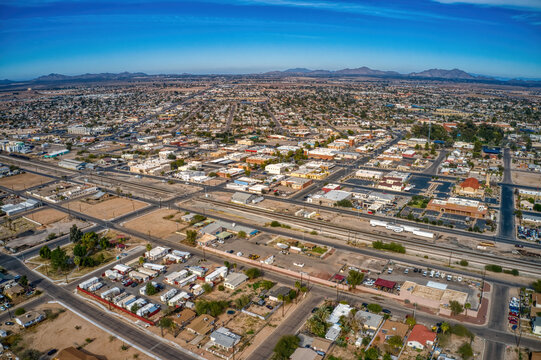
Casa Grande sits at the crossroads of Arizona’s fastest-growing manufacturing and logistics corridor
2026 Economic Outlook
- LG Energy Solution ramping toward full 2,000+ employee operation
- Lucid Motors expanding production at Arizona manufacturing campus
- Semiconductor supply chain investments flowing into Pinal County
- I-10 corridor logistics expansion drawing additional warehouse employers
- Pinal County infrastructure spending supporting residential development
Investment Climate
Casa Grande’s investment environment combines the best elements of an emerging market with meaningful downside protection from Arizona’s landlord-friendly legal framework. Investors operating here in 2026 occupy a rare position: genuine positive cash flow at conventional financing rates, in a market with identifiable near-term appreciation catalysts. Successful Casa Grande investors share several characteristics:
- Workforce housing focus targeting the $1,400 to $1,900 per month rent band that aligns with manufacturing employee budgets
- Growth orientation understanding that appreciation will accelerate as the employment base matures over the next 5 to 8 years
- Location discipline prioritizing properties within reasonable commute distance of the major employment sites
- Quality emphasis recognizing that manufacturing workforce tenants demand better quality housing than historic Casa Grande stock provided
- Multiple market access leveraging the city’s position between Phoenix and Tucson tenant pools
Arizona’s state-level landlord protections provide the legal foundation that makes investment straightforward. No rent control, no just cause eviction requirements, efficient courts, and a business-friendly regulatory environment mean that investors can focus on the market fundamentals rather than regulatory compliance complexity.
Historical Performance and Growth Trajectory
| Period | Market Driver | Avg Annual Appreciation | Key Event |
|---|---|---|---|
| 2010-2015 | Post-recession recovery, agricultural economy | 2-4% | Slow recovery, limited employment base |
| 2016-2019 | Phoenix spillover, bedroom community growth | 5-8% | Affordable alternative to Phoenix metro gains traction |
| 2020-2022 | Pandemic migration, remote work, affordability flight | 15-22% | Casa Grande saw historic demand from Phoenix price-outs |
| 2023-2024 | Rate normalization, manufacturing announcements | 5-9% | LG Energy Solution and Lucid Motors commitments confirmed |
| 2025-2026 | Manufacturing ramp-up, workforce housing demand | 8-13% (projected) | Full employment at major facilities driving sustained demand |
Casa Grande’s track record shows a market transitioning from a simple affordability play to a genuine employment-driven growth story. The post-pandemic period accelerated awareness among investors, and the manufacturing investment wave of 2022 to 2024 created the structural demand foundation that should sustain appreciation well into the next decade.
Demographic Trends Driving Demand
- Manufacturing Workforce Influx – LG Energy Solution, Lucid Motors, and supporting suppliers are bringing specialized workers who earn $50,000 to $90,000 annually and need quality housing close to the plants
- Phoenix Metro Overflow – Families and workers priced out of Phoenix continue to consider Casa Grande given its proximity via I-10 and significantly lower cost of living
- Logistics Sector Growth – Amazon, UPS, and regional distribution companies have established operations, creating a steady stream of workforce housing demand
- Active Adult Migration – Mission Royale and similar communities attract retirees seeking Arizona living at lower price points than Scottsdale or Chandler
- Agriculture Transition – Long-time agricultural workers transitioning to manufacturing employment represent a locally rooted tenant base
- Strategic Corridor Position – Dual commuter access to both Phoenix and Tucson job markets means the tenant pool is larger than single-market cities of similar size
📚 New to real estate investing? Master the fundamentals with our professional course Learn more →
2. Neighborhood Hotspots
Casa Grande Investment Neighborhood Map
Interactive map of Casa Grande’s investment neighborhoods. Green stars show top hotspots, blue circles mark established markets, and orange circles highlight emerging areas.
Core Investment Neighborhoods
Detailed Submarket Analysis: Casa Grande Neighborhoods
| Neighborhood | Price Range (SFH) | Cap Rate | Growth Drivers | Best Strategy |
|---|---|---|---|---|
| North CG / I-10 Corridor | $270K-$380K | 6-8% | LG Energy Solution, Lucid Motors, manufacturing workforce | New construction buy-and-hold, workforce housing |
| Mission Royale | $260K-$420K | 5.5-7% | Active adult demand, resort amenities, retiree migration | Long-term hold, stable tenants, minimal management |
| Cottonwood / NE Casa Grande | $240K-$350K | 6.5-8% | Family demand, schools, retail access, affordability | Family rentals, buy-and-hold, value-add opportunities |
| Central Casa Grande | $180K-$300K | 7-9% | Downtown revitalization, affordability, workforce housing | Cash flow focus, BRRRR, value-add renovation |
| Francisco Grande / West CG | $200K-$310K | 6.5-8% | Highway access, established area, workforce tenants | Steady cash flow, long-term holds, established rentals |
| Sunland Gin Road Corridor | $210K-$320K | 6.5-8% | Airpark proximity, logistics employment, I-10 access | Workforce housing, multi-employer tenant pool |
| South Casa Grande | $160K-$265K | 8-11% | Downtown spillover, affordability, workforce housing | Highest yield potential, patient investors, active management |
| Pinal Airpark Area | $195K-$290K | 7-10% | Airpark employment, logistics cluster, emerging industrial | Early-stage growth play, highest upside, higher risk |
Expert Insight: “The most overlooked Casa Grande opportunity right now is the zone within 10 minutes of the LG Energy Solution plant. These workers are earning wages that the local rental market has never seen before, but the housing supply reflects the old agricultural economy. Clean, well-maintained 3-bedroom homes in this corridor are renting within days of listing at prices that produce genuine cash flow even with conventional financing. Investors who wait until the factory is fully operational will find those rents already priced into purchase prices.” – David Reyes, Pinal County Investment Property Specialist
3. Property Types
| Investment Goal | Best Property Type | Best Neighborhoods | Minimum Capital |
|---|---|---|---|
| Maximum Cash Flow | Value-add SFH or small multi-family | Central CG, South CG | $50,000-$80,000 |
| Maximum Appreciation | New construction near employers | North CG / LG-Lucid corridor | $75,000-$100,000 |
| Balanced Returns | SFH workforce rental, 3-4BR | Cottonwood, Sunland corridor | $60,000-$90,000 |
| Lowest Management | Mission Royale active adult property | Mission Royale | $65,000-$110,000 |
Don’t guess the costs. Our Complete Renovation & Remodeling Cost Guide covers 400+ pages of project-by-project breakdowns with real contractor pricing ranges.
4. Cost Analysis
Acquisition Cost Breakdown (Casa Grande)
| Expense Item | Typical Cost | Example ($285,000 Property) | Notes |
|---|---|---|---|
| Down Payment | 25% (investment) | $71,250 | Standard for investment properties; 20% possible with strong credit |
| Closing Costs | 2-3% of price | $5,700-$8,550 | Title, escrow, lender fees, recording; Arizona rates competitive |
| General Inspection | $300-$500 | $400 | HVAC inspection critical given Arizona summer heat load |
| HVAC / Roof Inspection | $150-$350 | $250 | HVAC failure in Arizona summer is a habitability emergency; verify system age |
| Initial Repairs / Updates | 0-8% of price | $0-$22,800 | Older homes may need HVAC, roof, flooring updates before renting |
| Reserves (6 months) | 6 months expenses | $8,000-$12,000 | Emergency fund; HVAC replacement runs $6,000-$12,000 in Arizona |
| TOTAL MINIMUM ENTRY | ~30-35% of value | $85,600-$115,350 | Far more accessible than Phoenix or Scottsdale markets |
Sample Cash Flow Analysis: North Casa Grande 3BR Workforce Rental
| Item | Monthly | Annual | Notes |
|---|---|---|---|
| Gross Rent | $1,850 | $22,200 | 3BR, North CG, workforce rental near manufacturing corridor |
| Less Vacancy (5%) | -$93 | -$1,110 | Conservative; actual vacancy often lower in current market |
| Property Taxes | -$200 | -$2,400 | Pinal County rate approx 0.75-0.85% of assessed value |
| Insurance | -$110 | -$1,320 | Landlord policy; Arizona rates moderate, no flood/earthquake premium |
| Property Management (9%) | -$167 | -$2,000 | Casa Grande rates competitive; local management quality improving |
| Maintenance + CapEx | -$185 | -$2,220 | 10% of rent; higher HVAC allocation given Arizona climate |
| Net Operating Income | $1,095 | $13,150 | Before mortgage |
| Mortgage ($285K purchase, 25% down, 7.0%, 30yr) | -$1,427 | -$17,124 | On $213,750 loan balance |
| CASH FLOW | -$332 | -$3,984 | Slightly negative at 7% rate; positive at 6.5% or lower |
| Cap Rate | 4.6% | NOI / Purchase Price | |
| Total Return (10% appreciation) | ~35% | Including equity, appreciation, principal paydown on leveraged capital |
Note on rates: At a 6.5% rate (on a 20% down payment), this same property produces positive cash flow of approximately $150 to $200 per month. Value-add properties purchased at $220,000 and renovated to $260,000 ARV produce even stronger cash-on-cash returns. The key insight is that Casa Grande is far closer to genuine positive cash flow than any Phoenix submarket, making it one of Arizona’s strongest risk-adjusted investment opportunities in 2026.
Expert Insight: “Casa Grande offers something almost impossible to find in greater Phoenix: real cash flow potential with real appreciation upside. The manufacturing employment wave is just beginning to feed through into housing demand. Investors buying workforce rentals near the LG and Lucid facilities today are getting in before the institutional capital that will inevitably follow. When a major industrial employer reaches full operation, the surrounding residential market typically reprices 15 to 25 percent over the following 3 to 5 years, and Casa Grande is right at the beginning of that cycle.” – Angela Torres, Pinal County Investment Advisor, Southwest Realty Capital Group
5. Legal Framework
✅ Arizona Is Among the Most Landlord-Friendly States in the Country
Casa Grande operates under Arizona’s Residential Landlord and Tenant Act, which strongly favors property owners. There is no rent control, no just cause eviction requirement, no source of income protection mandate, and no local ordinances overriding state law in Pinal County. Investors managing properties here face far fewer legal complexities than those operating in California, Washington, or even Phoenix. Standard legal consultation is still recommended for entity setup and lease review, but the regulatory environment is genuinely investor-friendly.
Arizona Landlord-Tenant Law Basics
Casa Grande investors operate under state law with Pinal County court jurisdiction. Key provisions:
- Non-Payment Eviction: 5-day pay-or-quit notice. If tenant does not pay within 5 days, landlord may file for eviction. Court hearings typically scheduled within 2 to 3 weeks of filing.
- Lease Violation Eviction: 10-day notice to cure or vacate for material lease violations. Non-curable violations allow immediate notice.
- Month-to-Month Termination: 30-day notice to terminate a month-to-month tenancy with no cause required.
- Security Deposit: Maximum 1.5 months rent. Must be returned within 14 business days of move-out with itemized deductions.
- Rent Increases: No restrictions on amount or frequency. Notice required per lease terms (typically 30 days for month-to-month).
- Entry Notice: 2 days notice required for non-emergency entry.
- No Rent Control: Arizona state law prohibits local rent control ordinances.
- No Just Cause Requirement: Landlords can choose not to renew any lease without providing a reason.
Compliance Best Practices for Casa Grande
While the regulatory environment is favorable, systematic compliance protects your investment:
- Written Leases: Always use written leases with clear terms. Arizona Apartment Association lease templates are widely used and legally vetted.
- Move-In Condition Report: Document property condition with photos and written report signed by tenant at move-in. Essential for security deposit disputes.
- Habitability Standards: Must maintain working HVAC, plumbing, electrical, and weatherproofing. HVAC failure is an emergency requiring same-day response in Arizona summers.
- Security Deposit Accounting: Return within 14 business days with itemized statement. Failure voids right to withhold any amount.
- Fair Housing: Federal Fair Housing Act applies. Do not discriminate based on race, color, religion, sex, national origin, disability, or familial status.
- HOA Compliance: If property is in an HOA, review rental rules before purchase. Some Mission Royale sections have age restrictions that limit tenant eligibility.
- Entity Structure: LLC ownership recommended for liability protection. Arizona single-member LLCs are inexpensive and straightforward to maintain.
Useful Arizona Resources
- Arizona Residential Landlord and Tenant Act: azleg.gov
- Arizona Apartment Association: azaa.com
- Pinal County Superior Court: pinalcountyaz.gov
- Arizona Department of Real Estate: azre.gov
| Regulation | Arizona / Casa Grande | vs. California (for comparison) | Investor Impact |
|---|---|---|---|
| Eviction Timeline | 3-5 weeks total (non-payment) | 3-12+ months | Dramatically lower non-payment risk in Arizona |
| Rent Control | Prohibited statewide | Active in many cities | Full flexibility to adjust rents to market |
| Non-Renewal | 30-day notice, no cause needed | Just cause required in many cities | Full control over tenant selection at lease end |
| Security Deposit | Max 1.5x rent, 14 day return | Max 2x rent, 21 day return | Moderate protection; clear documentation essential |
| Rent Increase Notice | 30 days for month-to-month | 90 days for 10%+ increases | Flexibility to respond quickly to market conditions |
| Source of Income | No protection mandated | Protected in many cities | May choose tenants based on income type |
6. Step-by-Step Casa Grande Investment Playbook
Choose Your Casa Grande Strategy
Casa Grande is unusual in Arizona because it offers multiple viable strategies simultaneously. Define your approach before entering the market:
Workforce Housing Buy-and-Hold
Buy 3 to 4 bedroom homes near manufacturing employment. Target the $220,000 to $340,000 range. Rent to LG, Lucid, and logistics workers earning $50,000 to $90,000. Moderate cash flow with strong appreciation as employment matures.
Value-Add / BRRRR
Buy 1970s to 1990s homes in central or south CG at $160,000 to $240,000. Update HVAC, kitchen, bathrooms, flooring. Rent to workforce tenants at market rates. Refinance out equity and repeat. Strong cash-on-cash returns available.
Active Adult / Mission Royale
Buy in Mission Royale and rent to retirees and 55+ residents seeking resort lifestyle without ownership commitment. Exceptional tenant stability, lowest management intensity, predictable income. Verify HOA rental rules before purchase.
Corporate / Extended Stay Rental
Furnish a 3 to 4 bedroom home near the manufacturing employers and market to contractors, project managers, and executives on extended assignments. Potential to earn $2,500 to $3,500 per month versus $1,700 to $2,000 for unfurnished long-term rental.
Build Your Casa Grande Team
Local knowledge is essential in a market undergoing this much change. Key team members for Casa Grande investment:
- Pinal County Investment-Focused Real Estate Agent: Must understand the employment dynamics and know the rental performance of different corridors. Ask specifically about their experience with investor clients and workforce housing.
- Arizona Real Estate Attorney: For entity setup (LLC recommended), lease template review, and any eviction proceedings. Arizona law is straightforward but proper documentation from day one is still essential.
- Casa Grande Property Manager: Local management is improving as the market attracts more investment attention. Verify their experience with workforce housing and their maintenance response capacity given the critical importance of HVAC in Arizona.
- Licensed Contractor with Arizona Experience: Essential for value-add buyers. Must be familiar with desert-climate construction requirements including HVAC sizing, foam insulation standards, and caliche soil conditions.
- Arizona Real Estate CPA: For depreciation strategy, entity structuring, and understanding Arizona’s property tax system and appeal procedures.
Expert Tip: Ask any property manager candidate: “How do you handle an HVAC failure in July?” The answer reveals both their maintenance responsiveness and their understanding of Arizona’s climate-specific landlord obligations. A same-day or 24-hour response is the only acceptable answer given summer temperatures that regularly exceed 110 degrees Fahrenheit.
Casa Grande Due Diligence
Standard property due diligence with these Arizona and Casa Grande specific additions:
Physical Due Diligence
- HVAC age and condition (critical, replacement cost $6,000-$12,000)
- Roof condition and remaining life (flat or low-slope roofs common)
- Pool condition if present (adds maintenance cost and liability)
- Caliche soil assessment for foundation drainage issues
- Irrigation and landscaping water costs
- Window insulation quality (single-pane windows significantly increase utility costs)
- Electrical panel capacity for modern appliance loads
Market and Regulatory Due Diligence
- Verify HOA rental restrictions (particularly Mission Royale age and rental rules)
- Confirm zoning and any planned industrial or commercial development nearby
- Research actual rental comps within 1 mile using current listings and property manager data
- Verify proximity and commute time to major employment sites
- Check for any city assessments or infrastructure improvement districts
- Review any existing tenant lease terms and payment history if purchasing occupied property
- Confirm water rights and utility provider for the specific address
Acquire and Operate Successfully
Casa Grande is a more accessible market than Phoenix, but competition is increasing as investors discover the opportunity. Strategies for successful acquisition and operation:
- Move decisively: Well-priced properties in the manufacturing employment corridor are moving in 7 to 21 days. Pre-approval before searching is non-negotiable.
- Target workforce-appropriate finishes: Manufacturing workers care more about functional quality (working HVAC, clean kitchen, durable flooring) than luxury finishes. Over-improving for the market reduces your return without increasing rents proportionally.
- Set rents competitively from day one: Arizona’s tenant-friendly eviction timeline means a well-screened long-term tenant is more valuable than a higher-paying tenant with marginal qualifications. Slightly below-market rents for excellent tenants is a sound strategy.
- Screen for employment stability: Verify employment at a named local employer. Manufacturing workers at established companies like LG or Lucid have stable employment that reduces non-payment risk significantly versus gig economy or transient workers.
- Budget for HVAC maintenance proactively: Arizona’s heat means HVAC systems work harder than in most U.S. markets. Annual HVAC servicing ($150 to $250) prevents the $8,000 to $12,000 emergency replacement that can eliminate a year of cash flow.
7. Financing Options for Casa Grande
| Loan Type | Down Payment | Rate Premium | Best For | Casa Grande Note |
|---|---|---|---|---|
| Conventional Investment | 20-25% | +0.5-0.75% | Strong W-2 income, good credit | Most CG properties well below conforming loan limits; standard approval process |
| DSCR Loan | 20-25% | +1.5-2.5% | Self-employed investors, no income verification | Casa Grande is one of few Arizona markets where DSCR ratios can work at current rents |
| House Hacking (FHA) | 3.5% | Standard + MIP | Owner-occupying one unit of 2-4 unit property | Lowest barrier to entry; ideal first step for new investors |
| Portfolio Loan | 20-30% | +1-2% | Multiple properties, self-employed investors | Local Arizona community banks and credit unions offer competitive terms |
| Hard Money / Bridge | 15-25% | 8-12% rate | BRRRR acquisitions, value-add projects | Several Arizona hard money lenders active; shorter renovation timelines than Pacific Northwest |
| Cash Purchase | 100% | None | Investors wanting maximum cash flow without debt service | Lower entry prices make cash purchases accessible; 8-10% cash-on-cash without leverage |
| Owner-Occupied (Primary) | 3-10% | Standard rates | Investors who relocate to Casa Grande for employment | Manufacturing workers can own near their employer; strong appreciation with owner-occupant financing terms |
Casa Grande Financing Advantage: Unlike Phoenix or Scottsdale, Casa Grande properties often qualify for DSCR loans because the debt service coverage ratio at current rents can meet or exceed 1.0x for properties purchased in the $200,000 to $280,000 range. This gives investors access to no-income-documentation financing that simply is not available in most Arizona markets at current interest rates. For investors with multiple properties or self-employment income, DSCR loans in Casa Grande represent a meaningful structural advantage over higher-price metro markets.
8. Frequently Asked Questions

Knowledge Quiz: Casa Grande Real Estate Investment
Open Quiz
5 quick questions on what you just learned about Casa Grande investing
1) What is the single most transformative economic event in Casa Grande’s recent history?
Answer: B
The LG Energy Solution battery gigafactory represents approximately $5.5 billion in investment and is expected to employ 2,000+ workers directly, making it the largest single private investment in Pinal County history. Combined with Lucid Motors, it is transforming Casa Grande from an agricultural bedroom community to a genuine manufacturing employment hub.
2) What is the typical eviction timeline in Casa Grande for non-payment of rent?
Answer: A
Arizona’s landlord-friendly legal framework produces eviction timelines of 25 to 35 days for uncontested non-payment cases. The process starts with a 5-day pay or quit notice, then a court filing, a hearing typically within 2 to 3 weeks, and writ execution by the constable. This is far faster than California or Washington state timelines.
3) Which neighborhood offers the best combination of active adult tenant stability and low management intensity?
Answer: C
Mission Royale offers exceptional tenant stability because retirees renting in resort-amenity communities tend to stay 3 to 7 years and treat properties well. The guide notes that cap rates run 5.5 to 7 percent with very low vacancy and turnover, making it ideal for passive investors who prioritize stability over maximum yield.
4) What critical maintenance item must Casa Grande investors prioritize above all others given Arizona’s climate?
Answer: D
The guide emphasizes that HVAC failure in Arizona summer is a habitability emergency requiring same-day response when temperatures exceed 110 degrees Fahrenheit. HVAC replacement costs $6,000 to $12,000 and can eliminate a full year of cash flow. Annual servicing for $150 to $250 is essential preventive maintenance that the guide specifically calls out as non-negotiable.
5) Why does the guide say Casa Grande is one of the few Arizona markets where DSCR loans can work?
Answer: B
DSCR loans require that property rental income covers debt service at 1.0x or above. In Phoenix, cap rates of 4 to 5 percent at prices of $450,000 to $700,000 make this impossible at current rates. In Casa Grande, cap rates of 6 to 8 percent at prices of $200,000 to $280,000 mean the rental income can meet or exceed the debt service requirement, making DSCR qualification possible where it is not in higher-price metro markets.
Work With a Local Expert in Casa Grande
We are building a verified network of real estate professionals across every market we cover.

About Our Expert Network
We are finalizing partnerships with verified real estate professionals across every market featured on Builds and Buys. Each expert in our network is selected for their hands-on investment experience, local market knowledge, and commitment to helping buyers and investors make sound decisions.
Our local specialists offer:
- Proven experience with investment and income-producing properties
- Deep knowledge of local pricing, rental yields, and neighborhood dynamics
- Guidance on financing, legal structure, and due diligence
- Access to off-market and pre-market opportunities
- Full transaction support from search through closing
- Ongoing portfolio and property management referrals
Services Covered
- Property sourcing and acquisition
- Investment analysis and underwriting
- Buyer representation
- Market comparables and valuations
- Short-term and long-term rental strategy
- Value-add and renovation guidance
- Legal and title referrals
- Financing and lender connections
- Property management referrals
- Insurance and inspection referrals
- 1031 exchange coordination
- Exit strategy planning
Get Connected or Join Our Network
Looking for a local expert to help with your investment? Reach out and we will connect you with the right professional for your market and strategy.
Are you a real estate professional with a track record working with investors in Pinal County? We are always expanding our network of verified local experts.
Contact us at support@buildsandbuys.com
Find Specialized Casa Grande Real Estate Professionals
Ready to Invest in Casa Grande?
Casa Grande is one of Arizona’s most compelling investment opportunities for 2026. The convergence of manufacturing employment, affordability, positive cash flow potential, and Arizona’s landlord-friendly legal environment creates a rare combination that few markets in the American Southwest can match. Investors who establish positions now, before the manufacturing employment base reaches full operation, will be positioned for meaningful appreciation as the city’s economic transformation matures over the next decade.
Continue Your Research
Arizona State Guide
See how Casa Grande compares to Phoenix, Tucson, Scottsdale, and other Arizona markets.
Step-by-Step Invest
Complete framework for building a real estate investment strategy from scratch.
144-Lesson Course
University-level real estate education covering financing, law, strategy, and management.
For further guidance, explore our State-by-State Investor guides, browse our expert articles, or follow our Step-by-Step Investment Guide.