Brighton Colorado Real Estate Investment Guide For 2026
A comprehensive resource for investors targeting one of the Denver metro’s last true affordability frontiers, where sub-$450K single-family homes, E-470 commuter access, and rapid population growth converge into a compelling long-term investment case in 2026
Quick answers: Top 5 most searched Brighton investment questions ▼
Migration data: Where people are moving from to Brighton ▼
In This Guide
Click on any section to navigate directly to that content
1. Brighton Market Overview
Market Fundamentals
Brighton is the seat of Adams County and one of the fastest-growing cities in the Denver metro, positioned at the northeast corner of the region where E-470 meets I-76. With a population surpassing 42,000 and growing, Brighton occupies a unique market position: it is simultaneously a genuine small city with its own historic downtown and identity, and a major commuter bedroom community serving DIA, the northern industrial corridor, and downtown Denver. That dual identity creates a more durable investment case than pure bedroom suburbs with no local economic anchor.
Key economic indicators:
- Population: 42,000+ and growing at roughly 3% annually
- Major Employers: Colorado Plains Medical Center, Adams County government, Denver International Airport (via E-470), Vestas Wind Systems, Amazon and industrial corridor employers
- Median Household Income: $72,000
- Median Home Price: $440,000, one of the lowest in the Denver metro for a city of this size and accessibility
- E-470 Access: DIA in 15 minutes, Denver Tech Center in 35 minutes, Aurora in 25 minutes
- Adams County Property Tax Rate: Approximately 0.55 to 0.70% of assessed value, moderate within the metro
Brighton’s economy is anchored by healthcare, government, and the broader DIA employment ecosystem. The city is also home to a significant manufacturing and distribution base along the I-76 and E-470 corridors, including renewable energy manufacturing (Vestas), logistics, and food processing operations that employ thousands of blue-collar workers who primarily rent within city limits.
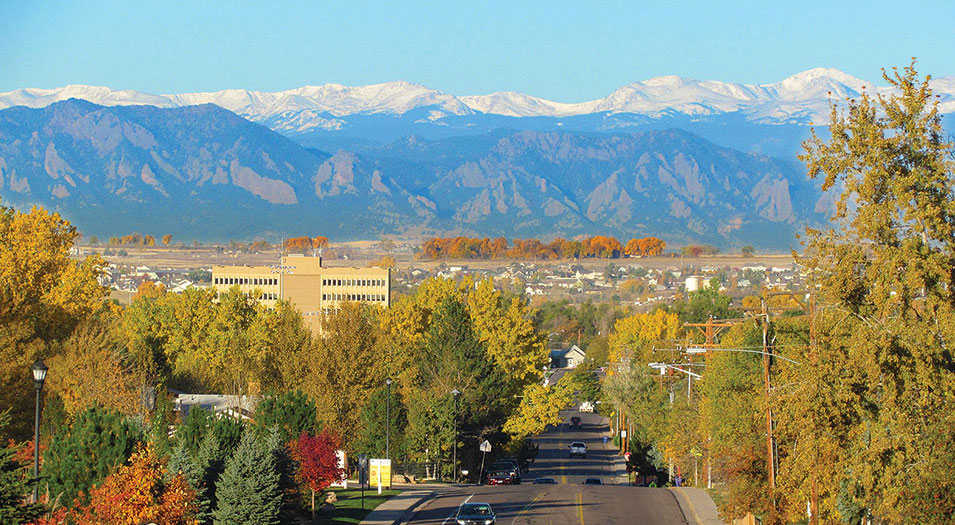
Brighton offers Denver metro access at Colorado’s most competitive price points, anchored by DIA employment and a growing healthcare sector
2026 Economic Outlook
- DIA expansion adding gates and employment through 2028
- Colorado Plains Medical Center campus expansion underway
- E-470 managed lane expansion improving commute reliability
- Adams County industrial corridor attracting distribution and logistics tenants
- Brighton downtown revitalization adding retail and dining attractors
The Brighton Investment Thesis: Last Affordable Denver Metro Frontier
Brighton’s core investment argument is straightforward: it offers genuine Denver metro connectivity at prices that have already been priced out of Aurora, Thornton, Westminster, and every other comparable northern suburb. As those markets have pushed median home prices past $500,000 and $550,000, Brighton has absorbed the overflow while maintaining a sub-$450,000 median. That price gap does not persist forever, and the investors who recognize and act on it before it closes are the ones who capture the appreciation upside.
The market has specific structural support for continued price appreciation:
- DIA is a 25-year growth engine — the airport’s long-term expansion program means the 35,000-plus worker base grows continuously, and Brighton is the most affordable community within a practical commute
- I-76 and E-470 are not replicable — the highway infrastructure connecting Brighton to Denver is fixed and finite, creating a location advantage that cannot be built around
- Adams County zoning is loosening selectively — master-planned communities are adding supply on the periphery, but the established neighborhoods near downtown and the medical center are not being replicated
- Population growth is sustained — Brighton’s 3% annual population growth rate exceeds most Colorado cities, driven by the affordability pull from the broader metro
The DIA Employment Rental Premium
Denver International Airport is one of the largest employment centers in Colorado and one of the most underappreciated drivers of Brighton’s rental market. The airport employs over 35,000 workers directly and tens of thousands more in adjacent logistics, hotels, and services. Brighton sits 15 minutes from DIA via E-470, making it the closest affordable city to the airport. Airline workers, TSA employees, ground crews, and logistics workers on rotating shifts specifically seek Brighton housing because the commute is fast at any hour, the rents are lower than any comparable alternative, and the yards and space are unavailable closer to the airport.
DIA Commute Times from Brighton vs. Alternatives
| City | Drive to DIA | Median Home Price | Typical 3BR Rent |
|---|---|---|---|
| Brighton | 15 min via E-470 | $440,000 | $1,800-$2,100 |
| Aurora (near DIA) | 20 min | $530,000 | $2,000-$2,400 |
| Thornton | 25 min | $510,000 | $1,950-$2,300 |
| Commerce City | 18 min | $470,000 | $1,850-$2,200 |
Brighton offers the lowest home prices and competitive rents among DIA-proximate communities, supporting strong investor returns.
Historical Performance
| Period | Market Driver | Avg Annual Appreciation | Key Event |
|---|---|---|---|
| 2015-2018 | Denver metro spillover, DIA growth | 6-9% | E-470 express lanes open; commute times drop |
| 2019-2022 | Remote work migration, affordability demand | 14-20% | Brighton becomes entry point for Denver metro homeownership |
| 2023-2024 | Rate normalization, modest pullback | 2-4% | New construction added supply pressure in outer subdivisions |
| 2025-2026 | Rate stabilization, DIA expansion, healthcare growth | 4-7% (projected) | Medical Center expansion and downtown revitalization lifting established neighborhoods |
The Hispanic Community: Brighton’s Rental Market Foundation
Brighton’s population is approximately 45 to 50% Hispanic, reflecting the city’s deep roots as an agricultural and working-class community along the South Platte River. This demographic creates specific investment considerations that Brighton-focused investors should understand:
- Multi-generational households are common, meaning a single rental unit may house 6 to 10 individuals contributing to a combined household income that supports higher rents than single-income household analysis would suggest
- Long tenancy preferences — Hispanic families in particular tend to establish roots in communities where they have social networks, churches, and schools. Turnover rates in this demographic are below the metro average.
- Spanish-language property management is a meaningful competitive advantage. Landlords who offer Spanish-language leases, maintenance communication, and property management reach a larger qualified tenant pool and experience lower vacancy.
- Cultural community anchors — downtown Brighton’s restaurants, markets, and community spaces serve as genuine neighborhood attractors that reduce the likelihood of community decline even as demographics shift
- Fair housing compliance — all screening criteria must be applied consistently regardless of national origin, language, or family size (within legal occupancy standards). Investors should use objective, documented screening criteria.
📚 New to real estate investing? Master the fundamentals with our professional course Learn more →
2. Neighborhood Hotspots
Brighton Investment Neighborhood Map
Interactive map of Brighton’s investment neighborhoods. Green stars show top hotspots, blue circles mark established markets, and orange circles highlight emerging areas.
Core Investment Neighborhoods
Detailed Submarket Analysis
| Neighborhood | Price Range | Cap Rate | Growth Drivers | Best Strategy |
|---|---|---|---|---|
| Historic Downtown | $380K-$480K | 6.5-8.0% | Value-add stock, community anchor, constrained supply | BRRRR, value-add, small multi-family |
| Medical Center Corridor | $400K-$520K | 6.0-7.0% | Hospital expansion, stable healthcare tenants | Buy-and-hold SFH, low turnover |
| E-470 Commuter Corridor | $420K-$560K | 5.8-6.8% | DIA employment, E-470 access | Newer SFH, airline worker targeting |
| Brighton Crossing / NE | $460K-$600K | 5.5-6.2% | Master-planned community, amenities, newer stock | Low-maintenance hold, professional tenants |
| Platte Valley / South | $380K-$500K | 6.0-7.2% | I-76 access, workforce housing, established | Cash flow focus, workforce rentals |
| East Brighton / Baseline | $360K-$460K | 6.5-7.5% | Industrial employment, lowest entry, logistics workers | Highest cash flow, workforce housing |
Expert Insight: “The downtown Brighton bungalows are exactly what we look for in a value-add market — dated homes in a stable community with a landlord-friendly state law backdrop and a tenant base that stays put. We have bought several properties in the $390,000 to $430,000 range, spent $35,000 to $55,000 on kitchens, baths, and cosmetics, and repositioned them at $1,950 to $2,100 per month with tenants who signed 2-year leases. The numbers work in Brighton in a way they just do not in Aurora or Thornton anymore.” — Carla Medina, Principal, Adams County Investment Group
3. Property Types
| Investment Goal | Best Property Type | Best Neighborhoods | Minimum Capital |
|---|---|---|---|
| Maximum Cash Flow | Value-add ranch or small multi-family | Downtown, East Brighton, South Brighton | $110,000+ |
| Stable Long-Term Hold | Medical Center proximity SFH | Medical Corridor, Brighton Crossing | $120,000+ |
| Lowest Management | New construction townhome | E-470 corridor, Brighton Crossing | $100,000+ |
| Best Value-Add Upside | 1960s-1970s ranch in downtown corridor | Downtown Brighton, Platte Valley | $120,000+ |
Our Complete Renovation and Remodeling Cost Guide covers 400+ pages of project-by-project cost breakdowns with real contractor pricing ranges.
4. Cost Analysis
Acquisition Cost Breakdown (Brighton)
| Expense Item | Typical Cost | Example ($440,000 Property) | Notes |
|---|---|---|---|
| Down Payment | 25% (investment) | $110,000 | Brighton’s lower prices make 25% down significantly more accessible than Denver |
| Closing Costs | 2-3% of price | $8,800-$13,200 | Colorado closing costs are moderate; Adams County title rates are standard |
| Inspection + Radon | $550-$800 | $650 | Radon testing essential in Adams County; mitigation $800-$2,500 if needed |
| Sewer Scope | $150-$300 | $200 | Essential for pre-1985 homes with original clay sewer lines |
| Initial Renovation | 0-15% of price | $0-$66,000 | Value-add purchases budget $30,000-$60,000 for kitchen, bath, cosmetics |
| Reserves (6 months) | 6 months expenses | $8,000-$12,000 | Lower Brighton rents mean lower reserve requirements than Denver |
| TOTAL MINIMUM ENTRY | ~28-33% of value | $127,650-$202,150 | The most accessible Denver metro entry point for conventional investment |
Sample Cash Flow Analysis: Downtown Brighton Value-Add Ranch
| Item | Monthly | Annual | Notes |
|---|---|---|---|
| Gross Rent | $1,950 | $23,400 | 3BR renovated ranch, downtown Brighton, post-renovation market rate |
| Less Vacancy (5%) | -$98 | -$1,170 | Conservative; workforce tenants in Brighton often stay 2+ years |
| Property Taxes | -$220 | -$2,640 | ~0.55% of $480K post-renovation assessed value (Adams County rate) |
| Insurance | -$120 | -$1,440 | Landlord policy; hail coverage essential in Adams County |
| Property Management (9%) | -$176 | -$2,106 | Spanish-language capable PM preferred for Brighton tenant pool |
| Maintenance + CapEx | -$163 | -$1,950 | Post-renovation; lower CapEx expected first 5 years |
| Net Operating Income | $1,173 | $14,094 | Before mortgage |
| Mortgage ($480K total cost, 25% down, 6.75%, 30yr) | -$2,087 | -$25,044 | $360K loan (purchase $420K + $60K renovation, refi post-renovation) |
| CASH FLOW | -$914 | -$10,950 | Modest negative carry; better than most Denver metro markets |
| Cap Rate (on total cost) | 2.94% | NOI / Total invested cost | |
| Total Return (6% appreciation) | ~20% | Appreciation on $480K ARV + principal paydown – negative carry |
The key to Brighton’s investment math: a property purchased at $420,000, renovated for $60,000, and refinanced at a $480,000 appraised value recovers most renovation capital through the cash-out refinance while repositioning rents from $1,500 pre-renovation to $1,950 post-renovation. The negative carry of $914/month is real, but the equity creation and appreciation trajectory make total returns competitive with higher-cap-rate markets with no appreciation story.
Expert Insight: “Brighton is one of the few places left in the Denver metro where the BRRRR strategy actually produces positive or neutral cash flow after refinancing, rather than just reducing negative carry. The combination of low purchase prices, meaningful rent uplift from targeted renovation, and Adams County’s moderate tax burden gives Brighton investors a math advantage that has essentially disappeared from Aurora, Thornton, and Westminster.” — Jim Patel, Portfolio Manager, Northern Colorado Real Estate Advisors
5. Legal Framework
✅ Brighton Landlord-Tenant Advantage: Colorado State Law
Brighton operates under Colorado state landlord-tenant law with no additional municipal tenant protection ordinances layered on top. This is a meaningful regulatory advantage over Denver, Boulder, and any Colorado city that has added municipal rental regulations. No rent control, no just-cause eviction requirement, no mandatory source-of-income acceptance, and no city rental license requirement as of 2026. Brighton investors operate in one of the clearest landlord-tenant regulatory environments in the Denver metro.
Colorado State Law Essentials
- No Rent Control: Colorado state law preempts local rent control. Brighton rents are entirely market-determined. Landlords can raise rents to current market rates at lease renewal with proper notice.
- Eviction Notice: 10-day pay-or-quit for non-payment, 3-day cure notice for lease violations, 21-day no-cause termination notice at lease end.
- Eviction Timeline: 30 to 45 days for uncontested non-payment. 45 to 75 days contested. Adams County courts are generally efficient relative to Denver.
- Security Deposit: No statutory cap. Must return within 60 days of vacating (72 hours if tenant provides written request).
- Habitability: Standard warranty applies. Heat, plumbing, and structural soundness must be maintained.
- Military Tenant Protections: SCRA applies. DIA proximity means Brighton occasionally has military tenant situations requiring awareness of special lease termination rights.
Brighton and Adams County Specifics
- No Rental License Required: Brighton does not currently require a landlord registration or rental license for long-term rentals. Monitor annually as Adams County cities are discussing rental inspection programs.
- Short-Term Rentals: Brighton requires an STR permit and limits operation to owner-occupied primary residences in most zones. Pure investment STR is not viable in most Brighton zoning areas.
- Fair Housing — Family Size: Federal Fair Housing Act prohibits discrimination based on familial status. In Brighton’s multi-generational Hispanic community, this is particularly relevant. Occupancy standards must be based on objective square footage criteria, not assumptions about household size or composition.
- Spanish-Language Lease Requirements: If negotiations leading to a lease occurred primarily in Spanish, Colorado law may require providing a Spanish-language lease copy before signing. Consult a Colorado real estate attorney to ensure compliance.
- Adams County Property Tax Appeals: File biennial protests with the Adams County Assessor’s Office. Brighton properties with rapid appreciation are frequently over-assessed.
- Hail Insurance: Multiple hail claims can result in non-renewal. Brighton landlords should consider Class 4 impact-resistant roofing on any roof replacement to qualify for premium discounts.
| Issue | Brighton Requirement | Investor Action |
|---|---|---|
| Multi-generational households | Occupancy standards must be objective (sq ft-based) | Set occupancy limits per HUD guidelines; do not set arbitrary person limits |
| Spanish-language lease | May be required if lease negotiated in Spanish | Use bilingual lease template; consult Colorado RE attorney |
| DIA worker / military tenant | SCRA lease termination rights apply to active duty military | Include SCRA clause in lease; verify tenant’s active duty status at screening |
| Hail damage | No specific ordinance; insurance driven | Install Class 4 roof on replacement; pull CLUE report before purchase |
| Eviction process | Colorado state law; Adams County courts | Use a Colorado-licensed eviction attorney; document all violations from day one |
6. Step-by-Step Brighton Investment Playbook
Choose Your Brighton Strategy
Value-Add BRRRR
Buy dated ranch near downtown at $380,000 to $430,000. Spend $40,000 to $60,000 on kitchen, bath, flooring, and HVAC. Refi at $490,000 to $520,000 ARV. Recover most capital, rent at $1,950 to $2,100, repeat.
DIA Worker Targeting
Buy near E-470 access. Market specifically to airline, TSA, and logistics employees via DIA employer bulletin boards and HR departments. Furnish optionally for relocation tenants at $2,800 to $3,500/month.
Medical Corridor Stability
Buy near Colorado Plains Medical Center. Target nurses, techs, and healthcare administrators. Accept slightly lower cap rates for 2 to 4 year average tenancies and recession-proof income.
Workforce Housing Hold
Buy lower-end workforce housing near downtown or East Brighton at maximum cap rate. Target multi-generational Hispanic families with Spanish-language management. Prioritize stability and low vacancy over appreciation.
Build Your Brighton Team
- Adams County-Experienced Real Estate Agent: Must understand the difference between Brighton’s constrained downtown stock and the outer new construction supply risk. Brighton-specific market knowledge matters.
- Colorado Real Estate Attorney: For LLC setup, lease templates including SCRA clause, and bilingual lease compliance review. Particularly important for Brighton given the Spanish-language lease requirement context.
- Spanish-Language Property Manager: Not optional if targeting Brighton’s dominant demographic. A property manager who can communicate fluently in Spanish reaches more qualified applicants and retains tenants longer. Adams County PM rates run 8 to 10% of collected rent.
- Value-Add Contractor: For BRRRR strategy, a contractor familiar with Adams County permit process and 1960s ranch construction. Brighton permit office is efficient relative to Denver.
- Colorado CPA: For depreciation strategy and Adams County property tax appeal process. Biennial appeals are worthwhile given Brighton’s appreciation rate.
Brighton-Specific Due Diligence
Physical Checks
- Radon test — mandatory in Adams County
- Sewer scope for pre-1985 construction
- HVAC inspection — Colorado temperature extremes stress systems
- Roof age and hail claim history (CLUE report)
- Basement egress for any finished lower level bedrooms
- Check for unpermitted additions common in older ranch conversions
- Foundation check for expansive soil movement — Adams County clay soils can cause differential settlement
Market and Regulatory Checks
- Check Adams County GIS for adjacent agricultural land zoning — proximity to future development can be an opportunity or a risk
- Review HOA docs if applicable for rental cap percentage
- Verify no active Brighton code violations
- Check new subdivision permit activity in surrounding area for supply risk
- Pull Adams County Assessor record to compare assessed value to purchase price
- Verify E-470 access route and travel time to DIA from specific property location
Marketing Brighton Properties Effectively
Spanish-Language Marketing Strategy
Brighton’s 45 to 50% Hispanic population represents the largest single renter cohort in the market. Reaching this demographic requires deliberate effort that most out-of-state and even many local investors do not make:
- List properties in Spanish on Craigslist, Facebook Marketplace, and local Brighton Facebook community groups in addition to standard English-language platforms
- Use a property manager who speaks Spanish fluently, not just conversationally
- Post physical flyers in Spanish at Brighton’s tiendas, taquerias, and Catholic parish bulletin boards
- Word of mouth referrals within the Hispanic community are powerful — a satisfied tenant who recommends a property to family and friends is worth more than any advertising spend
DIA Worker Targeting Strategy
- Post listings on airline employee Facebook groups for United, Southwest, and Frontier (Brighton-proximate DIA carriers)
- Contact HR and relocation departments at DIA-based employers about furnished rental programs for new hires
- Emphasize E-470 commute time to DIA specifically — “15 minutes to DIA via E-470” is a headline that converts for this audience
- Offer lease start flexibility for shift workers with irregular schedules
7. Financing Options for Brighton
| Loan Type | Down Payment | Rate Premium | Best For | Brighton Note |
|---|---|---|---|---|
| Conventional Investment | 25% | +0.5-0.75% | W-2 income, first Brighton investment | All Brighton properties well under conventional loan limits; no jumbo needed |
| DSCR Loan | 25-30% | +1.5-2.5% | Self-employed, portfolio investors | Brighton’s cap rates make DSCR qualification achievable, especially post-renovation. Value-add properties often hit 1.0x coverage at post-reno rents. |
| House Hacking (FHA) | 3.5% | Standard + MIP | First-time investors owner-occupying duplex | Excellent entry strategy for Brighton; duplex house hack can produce positive cash flow even at current rates |
| Hard Money (Bridge) | 15-25% | 8-12% rate | BRRRR acquisitions needing speed or renovation financing | Denver metro hard money lenders cover Adams County; use for acquisition and renovation, then refinance to conventional |
| Portfolio Loan | 20-25% | +1-2% | Investors with 5+ properties, self-employed | Elevations Credit Union, Ent CU, and Adams County community banks offer portfolio products |
| New Construction Financing | Varies | Builder incentives often below market | Buying directly from builder in Brighton Crossing area | Builders in Brighton outer subdivisions often offer 4.5-5.5% buy-downs and closing cost incentives competing for buyers — negotiate aggressively |
Brighton DSCR Reality Check: A renovated Brighton ranch at $480,000 ARV generating $1,950/month rent produces annual NOI of approximately $14,000 after typical expenses. At 30% down ($144,000), the loan of $336,000 at 9% (DSCR rate) generates annual debt service of $32,500. That is a 0.43x DSCR — still short of 1.0x but dramatically better than equivalent Denver properties. Post-renovation rent of $2,100/month with a larger down payment of 35% ($168,000) pushes the calculation to 0.58x. The path to DSCR qualification in Brighton requires either a larger down payment (40%+) or a higher-rent property in the Medical Corridor or E-470 corridor where $2,200 to $2,400/month is achievable on premium product.
8. Frequently Asked Questions

Knowledge Quiz: Brighton Colorado Real Estate Investment
Open Quiz
5 quick questions on what you just learned about Brighton investing
1) What is Brighton’s single most important infrastructure asset for property values and why?
Answer: C
E-470 is Brighton’s defining infrastructure asset. It puts DIA — an employer of 35,000+ workers — just 15 minutes away, and connects to Denver’s eastern employment corridors without surface street congestion. Airline workers, logistics employees, and DIA-adjacent industry workers specifically target Brighton for housing because of this access, creating a durable rental demand base that other suburbs cannot replicate.
2) What specific legal obligation may apply when renting to Spanish-speaking tenants in Brighton?
Answer: B
Colorado law includes provisions that may require providing a Spanish-language lease when lease negotiations occurred primarily in Spanish. Brighton investors serving the dominant Hispanic community should use bilingual lease templates reviewed by a Colorado real estate attorney. This protects both parties legally and builds the tenant trust that drives the referral-based leasing Brighton’s best landlords rely on.
3) Why does the guide recommend avoiding Brighton’s outer new construction subdivisions for investment?
Answer: D
Brighton sits in Adams County on agricultural land that is relatively easy to rezone and develop. Large master-planned communities are actively being built and approved north and east of the city. This new supply competes directly with outer subdivision investments and can suppress rent growth. The established neighborhoods near downtown and the Medical Center cannot be replicated with new supply — that constrained inventory is where investors should concentrate.
4) What physical due diligence item is particularly important for older Brighton homes that many investors overlook?
Answer: A
Adams County has significant areas of expansive clay soils that swell when wet and shrink when dry. This cyclical movement can cause foundation cracking, sticking doors and windows, and structural damage over time in pre-1990 homes. The guide recommends a structural engineer review for any older Brighton home showing crack patterns. Major foundation work runs $8,000 to $40,000 — a cost that needs to be priced into any value-add acquisition.
5) What makes Brighton one of the few Denver metro markets where BRRRR strategy can produce positive or neutral cash flow after refinancing?
Answer: C
Brighton’s BRRRR math works because of the combination of three factors: low purchase prices (sub-$440K for dated ranches), meaningful renovation-driven rent uplift (from $1,500 pre-renovation to $1,950 to $2,100 post-renovation), and Adams County’s moderate tax burden of 0.55 to 0.70% of assessed value. Together these allow post-refinance NOI to approach or match debt service — a calculation that simply does not work in Aurora, Thornton, or Westminster at similar renovation scopes.
Work With a Local Expert in Brighton
We are building a verified network of real estate professionals across every market we cover.

About Our Expert Network
We are finalizing partnerships with verified real estate professionals across every market featured on Builds and Buys. Each expert is selected for hands-on investment experience, local market knowledge, and commitment to helping investors make sound decisions.
- Proven experience with investment and income-producing properties
- Deep knowledge of local pricing, rental yields, and neighborhood dynamics
- Guidance on financing, legal structure, and due diligence
- Access to off-market and pre-market opportunities
- Full transaction support from search through closing
Services Covered
- Property sourcing and acquisition
- Investment analysis and underwriting
- Buyer representation
- Market comparables and valuations
- Value-add and renovation guidance
- Short and long-term rental strategy
- Legal and title referrals
- Financing and lender connections
- Property management referrals
- Insurance and inspection referrals
- 1031 exchange coordination
- Exit strategy planning
Get Connected or Join Our Network
Looking for a local expert to help with your investment? We will connect you with the right professional for your market and strategy.
Contact us at support@buildsandbuys.com
Find Specialized Brighton Real Estate Professionals
Ready to Invest in Brighton?
Brighton is where Denver metro affordability meets genuine community identity and DIA-driven employment demand. The window for sub-$450,000 Denver metro single-family investment is closing as the affordability frontier continues to push northeast, and Brighton is the last significant city in that path. Investors who understand the DIA connection, the Hispanic community dynamics, the Medical Center stability anchor, and the new construction supply risk have everything they need to build a durable position in one of Colorado’s most compelling workforce housing markets.
Continue Your Research
Colorado State Guide
See how Brighton compares to Denver, Aurora, Thornton, and other Colorado markets.
Step-by-Step Invest
Complete framework for building a real estate investment strategy from scratch.
144-Lesson Course
University-level real estate education covering financing, law, strategy, and management.
For further guidance, explore our State-by-State Investor guides, browse our expert articles, or follow our Step-by-Step Investment Guide.