Bridgewater Real Estate Investment Guide For 2026
A comprehensive resource for investors looking at the commercial hub of the South Shore on the LaHave River, with regional retail, healthcare and manufacturing serving a wide rural catchment, a working town rather than a tourism town, which gives it year round rather than seasonal rental demand. All figures in Canadian dollars.
Quick answers: Top 5 most searched Bridgewater investment questions ▼
Migration data: Where people are moving from to Bridgewater ▼
In This Guide
Click on any section to navigate directly to that content
1. Bridgewater Market Overview
Market Fundamentals
Bridgewater sits on the LaHave River about an hour southwest of Halifax and is the largest town on the South Shore. The South Shore Regional Hospital, Michelin’s tire plant, the community college campus and the retail strip that serves Lunenburg and Queens counties make up its economy.
Key economic indicators that define Bridgewater’s investment case:
- Population: 9,989 (Statistics Canada estimate, July 1, 2025)
- Major Employers: The South Shore Regional Hospital, Michelin’s Bridgewater plant, regional retail and services for Lunenburg and Queens counties, Nova Scotia Community College’s Lunenburg campus, and provincial government offices
- Population Change: Up 8.4% from the July 2022 estimate of 9,211 (Statistics Canada estimates)
- Market Price: The South Shore median sale price was $370,000 in September 2026, up 1.1% year over year, with 8.2 months of supply, a buyer’s market (Nova Scotia Association of REALTORS MLS data, September 2026)
- Deed Transfer Tax: Town of Bridgewater deed transfer tax of 1.5%, about $5,400 on a $360,000 purchase. A buyer who does not live in Nova Scotia adds the 10% Non-resident Provincial Deed Transfer Tax, about $36,000 more
- Property Tax Cap: The Capped Assessment Program limits assessment growth to inflation (2.6% for 2026) for eligible homes, but the cap is removed the year after a sale, and properties majority owned by people outside Nova Scotia do not qualify
- Rental Market: We do not quote a verified local vacancy rate for Bridgewater. For comparison, Halifax’s vacancy rate was 2.6% in October 2025 (CMHC). Check current local listings before you set a rent
Unlike Lunenburg and Chester nearby, Bridgewater is a working town, with year round tenants rather than summer visitors. Prices are below Halifax and the population grew quickly between 2022 and 2025. The South Shore market as a whole has more listings than buyers in 2026.
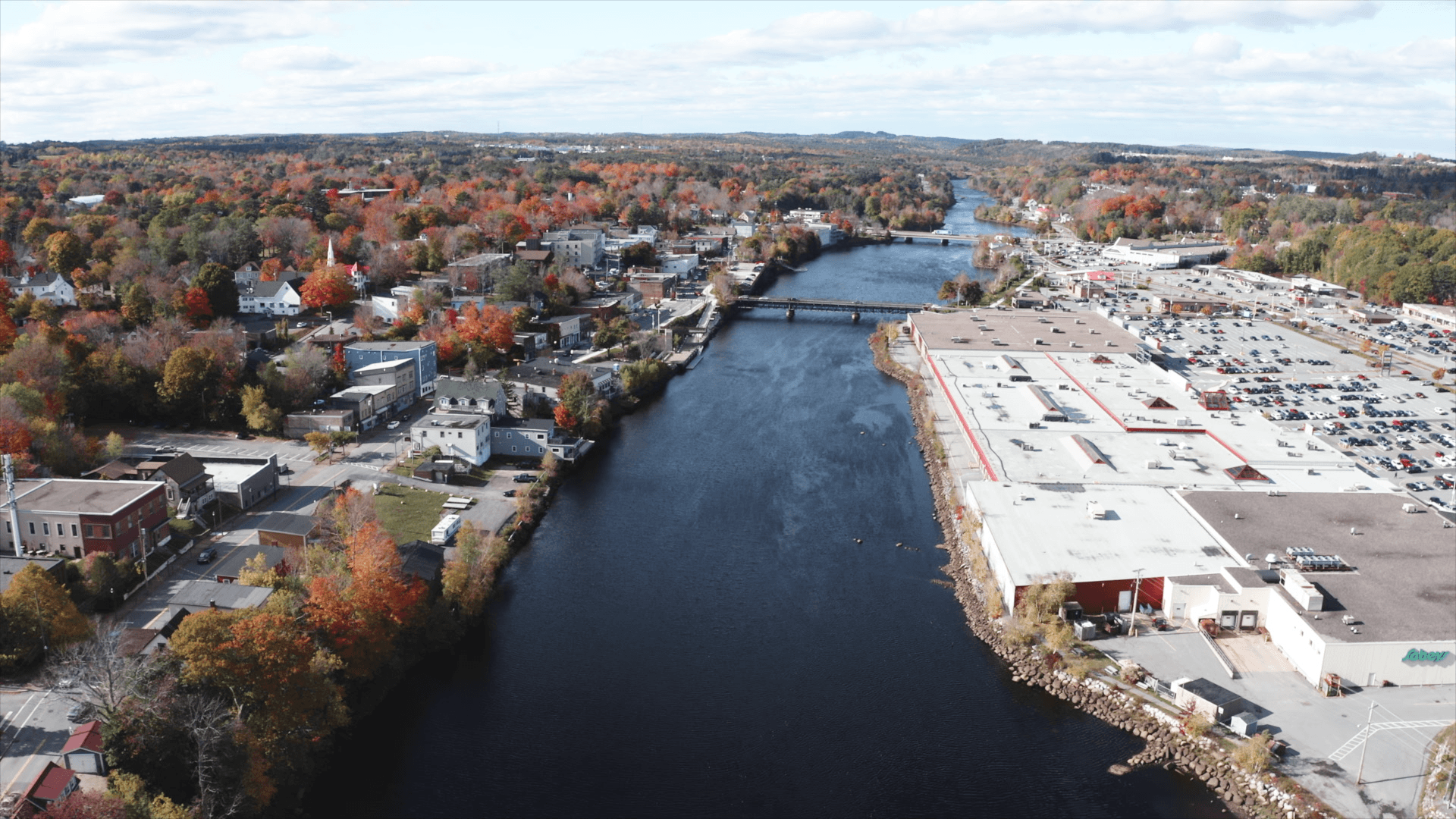
Bridgewater, the working hub of the South Shore
2026 Economic Outlook
- South Shore median up 1.1% year over year (September 2026)
- South Shore supply at 8.2 months, a buyer’s market
- Population up 8.4% since 2022
- 5% rent cap on sitting tenants until the end of 2027
- Michelin and the hospital steady
Investment Climate
Bridgewater’s 2026 market is steady and buyer leaning, with lower prices than Halifax and rents that can come close to covering costs on well bought properties. Successful Bridgewater investors tend to share a few characteristics:
- Income orientation buying where rents carry the property instead of hoping prices rise
- Residency math running the 10% non-resident deed transfer tax before anything else if they live outside Nova Scotia
- Starting rent discipline setting the right rent at the start of each tenancy, because increases on a sitting tenant are capped at 5% a year
- Screening discipline because a bad tenancy is still costly even with faster non-payment rules
- Renewal planning stress testing every deal at a higher rate when the five year term ends
Nova Scotia’s tradeoffs are clear: a 5% cap on increases for sitting tenants until the end of 2027, a municipal deed transfer tax on every purchase, a 10% provincial deed transfer tax on buyers who live outside the province, an assessment cap that resets when a property sells, and 14% HST on renovation work. Put all of them in your numbers from the first day.
Historical Performance
| Period | Market Driver | Price Trend | Key Event |
|---|---|---|---|
| 2010-2015 | Slow growth, young adults leaving for Alberta | Flat to modest | Prices barely move outside Halifax |
| 2016-2019 | Immigration rises, Atlantic Immigration Pilot from 2017 | Steady gains | Halifax vacancy starts to tighten |
| 2020-2022 | Record low rates, movers from Ontario | Sharp gains | Bidding wars and record population growth |
| 2023-2024 | Bank of Canada hikes to 5% | Prices hold, rents surge | Halifax vacancy near 1%, rent cap extended |
| 2025-2026 | 10% non-resident deed tax, new rental supply, fewer newcomers | Flat to modest gains | The South Shore median sale price was $370,000 in September 2026, up 1.1% year over year, with 8.2 months of supply, a buyer’s market (Nova Scotia Association of REALTORS MLS data, September 2026) |
Bridgewater’s prices stayed low for years, rose from a low base between 2020 and 2022 as buyers from Halifax and other provinces arrived, and have softened since. Plan for 1 to 3 percent a year.
Demographic Trends Driving Demand
- Local Workforce – Renters tied to the main local employers
- Halifax Spillover – Households priced out of the metro
- Retirees – Older buyers drawn by lower prices
- Healthcare Workers – Hospital and care staff, among the steadiest tenants
- Young Families – Renting while they save
- Newcomers – A small but growing share of recruited workers
📚 New to real estate investing? Master the fundamentals with our professional course Learn more →
2. Neighbourhood Hotspots
Bridgewater Investment Neighbourhood Map
Interactive map of Bridgewater’s investment neighbourhoods. Green stars show top hotspots, blue circles mark established markets, and orange circles highlight emerging areas. All figures in Canadian dollars.
Core Investment Neighbourhoods
Detailed Submarket Analysis: All Bridgewater Neighbourhoods
| Area | Price Range | Gross Yield | Growth Drivers | Best Strategy |
|---|---|---|---|---|
| Downtown and King Street | $280K-$420K | 5.8-7.0% | Services, riverfront | Duplex, long hold |
| North Bridgewater | $290K-$430K | 5.6-6.8% | Hospital, family tenants | Institutional tenants |
| Glen Allan Corridor | $300K-$440K | 5.4-6.6% | Shopping, newer stock | Low maintenance rental |
| South Bridgewater | $290K-$420K | 5.4-6.6% | Family tenants | Family rental |
| Cookville and Rural Outskirts | $280K-$440K | 5.2-6.4% | Lower deed tax, space | Owner occupier |
Investor Insight: In Bridgewater the numbers can come close to working, so the risk moves to the asset and the tenant. Older housing means heating, electrical and roof surprises, and a small market means a vacancy takes longer to fill. Inspect hard, screen hard, and keep reserves.
3. Property Types
| Investment Goal | Best Property Type | Best Areas | Minimum Capital |
|---|---|---|---|
| Maximum Cash Flow | Duplex or triplex | Downtown and King Street as well as North Bridgewater | $90,000+ |
| Long Term Appreciation | Detached house in a growing area | Downtown and King Street as well as North Bridgewater | $108,000+ |
| Lowest Entry Cost | Owner occupied two to four unit home | Downtown and King Street as well as North Bridgewater | $28,800+ (5 to 10% down) |
| Lowest Management | Newer townhome or semi | South Bridgewater | $86,400+ |
Don’t guess the costs. Our Complete Renovation & Remodeling Cost Guide covers 400+ pages of project-by-project breakdowns with real contractor pricing ranges. In Nova Scotia, add 14% HST to contractor quotes.
4. Cost Analysis
Acquisition Cost Breakdown (Bridgewater)
| Expense Item | Typical Cost | Example ($360,000 Duplex) | Notes |
|---|---|---|---|
| Down Payment | 20% minimum (rental) | $72,000 | Default insurance is not available on non owner occupied property |
| Municipal Deed Transfer Tax | 1.5% in Town of Bridgewater | $5,400 | Calculated on the purchase price. Rates are set by each municipality, mostly 1.0% to 1.5% |
| Legal Fees and Disbursements | $1,400-$2,500 | $1,900 | Nova Scotia lawyer handles title, migration of title under the Land Registration Act, and the deed transfer taxes |
| Home Inspection | $450-$700 | $550 | Inspect every unit, the electrical panel, the foundation and the heating system |
| Sewer Line Camera Scope | $250-$400 | $350 | Strongly recommended on older homes with mature trees |
| Appraisal and Title Insurance | $400-$800 | $600 | Lender appraisal plus title insurance |
| Setup and Initial Repairs | 0-3% of price | $4,000 | Locks, cleaning, smoke and CO alarms in every unit. Add 14% HST to contractor work |
| Reserves | 6 months of carrying costs | $8,000 | Cover vacancy, repairs, an uncapped assessment after the sale, and a five year renewal at a higher rate |
| TOTAL MINIMUM ENTRY (NOVA SCOTIA RESIDENT) | ~26% of value | $92,800 | Before any renovation or second unit work |
| Non-resident Provincial Deed Transfer Tax | 10% if you live outside Nova Scotia | $36,000 | Three units or fewer, on the greater of price or assessed value. Waived only if you move here and prove residency within 12 months |
| TOTAL MINIMUM ENTRY (BUYER LIVING OUTSIDE NOVA SCOTIA) | ~36% of value | $128,800 | The same purchase, about $36,000 more on day one |
Sample Cash Flow Analysis: Downtown Bridgewater Up and Down Duplex
| Item | Monthly | Annual | Notes |
|---|---|---|---|
| Upper Unit Rent (2BR) | $1,550 | $18,600 | Renovated upper unit |
| Lower Unit Rent (2BR) | $1,300 | $15,600 | Lower unit |
| Gross Income | $2,850 | $34,200 | Tenant pays electricity where separately metered |
| Less Vacancy (4%) | -$114 | -$1,368 | Allow for turnover and a slower leasing market in 2026 |
| Property Taxes | -$486 | -$5,830 | Estimate on an assessment of about 90% of price, at an assumed total residential rate of about $1.80 per $100. The assessment cap does not carry over after a sale. Check the actual bill |
| Insurance | -$183 | -$2,200 | Landlord policy |
| Property Management (8%) | -$228 | -$2,736 | Optional for local investors who self manage |
| Maintenance + CapEx (10%) | -$285 | -$3,420 | Older home and coastal winters, plus 14% HST on contractor work |
| Net Operating Income | $1,554 | $18,646 | Before mortgage |
| Mortgage ($288,000, 20% down, 4.99%, 25yr) | -$1,673 | -$20,081 | Principal and interest, Canadian semi annual compounding |
| CASH FLOW | -$120 | -$1,435 | About +$108/month if self managed |
| Same deal at 30% down | +$90 | +$1,075 | About +$318/month if self managed |
| Cap Rate | 5.18% | NOI / Purchase Price (gross yield 9.5%) | |
| Total Return Year 1 (2% appreciation) | ~13% | Cash flow -$1,435 + $5,991 principal paydown + $7,200 appreciation on $92,800 invested by a resident. About 9% for a buyer who pays the 10% non-resident tax |
At 20% down and a rate near 5%, this example runs about -$120 a month with management and about +$108 self managed. At 30% down it runs about +$90. That is about as good as a pure rental gets in Nova Scotia in 2026 once vacancy, repairs and management are budgeted honestly, and it depends on buying at the right price and keeping the units full. Rents, taxes and costs are examples only, so run your own numbers on every deal.
Investor Insight: The example pays $5,400 in municipal deed transfer tax. A buyer who lives outside Nova Scotia adds $36,000 in non-resident tax, for $41,400 at closing, which takes years of cash flow to recover. The other cost that catches investors out in Bridgewater is property tax: the assessment cap comes off the year after a sale, and properties majority owned by people outside Nova Scotia never qualify for it. Add 14% HST on every renovation and repair invoice.
5. Legal Framework
⚠️ Nova Scotia Compliance Notice
Residential tenancies in Bridgewater are governed by Nova Scotia’s Residential Tenancies Act, the provincial Standard Form of Lease (Form P), the Nova Scotia Human Rights Act, and Town of Bridgewater land use and minimum standards bylaws. Disputes go to the Residential Tenancies Program at Access Nova Scotia, not to New Brunswick’s Residential Tenancies Tribunal or Ontario’s Landlord and Tenant Board. The Act was amended in 2024 and 2025 to extend the rent cap and speed up non-payment evictions. This guide is an overview as of October 2026. Confirm current rules with Residential Tenancies and a Nova Scotia lawyer before you buy.
Nova Scotia and Bridgewater Regulations
The rules that matter most to Bridgewater landlords:
- Rent Cap: Increases for sitting tenants are capped at 5% a year until December 31, 2027. The cap covers month to month, year to year and fixed-term tenants who sign another lease for the same unit.
- Notice and Timing: At least four months written notice on Form J for monthly and yearly tenancies, eight weeks for weekly. One increase in any 12 month period, and none in the middle of a fixed-term lease.
- New Tenants: The cap does not apply to a new tenant signing a new lease, so a vacant unit can be re-let at market.
- Deposits: A security deposit is capped at half a month’s rent, must be held in trust, and must be returned within 10 days after the tenancy ends unless you file a claim with the Director in the same 10 days. No pet, key or cleaning deposits.
- Non Payment: Since April 30, 2025, a landlord can serve a notice to quit (Form D) once rent is three full days late. The tenant has 10 days to pay or dispute, after which the landlord can apply to the Director for an order of possession.
- Renovations: Ending a tenancy for demolition or renovation needs all permits in place and either a written agreement or a Director’s order. The tenant is owed one month’s rent in compensation in a building of four units or fewer, or three months in a larger building.
- Fixed-Term Leases: A fixed-term lease ends on its end date unless both sides agree to a new term, and tenant groups have pushed to close what they call a loophole. Use them carefully, and check for changes before you rely on one.
Compliance Best Practices
Running Bridgewater rentals smoothly comes down to documentation and timing:
- Standard Lease: Use the provincial Standard Form of Lease and give the tenant a signed copy and a copy of the Act within 10 days.
- Deposit Handling: Keep every security deposit in a trust account and track the 10 day return deadline.
- Rent Calendar: Track each tenancy’s anniversary and last increase so every Form J goes out four months ahead and stays within the 5% cap.
- Starting Rent: Set the rent correctly at the start of each tenancy, because you are limited to 5% a year after that.
- Screening: Apply consistent written criteria to every applicant in line with the Human Rights Act.
- Entry Notice: Give at least 24 hours written notice before entering, except in an emergency.
- Late Fees: Late fees are capped at 1% of the monthly rent and only after rent is more than 15 days late.
Useful Bridgewater Resources
- Residential Tenancies Program: novascotia.ca/rta
- Non-resident Provincial Deed Transfer Tax: novascotia.ca, Non-resident Provincial Deed Transfer Tax
| Regulation | Nova Scotia (Bridgewater) | New Brunswick | Investor Impact |
|---|---|---|---|
| Rent Control | 5% a year on sitting tenants until Dec 31, 2027 | 3% a year on existing tenancies, kept for 2027 | Price on the rents you inherit |
| Rent Increase Notice | 4 months on Form J, once every 12 months | 6 months, once every 12 months | Plan increases a season ahead |
| Deposits | Up to half a month, held in trust by the landlord | Up to one month, held by the Tribunal | Smaller damage cushion in Nova Scotia |
| Disputes | Residential Tenancies Program (Access Nova Scotia) | Residential Tenancies Tribunal | Both faster than Ontario on non payment |
| Transfer Tax (resident) | 1.5% municipal deed transfer tax here | 1% provincial transfer tax | Similar for residents |
| Transfer Tax (non-resident) | Add 10% on three units or fewer | No extra tax | The single biggest difference |
| Sales Tax on Renovations | 14% HST | 15% HST | Add 14% to every contractor quote |
6. Step-by-Step Bridgewater Investment Playbook
Define Your Bridgewater Strategy
Be clear on which of these strategies you are executing in Bridgewater before you shop, and run the non-resident tax first if you live outside Nova Scotia:
Cash Flow Buy-and-Hold
Buy a house or duplex where rent covers the mortgage and every cost once you self manage or put more down. Assume modest appreciation and stay disciplined on price.
Move Here and House Hack
Buy a duplex, triplex or house with a legal suite and live in one unit. You qualify for 5 to 10% down with insured financing, the other units carry much of the mortgage, and if you are moving to Nova Scotia you avoid the 10% non-resident tax by proving residency within 12 months.
Small Multi-Unit
Duplexes and triplexes trade at low prices per door. Budget for heating systems, roofs and 14% HST on repairs, and remember that sitting tenants stay under the 5% cap.
Workforce Rentals
Rent to the local workforce tied to the main employers, with long tenancies and steady demand.
Build Your Bridgewater Team
The right team keeps you out of the two most common Nova Scotia mistakes: forgetting the non-resident tax, and buying a building whose rents are locked under the cap:
- Investor Focused Realtor: Someone who checks permits for every unit, knows local suite rules, and pulls current rents and the last Form J before you offer.
- Mortgage Broker: Access to lenders with different rental income treatment, plus insured owner occupied programs for two to four unit buildings.
- Nova Scotia Real Estate Lawyer: Handles title migration, the municipal and non-resident deed transfer taxes, any residency declaration, and the transfer of tenant deposits.
- Contractor: Knows fire separation, egress and the building code for second units, and quotes 14% HST clearly.
- Property Manager: Fluent in Form J rent increase notices, Form D notices to quit and Residential Tenancies hearings.
- Accountant: For capital cost allowance and its recapture on sale, the capital gains inclusion rate, and the tax treatment of the non-resident deed transfer tax.
Expert Tip: Ask any property manager you interview: “Walk me through serving a Form D on day four of unpaid rent and what happens on day eleven.” Then ask: “How do you time Form J notices under the 5% cap?” Clear, specific answers mean they know Nova Scotia law. Vague answers mean they are guessing with your income.
Bridgewater-Specific Due Diligence
Standard due diligence plus these Nova Scotia critical checks:
Physical Due Diligence
- Oil tanks, older electric baseboard or oil heat, and the cost of converting to heat pumps
- Foundation, grading and basement moisture before any lower unit
- Sewer line camera scope on older homes with mature trees
- Roof age, siding and wind exposure after coastal storms
- Asbestos or vermiculite in pre 1990 homes before any renovation
- Well water test and septic inspection outside municipal services
- Separate electricity meters, or the cost of adding them
Regulatory Due Diligence
- Confirm building permits and final inspections for every existing unit
- Review every lease, current rent and the date and size of the last increase, since sitting tenants are capped at 5% a year
- Confirm the security deposit held for each tenant and how it transfers on closing
- Check whether any notice to quit or Residential Tenancies application is outstanding
- Ask for the property tax bill, and expect the assessment cap to come off the year after you buy
- Confirm your residency status with your lawyer before you sign, because it decides whether the 10% tax applies
- For condos, review the estoppel certificate, reserve fund study and rental rules
Buying in Bridgewater’s 2026 Market
Bridgewater in 2026 is a balanced to buyer leaning market in most segments. Strategies that work:
- Negotiate: Across Nova Scotia, supply rose to 5.7 months in September 2026 from 4.5 a year earlier, active listings were up 17.5% and sales were down 9.9%. Use the time a property has sat to your advantage.
- Keep your conditions: Financing and inspection conditions protect you. Buyers waived them in 2021 and 2022 and many regretted it.
- Buy the units, not the story: Pay for legal unit income only. Price an unpermitted basement unit as storage.
- Vacant or tenanted: A tenanted building comes with rents that can only rise 5% a year until at least 2028. Price it on the rents you inherit.
- Winter buying: Fewer buyers compete from November through March, though inspections are harder with snow cover.
Property Management in Bridgewater
Because increases on sitting tenants are capped at 5% a year and deposits are only half a month, tenant quality and the starting rent matter a great deal in Nova Scotia:
Tenant Screening Protocol
Nova Scotia lets landlords choose among qualified applicants, provided the process does not discriminate under the Human Rights Act. A strong process:
- Publish clear written criteria covering income, references, and credit
- Verify income with pay stubs or an employment letter
- Call at least two previous landlords, not just the current one
- Run a credit check with written consent
- Apply the same criteria to every applicant and keep records
Typical Bridgewater Management Fees
- Monthly management: 8-10% of rent collected
- Leasing fee: 50-100% of one month’s rent
- Lease renewal and Form J rent increase notices: $0-$200
- Residential Tenancies applications: time billed or a flat fee
- Repairs billed separately, with 14% HST
7. Financing Options for Bridgewater
| Loan Type | Down Payment | Rate Context | Best For | Bridgewater Note |
|---|---|---|---|---|
| Conventional Rental Mortgage | 20% minimum | Usually above insured rates | Most rental purchases | Must pass the federal stress test |
| Owner Occupied 1-2 Units | From 5% (insured) | Lowest available rates | House hacking a home with a legal suite | Newcomers who prove residency within 12 months avoid the 10% tax |
| Owner Occupied 3-4 Units | From 10% (insured) | Insured rates | Living in one unit of a triplex or fourplex | A fourplex is outside the non-resident tax |
| Credit Union / Portfolio | 20-35% | Varies by lender | Multiple properties, self employed | Nova Scotia credit unions lend on small rentals |
| CMHC MLI Select (5+ units) | As low as 5% on qualifying projects | Insured multi unit rates | Larger purpose built rentals | Requires affordability, energy, or accessibility commitments |
| Purchase Plus Improvements | 20% of total cost (rental) | Conventional rates | Buying and adding a legal unit | Include 14% HST in the improvement budget |
| Private / Alternative Lender | 20-35% | Higher rates plus fees | Short term renovation or bridge | Exit plan to conventional financing required |
Bridgewater Financing Reality: On October 28, 2026 the Bank of Canada raised its policy rate to 2.50% from 2.25%, citing an oil price shock, and said further increases could be needed, so expect fixed mortgage rates to stay firm or rise. The 4.99% rate used in this guide is an example only. Rental mortgages require 20% down because default insurance is not available on property you do not occupy, and you must qualify at the higher of 5.25% or your contract rate plus 2%. The owner occupied comparison matters more in Nova Scotia than anywhere else in Atlantic Canada, because it also decides the 10% non-resident tax. Take a $440,000 triplex near downtown. Bought as a pure rental at 20% down and 4.99%, the mortgage is about $2,045 a month against roughly $4,400 in total rent from all 3 units, before tax, insurance and repairs. Bought by an owner who lives in one unit at 10% down, the insured mortgage (premium of 3.10% added to the loan) at about 4.39% is about $2,235 a month, and the other units bring in roughly $2,850, which more than covers the mortgage, before tax, insurance and repairs. The down payment drops from $88,000 to $44,000, and a buyer moving to Nova Scotia who proves residency within 12 months avoids about $44,000 in non-resident tax. An investor who stays outside the province pays it. A broker who shops several lenders is worth it in this market.
8. Frequently Asked Questions

Knowledge Quiz: Bridgewater Real Estate Investment
Open Quiz
5 quick questions on what you just learned about Bridgewater investing
1) What is the minimum down payment on a rental property you will not live in?
Answer: B
Default insurance is not available on rental property you do not occupy, so lenders require at least 20% down. If you live in one unit of a two to four unit property, insured financing from 5 to 10% down may be available.
2) How much can a Nova Scotia landlord raise the rent on a sitting tenant in 2026?
Answer: C
The 5% cap on sitting tenants runs until December 31, 2027. Increases need four months written notice, once in any 12 month period. A new tenant on a new lease is not covered by the cap.
3) A buyer who lives in Alberta buys a $400,000 duplex in Bridgewater. Roughly how much deed transfer tax is due?
Answer: A
Residential property with three units or fewer bought by a non-resident carries the 10% Non-resident Provincial Deed Transfer Tax on top of the 1.5% municipal deed transfer tax, unless the buyer moves to Nova Scotia and proves residency within 12 months.
4) According to the sample cash flow analysis, what is the monthly cash flow on the Bridgewater duplex at 20% down with professional management?
Answer: D
At a 4.99% rate and 20% down, the example runs about -$120 a month with management and about +$108 self managed. That is close to the best a pure rental at 20% down can do here, and it depends on buying at the right price.
5) Where do residential landlord and tenant disputes go in Nova Scotia?
Answer: B
The Landlord and Tenant Board is Ontario’s body. In Nova Scotia, rent increase disputes, deposit claims and eviction applications go to the Director of Residential Tenancies.
Work With a Local Expert in Bridgewater
We are building a verified network of real estate professionals across every market we cover.

About Our Expert Network
We are finalizing partnerships with verified real estate professionals across every market featured on Builds and Buys. Each expert in our network is selected for their hands-on investment experience, local market knowledge, and commitment to helping buyers and investors make sound decisions.
Our local specialists offer:
- Proven experience with investment and income-producing properties
- Deep knowledge of local pricing, rental yields, and neighbourhood dynamics
- Guidance on financing, legal structure, and due diligence
- Access to off-market and pre-market opportunities
- Full transaction support from search through closing
- Ongoing portfolio and property management referrals
Services Covered
- Property sourcing and acquisition
- Investment analysis and underwriting
- Buyer representation
- Market comparables and valuations
- Short-term and long-term rental strategy
- Value-add and renovation guidance
- Legal and title referrals
- Financing and lender connections
- Property management referrals
- Insurance and inspection referrals
- Second unit and permit guidance
- Exit strategy planning
Get Connected or Join Our Network
Looking for a local expert to help with your investment? Reach out and we will connect you with the right professional for your market and strategy.
Are you a real estate professional with a track record working with investors? We are always expanding our network of verified local experts.
Contact us at support@buildsandbuys.com
Find Specialized Bridgewater Real Estate Professionals
Ready to Invest in Bridgewater?
Bridgewater is the South Shore’s working town, with year round tenants, a regional hospital and a growing population. A well bought duplex comes close to paying for itself. The South Shore is a buyer’s market in 2026, so negotiate, keep reserves, and run the non-resident tax first if you live outside Nova Scotia.
Continue Your Research
Nova Scotia Province Guide
See how Bridgewater compares to Lunenburg, Liverpool, Halifax, and other Nova Scotia markets.
Step-by-Step Invest
Complete framework for building a real estate investment strategy from scratch.
144-Lesson Course
University-level real estate education covering financing, law, strategy, and management.
For further guidance, explore our Canadian Province guides, browse our expert articles, or follow our Step-by-Step Investment Guide.