
Atchison Real Estate Investment Guide For 2026
A comprehensive resource for investors targeting Kansas’s most architecturally significant small market, where a private college, a national spirits producer, and Missouri River heritage meet some of the lowest entry prices in the state
Quick answers: Top 5 most searched Atchison investment questions ▼
Migration data: Where people are moving from to Atchison ▼
In This Guide
Click on any section to navigate directly to that content
1. Atchison Market Overview
Market Fundamentals
Atchison sits on the Missouri River in the northeast corner of Kansas, built into steep bluffs that rise sharply from the water. It was founded in 1854 and became one of the wealthiest towns in territorial Kansas as a river port and the eastern terminus of the Atchison, Topeka and Santa Fe Railway. That wealth built the housing stock, and the housing stock is why investors pay attention today.
The city is also the birthplace of Amelia Earhart, which gives it a tourism draw that most Kansas towns of 10,000 cannot claim.
Key economic indicators that define Atchison’s investment case:
- Population: Roughly 10,000 in the city, approximately 16,000 across Atchison County
- Major Employers: MGP Ingredients, a publicly traded producer of distilled spirits and specialty ingredients headquartered in Atchison; Benedictine College; Atchison County government; USD 409; regional healthcare; and manufacturing
- Median Household Income: Roughly $50,000 to $55,000
- Median Home Value: Approximately $120,000, among the lowest of any Kansas county seat
- Location: Roughly 50 miles northwest of Kansas City on two lane highway, about 25 miles north of Leavenworth
- Housing Stock: A very large share predates 1940, with substantial Victorian, Italianate, and Queen Anne inventory
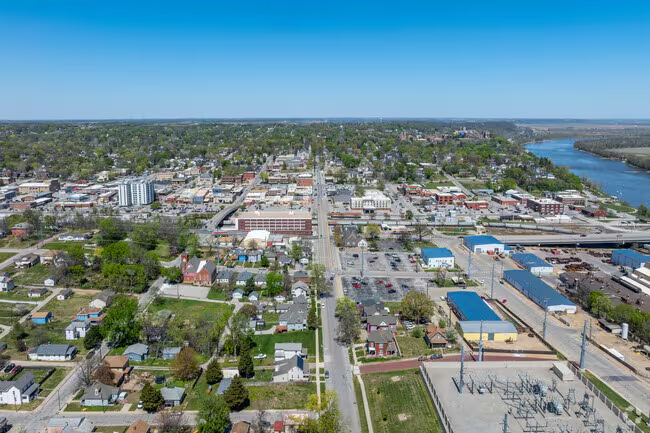
River port and railroad wealth built Atchison’s housing stock, and it still stands
2026 Economic Outlook
- Benedictine College enrollment growth driving sustained student and faculty housing demand
- MGP Ingredients anchoring high wage manufacturing employment as a headquartered public company
- Historic preservation and downtown revitalization supporting tourism and residential conversion
- Amelia Earhart heritage tourism contributing modest but genuine visitor demand
- Regional healthcare and county government providing recession resistant employment
Investment Climate
Atchison is the most demanding market in this Kansas series, and also one of the most rewarding for investors who match its requirements. Three factors define it.
The housing stock is genuinely old. Not old like Newton or Ottawa where much of the inventory is mid century. Old like 1885. Original knob and tube wiring, galvanized and cast iron plumbing, stone or brick foundations laid before modern engineering, plaster over lath, and single pane windows in twelve foot walls. A ten percent maintenance reserve on an Atchison Victorian is not conservative underwriting, it is wishful thinking. Budget fifteen percent minimum.
The bluffs complicate everything. Atchison is built into steep terrain rising from the Missouri River. That produces genuine drainage challenges, retaining wall structures that are themselves a century old and expensive to repair, foundation stress from hillside movement, and access difficulties for equipment during renovation. It also produces river views that support premium rents on the right properties. Terrain is a serious due diligence item here in a way it simply is not on the Kansas plains.
Two strong anchors, both worth understanding. Benedictine College has grown substantially and recruits nationally through Catholic networks, which brings students, faculty, and visiting families from well outside Kansas. MGP Ingredients is a publicly traded company headquartered in a town of 10,000, which is rare and provides wages far above what local prices would suggest. Both are genuine, and both are worth monitoring as the market’s leading indicators.
Successful Atchison investors tend to share these characteristics:
- Genuine renovation capability either personally or through established relationships with contractors who have worked on pre-1920 housing
- Fifteen percent maintenance reserves as a floor rather than a target
- Terrain literacy understanding drainage, retaining walls, and hillside foundation behavior before buying on the bluffs
- Anchor awareness tracking Benedictine enrollment and MGP operations as the market’s leading indicators
- Long hold horizons since exit liquidity in a market this size is genuinely limited
Historical Performance
| Period | Market Driver | Avg Annual Appreciation | Key Event |
|---|---|---|---|
| 2010-2014 | Flat market, minimal transaction volume | 0-2% | Values essentially unchanged, almost no investor presence |
| 2015-2019 | Benedictine growth, MGP expansion | 2-4% | College enrollment growth tightening student rental supply |
| 2020-2022 | Low rates, remote work, investor discovery | 10-16% | Out of area buyers drawn by architecture at low prices |
| 2023-2024 | Rate shock, renovation cost inflation | 1-3% | Rising construction costs stalling several Victorian rehab projects |
| 2025-2026 | Rate stabilization, continued college growth | 2-4% (projected) | Student housing demand remaining the tightest segment |
Atchison’s long run appreciation runs around 2 to 3 percent, the lowest in this Kansas series. That is the honest number and it should shape expectations. The 2020 to 2022 period drew a wave of out of area investors who saw Victorian mansions listed under $150,000 and did not fully price the renovation. Several of those projects stalled when construction costs rose. Model 2 to 3 percent appreciation, buy for yield, and treat any equity growth as a bonus.
Demographic Trends Driving Demand
- Benedictine College Enrollment Growth – The college has grown substantially and recruits nationally through Catholic school and parish networks, drawing students and faculty families from well outside the region
- MGP Ingredients Employment – A headquartered public company providing wages well above the local median in manufacturing, technical, and corporate roles
- County Seat Consolidation – Residents of Effingham, Muscotah, and rural Atchison County relocating for services and employment
- Cross River Employment – Movement between Atchison and northwest Missouri communities across the river
- Heritage Tourism – Amelia Earhart’s birthplace, the historic district, and river town character supporting visitor demand and some short-term rental interest
- Constrained Land Supply – The bluffs and river physically limit new development, so existing housing absorbs essentially all demand
📚 New to real estate investing? Master the fundamentals with our professional course Learn more →
2. Neighborhood Hotspots
Atchison Investment Neighborhood Map
Interactive map of Atchison’s investment areas and the surrounding northeast Kansas corridor. Green stars show top hotspots, blue circles mark established markets, and orange circles highlight emerging areas.
Core Investment Areas
Detailed Submarket Analysis: Atchison and Northeast Kansas
| Submarket | Price Range (SFH) | Cap Rate | Growth Drivers | Best Strategy |
|---|---|---|---|---|
| Benedictine College Corridor | $105K-$195K | 6.5-7.5% | National college recruitment, enrollment growth | Per-room student leasing, faculty rental |
| North Terrace / Historic | $95K-$250K | 5.5-6.8% | Architecture, river views, preservation interest | Historic renovation, experienced investors only |
| West Atchison / US-73 | $115K-$195K | 6.2-7.0% | Best condition, off the bluffs, family demand | Family rental, first Atchison acquisition |
| Downtown / Commercial Core | $70K-$280K | 6.5-8.0% | Riverfront, historic commercial, revitalization | Upper floor conversion, commercial investors only |
| East Atchison / Riverfront | $75K-$180K | 6.2-7.5% | River views, historic character | View premium rental, verify drainage and terrain |
| South Atchison / Industrial | $55K-$120K | 7.5-9.0% | MGP and manufacturing employment, lowest entry | Highest yields, workforce housing, check flood zone |
| Effingham / Rural County | $45K-$105K | 7.5-9.5% | Agricultural base, very low acquisition cost | High yield, very thin market, long holds only |
| Hiawatha | $60K-$140K | 7.5-9.0% | Brown County seat, regional services | Cash flow hold, small tenant pool |
| Horton | $40K-$100K | 8.0-10.0% | Railroad heritage, agricultural employment | Highest yields, extremely limited exit liquidity |
| Lansing | $180K-$300K | 5.2-6.0% | Correctional employment, KC fringe growth | Family rental, appreciation focus, newer stock |
Expert Insight: “Atchison breaks more out of state investors than any market in Kansas, and the mechanism is always the same. Somebody in California sees a photograph of an 1890 Queen Anne with a turret and stained glass listed at a hundred and thirty thousand dollars, and they cannot believe their luck. They buy it sight unseen. Then they find out the wiring is knob and tube, the plumbing is galvanized, the foundation is dry laid limestone that has been settling since Grover Cleveland, and the retaining wall holding the hillside off the back of the house needs sixty thousand dollars of work that no lender will finance. These are magnificent buildings and I love them, but they are not a beginner’s asset. Buy something on the west side first. Learn who the good contractors are, learn what the tenants want, learn the town. Then buy the Victorian, with your eyes open and a real budget.” – Mark Richardson, Principal, Kansas Investment Properties
3. Property Types
| Investment Goal | Best Property Type | Best Areas | Minimum Capital |
|---|---|---|---|
| Safest First Purchase | Mid century ranch off the bluffs | West Atchison, US-73 corridor | $38,000+ |
| Most Reliable Demand | Student rental leased by the room | Benedictine College corridor | $35,000+ |
| Maximum Cash Flow | Workforce housing or converted historic multi-unit | South Atchison, Historic District | $22,000+ |
| Highest Upside, Highest Risk | Victorian restoration | North Terrace, Historic District | $90,000+ including renovation |
Don’t guess the costs. Our Complete Renovation & Remodeling Cost Guide covers 400+ pages of project-by-project breakdowns with real contractor pricing ranges.
4. Cost Analysis
Acquisition Cost Breakdown (Atchison)
| Expense Item | Typical Cost | Example ($125,000 Property) | Notes |
|---|---|---|---|
| Down Payment | 25% (investment) | $31,250 | Standard conventional investment property requirement |
| Closing Costs | 2-3% of price | $2,500-$3,750 | Kansas has no state real estate transfer tax |
| General Inspection | $400-$700 | $550 | Use an inspector experienced with pre-1920 construction |
| Structural Engineer Evaluation | $500-$1,500 | $800 | Strongly recommended on bluff properties and any historic home |
| Electrical Evaluation | $200-$450 | $300 | Knob and tube is common here and affects insurability directly |
| Sewer Scope | $200-$400 | $300 | Essential. Clay and cast iron laterals over a century old. |
| Initial Repairs | 10-50% of price | $12,500-$62,500 | Wide range. Historic properties can exceed the purchase price. |
| Reserves (6 months) | 6 months expenses | $4,500-$6,500 | Older stock means more frequent unplanned repairs |
| TOTAL MINIMUM ENTRY | ~33-38% of value | $40,000-$43,650 | Before renovation budget, which is often substantial |
Sample Cash Flow Analysis: West Atchison 3BR Single-Family
| Item | Monthly | Annual | Notes |
|---|---|---|---|
| Gross Rent | $1,050 | $12,600 | 3BR/1.5BA mid century ranch, updated, west side |
| Less Vacancy (8%) | -$84 | -$1,008 | Small market. Re-leasing takes longer than in a metro. |
| Property Taxes | -$175 | -$2,100 | 11.5% assessment ratio at roughly 150 mills. Verify the parcel. |
| Insurance | -$140 | -$1,680 | Landlord policy. Historic properties cost meaningfully more. |
| Property Management (11%) | -$116 | -$1,392 | Few managers serve Atchison, so rates run higher |
| Maintenance + CapEx (15%) | -$158 | -$1,890 | Highest reserve in this Kansas series. The stock demands it. |
| Net Operating Income | $377 | $4,530 | Before mortgage |
| Mortgage ($125K, 25% down, 6.75%, 30yr) | -$608 | -$7,296 | Principal and interest only |
| CASH FLOW | -$231 | -$2,766 | Negative at 25% down with full management and honest reserves |
| Cap Rate | 3.62% | NOI divided by purchase price | |
| Gross Yield | 10.08% | Rent divided by price. This is what listing sites quote. | |
| Total Return (3% appreciation) | ~7% | Appreciation plus principal paydown less negative carry, on cash invested |
Look at the gap between the 10.08 percent gross yield and the 3.62 percent cap rate. That spread is the widest in this entire Kansas series, and it exists because Atchison’s housing stock genuinely requires a 15 percent maintenance reserve. An investor who models 10 percent here is not being optimistic, they are being wrong, and the difference shows up as a furnace they did not plan for in year two.
Atchison works, but only with the right levers pulled. Self managing adds back $1,392 and cuts the shortfall meaningfully, and in a market with this few managers it may be necessary rather than optional. Per bedroom student leasing near Benedictine is the strongest lever available: the same house leased at $475 per bedroom to three students grosses $1,425 instead of $1,050, which flips the property clearly positive. Buying at the low end matters enormously given the price spread here. Converting a large historic home to two or three legal units is the highest return strategy in the market for investors who can execute it. The Atchison formula is almost always student housing or a legal multi-unit conversion, not a standard single family rental.
Expert Insight: “There is a number I make every Atchison client write down before they look at a single listing, and it is fifteen percent. That is the maintenance and capital expenditure reserve on housing this old, and it is not negotiable. People fight me on it. They point out the house has a new roof, or the furnace was replaced in 2019, and they want to use ten. Here is the problem with that reasoning: in a house built in 1895 the roof and the furnace are the easy parts. It is the cast iron stack that cracks, the limestone foundation that takes on water after a wet spring, the century old retaining wall that starts leaning, the plaster that comes off the lath in a whole ceiling at once. None of that is on an inspection report as a defect. It is just what happens to buildings that old, on a schedule nobody can predict. Reserve fifteen percent and Atchison is a good market. Reserve ten and it will find you.” – Sarah Whitfield, CRE Advisor, Johnson County Property Group
5. Legal Framework
⚠️ Kansas Compliance Notice
Kansas is a landlord friendly state, but that does not make requirements optional. The Kansas Residential Landlord and Tenant Act sets specific notice periods, deposit limits, and return deadlines, and failure to follow them will lose you an eviction case regardless of how clearly the tenant breached. Atchison additionally has historic district considerations, floodplain regulations near the river, and a substantial stock of older multi-unit conversions whose permit status is frequently unclear. Confirm current rental, historic district, and zoning requirements with the City of Atchison before you close. This guide is an overview, not legal advice. Consult a Kansas licensed real estate attorney.
Kansas Landlord-Tenant Framework
Atchison operates under the Kansas Residential Landlord and Tenant Act, found at KSA 58-2540 and following. The key provisions:
- Security Deposit Limits: Maximum of one month’s rent for an unfurnished unit and one and a half months for a furnished unit, plus up to an additional half month specifically for pets.
- Deposit Return: The landlord must determine deductions and return the balance within fourteen days of that determination, and in no case more than thirty days after termination of the tenancy.
- Nonpayment of Rent: A three day notice to pay or vacate. One of the shortest notice periods in the country.
- Lease Violations: Written notice specifying the breach, giving fourteen days to remedy, with termination in thirty days if not cured.
- Month to Month Termination: Thirty days written notice from either party.
- No Rent Control: Kansas statute prohibits municipalities from enacting rent control.
- No Just Cause Requirement: A landlord may decline to renew at expiration without stating a reason, subject to fair housing law.
- Per-Room Leasing: If you lease individual bedrooms to students, notice and filing obligations run against each tenant separately. Lease structure matters.
Atchison and Atchison County Practicalities
Beyond state law, these local items materially affect Atchison operations:
- Historic District Requirements: Atchison has substantial historic resources and exterior alterations in designated areas may face review. Confirm scope with the city before planning facade, window, or roofing work.
- Unpermitted Conversions: Large historic homes in this town have been divided into apartments for a century, often without permits. Verify the legal unit count with the city rather than trusting the listing or the seller.
- Floodplain Regulations: The Missouri River and area drainage affect low lying portions of the city. Verify FEMA flood zone by parcel.
- Terrain and Retaining Structures: Bluff properties frequently have retaining walls, some over a century old. These are expensive to repair, rarely covered by insurance, and often not flagged as defects on a standard inspection.
- Property Tax Structure: Kansas assesses residential property at 11.5 percent of appraised value, then applies the local mill levy.
- Annual Valuation Notices: The Atchison County Appraiser mails notices each spring with a limited appeal window.
- Occupancy Limits: Verify municipal occupancy rules and any restrictions on unrelated occupants before pursuing per-room student leasing.
Useful Kansas Resources
- Kansas Residential Landlord and Tenant Act: KSA 58-2540 et seq.
- Kansas Historical Society: historic property and tax credit information
- FEMA Flood Map Service Center: parcel level flood zone lookup
- Atchison County Appraiser: parcel values and appeal process
- City of Atchison: zoning, permits, historic district, and rental requirements
| Regulation | Kansas Requirement | Typical Tenant Protective State | Investor Impact |
|---|---|---|---|
| Nonpayment Notice | 3 days to pay or vacate | 14 to 30 days | Delinquency resolves quickly, limiting loss exposure |
| Eviction Timeline | Typically 3 to 6 weeks total | 2 to 6 months | A small county docket often moves faster than a metro court |
| Just Cause to Terminate | Not required | Required in many jurisdictions | Full flexibility at lease expiration |
| Rent Control | Prohibited statewide by statute | Permitted or mandated locally | Rents reset freely to market |
| Historic District Review | Local designation may require exterior review | Similar framework where districts exist | Affects renovation scope, timeline, and material choices |
| Legal Unit Count | Determined by city zoning and permit history | Same framework | Many Atchison conversions are unpermitted. Verify with the city. |
6. Step-by-Step Atchison Investment Playbook
Define Your Atchison Strategy
Atchison supports four approaches, and they differ enormously in required skill. Be honest about which one you can actually execute.
Student Housing near Benedictine
Buy within walking distance of campus and lease by the bedroom. The most reliable demand in Atchison, insulated from the local economy entirely, with parentally guaranteed tenants.
Legal Multi-Unit Conversion
Buy an oversized historic home and convert it to two or three permitted units. The highest return strategy in Atchison for investors who verify zoning and execute the permitting properly.
West Side Family Rental
Buy mid century stock off the bluffs. Lower yields but housing that behaves normally, which lets you learn the market without simultaneously learning nineteenth century construction.
Victorian Restoration
Buy and fully restore a significant historic home. Genuine upside and genuine satisfaction, but this is a project with real execution risk and it should never be your first Atchison purchase.
Build Your Atchison Team
Atchison has the thinnest professional bench of any market in this series, and the specialized skills it requires are the hardest to find. Build this team before you buy, not after.
- Contractor with genuine pre-1920 experience: This is the single most important hire in Atchison and the hardest to find. Ask for addresses of historic homes they have worked on and go look at them.
- Structural engineer familiar with bluff terrain: Retaining walls, hillside drainage, and century old foundations are not standard inspection items. On any bluff property, get an engineer.
- Local Atchison County agent: Must know which historic conversions are legally permitted, which blocks have drainage problems, and how Benedictine student leasing actually works here.
- Independent insurance agent: Historic homes with older electrical and unusual construction are harder to insure. Some carriers decline outright. Confirm coverage before removing contingencies.
- Property manager: Very few serve Atchison, and rates run higher as a result. Self management is a realistic default here.
- Kansas real estate attorney: For entity formation, lease review under KSA 58-2540, per-room lease structure, and Atchison County eviction filings.
Expert Tip: When interviewing contractors, ask one question: “Have you ever rewired a house with knob and tube in it?” If the answer is no, they are the wrong contractor for a historic Atchison property regardless of how good their other work is. The failure mode is not bad work, it is discovering mid project that the scope was three times larger than quoted.
Atchison-Specific Due Diligence
This is the most demanding due diligence list in the Kansas series, and every item on it exists because someone learned it the expensive way.
Physical Due Diligence
- Structural engineer evaluation on any bluff or historic property. Not a general inspector. An engineer.
- Retaining wall condition and ownership. Century old walls, expensive repairs, rarely insured.
- Electrical service type. Knob and tube is genuinely common here and affects insurability.
- Plumbing supply material. Galvanized and cast iron are the norm in the historic stock.
- Foundation type and condition, particularly dry laid limestone on hillside sites
- Site drainage and grading. Bluff terrain moves water in ways flat lots do not.
- Sewer lateral scope on any pre-1940 property
- Roof, gutter, and downspout condition, since water management on a hillside is critical
Financial and Regulatory Due Diligence
- Verify the legal unit count with the City of Atchison. Many conversions here are unpermitted.
- Pull the actual parcel tax bill from the Atchison County Appraiser
- Confirm historic district designation and what it means for exterior work
- Obtain a binding insurance quote, not an estimate, and confirm the carrier will write the property at all
- Check FEMA flood zone for parcels near the river or low lying drainage
- Verify occupancy limits and unrelated occupant rules if pursuing per-room student leasing
- Research historic tax credit eligibility, which can meaningfully offset renovation cost
- Pull full permit history, which in a town this old is often revealing
Competing in Atchison’s Market
Atchison has low transaction volume and an unusual buyer mix, including out of state buyers drawn purely by the architecture. That creates specific opportunities.
- Be the local buyer who can actually close: Out of state buyers frequently fall out of contract when they discover the renovation scope. Sellers and agents value a buyer who understands what they are buying.
- Buy the stalled projects: The 2020 to 2022 wave left partially renovated historic homes owned by people who ran out of budget or patience. These can be excellent acquisitions for someone with genuine capability.
- Target the Benedictine corridor first: Student housing supply has not kept up with enrollment growth. This is the tightest demand in the market.
- Investigate historic tax credits before you buy: Kansas and federal programs can meaningfully change renovation economics on qualifying properties. This is worth understanding before you make an offer, not after.
- Look for legal multi-unit properties: A permitted three unit historic conversion is worth substantially more than the same building with an unpermitted one, and the market does not always price that difference correctly.
- Buy in winter: Listing activity drops sharply November through February, and sellers who list then generally need to sell.
Property Management in Atchison
With few professional managers serving this market, most Atchison investors self manage or work with a local individual rather than a firm. Plan for that from the beginning.
Tenant Screening Protocol
Atchison’s tenant pool splits into three distinct groups that need different handling:
- Benedictine College students, seasonal leasing, per-room potential, parent guarantors standard
- MGP Ingredients and manufacturing employees, solid wages, the most stable long-term tenants
- County, school district, healthcare, and service employment, moderate incomes, steady demand
- Screen for income at three times monthly rent, verified through pay stubs or employer contact
- For student tenants, require a parent or guardian guarantor without exception
- Verify two years of rental history with direct prior landlord contact
- Apply written criteria consistently to every applicant to satisfy federal fair housing obligations
- Take the full permitted deposit including the additional half month for pets
Typical Atchison Management Fees
- Single-family management: 10-12% of monthly rent, with limited provider choice
- Student per-room management: 12-15%, reflecting the added complexity
- Leasing fee: 50-100% of one month’s rent
- Minimum monthly fee: Common, often $85-$125, which matters at Atchison rent levels
- Self management is the practical default for many investors here
7. Financing Options for Atchison
| Loan Type | Down Payment | Rate Premium | Best For | Atchison Note |
|---|---|---|---|---|
| Local Community Bank | 20-25% | +0.5-1.25% | Most Atchison investors | Usually the only realistic option. They understand these buildings. |
| Cash | 100% | N/A | Sub-$120K and heavy renovation projects | Very common here. Many historic properties will not appraise or qualify. |
| Renovation Loan (203k / HomeStyle) | 3.5-25% | +0.5-1.5% | Historic restoration projects | The most useful product in this market. Finances purchase plus renovation together. |
| Conventional Investment | 25% | +0.5-0.75% | West side mid century properties in good condition | Loan minimums exclude much of the inventory. Condition issues can kill approval. |
| House Hacking (FHA) | 3.5% | Standard + MIP | Owner occupying one unit of a legal 2-4 unit property | Powerful here given the multi-unit historic stock, but the units must be legal |
| USDA Rural Development | 0% | Standard + fee | Owner occupants in eligible areas | Check by address. Surrounding Atchison County towns often qualify. |
| Historic Tax Credits | N/A | N/A | Qualifying certified historic properties | Not financing, but can materially offset renovation cost. Research before buying. |
Atchison Financing Reality: Financing is the hardest part of investing in this market and it is worth understanding before you fall in love with a property. Conventional lenders have loan minimums that exclude much of the inventory, and they also have condition standards that a house with knob and tube wiring and a settling limestone foundation will not meet. That leaves three practical routes: local community banks that know these buildings and will lend on them, cash purchase followed by renovation and refinance, or a renovation loan product that finances acquisition and rehabilitation together. The renovation loan is genuinely the best tool for the Atchison historic market and is underused. Separately, research historic tax credit eligibility early, because on a qualifying certified property those credits can change the renovation math substantially.
8. Frequently Asked Questions

Knowledge Quiz: Atchison Real Estate Investment
Open Quiz
5 quick questions on what you just learned about Atchison investing
1) What maintenance reserve does the guide insist on for Atchison properties, and why?
Answer: C
Atchison’s housing stock is roughly fifty years older than most Kansas markets in this series. Cast iron stacks crack without warning, limestone foundations take on water, plaster releases from lath, and retaining walls lean. None of that appears on an inspection report as a defect. It is simply what buildings of this age do, on a timeline nobody can predict.
2) What makes Benedictine College unusually valuable as a demand driver?
Answer: B
Benedictine recruits through Catholic school and parish networks across the country, which means a downturn in Kansas agriculture or manufacturing does not reduce enrollment. In a market of 10,000 people, having a demand source completely uncorrelated with the local economy is genuinely valuable. Supply has not kept pace with the college’s growth, making student housing the tightest segment.
3) How long is the Kansas notice period for nonpayment of rent?
Answer: A
Kansas requires only a three day notice to pay or vacate under KSA 58-2564. Two Atchison specific notes: per-room student leases mean notice obligations run against each tenant separately, and a property with an unpermitted unit conversion will have that problem surface during exactly this kind of dispute.
4) What does the guide recommend as a first Atchison purchase?
Answer: D
West side mid century stock behaves like ordinary housing, which lets you learn the tenant base, find contractors who genuinely know pre-1920 construction, and understand the town without simultaneously taking on a preservation project. Buy the Victorian third or fourth, with a renovation loan, a real scope, and a contingency.
5) Why does the guide recommend a structural engineer rather than just a home inspector on bluff properties?
Answer: B
Atchison is built into steep bluffs above the Missouri River. Century old retaining walls can cost $20,000 to $80,000 to repair and are typically not an insured loss. Hillside soil movement stresses foundations in ways that read differently to an engineer than to a general inspector. Spending $500 to $1,500 on an engineer is the cheapest insurance available in this market.
Work With a Local Expert in Atchison
We are building a verified network of real estate professionals across every market we cover.

About Our Expert Network
We are finalizing partnerships with verified real estate professionals across every market featured on Builds and Buys. Each expert in our network is selected for their hands-on investment experience, local market knowledge, and commitment to helping buyers and investors make sound decisions.
Our local specialists offer:
- Proven experience with investment and income-producing properties
- Deep knowledge of local pricing, rental yields, and neighborhood dynamics
- Guidance on financing, legal structure, and due diligence
- Access to off-market and pre-market opportunities
- Full transaction support from search through closing
- Ongoing portfolio and property management referrals
Services Covered
- Property sourcing and acquisition
- Investment analysis and underwriting
- Buyer representation
- Market comparables and valuations
- Short-term and long-term rental strategy
- Value-add and renovation guidance
- Legal and title referrals
- Financing and lender connections
- Property management referrals
- Insurance and inspection referrals
- 1031 exchange coordination
- Exit strategy planning
Get Connected or Join Our Network
Looking for a local expert to help with your investment? Reach out and we will connect you with the right professional for your market and strategy.
Are you a real estate professional with a track record working with investors? We are always expanding our network of verified local experts.
Contact us at support@buildsandbuys.com
Find Specialized Atchison Real Estate Professionals
Ready to Invest in Atchison?
Atchison is the most demanding market in this Kansas series and the most rewarding for investors who match its requirements. It has two anchors most towns of 10,000 would envy, a nationally recruiting college and a headquartered public company, plus architecture that genuinely has no equivalent at these prices. What it asks in return is competence: a fifteen percent reserve, a contractor who has worked on knob and tube, a structural engineer on the bluffs, and the discipline to buy a west side ranch before you buy the Victorian. Meet those terms and Atchison rewards you. Skip them and it will teach you the same lesson it has taught a long line of investors who saw a turret in a photograph.
Continue Your Research
Kansas State Guide
See how Atchison compares to Wichita, Topeka, Lawrence, and every other Kansas market.
Leavenworth Guide
The larger river city 25 miles south, with Fort Leavenworth and BAH backed military demand.
144-Lesson Course
University-level real estate education covering financing, law, strategy, and management.
For further guidance, explore our State-by-State Investor guides, browse our expert articles, or follow our Step-by-Step Investment Guide.



