
Colby Real Estate Investment Guide For 2026
A comprehensive resource for investors targeting the Oasis on the Plains, where a community college, wind energy, irrigated agriculture, and I-70 corridor services anchor the regional hub of far northwest Kansas
Quick answers: Top 5 most searched Colby investment questions ▼
Migration data: Where people are moving from to Colby ▼
In This Guide
Click on any section to navigate directly to that content
1. Colby Market Overview
Market Fundamentals
Colby sits on Interstate 70 in far northwest Kansas, roughly 50 miles east of the Colorado line, on the High Plains above the Ogallala Aquifer. It calls itself the Oasis on the Plains, and for a very large and very sparsely populated region, that is a functional description rather than a slogan. Colby provides the healthcare, education, retail, government, and professional services for an area where the next comparable town is a long drive in any direction.
That regional hub function is the core of the investment case. In a county of 7,500 people, Colby is where everyone comes.
Key economic indicators that define Colby’s investment case:
- Population: Roughly 5,500 in the city, approximately 7,500 across Thomas County
- Major Employers: Colby Community College, a regional hospital, Thomas County government, USD 315, irrigated agriculture and agribusiness, wind energy operations and maintenance, and I-70 corridor hospitality and services
- Median Household Income: Roughly $52,000 to $58,000
- Median Home Value: Approximately $105,000
- Location: I-70 and US-83 junction, roughly 3 hours east of Denver and 5 hours west of Kansas City
- Housing Stock: A broad mix with substantial mid century inventory and limited new construction
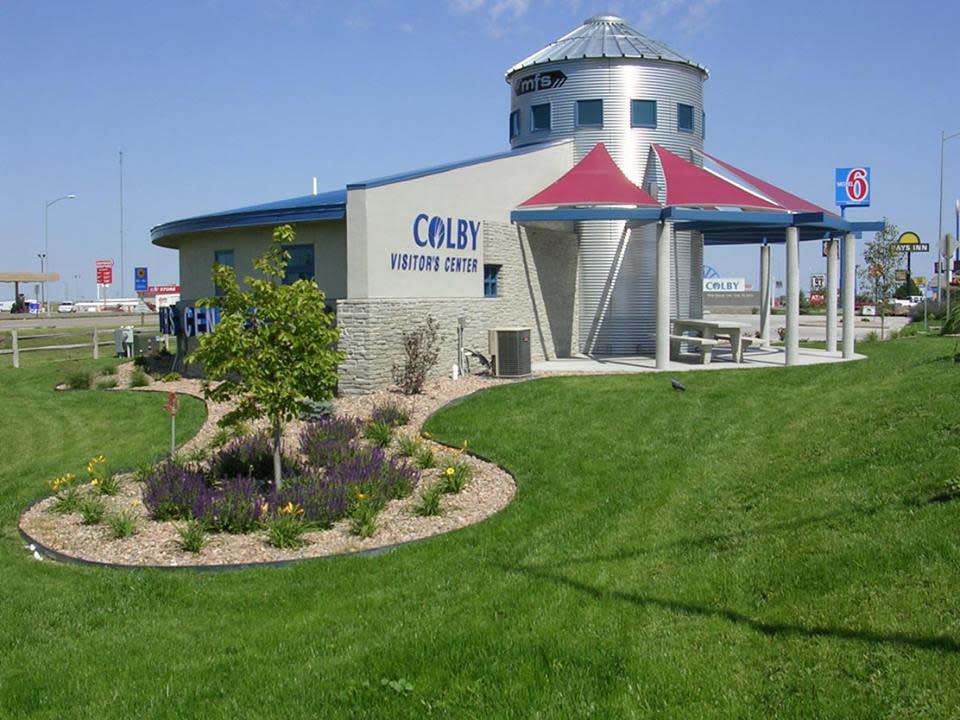
Colby serves as the service hub for a very large, very sparsely populated corner of Kansas
2026 Economic Outlook
- Colby Community College maintaining enrollment across a wide western Kansas service area
- Regional healthcare anchoring the most stable employment in the county
- Wind energy operations and maintenance providing skilled technical jobs
- Irrigated agriculture facing long term Ogallala Aquifer water considerations
- I-70 corridor traffic supporting hospitality, fuel, and service employment
Investment Climate
Colby is the smallest and most remote market in this Kansas series, and an honest assessment has to lead with what that means rather than with the yield figures.
Distance is the binding constraint. Colby is roughly 300 miles from Wichita, 250 from Denver metro, and 400 from Kansas City. That is not a day trip. If a furnace fails, you are not driving out to look at it. If you need a second opinion on a contractor bid, there may not be a second contractor. Property managers serving a market this size are extremely limited. For an investor based in western Kansas or eastern Colorado, this is manageable and the yields are genuinely attractive. For an investor in another state, the operational friction usually eats the yield advantage.
The market is very small. A city of 5,500 in a county of 7,500 means a thin tenant pool, low transaction volume, and limited exit liquidity. There may be only a handful of properties worth buying in a given year, and selling one can take many months.
The employment base is genuinely stable, though. The college, the hospital, county government, and the school district do not disappear. Wind energy operations and maintenance provide skilled technical employment that is growing rather than shrinking. And Colby’s regional hub function means it captures demand from a much larger area than its own population suggests.
Water is the long horizon question. Irrigated agriculture across this part of Kansas depends on the Ogallala Aquifer, which is declining. That is a decades long consideration rather than an immediate one, but any investor holding western Kansas property for twenty years should understand it exists.
Successful Colby investors tend to share these characteristics:
- Regional proximity living close enough to be there in an afternoon, which is most of what makes this market work
- Institutional tenant focus targeting college, hospital, county, and school employees who provide the stable base
- Realistic maintenance budgeting at 13 to 15 percent, higher than percentages suggest because contractor availability is limited
- Long hold horizons given genuinely limited exit liquidity
- Low leverage or cash since at these price points it is achievable and it removes pressure in a thin market
Historical Performance
| Period | Market Driver | Avg Annual Appreciation | Key Event |
|---|---|---|---|
| 2010-2014 | Strong agricultural commodity prices | 2-4% | High grain prices supporting the regional economy |
| 2015-2019 | Agricultural price decline, wind energy buildout | 0-2% | Farm economy softens, wind projects add a new employment layer |
| 2020-2022 | Low rates, rural migration interest, investor entry | 7-12% | Remote work interest and yield seekers discover western Kansas |
| 2023-2024 | Rate shock, normalization | 0-2% | Out of area investor interest cools, days on market lengthen |
| 2025-2026 | Rate stabilization, steady institutional employment | 1-2% (projected) | Institutional base holding, gradual county population decline continues |
Colby’s long run appreciation runs around 1.5 to 2 percent, the lowest in this Kansas series, and that is the honest number for a small county seat in a region with gradual population decline. The 2020 to 2022 period was driven by out of area yield seekers and remote work curiosity, and much of that interest has since receded. Model 1.5 to 2 percent. Buy Colby for current income only, and treat any appreciation as incidental rather than as part of the thesis.
Demographic Trends Driving Demand
- Colby Community College – Serves a wide western Kansas region and provides the most consistent rental demand in the market, independent of agricultural cycles
- Regional Healthcare – The hospital draws clinical and support staff for a large service area with no nearby alternative
- Wind Energy Operations – Turbine technicians and maintenance staff represent skilled, well paid employment that has grown across northwest Kansas
- Regional Hub Function – Colby provides retail, medical, legal, government, and professional services for several surrounding counties
- Irrigated Agriculture – Farming and agribusiness employment across Thomas County, subject to commodity cycles and long term water considerations
- I-70 Corridor Traffic – Interstate travel supporting hospitality, fuel, dining, and service employment
📚 New to real estate investing? Master the fundamentals with our professional course Learn more →
2. Neighborhood Hotspots
Colby Investment Neighborhood Map
Interactive map of Colby’s investment areas and the surrounding northwest Kansas corridor. Green stars show top hotspots, blue circles mark established markets, and orange circles highlight emerging areas.
Core Investment Areas
Detailed Submarket Analysis: Colby and Northwest Kansas
| Submarket | Price Range (SFH) | Cap Rate | Growth Drivers | Best Strategy |
|---|---|---|---|---|
| Community College Corridor | $85K-$165K | 7.2-8.2% | College enrollment, demand independent of agriculture | Student rental, per-room leasing |
| Hospital Corridor | $95K-$175K | 7.0-8.0% | Regional healthcare, no nearby alternative facility | Long-term hold, steadiest tenants |
| North Colby / I-70 | $120K-$200K | 6.6-7.6% | Newest stock, interstate services, condition | Lowest maintenance hold, remote owner friendly |
| Central / Courthouse District | $70K-$140K | 7.8-9.0% | County employment, walkability, character housing | Value-add, county employee rental |
| West Colby | $75K-$150K | 7.5-8.7% | Balanced location, moderate pricing | Value-add, balanced hold |
| South / Rail and Industrial | $45K-$100K | 8.5-10.5% | Agribusiness and rail employment, lowest entry | Highest yields, workforce housing, active management |
| Goodland | $50K-$120K | 8.0-10.0% | Sherman County seat, I-70, agriculture | High yield hold, comparable market, thin liquidity |
| Oakley | $45K-$110K | 8.0-10.0% | Highway junction, agriculture, modest tourism | High yield hold, very small market |
| Atwood / Hoxie | $40K-$100K | 8.0-10.0% | County seat services, agricultural base | Very high yield, very thin market, long holds only |
| Rural Thomas County | $35K-$90K | Variable | Agricultural, minimal rental demand | Generally not recommended as rental investment |
Expert Insight: “I am going to say something about Colby that I do not say about most markets, which is that the yields are real and you should probably still not buy here unless you live within a couple hours. The fundamentals are fine. The college is solid, the hospital serves five counties and is not going anywhere, wind energy has added good technical jobs, and you can buy a decent rental house for ninety thousand dollars that rents for nine hundred a month. Run those numbers and it looks better than anything in Johnson County. Here is what the numbers do not show you. There are maybe two property managers in that part of the state and they are busy. If your water heater goes out in January, you are calling a plumber who might get there Thursday. If you need to sell, your buyer pool is people who already live in Thomas County plus whatever investors happen to be looking that month. None of that is a dealbreaker if you are in Hays or Goodland or eastern Colorado and you can drive out. If you are in Phoenix looking at a spreadsheet, that friction is going to cost you more than the yield gains you.” – Mark Richardson, Principal, Kansas Investment Properties
3. Property Types
| Investment Goal | Best Property Type | Best Areas | Minimum Capital |
|---|---|---|---|
| Most Reliable Demand | Student rental or hospital corridor home | College corridor, hospital corridor | $30,000+ |
| Maximum Cash Flow | Duplex or workforce single-family | South Colby, Central Colby, surrounding towns | $17,000+ |
| Lowest Maintenance | Newer construction near the interstate | North Colby, I-70 corridor | $42,000+ |
| Cycle Diversification | Student rental leased by the room | College corridor | $30,000+ |
Don’t guess the costs. Our Complete Renovation & Remodeling Cost Guide covers 400+ pages of project-by-project breakdowns with real contractor pricing ranges.
4. Cost Analysis
Acquisition Cost Breakdown (Colby)
| Expense Item | Typical Cost | Example ($105,000 Property) | Notes |
|---|---|---|---|
| Down Payment | 25% (investment) | $26,250 | Standard conventional investment property requirement |
| Closing Costs | 2-3% of price | $2,100-$3,150 | Kansas has no state real estate transfer tax |
| General Inspection | $400-$700 | $525 | Inspectors may travel from Hays or Denver, raising cost |
| Roof Inspection | $150-$400 | $250 | Western Kansas hail and wind exposure is significant |
| Sewer Scope | $250-$450 | $325 | Recommended on pre-1970 homes. May require travel charge. |
| Water and Well Considerations | $0-$500 | $0 in town | Rural properties on private wells require testing and evaluation |
| Initial Repairs | 10-30% of price | $10,500-$31,500 | Budget higher than comparable eastern Kansas. Contractor scarcity raises costs. |
| Reserves (6 months) | 6 months expenses | $4,000-$5,800 | Hold more than usual. Repairs take longer and cost more out here. |
| TOTAL MINIMUM ENTRY | ~32-37% of value | $33,450-$36,300 | Before renovation budget |
Sample Cash Flow Analysis: Colby 3BR Single-Family
| Item | Monthly | Annual | Notes |
|---|---|---|---|
| Gross Rent | $900 | $10,800 | 3BR/1.5BA mid century ranch, updated, hospital corridor |
| Less Vacancy (9%) | -$81 | -$972 | A city of 5,500 has a very thin tenant pool |
| Property Taxes | -$150 | -$1,800 | 11.5% assessment ratio at roughly 155 mills. Verify the parcel. |
| Insurance | -$140 | -$1,680 | Landlord policy. Western Kansas hail and wind exposure. |
| Property Management (12%) | -$108 | -$1,296 | Very few providers. Rates reflect that scarcity. |
| Maintenance + CapEx (14%) | -$126 | -$1,512 | Contractor scarcity raises real costs above the percentage |
| Net Operating Income | $295 | $3,540 | Before mortgage |
| Mortgage ($105K, 25% down, 6.75%, 30yr) | -$511 | -$6,132 | Principal and interest only |
| CASH FLOW | -$216 | -$2,592 | Negative at 25% down with full management |
| Cap Rate | 3.37% | NOI divided by purchase price | |
| Gross Yield | 10.29% | Rent divided by price. This is what listing sites quote. | |
| Total Return (2% appreciation) | ~5% | Appreciation plus principal paydown less negative carry, on cash invested |
That is the leveraged, professionally managed version, and it is the least attractive way to own Colby. It is shown because it is what an out of state investor running a national spreadsheet would default to, and it is worth seeing why that approach does not fit this market.
Here is how Colby actually works. Buying cash at $105,000 produces $3,540 in net operating income, a 3.37 percent unlevered return that rises to roughly 4.7 percent if you self manage. That is modest. Buying cash and self managing at the low end is where this market earns its reputation: a $70,000 central district house renting for $800 with self management produces roughly $4,400 NOI on $70,000, which is a 6.3 percent unlevered cash return with no debt and no manager. A duplex at $150,000 renting two units at $675 with self management can clear $700 to $850 monthly net. Per bedroom student leasing near the college adds another path.
The pattern is consistent: Colby rewards low leverage, self management, and buying well below the median. It punishes the opposite. That is not a quirk, it is a direct consequence of low rents in a remote thin market, and it is why this is a local investor’s market.
Expert Insight: “There is a cost in western Kansas that never shows up on a pro forma, and it is the cost of things taking longer. A make ready that takes two weeks in Wichita takes five out here, because the flooring has to be ordered in, the painter is finishing a job in Goodland, and the appliance you need is not in stock within a hundred miles. Every one of those delays is a day of lost rent and none of them are anybody’s fault. So when I underwrite a Colby property I am not just raising the maintenance percentage, I am raising the vacancy assumption too, because turnover here simply takes longer to complete. Nine percent vacancy is not me being gloomy about demand. It is me being realistic about logistics.” – Sarah Whitfield, CRE Advisor, Johnson County Property Group
5. Legal Framework
⚠️ Kansas Compliance Notice
Kansas is a landlord friendly state, but that does not make requirements optional. The Kansas Residential Landlord and Tenant Act sets specific notice periods, deposit limits, and return deadlines. Western Kansas additionally carries water rights considerations that matter on any property with acreage or a private well, and the Ogallala Aquifer is subject to groundwater management district regulation. Confirm current rental and zoning requirements with the City of Colby before you close. This guide is an overview, not legal advice. Consult a Kansas licensed real estate attorney.
Kansas Landlord-Tenant Framework
Colby operates under the Kansas Residential Landlord and Tenant Act, found at KSA 58-2540 and following. The key provisions:
- Security Deposit Limits: Maximum of one month’s rent for an unfurnished unit and one and a half months for a furnished unit, plus up to an additional half month specifically for pets.
- Deposit Return: The landlord must determine deductions and return the balance within fourteen days of that determination, and in no case more than thirty days after termination of the tenancy.
- Nonpayment of Rent: A three day notice to pay or vacate. One of the shortest notice periods in the country.
- Lease Violations: Written notice specifying the breach, giving fourteen days to remedy, with termination in thirty days if not cured.
- Month to Month Termination: Thirty days written notice from either party.
- No Rent Control: Kansas statute prohibits municipalities from enacting rent control.
- No Just Cause Requirement: A landlord may decline to renew at expiration without stating a reason, subject to fair housing law.
- Per-Room Leasing: If you lease bedrooms individually to students, notice and filing obligations run against each tenant separately.
Colby and Thomas County Practicalities
Beyond state law, these local items materially affect Colby operations:
- Water Rights: On any property with acreage or a private well, water rights are a distinct legal interest from the surface and are administered by the state. Northwest Kansas groundwater management districts regulate use over the Ogallala Aquifer. Confirm what conveys.
- Private Well and Septic: Properties outside city limits are commonly on private well and septic, which carry testing and county health department requirements at transfer.
- Wind and Hail Exposure: Western Kansas insurance underwriting reflects significant severe weather risk. Expect percentage based wind and hail deductibles rather than flat amounts.
- Contractor and Service Availability: Not a legal matter but an operational one that affects every timeline in this market. Build relationships before you need them.
- Property Tax Structure: Kansas assesses residential property at 11.5 percent of appraised value, then applies the local mill levy.
- Annual Valuation Notices: The Thomas County Appraiser mails notices each spring with a limited appeal window.
- City Rental Requirements: Registration, inspection, and occupancy rules are set at the municipal level. Verify current City of Colby requirements before closing, particularly for per-room student leasing.
Useful Kansas Resources
- Kansas Residential Landlord and Tenant Act: KSA 58-2540 et seq.
- Kansas Department of Agriculture, Division of Water Resources: water rights
- Northwest Kansas Groundwater Management District: Ogallala regulation
- Thomas County Appraiser: parcel values and appeal process
- City of Colby: zoning, permits, and rental requirements
| Regulation | Kansas Requirement | Typical Tenant Protective State | Investor Impact |
|---|---|---|---|
| Nonpayment Notice | 3 days to pay or vacate | 14 to 30 days | Delinquency resolves quickly, limiting loss exposure |
| Eviction Timeline | Typically 3 to 6 weeks total | 2 to 6 months | A small rural docket often moves quickly |
| Just Cause to Terminate | Not required | Required in many jurisdictions | Full flexibility at lease expiration |
| Rent Control | Prohibited statewide by statute | Permitted or mandated locally | Rents reset freely, though the market caps what is achievable |
| Water Rights | Separate legal interest, state administered | Varies widely by state | Critical on acreage or well properties. Confirm what conveys. |
| Wind and Hail Deductible | Commonly 1-2% of dwelling coverage | Often a flat dollar amount | Hold a full deductible in reserves at all times |
6. Step-by-Step Colby Investment Playbook
Define Your Colby Strategy
The first question in Colby is not which strategy, it is whether you are close enough to execute any of them. If you can be in Colby within a couple hours, all four approaches below work. If you cannot, reconsider the market entirely.
Unlevered Self Managed Hold
Buy outright below the median and self manage. This is the strategy that actually makes Colby work, eliminating both debt service and management fees in a market where rents are too low to support either comfortably.
Student Housing near the College
Buy near Colby Community College and lease by the bedroom. The most reliable demand in the market and the natural hedge against an economy otherwise tied to agriculture.
Institutional Tenant Focus
Buy near the hospital and rent to healthcare, county, and school district employees. The steadiest tenancies in Thomas County, with employment that does not follow commodity prices.
Small Multi-Family
Buy duplexes where available. Best cash flow in the market and, more importantly, spreading vacancy across units matters more here than anywhere given how thin the tenant pool is.
Build Your Colby Team
This is the hardest team to build in this entire Kansas series, and it is the reason most out of area investors should pass on the market. Secure these relationships before you close, not after.
- Reliable Local Handyman or Contractor: The single most important relationship in this market. There are few options, they are busy, and without one you will wait weeks for routine repairs. Secure this first.
- Local Thomas County Agent: Must know actual local rents, which blocks rent well, water rights issues on any acreage property, and realistic timelines for everything.
- Independent Insurance Agent: Western Kansas wind and hail underwriting is its own discipline. You need someone who writes in this region regularly.
- Local Community Bank: Almost certainly your only lender. Build the relationship before you find a property.
- Property Manager, if one exists: Very few serve this market. Confirm current Colby door count rather than assuming coverage. Self management is the realistic default.
- Kansas Real Estate Attorney: For entity formation, lease review under KSA 58-2540, water rights questions, and Thomas County eviction filings.
Expert Tip: Before you make an offer in Colby, call two local contractors and ask how soon they could look at a water heater replacement. If both say three weeks, that is your actual operating reality and you should underwrite vacancy and turnover timelines accordingly. If you cannot get either to call you back, that tells you something too.
Colby-Specific Due Diligence
Standard inspection items plus these northwest Kansas critical checks:
Physical Due Diligence
- Roof age, material, and hail history. Western Kansas exposure is significant and drives insurability.
- Wind damage assessment on siding, windows, and outbuildings
- Sewer lateral scope on pre-1970 homes
- Foundation evaluation for soil movement
- Electrical service size and type on older properties
- HVAC condition. High Plains temperature extremes work systems hard.
- For rural properties: well condition, water quality testing, and septic evaluation
Financial and Regulatory Due Diligence
- On any acreage or well property, confirm what water rights convey. This is a distinct legal interest from the surface.
- Pull the actual parcel tax bill from the Thomas County Appraiser
- Obtain a binding insurance quote, not an estimate, and confirm the carrier writes in Thomas County
- Verify contractor and service availability before closing. This is operational due diligence and it matters as much as the inspection.
- Verify current City of Colby rental registration or inspection requirements
- Confirm occupancy limits if you plan per-room student leasing near the college
- Research actual local rents from a local source rather than a national data aggregator, which will be unreliable at this market size
Competing in Colby’s Market
Competition in Colby is minimal, and inventory is equally minimal. This is a market of patience rather than speed.
- Expect very low transaction volume: There may be only a handful of properties worth buying in a given year. Build agent relationships and be ready when something appears.
- Be the buyer who can close with cash: At these price points cash is achievable, and it wins in a market where financing options are limited and appraisals can be difficult.
- Target tired landlords: Colby has long term local owners with small portfolios reaching retirement. In a town this size, direct outreach to owners of record is genuinely productive.
- Local relationships determine deal flow: In a community of 5,500, the properties that never hit the market are often the best ones. That access requires being known locally.
- Consider surrounding county seats: Goodland, Oakley, Atwood, and Hoxie have essentially zero investor competition. Yields are higher, liquidity is worse, and the same distance constraints apply doubled.
- Buy in winter: Listing activity in northwest Kansas drops sharply in the cold months, and sellers who list then generally need to sell.
Property Management in Colby
With very few professional managers serving northwest Kansas, self management is the practical default. That is workable if you are regional and genuinely difficult if you are not.
Tenant Screening Protocol
Colby’s tenant pool is small and worth understanding precisely:
- Hospital, college, county, and school district employees, the stable institutional base, worth prioritizing
- Colby Community College students, seasonal, per-room potential, parent guarantors standard
- Wind energy technicians and operations staff, good incomes, growing sector
- Agribusiness, rail, and I-70 service employment, the workforce base
- Screen for income at three times monthly rent, verified through pay stubs or employer contact
- For student tenants, require a parent or guardian guarantor without exception
- Verify rental history with direct prior landlord contact
- Apply written criteria consistently to every applicant to satisfy federal fair housing obligations
Typical Northwest Kansas Management Costs
- Single-family management: 11-13% where available, with very limited provider choice
- Leasing fee: 50-100% of one month’s rent
- Minimum monthly fee: Common, often $85-$125, which is significant at Colby rent levels
- Handyman rates: Comparable to metro rates despite the market size, given scarcity
- Self management is the realistic default for nearly all Colby investors
7. Financing Options for Colby
| Loan Type | Down Payment | Rate Premium | Best For | Colby Note |
|---|---|---|---|---|
| Cash | 100% | N/A | Most Colby acquisitions | Genuinely the right approach here. Rents are too low to carry debt well. |
| Local Community Bank | 20-30% | +0.5-1.5% | Leveraged purchases | Almost certainly your only lender. They know this market and these properties. |
| USDA Rural Development | 0% | Standard + fee | Owner occupants | Colby and most of Thomas County almost certainly qualify. Verify by address. |
| House Hacking (FHA) | 3.5% | Standard + MIP | Owner occupying one unit of a 2-4 unit property | Viable for a local buyer, though duplex inventory is scarce |
| Conventional Investment | 25% | +0.5-0.75% | Higher priced north side properties | Loan minimums exclude most of the local inventory outright |
| DSCR Loan | 20-25% | +1-2% | Investors avoiding income documentation | Very limited lender appetite at this market size and price point |
| Seller Financing | Negotiable | Negotiable | Retiring local landlords | More common in small rural markets than most investors expect. Ask. |
Colby Financing Reality: Financing is difficult here and the honest recommendation is to avoid needing it. Most national lenders will not write mortgages below $75,000 or $100,000, which excludes the majority of Colby inventory. Appraisals in a market with this little transaction volume can be difficult to complete and may come in low simply from lack of comparables. DSCR and specialty lenders have little appetite at this market size. That leaves local community banks, which are genuinely good options and know these properties, or cash. Given that Colby rents struggle to carry debt service comfortably, cash purchase is not a fallback here, it is the strategy. One underused option worth asking about: seller financing from retiring local landlords is more common in small rural markets than most investors expect.
8. Frequently Asked Questions

Knowledge Quiz: Colby Real Estate Investment
Open Quiz
5 quick questions on what you just learned about Colby investing
1) What does the guide identify as the binding constraint on investing in Colby?
Answer: B
Colby’s employment base is genuinely stable: a community college, a regional hospital serving several counties, wind energy operations, county government, and agriculture. The constraint is that Colby is roughly 300 miles from Wichita in a county of 7,500 people, with very few property managers and a limited contractor pool. This is a regional investor’s market.
2) Why does the guide recommend cash purchase over financing in Colby?
Answer: C
On a $105,000 property generating $3,540 in NOI, the mortgage payment at 25 percent down runs about $6,132, which is 173 percent of the NOI. Unlevered, that same property returns 3.4 percent, or roughly 4.7 percent self managed, and buying below the median pushes it past 6 percent. Cash also removes the risk of carrying payments through a vacancy in a thin market.
3) How long is the Kansas notice period for nonpayment of rent?
Answer: A
Kansas requires only a three day notice to pay or vacate under KSA 58-2564, and a small rural docket often moves quickly. In Colby specifically, note that replacing the tenant afterward takes longer than the eviction itself, because the applicant pool is small. The real cost of a bad tenancy here is the vacancy that follows it.
4) Which Colby submarket does the guide identify as the natural hedge against an agricultural economy?
Answer: D
Colby Community College serves a wide western Kansas region and its enrollment does not follow grain prices or cattle markets. In a county economy tied heavily to agriculture, owning a rental whose demand runs on an academic calendar is genuine diversification. The hospital corridor serves a similar function.
5) How does the guide characterize wind energy’s role in the Colby market?
Answer: B
Wind creates two distinct kinds of demand. Construction phase brings large crews for months at a time, which suits a furnished mid term rental but is unpredictable. Operations and maintenance is the more valuable piece: skilled, well paid, year round positions filled by people who live locally. That employment is a genuine addition to Colby’s stable base and partially offsets agricultural cyclicality.
Work With a Local Expert in Colby
We are building a verified network of real estate professionals across every market we cover.

About Our Expert Network
We are finalizing partnerships with verified real estate professionals across every market featured on Builds and Buys. Each expert in our network is selected for their hands-on investment experience, local market knowledge, and commitment to helping buyers and investors make sound decisions.
Our local specialists offer:
- Proven experience with investment and income-producing properties
- Deep knowledge of local pricing, rental yields, and neighborhood dynamics
- Guidance on financing, legal structure, and due diligence
- Access to off-market and pre-market opportunities
- Full transaction support from search through closing
- Ongoing portfolio and property management referrals
Services Covered
- Property sourcing and acquisition
- Investment analysis and underwriting
- Buyer representation
- Market comparables and valuations
- Short-term and long-term rental strategy
- Value-add and renovation guidance
- Legal and title referrals
- Financing and lender connections
- Property management referrals
- Insurance and inspection referrals
- 1031 exchange coordination
- Exit strategy planning
Get Connected or Join Our Network
Looking for a local expert to help with your investment? Reach out and we will connect you with the right professional for your market and strategy.
Are you a real estate professional with a track record working with investors? We are always expanding our network of verified local experts.
Contact us at support@buildsandbuys.com
Find Specialized Colby Real Estate Professionals
Ready to Invest in Colby?
Colby has a community college, a hospital serving five counties, wind energy technicians, county government, and a regional hub function that captures demand from a much larger area than its own population. Those fundamentals are sound and the yields on paper are excellent. What the yields do not show is the distance: 300 miles from Wichita, a handful of property managers across northwest Kansas, and a contractor who might get there Thursday. Buy Colby if you live close enough to be there in an afternoon, buy it with cash, self manage, and buy below the median. Under those conditions it works well. Under any others, the friction will cost you more than the yield ever gave you.
Continue Your Research
Kansas State Guide
See how Colby compares to Wichita, Topeka, Lawrence, and every other Kansas market.
Hays Guide
The western Kansas hub 100 miles east, with Fort Hays State and a far deeper market.
144-Lesson Course
University-level real estate education covering financing, law, strategy, and management.
For further guidance, explore our State-by-State Investor guides, browse our expert articles, or follow our Step-by-Step Investment Guide.



