
Breckenridge Real Estate Investment Guide For 2026
A comprehensive resource for investors looking to capitalize on one of Colorado’s most iconic and rental regulation defined ski resort property markets in 2026
Quick answers: Top 5 most searched Breckenridge investment questions ▼
Migration data: Where people are moving from to Breckenridge ▼
In This Guide
Click on any section to navigate directly to that content
1. Breckenridge Market Overview
Market Fundamentals
Breckenridge sits in Summit County roughly 90 minutes from Denver via I-70, a historic mining town turned world renowned ski resort with a genuinely walkable Victorian era Main Street unlike almost any other Colorado mountain destination. The town’s investment case is unusual among Colorado resort markets in that its primary constraint is not just geography, but a deliberately engineered short term rental licensing system designed to preserve local workforce housing capacity.
Key economic indicators that define Breckenridge’s investment case:
- Median Sale Price: approximately $1.275 million to $1.297 million as of early to mid 2026
- Median Price Per Square Foot: approximately $836 to $846
- Months of Supply: approximately 3.6, keeping the market seller leaning despite slower transaction volume
- Days on Market: approximately 96 to 126 days, reflecting a luxury heavy, more deliberate buyer decision cycle
- STR License Structure: Four distinct zones with individual caps, two of which (Zone 2 and Zone 3) are currently full and fully waitlisted
- Combined STR Lodging Tax: 12.275% within Town of Breckenridge limits
Breckenridge’s economy is built almost entirely around tourism and second home ownership, anchored by Breckenridge Ski Resort’s position as one of the most visited ski areas in North America, supplemented by a smaller year round local workforce and service economy. The town’s proactive STR zoning framework, adopted in 2021, represents one of the most detailed and consequential local rental regulation systems in the entire state of Colorado.
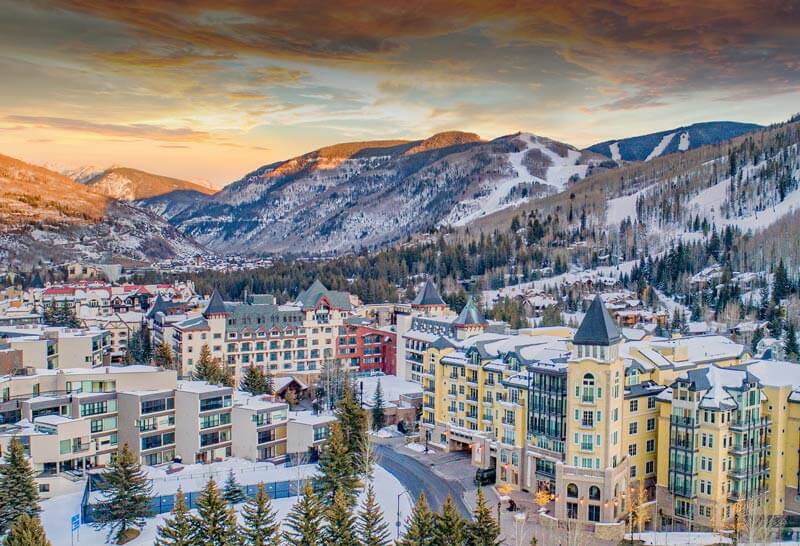
Breckenridge’s Victorian era Main Street sits at the base of Peak 8, framed by White River National Forest boundaries
2026 Market Outlook
- Record-low inventory persisting at the luxury tier alongside strong cash buyer demand
- Rising spring inventory across Summit County, historically the market’s most active buying window
- Continued attrition based reduction of Zone 2 and Zone 3 STR licenses as properties sell without transferring licenses
- New condominium construction driving improvement in county wide sales and price metrics
- Growing buyer sophistication around zone specific due diligence before making offers
Investment Climate
Breckenridge is best understood as two distinct markets operating under one town name: a licensed STR segment with meaningful income potential, and an unlicensed or waitlisted segment that functions primarily as an appreciation and personal use asset. Successful Breckenridge investors tend to share a few characteristics:
- Zone verification discipline confirming a property’s exact STR zone and current license status before writing any offer contingent on rental income
- Total return orientation similar to Vail, accepting that cash flow is secondary to appreciation and personal use value for most of the market
- HOA and building specific research since Resort Zone and Zone 1 eligibility can vary building by building even within the same general area
- Patience with the waitlist system for buyers targeting Zone 2 or Zone 3 properties, understanding that license availability depends entirely on attrition
- Long hold horizon given elevated entry prices and the multi-year nature of STR license waitlists in the most restricted zones
Breckenridge’s near total geographic build out, framed by White River National Forest, combines with its engineered STR license scarcity to create two overlapping and mutually reinforcing supply constraints. This dual scarcity has historically supported strong long term appreciation, though the specific value of any given property now depends heavily on its STR zone designation in a way that is unique among the Colorado markets covered in this guide series.
Historical Performance
| Period | Market Driver | Avg Annual Appreciation | Key Event |
|---|---|---|---|
| 2012-2016 | Post recession recovery, luxury resort rebound | 4-6% | Steady recovery as Front Range wealth expanded |
| 2017-2019 | Sustained luxury demand, low interest rate environment | 6-9% | Continued growth in the STR-driven second home market |
| 2020-2022 | Pandemic second home surge, remote work | 15-20% | Inventory hit historic lows across mountain resort markets nationally |
| 2023-2025 | STR zoning ordinance implementation, rate shock | Highly variable, single family up double digits some years, condos softer in others | 2021 STR zoning ordinance began reshaping relative neighborhood values |
| 2025-2026 | Continued zone based scarcity, luxury cash buyer strength | 4-8% (long term trend) | Record-low luxury inventory alongside slower financed-buyer segment |
Breckenridge’s single family home segment showed particularly strong pricing momentum through 2023 and 2024, with values up over 16% in one recent year even as the broader Summit County condo market showed more modest, occasionally negative, price movement. This bifurcation between property types and STR zones is a defining and persistent feature of the current Breckenridge market, and investors should evaluate appreciation trends by zone and property type rather than relying on a single town wide median figure.
Demographic Trends Driving Demand
- Denver Metro Proximity – At roughly 90 minutes via I-70, Breckenridge remains genuinely usable as a weekend property for Front Range buyers
- Global Brand Recognition – Consistent ranking among the most visited ski resorts in North America drives sustained destination demand
- Cash Buyer Concentration – High net worth buyers increasingly using Breckenridge real estate as a tangible asset diversification strategy
- STR License Scarcity Premium – Properties with active, transferable STR licenses in capped zones increasingly command a documented value premium over otherwise comparable unlicensed properties
- Workforce Housing Policy Tension – Ongoing town efforts to balance tourism economics against local employee housing availability continue to shape zoning and regulatory direction
- Geographic Lock-in – White River National Forest boundaries surrounding the town leave essentially no room for new large scale development
📚 New to real estate investing? Master the fundamentals with our professional course Learn more →
2. Neighborhood Hotspots
Breckenridge Investment Neighborhood Map
Interactive map of Breckenridge’s investment neighborhoods, organized by short term rental zone. Green stars show top hotspots, blue circles mark established markets, and orange circles highlight emerging areas.
Core Investment Neighborhoods
Detailed Submarket Analysis: All Breckenridge STR Zones
| Zone / Neighborhood | Price Range | STR License Cap | Current Status | Best Strategy |
|---|---|---|---|---|
| Resort Zone | $700K-$3M+ | No cap (100% eligible) | Open, licenses readily available | Licensed STR |
| Zone 1 (Tourism) | $550K-$1.5M | 92% of ~1,817 units | Some availability, verify per building | Licensed STR |
| Zone 2 (Downtown Core) | $700K-$2M+ | 51% of 257 units | Full, waitlist only | Appreciation, personal use, waitlist STR |
| Zone 3 (Single Family Residential) | $900K-$2.5M | 10% of units | Well over cap, fully waitlisted | Long term hold, personal use |
| Four O’Clock Subdivision | $600K-$1.3M | County-level exemption, distinct rules | Verify current county status | STR, verify with Summit County |
| Blue River (separate town) | $550K-$1.2M | No cap currently | Open, license still required | Licensed STR, no cap constraint |
Expert Insight: “Zone boundaries do not follow neighborhood lines or building names. We have seen two buildings next to each other fall into different zones because one straddles a zone boundary. The only reliable check is the Town’s interactive map cross-referenced with the property’s exact legal address, and we verify STR zone, license availability, and HOA STR permissions on every STR-intended purchase as a matter of course before a client writes an offer.” – High Rockies Homes team, LIV Sotheby’s International Realty, Breckenridge
3. Property Types
| Investment Goal | Best Property Type | Best Zones | Minimum Capital |
|---|---|---|---|
| Guaranteed STR Licensing | Resort Zone condo-hotel | Resort Zone | $175,000+ (25% down) |
| Best STR Value | Zone 1 Tourism condo | Zone 1 | $137,500+ (25% down) |
| Maximum Appreciation | Historic downtown home or condo | Zone 2 | $175,000+ (25% down) |
| Long Term Personal Use | Single-family home | Zone 3, Blue River | $225,000+ (25% down) |
Don’t guess the costs. Our Complete Renovation & Remodeling Cost Guide covers 400+ pages of project-by-project breakdowns with real contractor pricing ranges.
4. Cost Analysis
Acquisition Cost Breakdown (Breckenridge)
| Expense Item | Typical Cost | Example ($1,000,000 Property) | Notes |
|---|---|---|---|
| Down Payment | 25-30% (investment) | $250,000-$300,000 | Standard for jumbo investment financing in Colorado resort markets |
| Closing Costs | 2-3% of price | $20,000-$30,000 | Title, escrow, lender fees, recording |
| STR Zone Verification / Attorney Review | $400-$900 | $650 | Highly recommended before any offer contingent on STR income |
| General Inspection | $600-$1,200 | $900 | Higher end for larger single family homes or complex condo systems |
| HOA Document Review | $300-$800 | $500 | Critical for confirming building-specific rental policy alongside town zone status |
| STR License and Business License Setup | $175-$3,200+ (bedroom dependent) | $1,700 | Combined license fee and per-bedroom regulatory fee; only applicable if a license is available |
| Reserves (6 months) | 6 months expenses | $18,000-$25,000 | Emergency fund given negative cash flow profile common to this market |
| TOTAL MINIMUM ENTRY | ~29-36% of value | $290,000-$360,000 | Substantial capital required at Breckenridge’s typical price points |
Sample Cash Flow Analysis: Zone 1 Licensed Short Term Rental Condo
| Item | Monthly (Avg) | Annual | Notes |
|---|---|---|---|
| Gross STR Revenue | $7,500 | $90,000 | 2BR Zone 1 condo, well managed, peak winter and summer seasons |
| Combined Lodging Tax (12.275%) | -$921 | -$11,048 | State, county, and Town of Breckenridge combined rate on lodging revenue |
| HOA Dues | -$1,200 | -$14,400 | Resort area condo HOA dues typically run higher than standard residential |
| Property Taxes | -$420 | -$5,040 | Colorado’s low effective rate partially offsets high assessed values |
| STR License Fees (amortized) | -$142 | -$1,700 | Annual license and per-bedroom regulatory fee, 2BR example |
| Insurance | -$220 | -$2,640 | STR specific liability coverage |
| STR Management (25%) | -$1,875 | -$22,500 | Full service short term rental management on gross revenue |
| Maintenance + Turnover | -$450 | -$5,400 | Cleaning and turnover between guest stays |
| Net Operating Income | $2,272 | $27,272 | Before mortgage |
| Mortgage ($1,000,000, 25% down, 6.75%, 30yr) | -$4,864 | -$58,368 | Principal and interest only, on $750,000 loan balance |
| CASH FLOW | -$2,592 | -$31,096 | Negative even with strong STR booking, typical for financed Breckenridge properties |
| Cap Rate | 2.73% | NOI / Purchase Price | |
| Total Return (7% appreciation) | ~13-18% | Including equity, appreciation, principal paydown; excludes personal use value |
This example assumes a licensed Zone 1 property with strong occupancy. A Zone 2 or Zone 3 property without an active STR license would show no rental income at all beyond a 30-day-plus lease structure, making the underlying appreciation and eventual license access via waitlist the primary investment thesis for those zones. Investors who put 40% or more down, or who purchase with cash, frequently reach positive cash flow given the significant reduction in debt service as a share of expenses.
Expert Insight: “The single biggest underwriting mistake we see in Breckenridge is a buyer modeling STR income on a Zone 2 or Zone 3 property as if a license is guaranteed. It is not. If you are buying specifically for rental income, the Resort Zone or Zone 1 with verified current license availability is where that model actually works. Everywhere else, treat the property as an appreciation and personal use asset first, and any eventual STR license as a bonus, not the plan.” – High Rockies Homes team, LIV Sotheby’s International Realty, Breckenridge
5. Legal Framework
⚠️ Breckenridge Compliance Notice
Breckenridge’s four-zone short term rental licensing system is one of the most detailed and consequential in Colorado, and zone boundaries do not always follow neighborhood or building lines. This guide provides an overview only. Always consult a Colorado licensed real estate attorney and verify current zone status and license availability directly with the Town of Breckenridge Finance Department before making any offer contingent on short term rental income.
Town of Breckenridge Specific Regulations
Colorado’s statewide landlord tenant framework applies in Breckenridge, layered with the town’s detailed 2021 STR zoning ordinance:
- Four STR Zones: Resort Zone (unlimited licensing), Zone 1 Tourism (92% of ~1,817 units eligible), Zone 2 Downtown Core (51% of 257 units, currently full), and Zone 3 Single Family Residential (10% of units, currently well over cap and fully waitlisted).
- Non-Transferable Licenses: STR licenses do not transfer with property sale. A buyer must apply fresh after closing and may be placed on a waitlist even if the seller held an active license.
- Grandfathered Licenses: Existing licenses in any zone continue as normal and are only relinquished through property sale or non-renewal, not affected retroactively by the 2021 caps.
- Responsible Agent Requirement: Every license requires a designated Responsible Agent available 24/7 and able to respond to complaints within 60 minutes.
- Business and Occupational License Prerequisite: Owners must obtain a Town of Breckenridge Business and Occupational License before applying for an STR license.
- Two-Part Fee Structure: An accommodation unit license fee (scaling by bedroom count) plus an uncapped accommodation unit regulatory fee (charged per bedroom), both due annually.
- Combined Lodging Tax: 12.275% applies to short term rental revenue within Town of Breckenridge limits, covering state, county, and town components.
- Jurisdiction Variation: Unincorporated Summit County, Blue River, Dillon, Frisco, and Silverthorne each maintain separate and distinct STR rules from the Town of Breckenridge itself.
Compliance Best Practices
Successfully navigating Breckenridge’s STR licensing system requires disciplined, sequenced due diligence:
- Verify Zone Before Offer: Use the Town’s interactive STR zone map cross-referenced with the exact legal address and parcel number before submitting any offer contingent on rental income.
- Confirm Current License Count: The Town updates zone license counts approximately every three months; request the most current figures directly rather than relying on older published data.
- HOA Rental Policy Review: Even in STR-eligible zones, individual HOA declarations may impose additional restrictions beyond town rules.
- Apply Immediately After Closing: Buyers cannot join a waitlist before closing, but should apply the same day as closing to secure their position as early as possible.
- Model a Waitlist Scenario: For Zone 2 and Zone 3 purchases, underwrite the investment assuming no STR license access for the foreseeable future, treating any eventual license as upside rather than baseline.
- Confirm Jurisdiction for Neighboring Properties: Properties near but outside Breckenridge town limits may fall under Summit County or Blue River rules, which differ meaningfully.
Useful Breckenridge Resources
- Town of Breckenridge STR Licensing: townofbreckenridge.com
- Summit County STR Program: summitcountyco.gov/services/community_development/short_term_rentals
- Summit County GIS Jurisdiction Lookup: available via Summit County website
- MUNIRevs Tax Filing Portal for direct-booked STR revenue
| Regulation | Town of Breckenridge Requirement | Colorado State | Investor Impact |
|---|---|---|---|
| Short Term Rentals | License required, capped by zone, non-transferable | No statewide STR restriction | Among the most restrictive and consequential zoning systems in Colorado |
| Eviction | Follows state process | 10-day notice for non-payment; specific process for other causes | Meaningfully faster than West Coast jurisdictions |
| STR Tax Stack | 12.275% combined sales and lodging tax within town limits | 2.9% state sales tax component | Meaningful revenue reduction to model into STR underwriting |
| Rent Increases | Follows state notice requirement | 60 days notice for month to month tenancies | Relevant for the long term lease segment used while awaiting STR licensing |
| Property Tax | Summit County assessed | Among the lowest effective rates nationally | Meaningful cost advantage relative to high tax resort states |
| HOA Rental Restrictions | Not regulated by town, governed by private declarations | Generally enforceable under Colorado common interest community law | A second layer of diligence on top of the zone system itself |
6. Step-by-Step Breckenridge Investment Playbook
Define Your Breckenridge Strategy Around STR Zone Reality
Every Breckenridge strategy must start with the STR zone question, since it determines whether rental income is a realistic near term possibility at all:
Guaranteed STR Income
Buy in the Resort Zone or a Zone 1 building with verified current license availability. The only reliable path to near-immediate licensed short term rental income in Breckenridge.
Appreciation With Long Term Lease Bridge
Buy in Zone 2 or Zone 3, join the STR waitlist immediately after closing, and lease the property on a 30-day-plus basis while waiting. Capture appreciation and eventual STR upside without relying on it for underwriting.
Unrestricted Neighboring Jurisdiction
Buy in Blue River or verify unincorporated Summit County status for properties like the Four O’Clock Subdivision, sidestepping Breckenridge’s zone cap system entirely, subject to that jurisdiction’s own current rules.
Pure Legacy Asset / Personal Use
Buy in Zone 3 or historic downtown purely for family use and long term appreciation, treating any STR license as a distant possibility rather than a core part of the investment thesis.
Build Your Breckenridge Team
Given the complexity of Breckenridge’s zone system, your team’s STR licensing expertise is as important as their general real estate knowledge. Non-negotiable team members:
- Summit County Specialist Agent: Must verify STR zone, current license availability, and HOA rental permissions on every property before an offer is written, as a standard part of their process.
- Colorado Real Estate Attorney: For HOA document review and any complex title questions given the town’s layered zoning history.
- Local STR Property Manager (if pursuing STR strategy): Verify their track record specifically managing properties within Resort Zone or Zone 1 buildings.
- Colorado Mortgage Lender Experienced with Jumbo and Second Home Financing: Familiar with Breckenridge’s price points and STR revenue documentation practices.
- Real Estate CPA familiar with resort property taxation: For depreciation strategy, personal use versus rental day tracking, and lodging tax compliance across multiple jurisdictions if operating in both Breckenridge and Summit County.
Expert Tip: Before making an offer on any property where STR income is part of your investment thesis, ask your agent for the exact zone, the current license count against the cap, and the specific HOA’s rental policy in writing. If any of these three things cannot be answered with certainty, treat the property as a non-STR purchase for underwriting purposes.
Breckenridge Specific Due Diligence
Standard due diligence items plus these Breckenridge critical checks:
Physical Due Diligence
- Snow load and roof structural inspection given significant annual snowfall
- Flood risk assessment given the town’s notably elevated flood risk rating
- Wildfire risk assessment given the town’s high wildfire exposure rating
- Boiler and HVAC system inspection for older downtown and condo buildings
- Parking allocation verification, especially important for STR guest logistics
Regulatory Due Diligence
- Confirm exact STR zone using the Town’s interactive map cross-referenced with the property’s legal parcel number
- Request current license count against the cap for that specific zone from the Town Finance Department
- Obtain and review complete HOA declarations, bylaws, and current rental policy before writing an offer
- Verify whether the property sits within Town of Breckenridge limits or unincorporated Summit County, since rules differ
- If purchasing with an existing STR license situation, confirm in writing that the license does not automatically transfer and understand the reapplication process
Competing in Breckenridge’s Market
Breckenridge’s slower days on market and seller-leaning months of supply create a nuanced negotiating environment. Strategies that work:
- Cash or strong pre-approval: Given the luxury tier’s cash buyer concentration, cash offers or robust jumbo pre-approvals materially strengthen a position on the most desirable listings.
- Spring inventory timing: Rising spring inventory historically signals the most active buying window, giving prepared buyers more selection and negotiating room.
- Zone-first property search: Rather than searching by neighborhood name, filter first by confirmed STR zone if rental income matters to your strategy, since zone status can override neighborhood reputation for investment purposes.
- Financed-buyer patience: The more rate-sensitive, financed segment of the market is showing more negotiability than the luxury cash tier, creating opportunity for well-prepared conventional buyers.
- Local broker relationships: Given the complexity of zone verification, off-market intelligence from agents with direct experience closing STR-focused transactions is particularly valuable in Breckenridge.
Property Management in Breckenridge
Management needs differ substantially depending on STR zone eligibility and license status:
Licensed Short Term Rental Management
Full service STR management in Breckenridge typically includes:
- 24/7 Responsible Agent function required by town license, either self-designated or via management company
- Housekeeping and turnover coordination between guest stays across winter and summer peak seasons
- Dynamic pricing optimization reflecting Breckenridge’s dual winter ski and summer festival season demand
- Combined lodging tax collection and remittance, either automated via Airbnb/VRBO or manually through MUNIRevs for direct bookings
- Annual STR and business license renewal tracking and regulatory fee payment
Typical Breckenridge Management Fees
- Short term rental management: 20-30% of gross booking revenue
- Long term rental management (for Zone 2/3 waitlist bridge periods): 8-10% of monthly rent
- STR license fee: $175 base plus $756 per bedroom regulatory fee (example: 4BR totals $3,199 annually)
- HOA dues on resort condos often run $800-$2,500+ per month depending on building amenities
7. Financing Options for Breckenridge
| Loan Type | Down Payment | Rate Premium | Best For | Breckenridge Note |
|---|---|---|---|---|
| Jumbo Second Home / Investment | 25-35% | +0.75-1.5% | Strong W-2 or self-employed income, good credit | Nearly all Breckenridge purchases require jumbo financing given price points |
| DSCR Loan | 30-40% | +2-3% | Investors who want no income verification, STR-licensed properties only | Lenders will require documented current license status, not just STR zone eligibility |
| Portfolio / Private Bank Loan | 20-35% | Negotiable, relationship dependent | High net worth buyers, complex income situations | Common among the cash-adjacent luxury buyer segment |
| Cash Purchase | 100% | N/A | High net worth and diversification-focused buyers | Increasingly common at the luxury tier given record-low inventory and cash buyer strength |
| Conventional Investment | 25% | +0.5-0.75% | Lower-priced Zone 3 or non-resort area properties | Applicable where the purchase price falls within conforming loan limits |
Breckenridge Financing Reality: Most Breckenridge transactions involve either cash or jumbo financing with 25% or more down, and the recent softening in the financed-buyer segment relative to the cash-driven luxury tier means conventional buyers currently have more negotiating leverage than in prior years. DSCR loans require documented current STR license status, not just theoretical zone eligibility, so buyers pursuing this financing route should have zone and license verification completed before applying, not after.
8. Frequently Asked Questions

Knowledge Quiz: Breckenridge Real Estate Investment
Open Quiz
5 quick questions on what you just learned about Breckenridge investing
1) Which Breckenridge STR zone currently offers unlimited license availability?
Answer: C
The Resort Zone, comprised of purpose-built resort condo and hotel complexes like One Ski Hill Place, Crystal Peak Lodge, and Beaver Run, has no cap on STR licenses, unlike Zone 1 (92% eligible), Zone 2 (51% eligible, currently full), and Zone 3 (10% eligible, currently well over cap).
2) What happens to a Breckenridge STR license when a property is sold?
Answer: B
STR licenses in Breckenridge are non-transferable and generally lapse upon sale. Buyers must apply for their own license after closing and may be placed on a waitlist if the property’s zone is at or over its cap.
3) Why did the Town of Breckenridge adopt its zoned STR licensing system in 2021, according to the guide?
Answer: D
The zoning system was designed in response to local businesses reporting growing difficulty finding and retaining employees who could not find affordable long term housing, concentrating unrestricted STR activity in purpose-built resort properties while progressively reducing STR density in residential neighborhoods.
4) What is the combined lodging tax rate on short term rental revenue within Town of Breckenridge limits?
Answer: A
A combined tax rate of 12.275% applies to short term rental lodging revenue within Town of Breckenridge limits, covering state, county, and town sales and lodging tax components.
5) According to the guide, how does Blue River’s STR licensing framework currently differ from Breckenridge’s?
Answer: C
Blue River, a separate incorporated town south of Breckenridge, currently has no cap on STR licenses, unlike Breckenridge’s capped four-zone system, though property owners still need to obtain a valid Blue River STR license to operate legally.
Work With a Local Expert in Breckenridge
We are building a verified network of real estate professionals across every market we cover.

About Our Expert Network
We are finalizing partnerships with verified real estate professionals across every market featured on Builds and Buys. Each expert in our network is selected for their hands-on investment experience, local market knowledge, and commitment to helping buyers and investors make sound decisions.
Our local specialists offer:
- Proven experience with investment and income-producing properties
- Deep knowledge of local pricing, rental yields, and neighborhood dynamics
- Guidance on financing, legal structure, and due diligence
- Access to off-market and pre-market opportunities
- Full transaction support from search through closing
- Ongoing portfolio and property management referrals
Services Covered
- Property sourcing and acquisition
- Investment analysis and underwriting
- Buyer representation
- Market comparables and valuations
- Short-term and long-term rental strategy
- Value-add and renovation guidance
- Legal and title referrals
- Financing and lender connections
- Property management referrals
- Insurance and inspection referrals
- 1031 exchange coordination
- Exit strategy planning
Get Connected or Join Our Network
Looking for a local expert to help with your investment? Reach out and we will connect you with the right professional for your market and strategy.
Are you a real estate professional with a track record working with investors? We are always expanding our network of verified local experts.
Contact us at support@buildsandbuys.com
Find Specialized Breckenridge Real Estate Professionals
Ready to Invest in Breckenridge?
Breckenridge rewards investors who do their zone-level homework before falling in love with a listing. High entry costs, a genuinely complex four-zone STR licensing system, and elevated days on market challenge investors who are unprepared. But for investors who verify STR zone status before every offer, understand the meaningful difference between Resort Zone, Zone 1, Zone 2, and Zone 3, and commit to the right strategy for their capital, Breckenridge offers one of the most recognized ski resort brands in North America, genuine geographic scarcity, and, for the right property, some of the strongest short term rental performance available in Colorado.
Continue Your Research
Colorado State Guide
See how Breckenridge compares to Vail, Winter Park, and other Colorado mountain markets.
Step-by-Step Invest
Complete framework for building a real estate investment strategy from scratch.
144-Lesson Course
University-level real estate education covering financing, law, strategy, and management.
For further guidance, explore our State-by-State Investor guides, browse our expert articles, or follow our Step-by-Step Investment Guide.



