
Winter Park Real Estate Investment Guide For 2026
A comprehensive resource for investors looking to capitalize on one of Colorado’s most accessible Front Range adjacent ski resort property markets in 2026
Quick answers: Top 5 most searched Winter Park investment questions ▼
Migration data: Where people are moving from to Winter Park ▼
In This Guide
Click on any section to navigate directly to that content
1. Winter Park Market Overview
Market Fundamentals
Winter Park sits in Grand County roughly 67 miles and under 90 minutes from downtown Denver via US Highway 40, making it the closest major ski resort to the Front Range and avoiding the I-70 corridor congestion that affects Summit County and Vail Valley traffic. This proximity, combined with Winter Park Resort’s growing summer tourism through Trestle Bike Park, defines a market with genuine year round revenue potential rather than a purely winter dependent economy.
Key economic indicators that define Winter Park’s investment case:
- Distance to Denver: Approximately 67 miles, under 90 minutes via US 40
- Grand County SFH Median: Approximately $1.6 million to $1.86 million depending on the reporting period and mix
- Grand County Condo/Townhome Median: Approximately $840,000
- Blended Winter Park Median Sale Price: Approximately $925,000
- STR Performance: Approximately 77% average occupancy and $284 average daily rate
- Winter Park SFH Sales Volume: Up approximately 37% year over year per recent Grand County market data
Winter Park’s economy centers on Winter Park Resort, operated in partnership with Denver’s Department of Parks and Recreation through a unique long standing lease arrangement, alongside a growing base of remote workers and second home buyers drawn by the town’s accessibility. The Fraser Valley, encompassing Winter Park, Fraser, and Tabernash, functions as one interconnected market for investment purposes.
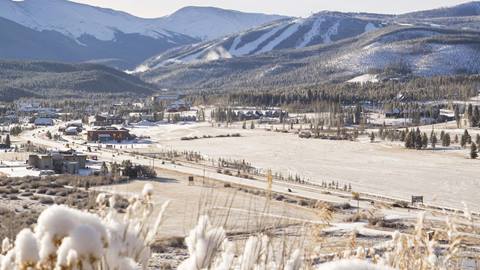
Winter Park’s proximity to Denver via US 40 makes it the most accessible major ski resort from the Front Range
2026 Market Outlook
- Planned gondola project connecting downtown Winter Park directly to the resort base area
- Continued strength in Trestle Bike Park driving expanding summer tourism revenue
- Elevated inventory versus prior years giving buyers modestly more negotiating leverage
- Newer developments like ROAM adding inventory along the Fraser River corridor
- Sustained Denver metro buyer demand given the town’s unmatched proximity advantage
Investment Climate
Winter Park occupies a distinct niche among Colorado mountain resort markets: meaningfully lower entry pricing than Vail, Breckenridge, or Aspen, combined with the shortest practical drive time from Denver of any major resort. Successful Winter Park investors tend to share a few characteristics:
- STR strategy clarity given the meaningful difference in rental performance between base village complexes and outlying residential neighborhoods
- HOA and zone specific diligence since STR eligibility and restrictions vary considerably by complex and zone
- Year round revenue thinking given growing mountain biking and summer tourism alongside traditional ski season demand
- Fraser Valley market awareness recognizing that Fraser and Tabernash properties, while outside Winter Park town limits, are part of the same functional market
- Realistic seasonal cash flow modeling given the town’s smaller size and more concentrated peak season revenue windows than larger resort markets
Winter Park’s unique 67 mile proximity to Denver has historically insulated demand from broader mountain resort market cycles, since a meaningful share of buyers are Denver metro residents seeking a genuinely usable weekend property rather than purely a vacation investment. Grand County market data shows Winter Park area single family sales volume up substantially year over year even as some neighboring resort markets softened.
Historical Performance
| Period | Market Driver | Avg Annual Appreciation | Key Event |
|---|---|---|---|
| 2012-2016 | Post recession recovery, Denver metro growth spillover | 4-6% | Steady recovery as Front Range population growth accelerated |
| 2017-2019 | Trestle Bike Park expansion, growing summer tourism | 6-8% | Year round revenue potential began attracting more investment buyers |
| 2020-2022 | Pandemic second home surge, remote work migration | 15-22% | Denver metro buyers accelerated Winter Park purchases given accessibility |
| 2023-2025 | Rate normalization, rising inventory | Variable, with SFH average sale price up strongly even as days on market lengthened | Winter Park SFH sales volume up approximately 37% year over year |
| 2025-2026 | Gondola project planning, continued Denver demand | 6-9% (long term trend) | Inventory elevated versus prior years, giving buyers moderately more leverage |
Winter Park’s long run appreciation has tracked in the 6 to 9% range, with a notable pandemic era spike and continued strength in the single family segment even as broader Colorado mountain markets showed mixed signals through 2025. Investors should note that median price figures can swing significantly month to month given the market’s relatively low transaction count and the wide gap between condo and single family price tiers.
Demographic Trends Driving Demand
- Denver Metro Proximity – Winter Park’s 67 mile, sub-90 minute drive time from Denver is the single largest structural demand driver in the market
- Trestle Bike Park and Summer Tourism – Rapidly growing mountain biking tourism is extending the resort’s revenue season well beyond winter
- Gondola Infrastructure Project – A planned gondola connecting downtown Winter Park to the resort base is expected to further strengthen both visitor convenience and property values
- Remote Worker Migration – Professionals relocating primary residency to Grand County for lifestyle while maintaining Denver metro employment ties
- Family Focused Master Planned Communities – Developments like Rendezvous and Grand Park in neighboring Fraser continue to draw family buyers seeking amenity rich, year round communities
- Geographic Constraints – Grand County’s mountainous terrain and surrounding Arapaho National Forest boundaries limit long term developable land
📚 New to real estate investing? Master the fundamentals with our professional course Learn more →
2. Neighborhood Hotspots
Winter Park Investment Neighborhood Map
Interactive map of the Winter Park and Fraser Valley investment neighborhoods. Green stars show top hotspots, blue circles mark established markets, and orange circles highlight emerging areas.
Core Investment Neighborhoods
Detailed Submarket Analysis: Winter Park and Fraser Valley Neighborhoods
| Neighborhood | Price Range | Cap Rate | Growth Drivers | Best Strategy |
|---|---|---|---|---|
| Base Village (Zephyr / Fraser Crossing) | $700K-$1.6M | 4.5-6.0% | Ski-in/ski-out, designated STR zoning | Licensed short term rental |
| Old Town Winter Park | $650K-$1.4M | 4.0-5.5% | Walkability, Main Street proximity | Mixed STR and long term rental |
| Rendezvous | $700K-$2M+ | 3.5-5.0% | Private trails, upscale demand | Upscale STR, family long term hold |
| Grand Park (Fraser) | $550K-$1.1M | 4.0-5.5% | Shuttle access, open space, growing inventory | Family rental, STR |
| Hideaway Village | $500K-$900K | 3.5-5.0% | Quiet setting, shuttle access | Balanced STR and long term hold |
| Lakota | $900K-$2.5M | 3.0-4.5% | Resort views, luxury finishes | Luxury STR, appreciation |
| Iron Horse Resort | $600K-$1.2M | 4.0-5.5% | Mary Jane access, established STR | Licensed short term rental |
| ROAM | $550K-$950K | 4.0-5.5% | New construction, river corridor | Early stage entry, STR |
| Fraser / Tabernash Corridor | $450K-$800K | 4.5-6.5% | Lowest entry price, steady demand | Best cash flow in Fraser Valley |
Expert Insight: “The Fraser and Tabernash condo complexes, places like Sunnyside Flats and Meadow Ridge, are the most underrated play in the Winter Park market right now. They sit 10 to 15 minutes from the resort, still on the free shuttle route, at 30 to 40% below equivalent base village pricing, yet they’re posting steady year round occupancy because the whole Fraser Valley now functions as one rental market to guests. Buyers fixated only on ski-in/ski-out access are leaving real yield on the table.” – Nazreen Kashani, Realtor and STR Data Specialist, Grand County
3. Property Types
| Investment Goal | Best Property Type | Best Neighborhoods | Minimum Capital |
|---|---|---|---|
| Highest STR Yield | Base village ski-in/ski-out condo | Zephyr Mountain Lodge, Fraser Crossing | $150,000+ |
| Best Cash Flow | Value Fraser Valley condo | Fraser / Tabernash corridor | $112,500+ |
| Maximum Appreciation | Single family home or custom Rendezvous property | Old Town Winter Park, Rendezvous | $162,500+ |
| Family Use Plus Rental Offset | Master planned community townhome | Grand Park, Rendezvous, ROAM | $137,500+ |
Don’t guess the costs. Our Complete Renovation & Remodeling Cost Guide covers 400+ pages of project-by-project breakdowns with real contractor pricing ranges.
4. Cost Analysis
Acquisition Cost Breakdown (Winter Park)
| Expense Item | Typical Cost | Example ($850,000 Property) | Notes |
|---|---|---|---|
| Down Payment | 25% (investment) | $212,500 | Standard for investment properties in Colorado mountain markets |
| Closing Costs | 2-3% of price | $17,000-$25,500 | Title, escrow, lender fees, recording |
| General Inspection | $550-$900 | $700 | Snow load and roof condition especially important |
| HOA Document Review | $250-$600 | $400 | Critical for confirming STR eligibility and rental restrictions |
| STR License and Setup | $150-$400 | $275 | Town license fee plus any inspection requirements |
| Furnishing (if STR) | $15,000-$50,000 | $25,000 | Depends on unit size and target guest tier |
| Reserves (6 months) | 6 months expenses | $14,000-$20,000 | Emergency fund for shoulder season vacancy |
| TOTAL MINIMUM ENTRY | ~28-38% of value | $238,000-$322,000 | Range depends heavily on whether furnishing for STR is required |
Sample Cash Flow Analysis: Base Village Licensed Short Term Rental Condo
| Item | Monthly (Avg) | Annual | Notes |
|---|---|---|---|
| Gross STR Revenue | $5,700 | $68,400 | 2BR base village condo at approximately 77% occupancy and market average daily rate |
| Sales and Lodging Tax | -$570 | -$6,840 | Combined Colorado, Grand County, and Winter Park tax stack, approximately 8-10% |
| HOA Dues | -$650 | -$7,800 | Base village HOA dues typically lower than Vail or Aspen equivalents |
| Property Taxes | -$350 | -$4,200 | Colorado’s low effective rate applies |
| Insurance | -$175 | -$2,100 | STR specific liability coverage |
| STR Management (25%) | -$1,425 | -$17,100 | Full service short term rental management on gross revenue |
| Maintenance + Turnover | -$340 | -$4,080 | Cleaning and turnover between guest stays |
| Net Operating Income | $2,190 | $26,280 | Before mortgage |
| Mortgage ($850,000, 25% down, 6.75%, 30yr) | -$4,133 | -$49,596 | Principal and interest only, on $637,500 loan balance |
| CASH FLOW | -$1,943 | -$23,316 | Negative at full leverage, improves meaningfully with larger down payment |
| Cap Rate | 3.09% | NOI / Purchase Price | |
| Total Return (7% appreciation) | ~15-19% | Including equity, appreciation, principal paydown; excludes personal use value |
Investors who put 35 to 40% down, or who target the more affordable Fraser and Tabernash condo corridor rather than the base village premium, frequently reach near breakeven or modestly positive cash flow. Winter Park’s lower absolute price points relative to Vail or Aspen mean the debt service burden per dollar of STR revenue is meaningfully lighter, one of the market’s core relative advantages for cash flow focused investors.
Expert Insight: “Winter Park lets investors buy the same ski-in/ski-out concept that costs three or four times as much in Vail or Aspen, at a scale where a meaningful down payment can actually get you to positive cash flow. That combination of accessibility, both to Denver and to financing math that pencils, is what keeps pulling first time resort investors here rather than jumping straight to the bigger name mountain markets.” – Naz Kashani, Realtor, Grand County
5. Legal Framework
⚠️ Winter Park Compliance Notice
Winter Park is broadly supportive of short term rentals, but specific zone and HOA rules vary meaningfully by complex, and some newer developments carry different tax treatment than established downtown properties. This guide provides an overview only. Always consult a Colorado licensed real estate attorney before acquiring rental properties, and confirm both town zoning eligibility and current HOA rental policy in writing before closing.
Winter Park Specific Regulations
Colorado’s statewide landlord tenant framework applies in Winter Park, along with town level short term rental licensing:
- Short Term Rental License Required: A Town of Winter Park STR license is required before renting any property for fewer than 30 consecutive days.
- Zone Based Variation: Certain base village complexes, such as Zephyr Mountain Lodge, are specifically zoned and designated for nightly rental use, while other areas carry more variable rules.
- HOA Supremacy: As in most Colorado resort towns, HOA declarations and condo bylaws frequently impose additional restrictions beyond town requirements.
- Fraser and Tabernash Distinctions: Properties outside Winter Park town limits in Fraser or Tabernash fall under separate municipal or Grand County jurisdiction, with their own STR licensing and tax rules that may differ from Winter Park proper, including certain developments marketed as having no local tourism tax.
- Lodging Tax Collection: Licensed short term rentals must collect and remit applicable state, county, and any local lodging taxes depending on the specific jurisdiction.
- Grand County Assessor Reappraisal: Property tax assessments follow Colorado’s periodic county reappraisal cycle, relevant for underwriting long term holding costs.
Compliance Best Practices
Successfully operating Winter Park rental properties requires attention to both jurisdiction and HOA specifics:
- Confirm the Exact Jurisdiction: Determine whether a target property sits within Winter Park town limits, Fraser town limits, or unincorporated Grand County, since STR rules and tax rates differ.
- Full HOA Document Review Before Purchase: Obtain declarations, bylaws, and current rental policy before writing an offer, particularly for base village complexes with nightly rental designations.
- Verify STR License Eligibility: Some complexes are pre-approved for nightly rental use while others require case by case town review.
- Lease Compliance Review: Use Colorado specific lease templates for any long term rental component, updated for current state habitability and notice requirements.
- Local Property Management: Given the market’s smaller size and the meaningful performance gap between base village and outlying properties, local management experience with the specific complex type is valuable.
Useful Winter Park Resources
- Town of Winter Park: wpgov.com
- Town of Fraser: frasercolorado.com
- Grand County Assessor: co.grand.co.us
- Colorado Division of Housing: cdola.colorado.gov
| Regulation | Winter Park Requirement | Colorado State | Investor Impact |
|---|---|---|---|
| Short Term Rentals | License required, broadly permitted, zone and HOA dependent | No statewide STR restriction | Generally accessible but requires complex specific diligence |
| Eviction | Follows state process | 10-day notice for non-payment; specific process for other causes | Meaningfully faster than West Coast jurisdictions |
| Rent Increases | Follows state notice requirement | 60 days notice for month to month tenancies | Relevant for the long term rental segment of the market |
| Property Tax | Grand County assessed | Among the lowest effective rates nationally | Meaningful ongoing cost advantage |
| Jurisdiction Boundaries | Winter Park, Fraser, and unincorporated Grand County have separate rules | N/A | Confirm exact jurisdiction before assuming tax or licensing terms |
6. Step-by-Step Winter Park Investment Playbook
Define Your Winter Park Strategy
Before buying, decide which of these strategies best fits your capital and goals:
Base Village Licensed STR
Buy ski-in/ski-out at Zephyr Mountain Lodge, Fraser Crossing, or Iron Horse Resort. The strongest STR performance in the market, benefiting from designated nightly rental zoning.
Value Fraser Valley Cash Flow
Buy in Fraser or Tabernash condo complexes for the best relative cash flow in the greater Winter Park market. Lower absolute revenue but a meaningfully lighter debt service burden.
Family Second Home Plus Rental
Buy in Rendezvous, Grand Park, or ROAM for a genuinely usable family second home that also generates rental income during weeks not personally used.
Appreciation Focused Single Family
Buy in Old Town Winter Park for a single family home targeting the market’s strongest recent appreciation segment, with optional STR licensing if zoning allows.
Build Your Winter Park Team
Given the market’s smaller size and complex specific rental performance variation, local relationships matter. Non-negotiable team members:
- Fraser Valley Specialist Agent: Should have direct experience with STR performance data across specific complexes, not just general market pricing.
- Colorado Real Estate Attorney: For HOA document review and entity setup given the multi-jurisdiction nature of the Winter Park, Fraser, and Grand County area.
- Local STR Property Manager: Verify demonstrated experience with the specific complex or neighborhood type, since performance varies meaningfully across the market.
- Colorado Mountain Market Lender: Experienced with second home and investment financing at Winter Park’s more accessible price points relative to Vail or Aspen.
- Real Estate CPA familiar with Colorado resort taxation: For depreciation strategy and multi-jurisdiction lodging tax compliance if operating across Winter Park and Fraser properties.
Expert Tip: Ask any prospective STR manager for actual occupancy and ADR data from comparable units in the specific complex you’re considering, not market wide averages. The gap between base village and outlying complex performance in Winter Park is significant enough that generic market data can be misleading for underwriting a specific unit.
Winter Park Specific Due Diligence
Standard due diligence items plus these Winter Park critical checks:
Physical Due Diligence
- Snow load and roof structural inspection given significant annual snowfall in the Fraser Valley
- HVAC and boiler system inspection for older base village and Old Town buildings
- Water and septic system verification for outlying acreage properties in Fraser and Tabernash
- Parking allocation verification, especially for STR guest turnover logistics
- Road access and winter maintenance confirmation for outlying custom home lots
Regulatory Due Diligence
- Confirm exact jurisdiction (Winter Park town, Fraser town, or unincorporated Grand County) before assuming tax or STR rules
- Obtain and review complete HOA declarations, bylaws, and current rental policy before writing an offer
- Verify STR license eligibility and any pending complex level restrictions or moratoriums
- Confirm current property tax assessment and any pending Grand County reappraisal
- Review lodging tax obligations specific to the exact jurisdiction, since some newer developments have different tax treatment
Competing in Winter Park’s Market
Winter Park’s market has shown elevated inventory and longer days on market recently, creating opportunity for prepared buyers. Strategies that work:
- Shoulder season shopping: Spring and fall shoulder seasons typically see the least competition and most negotiable pricing.
- STR performance data requests: Ask sellers or listing agents for actual trailing twelve month booking data on income properties rather than relying on projected estimates alone.
- Complex level intelligence: Track which base village buildings have designated nightly rental zoning versus those requiring case by case approval, since this materially affects both financing and revenue potential.
- Fraser Valley wide search: Expanding the search beyond Winter Park town limits into Fraser and Tabernash often surfaces meaningfully better value for comparable shuttle accessible product.
- Gondola project tracking: Monitor progress on the planned downtown to base area gondola, since early positioning near future infrastructure improvements can capture outsized appreciation.
Property Management in Winter Park
Management needs differ substantially between base village STR operations and outlying long term rentals:
Short Term Rental Management
Full service STR management in the Winter Park and Fraser Valley market typically includes:
- Guest communication and coordination with The Lift shuttle schedule for guest convenience
- Housekeeping and turnover coordination between guest stays, particularly important during peak ski and summer bike season
- Dynamic pricing optimization across winter ski season and summer bike park season
- Lodging tax collection and remittance specific to the exact jurisdiction
- Maintenance coordination given snow season wear and higher guest turnover
Typical Winter Park Management Fees
- Short term rental management: 20-30% of gross booking revenue
- Long term rental management: 8-10% of monthly rent
- Leasing fee (long term): 50-100% of one month’s rent
- HOA dues on base village condos generally run lower than comparable Vail or Aspen complexes, often $400-$1,200 per month
7. Financing Options for Winter Park
| Loan Type | Down Payment | Rate Premium | Best For | Winter Park Note |
|---|---|---|---|---|
| Conventional Second Home | 10-20% | +0.375-0.5% | Buyers using the property personally alongside rental | Winter Park’s lower price points keep more buyers within conforming loan limits than Vail or Aspen |
| Conventional Investment | 25% | +0.5-0.75% | Strong W-2 or self-employed income, good credit | Standard for most Winter Park investment purchases |
| Jumbo Investment | 25-30% | +0.75-1.25% | Higher priced single family and Lakota luxury properties | Relevant primarily for Rendezvous custom homes and upper tier single family |
| DSCR Loan | 25-30% | +1.5-2.5% | Investors who want no income verification | More achievable in Winter Park than Vail or Aspen given the market’s stronger relative rent-to-price ratios |
| Portfolio / Local Bank Loan | 20-30% | +1-2% | Multiple properties, self-employed borrowers | Colorado mountain community banks are frequently comfortable with Grand County resort appraisals |
Winter Park Financing Reality: Winter Park’s lower absolute price points relative to Vail, Breckenridge, and Aspen make it one of the more financeable resort markets in Colorado, with a meaningfully higher share of purchases qualifying for conventional financing rather than requiring jumbo loans. DSCR loans, which are very difficult to qualify for in Vail given low rent-to-price ratios, are more achievable in Winter Park, particularly for base village licensed STR units with documented booking history.
8. Frequently Asked Questions

Knowledge Quiz: Winter Park Real Estate Investment
Open Quiz
5 quick questions on what you just learned about Winter Park investing
1) What is Winter Park’s key structural advantage over most other major Colorado ski resorts?
Answer: A
Winter Park’s roughly 67 mile, sub-90 minute drive via US Highway 40 avoids the I-70 mountain corridor traffic that regularly extends drive times to Summit County and Vail Valley, making it genuinely usable as a regular weekend property for Denver metro buyers.
2) Which base village complex does the guide identify as specifically zoned and designated for nightly rental use?
Answer: C
Zephyr Mountain Lodge is specifically cited as a complex zoned and designated for nightly rental use, along with sister complexes Fraser Crossing and Founders Pointe, making STR operation a core intended function rather than a case by case exception.
3) According to the guide, what should investors verify before assuming a specific tax rate or STR rule applies to a Fraser Valley property?
Answer: B
The guide stresses confirming whether a property sits in Winter Park town limits, Fraser town limits, or unincorporated Grand County, since STR licensing, zoning, and tax rules differ by jurisdiction across this interconnected market.
4) What does the guide say about DSCR loan accessibility in Winter Park compared to Vail?
Answer: D
The guide notes that Winter Park’s lower absolute price points relative to Vail or Aspen produce stronger rent-to-price ratios, making DSCR loan qualification more achievable than in Vail, where low cap rates often prevent loans from meeting minimum debt service coverage thresholds.
5) What infrastructure project does the guide identify as a potential future driver of Winter Park property values?
Answer: A
The guide identifies a planned gondola project connecting downtown Winter Park to the resort base area as a potential future value driver, following a pattern seen in other Colorado resort towns where improved downtown-to-mountain connectivity has historically supported appreciation.
Work With a Local Expert in Winter Park
We are building a verified network of real estate professionals across every market we cover.

About Our Expert Network
We are finalizing partnerships with verified real estate professionals across every market featured on Builds and Buys. Each expert in our network is selected for their hands-on investment experience, local market knowledge, and commitment to helping buyers and investors make sound decisions.
Our local specialists offer:
- Proven experience with investment and income-producing properties
- Deep knowledge of local pricing, rental yields, and neighborhood dynamics
- Guidance on financing, legal structure, and due diligence
- Access to off-market and pre-market opportunities
- Full transaction support from search through closing
- Ongoing portfolio and property management referrals
Services Covered
- Property sourcing and acquisition
- Investment analysis and underwriting
- Buyer representation
- Market comparables and valuations
- Short-term and long-term rental strategy
- Value-add and renovation guidance
- Legal and title referrals
- Financing and lender connections
- Property management referrals
- Insurance and inspection referrals
- 1031 exchange coordination
- Exit strategy planning
Get Connected or Join Our Network
Looking for a local expert to help with your investment? Reach out and we will connect you with the right professional for your market and strategy.
Are you a real estate professional with a track record working with investors? We are always expanding our network of verified local experts.
Contact us at support@buildsandbuys.com
Find Specialized Winter Park Real Estate Professionals
Ready to Invest in Winter Park?
Winter Park occupies a genuinely distinct position among Colorado mountain resort markets. Multi-jurisdiction complexity across Winter Park, Fraser, and unincorporated Grand County, and complex specific rental performance variation challenge investors who are unprepared. But for investors who understand which complexes carry designated STR zoning, build the right local relationships, and take advantage of the market’s more accessible price points and financing math relative to Vail or Aspen, Winter Park offers one of Colorado’s strongest combinations of Denver metro proximity, growing year round tourism revenue, and comparatively achievable entry costs. The market’s underlying advantage, being the closest major ski resort to the Front Range, is a structural feature that is very difficult to replicate anywhere else in the state.
Continue Your Research
Colorado State Guide
See how Winter Park compares to Vail, Steamboat Springs, and other Colorado mountain markets.
Step-by-Step Invest
Complete framework for building a real estate investment strategy from scratch.
144-Lesson Course
University-level real estate education covering financing, law, strategy, and management.
For further guidance, explore our State-by-State Investor guides, browse our expert articles, or follow our Step-by-Step Investment Guide.



