
Crested Butte Colorado Real Estate Investment Guide For 2026
A comprehensive resource for investors looking to capitalize on one of Colorado’s most iconic and supply-constrained mountain resort markets in 2026
Quick answers: Top 5 most searched Crested Butte investment questions ▼
Migration data: Where people are moving from to Crested Butte ▼
In This Guide
Click on any section to navigate directly to that content
1. Crested Butte Market Overview
Market Fundamentals
Crested Butte occupies a unique position in Colorado’s resort real estate landscape. Often called “the last great ski town,” it has preserved an authentic mountain character that Aspen, Telluride, and Vail have largely lost to commercialization. This authenticity is not just a cultural asset, it is an economic moat that drives sustained demand from buyers and visitors who specifically seek what larger resorts can no longer offer.
Key economic indicators defining Crested Butte’s investment case:
- Town Population: ~1,700 permanent residents, Gunnison County ~17,000
- Major Economic Driver: Crested Butte Mountain Resort (owned by Vail Resorts, Epic Pass)
- Summer Economy: Mountain biking, hiking, wildflower tourism, Crested Butte Arts Festival
- Airport: Gunnison-Crested Butte Regional Airport (GUC), with seasonal direct flights from major cities
- Median Household Income: ~$72,000 locally, but second home buyers average $250,000+
- Vacancy (Long-Term): Near zero year-round due to workforce housing crisis
The market is defined by two investor profiles: second home buyers who offset carrying costs through STR income, and pure investment buyers targeting STR yield and long-term appreciation. Both benefit from the same structural reality: very little new land available for development, surrounded by National Forest and wilderness areas on all sides.
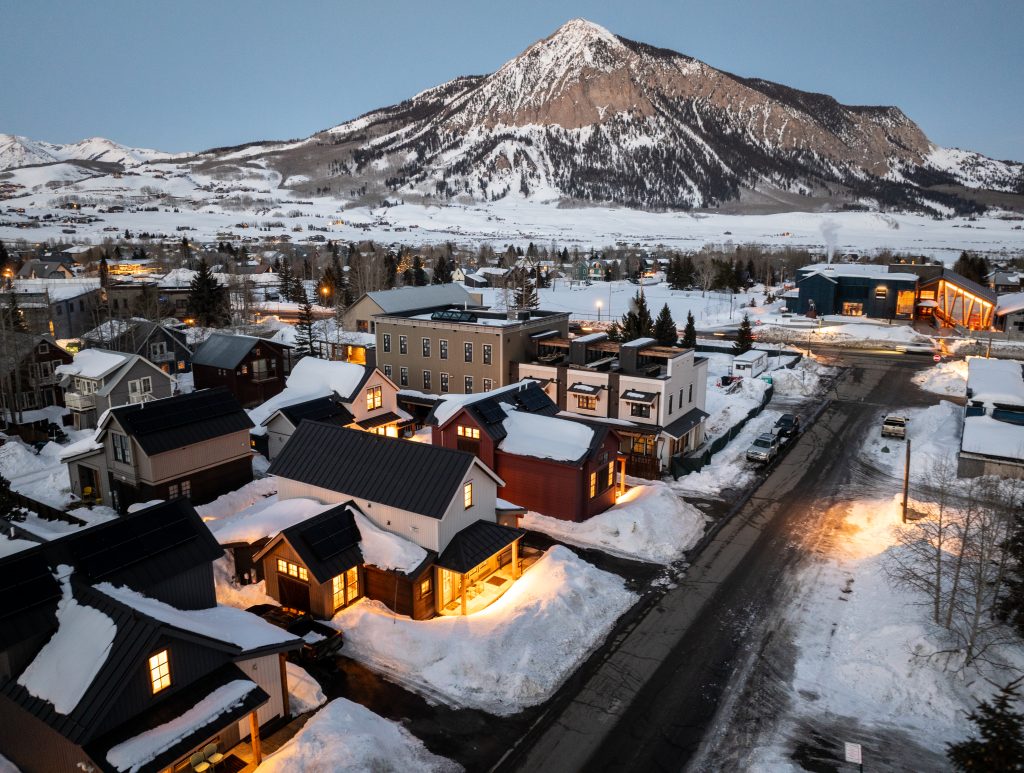
Crested Butte’s Victorian-era town core and surrounding peaks define one of Colorado’s most constrained and desirable resort markets
2026 Economic Outlook
- Epic Pass inclusion driving record Vail Resorts skier visits
- Mountain biking infrastructure expanding, lengthening summer season
- Remote work migration permanently increasing full-time population
- Gunnison-Crested Butte Airport expanding seasonal flight options
- Workforce housing shortage intensifying, supporting long-term rental premiums
Investment Climate
Crested Butte is a two-season STR market with meaningful long-term appreciation characteristics. The investment environment rewards investors who understand the STR licensing landscape, property management quality, and the seasonal revenue distribution that defines returns here. Key investor characteristics for success:
- STR license awareness as availability and cap rules can make or break a deal’s returns
- Seasonal cash flow modeling with realistic shoulder season occupancy below 20%
- Property management selection as local management quality directly drives STR income
- Long-term appreciation thesis given supply constraints and growing destination status
- Personal use optimization balancing owner enjoyment with peak revenue weeks
Colorado’s landlord-friendly statewide framework, combined with Crested Butte’s relatively pragmatic local STR regulations (compared to resort markets like Steamboat or Breckenridge), creates a workable environment for investors. The primary risks are seasonal revenue concentration, high HOA fees at ski base properties, and the occasional STR license cap changes that can affect non-owner-occupied properties.
Historical Performance
| Period | Market Driver | Avg Annual Appreciation | Key Event |
|---|---|---|---|
| 2010-2015 | Post-recession recovery, resort market rebound | 4-6% | Vail Resorts acquires CBMR, Epic Pass integration |
| 2016-2019 | STR platform growth, summer tourism surge | 7-10% | Airbnb and VRBO adoption drives STR income discovery |
| 2020-2022 | Pandemic migration, remote work, mountain lifestyle demand | 18-28% | Record transactions, inventory hits historic lows |
| 2023-2024 | Rate normalization, volume pullback | 3-6% | Transaction volume drops but prices hold, inventory remains thin |
| 2025-2026 | Rate stabilization, continued migration, summer season growth | 8-12% (projected) | New direct flight routes increasing visitor access |
Crested Butte’s 15-year appreciation track record of 8-10% annually places it among Colorado’s top-performing resort markets. A $500,000 property purchased in 2010 would be worth approximately $1.4-1.7 million today. The pandemic-era spike compressed a decade of appreciation into two years, and the market has since stabilized at more sustainable growth rates driven by structural supply constraints rather than speculative demand.
Demand Drivers
- Epic Pass Network – Vail Resorts ownership brings millions of existing Epic Pass holders into Crested Butte’s potential visitor pool, driving STR demand
- Two-Season Tourism – Ski season and summer wildflower/biking/festival season both generate strong STR revenue, unlike single-season resorts
- Remote Work Migration – High-income professionals permanently relocating, converting former second home inventory to primary residences and reducing available supply
- Geographic Supply Constraint – Surrounded by Gunnison National Forest and wilderness on all sides, with no meaningful new development land available in or near town
- Workforce Housing Crisis – Severe shortage of long-term rental housing for resort workers supports both long-term rental demand and STR premiums
- Authenticity Premium – Crested Butte’s preserved Victorian character and anti-chain culture attract buyers willing to pay a premium over more developed resort markets
📚 New to real estate investing? Master the fundamentals with our professional course Learn more →
2. Neighborhood Hotspots
Crested Butte Investment Neighborhood Map
Interactive map of Crested Butte’s investment neighborhoods. Green stars show top hotspots, blue circles mark established markets, and orange circles highlight emerging areas.
Core Investment Neighborhoods
Detailed Submarket Analysis: Crested Butte Area
| Area | Price Range | Cap Rate | Growth Drivers | Best Strategy |
|---|---|---|---|---|
| Mt. CB Ski Base (ski-in/ski-out) | $750K-$2.5M | 5.5-7.5% (STR) | Epic Pass, ski access, premium daily rates | Maximum STR yield, active management |
| Historic Town Core | $900K-$3M+ | 4.5-6.0% (STR) | Walkability, authenticity, festival demand | Appreciation + STR, long-term hold |
| Skyland | $1.2M-$5M+ | 4.0-5.5% (STR) | Golf, luxury buyer base, river access | Luxury STR, high net worth tenants |
| Prospect | $850K-$1.8M | 4.5-6.0% (STR) | Modern construction, trail access, growing demand | Family STR, remote work buyer appeal |
| Gothic Road Corridor | $800K-$3M+ | 3.5-5.0% (STR) | Privacy, river, unique assets, RMBL proximity | Niche luxury STR, nature-focused renters |
| Crested Butte South | $450K-$850K | 5.0-6.5% | Workforce housing demand, affordability, Gunnison County STR rules | Best entry, long-term rental, balanced STR |
| Almont / Gunnison Corridor | $350K-$700K | 5.5-7.5% (STR) | Blue Mesa Reservoir, fishing, Gunnison proximity | Affordable STR, outdoor recreation angle |
Expert Insight: “The most overlooked opportunity in Crested Butte right now is the ski-base condo market at Mount Crested Butte. A lot of buyers focus on the historic town core for the character play, but the condo units within 200 yards of the base lift are generating $90,000-$130,000 in annual STR gross revenue and appreciating just as fast. The HOA fees are real, but the income more than covers them, and you get a Vail Resorts-managed resort amenity package without building it yourself. That combination is hard to find anywhere else in Colorado at this price point.” – Local CB Investment Broker
3. Property Types
| Investment Goal | Best Property Type | Best Area | Minimum Capital |
|---|---|---|---|
| Maximum STR Yield | Ski-in/ski-out condo | Mount Crested Butte base | $225,000+ |
| Maximum Appreciation | Victorian SFH | Historic town core | $300,000+ |
| Best Cash Flow Entry | Townhome or SFH | Crested Butte South | $120,000+ |
| Lowest Management | Long-term rental SFH | CB South / Gunnison | $120,000+ |
Don’t guess the costs. Our Complete Renovation & Remodeling Cost Guide covers 400+ pages of project-by-project breakdowns with real contractor pricing ranges.
4. Cost Analysis
Acquisition Cost Breakdown (Crested Butte)
| Expense Item | Typical Cost | Example ($950,000 Condo) | Notes |
|---|---|---|---|
| Down Payment | 25% (investment) | $237,500 | Standard for investment/second home in Colorado |
| Closing Costs | 2-3% of price | $19,000-$28,500 | Title, lender, recording; Colorado buyers typically pay their own closing costs |
| Inspection | $500-$900 | $650 | Altitude-specific issues: roof snow load, freeze protection, radon |
| Radon Testing | $150-$300 | $200 | Colorado has elevated radon levels; mitigation costs $800-$2,500 |
| HOA Reserve Review | $200-$500 | $300 | Critical for ski base condos; underfunded reserves = future special assessments |
| STR Setup (furniture, linens) | $15,000-$50,000 | $25,000 | Full STR-ready furnishing for guest expectations at this price point |
| STR License Fee | $200-$500/year | $300 | Town of CB and Mt. CB both require annual license; verify availability pre-purchase |
| Reserves (6 months) | 6 months expenses | $20,000-$30,000 | Include HOA fees, mortgage, and management during shoulder seasons |
| TOTAL MINIMUM ENTRY | ~32-38% of value | $302,950-$361,950 | Substantial capital required; STR setup adds meaningful upfront cost |
Sample Cash Flow Analysis: Mount Crested Butte Ski-Base Condo (STR)
| Item | Monthly Avg | Annual | Notes |
|---|---|---|---|
| Ski Season Revenue (Dec-Mar, 4 months) | $12,500 | $50,000 | $600 avg nightly, 70% occupancy, 30 nights/month |
| Summer Peak Revenue (Jun-Aug, 3 months) | $9,000 | $27,000 | $450 avg nightly, 65% occupancy, arts festival premium |
| Shoulder Season Revenue (Sep, Nov, May) | $2,500 | $7,500 | $300 avg nightly, 25% occupancy – very slow |
| Owner Use / Blocked (2 months) | $0 | $0 | Typical owner blocking for personal use (April, October) |
| Gross STR Revenue | $7,042 | $84,500 | |
| Property Management (25%) | -$1,760 | -$21,125 | Resort market management commands 20-30%; includes bookings, cleaning coordination |
| HOA Fees | -$1,200 | -$14,400 | Ski base condo HOA; includes amenities, exterior, snow removal |
| Property Taxes | -$500 | -$6,000 | ~0.6% of $950K assessed value (Gunnison County) |
| Insurance (landlord/STR rider) | -$250 | -$3,000 | STR-specific policy or rider required; standard homeowner’s insufficient |
| Supplies, Maintenance, Repairs | -$400 | -$4,800 | Linens replacement, consumables, minor repairs; STR wear is significant |
| Net Operating Income | $2,931 | $35,175 | Before mortgage |
| Mortgage ($950K, 25% down, 7.0%, 30yr) | -$4,762 | -$57,144 | Second home/investment rate on $712,500 loan |
| CASH FLOW | -$1,831 | -$21,969 | Manageable negative carry offset by appreciation and owner enjoyment |
| Cap Rate (STR basis) | 3.70% | NOI / Purchase Price | |
| Total Return (10% appreciation) | ~30% | Including equity, appreciation on $950K, principal paydown |
This analysis reflects the typical Crested Butte STR investor profile: modest negative cash flow offset by strong appreciation and significant personal enjoyment value. Investors who block fewer weeks for personal use or who achieve higher occupancy through premium management can approach cash flow breakeven. The two-season revenue concentration (ski and summer) means a single week of peak bookings in February can equal two months of shoulder season revenue combined.
Expert Insight: “The investors making the best returns in Crested Butte right now are the ones who bought ski-base condos in 2019-2020 with strong STR licenses in place and have ridden both the appreciation wave and the STR revenue growth simultaneously. For new buyers in 2026, the math is tighter but the structural case remains: you are buying into one of fewer than 10 authentic ski resort towns in the entire United States that still has genuine character. That scarcity compounds over time in ways that spreadsheets cannot fully capture.” – Gunnison Valley Real Estate Investor
5. Legal Framework
⚠️ Critical STR License Notice for Crested Butte
Both the Town of Crested Butte and the Town of Mount Crested Butte maintain short-term rental licensing systems. The Town of Crested Butte caps non-owner-occupied STR licenses, and license availability changes over time. Always verify current license availability and cap status directly with the relevant municipality before making a purchase decision. A property without an active STR license that is subject to a cap may be unable to generate STR income, fundamentally changing the investment thesis. This is the single most important regulatory due diligence item in this market.
Jurisdiction-Specific Regulations
Crested Butte spans three regulatory jurisdictions with different rules:
- Town of Crested Butte: Historic town core. STR licenses required annually. Non-owner-occupied licenses are capped. Noise ordinances strictly enforced. Good neighbor policy required in STR applications.
- Town of Mount Crested Butte: Ski resort base area. More permissive STR environment for condominium properties within resort zones. STR licenses required but cap rules are less restrictive for resort-zoned properties.
- Gunnison County: Governs all properties outside town limits including Crested Butte South, Gothic Road, and Almont/Gunnison corridor. Separate STR licensing with generally more accessible license availability.
- Colorado State Framework: Colorado has no rent control and no just cause eviction requirement for standard lease terminations. Standard Colorado notice periods apply: 10-day notice for non-payment, 3-day notice for lease violations, 21-day notice for general termination with reason.
- HOA Rules: Many ski base and resort properties have HOA rules that specifically govern STR operations. Always review HOA CC&Rs for STR restrictions, pet policies, parking rules, and noise requirements that may be stricter than municipal code.
STR Compliance Best Practices
- License Verification: Contact the Town of CB, Town of Mt. CB, or Gunnison County directly before closing to confirm STR license transferability and availability.
- Good Neighbor Policy: Post local contact number, noise rules, parking limits, and trash procedures in all listings and inside the property. Required and actively enforced.
- Sales Tax Collection: Colorado requires collection and remittance of state, county, and municipal sales tax on STR income. Most platforms (Airbnb, VRBO) collect automatically, but verify for direct bookings.
- Lodging Tax: Gunnison County and both municipalities collect lodging/accommodations tax. Confirm registration with all applicable taxing authorities.
- Insurance: Standard homeowner’s policies do not cover commercial STR activity. Obtain STR-specific coverage or a commercial hospitality rider. Umbrella policy strongly recommended.
- Septic System Compliance: Properties outside town limits on septic must comply with Gunnison County wastewater regulations. STR guest loading can trigger required septic upgrades.
Key Regulatory Contacts
- Town of Crested Butte: CrestedButteColorado.gov
- Town of Mount Crested Butte: MtCrestedButte.com
- Gunnison County: GunnisonCounty.org
- Colorado DORA (Real Estate): DORA.Colorado.gov
| Regulation Area | Town of Crested Butte | Mount Crested Butte | Gunnison County |
|---|---|---|---|
| STR License | Required, annual, non-owner cap | Required, annual, resort zone more permissive | Required, annual, most accessible |
| Eviction (Colorado) | 10-day notice non-payment | 10-day notice non-payment | 10-day notice non-payment |
| Rent Control | None (Colorado prohibition) | None | None |
| Sales / Lodging Tax | State + county + municipal | State + county + municipal | State + county only |
| Property Tax Rate | ~0.55-0.70% (Gunnison County) | ~0.55-0.70% (Gunnison County) | ~0.55-0.70% |
| HOA Jurisdiction | Varies by development | Strong HOA presence at ski base | Varies; often no HOA for SFH |
6. Step-by-Step Crested Butte Investment Playbook
Define Your Crested Butte Strategy
Crested Butte demands clarity on your investment thesis before you look at a single property. The market is small, competitive, and seasonal. The three realistic strategies:
Pure STR Income + Appreciation
Buy a ski-base condo or town core property with an active STR license. Run it as a professional STR with a quality local property manager. Accept modest negative carry in exchange for appreciation and STR revenue that partially offsets costs.
Second Home + STR Offset
Buy your dream mountain home and STR it when not in use. The goal is not maximum STR income but offsetting enough carrying cost to make ownership sustainable. Owner use during prime weeks is factored in from the start.
Workforce Housing Cash Flow
Buy in Crested Butte South or Gunnison corridor. Long-term rent to resort workers, healthcare employees, or Western State University staff. Near-zero vacancy, minimal management burden, best cash flow metrics in the area. Less STR complexity.
Niche Outdoor Recreation STR
Buy a fishing cabin or outdoor-oriented property in the Almont/Gunnison corridor. Target the Gold Medal fishing, Blue Mesa Reservoir, and hunt camp visitor base. Most affordable entry into the broader market. Gunnison County STR licensing most accessible.
Build Your Crested Butte Team
This is a small, relationship-driven market. Your team members will likely know each other. Choose carefully, as reputation matters here.
- Local Crested Butte Real Estate Agent: Must have specific investor transaction experience in the Gunnison Valley. Ask for their last 5 investor transactions with actual STR revenue data. The market is small enough that agents know which properties have strong STR histories.
- STR Property Manager: Non-negotiable for non-local investors. Interview specifically about their Crested Butte marketing reach, shoulder season strategies, and average occupancy rates for comparable properties. Ask for actual client revenue statements, not projections.
- Colorado Real Estate Attorney: For STR license review, HOA document analysis, and entity structuring. Many Crested Butte purchases benefit from LLC ownership for liability protection given the STR use.
- Real Estate CPA (Colorado Mountain Market Experience): Depreciation strategies, STR income treatment (passive vs. active), and the Colorado-specific tax implications of resort property ownership are distinct from other markets.
- Local Inspector with Altitude Experience: Standard inspectors from Denver or Colorado Springs may miss altitude-specific issues: freeze pipe vulnerability, snow load on structures, septic system sizing for STR guest loads.
Crested Butte-Specific Due Diligence
Physical Due Diligence
- Radon testing mandatory (Colorado mountain areas frequently elevated)
- Roof snow load certification (Crested Butte receives 300+ inches annually)
- Freeze protection systems: heat tape, pipe insulation, thermostat-controlled heating minimums
- Septic system inspection and capacity review (for properties outside town sewer)
- Water source verification (well vs. municipal; well yield testing critical)
- Foundation integrity on sloped lots (common in mountain terrain)
- Wildfire risk assessment and defensible space compliance
STR and Regulatory Due Diligence
- Confirm STR license status: active, transferable, and not subject to cap waitlist
- Review actual STR revenue history (2-3 years minimum) from listing platforms
- HOA CC&R review for STR restrictions, rental caps, or pending rule changes
- HOA financial health: reserve fund adequacy, any pending special assessments
- Verify sales tax and lodging tax registration requirements for new owner
- Confirm zoning permits intended use (some parcels have residential-only restrictions)
- Review any existing long-term tenant obligations if property is currently rented
Competing and Succeeding in the Crested Butte Market
Crested Butte’s market is small and moves fast when good properties appear. Strategies that work for out-of-area investors:
- Pre-approval for jumbo financing: Most CB transactions require jumbo loans. Having a full pre-approval letter (not just pre-qualification) from a lender familiar with Colorado resort property is essential before offering.
- Agent relationship building: In a market with fewer than 200 annual transactions, your agent’s relationships are your pipeline. Top local agents often know of properties before they list. Commit to one agent who is actively investing their relationship capital on your behalf.
- Flexibility on inspection contingencies: Competitive offers in CB frequently involve pre-inspections or compressed inspection timelines. Budget $700-$1,000 for an inspection before offer on serious prospects.
- STR license due diligence as a deal point: When making an offer on a property with an active STR license, ensure the purchase contract clearly addresses license transferability and what happens if the license is not transferable to you as a new owner.
- Off-season purchasing: October-November is the slowest period in Crested Butte for both tourism and real estate. Sellers motivated to transact before ski season often accept better terms during this window.
7. Financing Options for Crested Butte
| Loan Type | Down Payment | Rate Premium | Best For | Crested Butte Note |
|---|---|---|---|---|
| Second Home Conventional | 10-20% | +0.25-0.5% | Owner who will use property 14+ days/year | Best rates for CB buyers; STR income can be used for qualification under second home rules |
| Investment Property Conventional | 25% | +0.5-0.75% | Pure investment with no personal use | Higher down, higher rate than second home; most CB investors qualify as second home |
| Jumbo Loan | 20-25% | +0.5-1.0% | Properties above $806,500 conforming limit | Most CB transactions above conforming; use lenders experienced with Colorado resort markets |
| DSCR Loan | 25-30% | +1.5-2.5% | Self-employed or complex income buyers | Some STR-focused DSCR lenders use projected STR income for coverage; verify underwriting approach |
| Portfolio / Bank Statement | 20-30% | +1-2% | Business owners, self-employed, high net worth | Several Colorado-based portfolio lenders understand resort market; good option for complex income |
| Cash / 1031 Exchange | 100% | N/A | Competitive offers, 1031 exchange buyers | CB is a frequent 1031 exchange destination; cash offers win in competitive situations |
| HELOC on Primary Residence | Varies | Prime + 0.5-1% | Buyers with significant primary home equity | Many CB buyers (especially Front Range) leverage primary home equity to fund down payment |
Crested Butte Financing Reality: The most important financing decision in this market is whether to classify your purchase as a second home or investment property. Second home classification requires that you personally use the property at least 14 days per year (or 10% of rented days, whichever is greater) and gets significantly better rates and lower down payment requirements. Most Crested Butte buyers with any personal use plans qualify as second home buyers. Work with a lender who specifically understands Colorado resort property classification, as misclassification in either direction creates compliance issues and unnecessary cost.
8. Frequently Asked Questions

Knowledge Quiz: Crested Butte Real Estate Investment
Open Quiz
5 quick questions on what you just learned about Crested Butte investing
1) What is the single most important regulatory due diligence item before buying a Crested Butte STR property?
Answer: B
The guide explicitly identifies STR license verification as the most critical pre-purchase step. Both the Town of Crested Butte and Mount Crested Butte have licensing systems, and non-owner-occupied licenses may be capped. A property without a transferable STR license fundamentally changes the investment thesis. Always contact the municipality directly, not just the listing agent.
2) Which season generates the most STR income in Crested Butte, and what percentage of annual revenue does it represent?
Answer: C
Ski season (December through March) generates 45-55% of annual STR revenue in Crested Butte. Summer peak (June-August) generates 30-40%. The shoulder seasons of April-May and November are extremely slow, with occupancy often below 20%. Holiday ski weeks alone (Christmas, New Year’s, Presidents’ Day) can each account for 8-12% of total annual revenue.
3) What financing classification delivers the best rates for most Crested Butte buyers, and what is the personal use requirement?
Answer: A
Second home loan classification delivers the best rates (lower than investment property) and lower down payment requirements (10-20% vs. 25%). The IRS/lender requirement is personal use of at least 14 days per year or 10% of rented days, whichever is greater. Most Crested Butte buyers with any personal use intent qualify, making second home classification the standard for this market.
4) Which area offers the most affordable entry point in the Crested Butte market and primarily serves what demand driver?
Answer: D
Crested Butte South, located 4 miles south of the historic town, offers the most affordable entry point at $450,000-$850,000 for single-family homes and townhomes. It serves primarily workforce housing demand from resort workers, healthcare employees, and local service staff who cannot afford to live in the town core. Long-term rental vacancy is near zero due to the severe workforce housing shortage in the Gunnison Valley.
5) What is the guide’s key warning about HOA fees at ski base condo developments in Mount Crested Butte?
Answer: B
The guide warns that while high HOA fees at ski base developments are offset by premium amenities and nightly rates, investors must review the HOA reserve fund adequacy and watch for pending special assessments. A single large special assessment (common in aging mountain resort buildings facing roof, elevator, or mechanical replacements) can cost $20,000-$50,000+ per unit and eliminate an entire year’s STR profit. Request the last 3 years of HOA financials and the most recent reserve study before any ski base condo purchase.
Work With a Local Expert in Crested Butte
We are building a verified network of real estate professionals across every market we cover.

About Our Expert Network
We are finalizing partnerships with verified real estate professionals across every market featured on Builds and Buys. Each expert in our network is selected for their hands-on investment experience, local market knowledge, and commitment to helping buyers and investors make sound decisions.
Our local specialists offer:
- Proven experience with resort investment and STR income properties
- Deep knowledge of local STR licensing, HOA dynamics, and seasonal revenue patterns
- Guidance on financing, entity structure, and STR compliance
- Access to off-market and pre-market opportunities in this small, relationship-driven market
- Full transaction support from search through closing
- Property management referrals with verified Crested Butte STR track records
Services Covered
- Resort property sourcing and acquisition
- STR revenue underwriting and analysis
- Buyer representation
- Market comparables and valuations
- STR and long-term rental strategy
- Renovation and value-add guidance
- Legal and title referrals
- Financing and lender connections
- STR property management referrals
- Insurance and inspection referrals
- 1031 exchange coordination
- Exit strategy planning
Get Connected or Join Our Network
Looking for a local expert to help with your Crested Butte investment? Reach out and we will connect you with the right professional for your strategy.
Are you a Crested Butte or Gunnison Valley real estate professional with resort investment experience? We are expanding our network of verified local experts.
Contact us at support@buildsandbuys.com
Find Specialized Crested Butte Real Estate Professionals
Ready to Invest in Crested Butte?
Crested Butte is not a market for passive investors expecting easy returns. High entry costs, STR licensing complexity, meaningful seasonal revenue swings, and the operational demands of resort property management require genuine engagement. But for investors who understand the market, secure the right license, work with quality local property managers, and commit to a long-term hold, Crested Butte’s geographic supply constraints, authentic character, and growing two-season tourism base create a structural investment case that few Colorado mountain markets can match at its current price point.
Continue Your Research
Colorado State Guide
See how Crested Butte compares to Denver, Boulder, Vail, and other Colorado markets.
Step-by-Step Invest
Complete framework for building a real estate investment strategy from scratch.
144-Lesson Course
University-level real estate education covering financing, law, strategy, and management.
For further guidance, explore our State-by-State Investor guides, browse our expert articles, or follow our Step-by-Step Investment Guide.



