
Loveland Real Estate Investment Guide For 2026
A comprehensive resource for investors targeting Northern Colorado’s most balanced mid-market, where Loveland’s unique arts and sculpture identity, growing healthcare sector, outdoor recreation appeal, and position between Fort Collins and Denver create a durable family and professional rental market at price points 10 to 15% below its neighbor to the north
Quick answers: Top 5 most searched Loveland investment questions ▼
Migration data: Where people are moving from to Loveland ▼
In This Guide
Click on any section to navigate directly to that content
1. Loveland Market Overview
Market Fundamentals
Loveland is one of Colorado’s most overlooked investment markets, often dismissed as simply the smaller city between Fort Collins and Denver. That characterization misses what makes Loveland genuinely interesting: it has developed a distinct identity that attracts a quality tenant demographic entirely independent of its neighbors. The Sweetheart City’s arts economy, the outdoor recreation infrastructure centered on Horsetooth Reservoir, UCHealth’s growing medical campus, and the Thompson School District’s reputation have collectively created a city that draws and retains families and professionals who specifically choose Loveland, not just those who could not afford Fort Collins.
Key fundamentals defining Loveland’s 2026 investment case:
- Population: 80,000+ city proper, within the 370,000+ Larimer County metro
- Major Employers: UCHealth Medical Center, Larimer County government, Thompson School District, Loveland city government, Agilent Technologies, Woodward, retail and healthcare sector
- Median Household Income: $68,000 and growing
- Vacancy Rate: Under 4% citywide for quality units
- Position: 15 miles south of Fort Collins, 45 miles north of Denver on I-25
- Key Amenity: Horsetooth Reservoir immediately west, Rocky Mountain National Park 35 miles via US 34
Loveland’s investment thesis is fundamentally about being the right-sized city in the right location. It is large enough to have genuine economic diversity and quality amenities, but small enough that its arts and outdoor identity remains authentic rather than commercialized. That authenticity attracts a tenant demographic that values community and stability, producing lower turnover and longer tenancies than comparable Front Range markets.
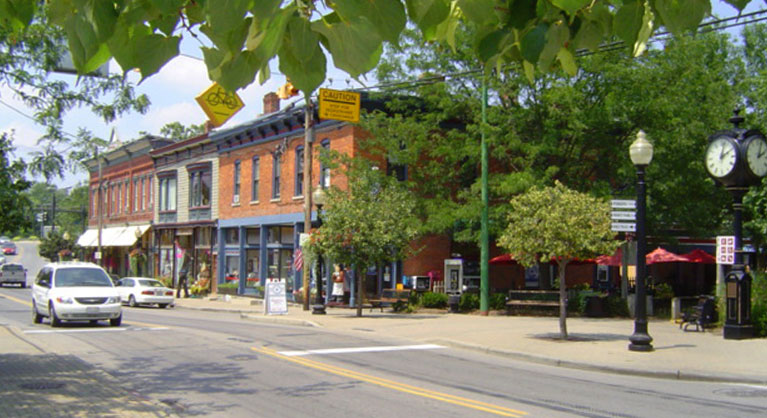
Loveland’s position between Fort Collins and Denver, combined with its arts and outdoor identity, creates a durable professional and family rental market
2026 Economic Outlook
- UCHealth Medical Center Loveland campus continuing to expand, adding healthcare employment
- Remote worker migration from Denver and Front Range continuing as Loveland’s affordability advantage versus Fort Collins grows
- Downtown revitalization investment with new restaurants, galleries, and mixed-use development
- Larimer County growth management policies limiting new supply, supporting appreciation trajectory
- US 34 corridor to Rocky Mountain National Park improving as Estes Park gateway strengthens tourism
The Loveland Investment Case: Honest Assessment
Structural Advantages
- 10 to 15% price discount versus Fort Collins for comparable quality with similar appreciation trajectory
- Family and professional tenant base produces lowest management intensity in Northern Colorado
- Healthcare employment anchor at UCHealth creates recession-resistant rental demand
- Larimer County landlord regulations are the same as Fort Collins, more favorable than Denver
- Arts and outdoor identity differentiates Loveland from purely functional suburban markets
- Fort Collins overflow creates sustained buyer and renter demand that is permanent and growing
- No rental license requirement (unlike Fort Collins), reducing administrative burden
Risks to Underwrite Honestly
- No university in Loveland means no student rental demand or the income premium that comes with it
- Entry prices of $440,000 to $600,000 still produce negative cash flow at standard investment financing
- Appreciation is strong but typically 1 to 2 percentage points below Fort Collins annually due to absence of CSU premium
- Without a dominant single demand driver like CSU, Loveland’s rental market is more distributed and slightly more sensitive to economic conditions
- Front Range hail risk applies equally to Loveland as to Fort Collins
Historical Performance
| Period | Market Driver | Avg Annual Appreciation | Key Event |
|---|---|---|---|
| 2012-2017 | Fort Collins spillover, post-recession recovery, UCHealth growth | 5-8% | Loveland emerges as Northern Colorado’s quality alternative to Fort Collins |
| 2017-2020 | Denver overflow, arts economy growth, downtown revitalization | 6-10% | Loveland’s arts and outdoor identity drives national recognition |
| 2020-2022 | Remote work migration, pandemic demand | 14-20% | Loveland receives significant remote worker migration from Denver and Front Range |
| 2022-2024 | Rate shock, normalization | 2-4% | Market cools but family rental demand remains strong; low vacancy maintained |
| 2025-2026 | Rate stabilization, UCHealth expansion, Fort Collins overflow | 6-10% (projected) | Remote worker base maturing; affordability advantage vs Fort Collins driving sustained demand |
Loveland vs Northern Colorado Market Comparison
| Market | Median Price | Cap Rate | Primary Tenant Type | Management Intensity |
|---|---|---|---|---|
| Loveland | $490,000 | 4.5-6.0% | Professional families, healthcare workers | Low to medium |
| Fort Collins | $550,000 | 4.3-5.8% | CSU students, professionals, remote workers | Medium to high (student) |
| Greeley | $390,000 | 5.5-7.5% | Working class, students, oil workers | Medium to high |
| Windsor / Timnath | $520,000 | 4.8-6.0% | New construction families, commuters | Low (newer stock) |
| Longmont | $510,000 | 4.5-5.8% | Boulder overflow, tech workers | Low to medium |
Loveland’s competitive position is clear in this comparison: it offers Fort Collins-comparable appreciation, better cap rates than Fort Collins due to the price discount, lower management intensity than CSU student rentals or Greeley working-class properties, and a family/professional tenant profile that produces the longest average tenancies in Northern Colorado. For investors who want to minimize time managing properties while maintaining strong appreciation exposure, Loveland is Northern Colorado’s most efficient market.
📚 New to real estate investing? Master the fundamentals with our professional course Learn more →
2. Neighborhood Hotspots
Loveland Investment Neighborhood Map
Interactive map of Loveland’s investment neighborhoods. Green stars show top hotspots, blue circles mark established markets, and orange circles highlight emerging and value-add areas.
Core Investment Neighborhoods
Detailed Submarket Analysis: Loveland Neighborhoods
| Neighborhood | Price Range | Cap Rate | Growth Drivers | Best Strategy |
|---|---|---|---|---|
| West Loveland / Benson Sculpture | $500K-$720K | 4.5-5.8% | Benson Sculpture, Horseshoe Lake, foothills, remote workers | Long term hold, premium professional tenants |
| SE Loveland / UCHealth | $460K-$650K | 4.8-6.0% | UCHealth campus, healthcare workers, stable employment | Healthcare worker rental, stable income hold |
| Downtown / Arts District | $430K-$620K | 5.0-6.5% | Arts district, revitalization, walkability, young professionals | Value-add, appreciation play, remote worker tenants |
| North Loveland | $440K-$620K | 4.8-6.0% | Fort Collins commuter, family demand, established neighborhoods | Family buy and hold, commuter rentals |
| East Loveland | $420K-$590K | 5.0-6.2% | Affordable entry, family demand, I-25 access | Cash flow relative to Loveland median, family focus |
| South Loveland / Centerra | $470K-$680K | 4.8-6.0% | Centerra commercial, newer construction, family demand | Newer construction, low maintenance, family rental |
| Mariana Butte / SW | $540K-$850K | 4.2-5.5% | Golf course, foothills views, executive tenants | Executive rental, premium appreciation hold |
| US 34 Gateway Corridor | $480K-$850K | 5-10% (STR) | RMNP gateway, mountain access, STR demand | STR with RMNP demand, rural residential |
Expert Insight: “The mistake investors make with Loveland is comparing it only to Fort Collins and concluding it is ‘just a smaller version.’ Loveland has its own identity that produces a fundamentally different tenant. The healthcare worker renting near UCHealth has nothing to do with CSU demand. The remote worker in West Loveland chose Loveland specifically for the Benson Sculpture District and Horseshoe Lake access, not because it is a cheaper Fort Collins. These tenants are mission-driven in their choice of Loveland, which makes them sticky in ways that Fort Collins’s transient student population is not. My Loveland properties have an average tenancy over 3 years. My Fort Collins properties average 11 months.” – Larimer County investor with properties in both markets
3. Property Types
| Investment Goal | Best Property Type | Best Neighborhood | Minimum Capital |
|---|---|---|---|
| Lowest Management Burden | Healthcare worker SFH near UCHealth | SE Loveland, UCHealth corridor | $115,000-$165,000 |
| Best Long-Term Appreciation | West Loveland SFH near amenity cluster | West Loveland, Benson Sculpture area | $125,000-$180,000 |
| Best Value-Add Upside | Downtown older stock renovation | Downtown / Arts District | $110,000-$160,000 |
| Lowest Capital Entry | FHA duplex house hack | East or central Loveland | $20,000-$25,000 (FHA) |
| Highest Income Ceiling | US 34 STR near RMNP | US 34 gateway corridor | $125,000-$215,000 |
Loveland renovation costs run at Denver-comparable rates. Our Complete Renovation & Remodeling Cost Guide covers 400+ pages of project-by-project breakdowns to help you budget Downtown arts district value-add renovations accurately.
4. Cost Analysis
Acquisition Cost Breakdown (Loveland Single Family)
| Expense Item | Typical Cost | Example ($490,000 Property) | Notes |
|---|---|---|---|
| Down Payment | 20-25% | $98,000-$122,500 | 25% brings cash flow closer to neutral vs 20% |
| Closing Costs | 2-3% | $9,800-$14,700 | Title, escrow, lender fees, Larimer County recording |
| General Inspection | $400-$550 | $450 | Include hail damage inspection; Front Range hail is a real and frequent risk |
| Radon Test | $150-$250 | $180 | Larimer County has moderate radon; always test |
| Note: No Rental License Required | $0 | $0 | Unlike Fort Collins, Loveland does not require a city rental license for standard single-family properties. Confirm current policy. |
| Initial Repairs | 0-7% | $0-$34,300 | Older central Loveland stock may need HVAC, roof, or cosmetic updates |
| Reserves (6 months) | $9,000-$14,000 | $11,000 | Lower reserves needed than Fort Collins due to better cash flow characteristics |
| TOTAL MINIMUM ENTRY | ~25-31% | $118,430-$182,430 | 10 to 15% below Fort Collins entry cost for comparable investment |
Cash Flow Analysis: UCHealth Corridor Family Rental (3BR, 25% Down)
| Item | Monthly | Annual | Notes |
|---|---|---|---|
| Gross Rent | $2,200 | $26,400 | 3BR SE Loveland near UCHealth. $510,000 purchase price |
| Less Vacancy (4%) | -$88 | -$1,056 | Healthcare worker tenants have extremely low vacancy; 4% is conservative |
| Property Taxes | -$361 | -$4,335 | ~0.85% of $510K; Larimer County |
| Insurance | -$130 | -$1,560 | Hail endorsement recommended; Front Range risk |
| Property Management (9%) | -$191 | -$2,296 | Family rentals in Loveland have lighter PM requirements; 9% reflects this |
| Maintenance + CapEx (9%) | -$191 | -$2,296 | Lower than student or working-class rentals; professional tenants maintain properties |
| Net Operating Income | $1,239 | $14,857 | Cap rate: 2.91% on purchase price |
| Mortgage ($382,500, 25% down, 6.75%, 30yr) | -$2,481 | -$29,766 | Principal and interest |
| CASH FLOW (25% down) | -$1,242 | -$14,909 | Negative carry at 25% down; better than Fort Collins equivalent |
| Annual Appreciation (8%) | +$40,800 | 8% appreciation on $510,000 | |
| Total Return Year 1 | +$25,891 | Appreciation ($40,800) minus carry (-$14,909) = +$25,891 on ~$127,500 invested (20.3% total return) |
This example demonstrates Loveland’s total return math. Despite negative monthly carry, the 8% annual appreciation on a $510,000 property produces a $25,891 total return in year one on $127,500 invested, a 20.3% total return. Importantly, the monthly negative carry of $1,242 is meaningfully less than a comparable Fort Collins property ($1,370+ per month), making Loveland’s carry more manageable for investors with moderate income. As rents grow and the mortgage amortizes, the carry gap closes further each year.
Loveland vs Fort Collins: The Carry Advantage Quantified
| Metric | Loveland (SE, 3BR) | Fort Collins (Campus West, 4BR student) | Loveland Advantage |
|---|---|---|---|
| Purchase Price | $510,000 | $580,000 | $70,000 less capital required |
| 25% Down Payment | $127,500 | $145,000 | $17,500 less initial capital needed |
| Monthly Cash Flow | -$1,242 | -$1,370 | $128/month less negative carry |
| Annual Appreciation | $40,800 (8%) | $52,200 (9%) | Fort Collins $11,400 more appreciation |
| Annual Total Return | +$25,891 | +$35,774 | Fort Collins $9,883 more total return |
| Total Return on Capital | 20.3% | 24.7% | Fort Collins 4.4% higher return on capital |
| Management Intensity | Low (family tenants) | Medium-high (student management) | Loveland wins on time efficiency |
| Rental License Required | No | Yes ($150/yr) | Loveland lower compliance burden |
The comparison shows that Fort Collins produces about 4.4% higher total return on capital invested, but requires more capital, more management time, student tenant complexity, and city compliance overhead. Loveland’s 20.3% total return on capital, achieved with professional family tenants and minimal management burden, is a compelling alternative for investors who value their time alongside their capital. Many experienced investors hold both, using Fort Collins for its CSU-anchored appreciation ceiling and Loveland for its management efficiency and UCHealth stability.
Expert Insight: “If you are comparing Loveland to Fort Collins purely on spreadsheet metrics, Fort Collins wins. If you factor in the time you will spend managing student rentals, navigating the city’s rental license and inspection program, and dealing with summer vacancy, Loveland closes the gap dramatically. My Loveland properties average 31 months of tenancy per tenant. My Fort Collins properties average 9 months. The Fort Collins properties earn more per dollar invested, but my Loveland properties let me sleep better and spend fewer weekends on property management issues.” – Northern Colorado investor with 14 properties across both markets
5. Legal Framework
✅ Loveland: Larimer County Landlord Friendly Without Fort Collins Compliance Overhead
Loveland operates under Colorado state landlord-tenant law as part of Larimer County, with an important advantage over Fort Collins: Loveland does not have Fort Collins’s rental housing license requirement or city-administered rental inspection program. This meaningfully reduces the annual compliance burden for Loveland landlords versus their Fort Collins counterparts. There is no just cause eviction requirement, no first-in-time tenant selection rule, no mandatory source of income protection beyond Colorado state law, and no rent increase advance notice beyond the 21-day state requirement. Larimer County evictions typically complete in 30 to 45 days. Loveland is one of Northern Colorado’s most straightforward markets to operate in from a regulatory perspective.
Colorado State Law in Loveland
- Non-Payment Eviction: 10 day demand, then unlawful detainer. Larimer County typical timeline: 30 to 45 days. Loveland courts are efficient and less congested than Denver.
- Lease Violation: 3 day notice to cure, then unlawful detainer. Timeline: 25 to 40 days.
- End of Lease: 21 day written notice for month to month. No just cause required.
- Security Deposits: No statutory cap in Colorado. Must return within 60 days. Market standard in Loveland is one month’s rent.
- Rent Increases: 21 day notice. No rent control. No advance notice beyond state requirement.
- Habitability: Standard Colorado requirements. Loveland enforces minimum standards on complaint basis.
- Discrimination Protections: Standard federal and Colorado fair housing laws apply. No additional local protected classes in Loveland beyond Colorado law as of 2026.
Loveland Specific Considerations
- No City Rental License (unlike Fort Collins): Loveland does not currently require a city-issued rental license for single-family homes and most residential rental properties. This is a meaningful administrative advantage over Fort Collins. Confirm this remains current policy before purchasing, as city ordinances can change.
- Occupancy Limits: Loveland has occupancy limit ordinances similar to Fort Collins. Relevant primarily for anyone considering multi-bedroom rentals to unrelated adults. Confirm current limits if planning any non-standard occupancy arrangement.
- STR Regulations: Short-term rentals within Loveland city limits require a permit. Larimer County (unincorporated areas including US 34 corridor) has separate permit requirements. Confirm current rules before any STR acquisition.
- Hail Damage History: Colorado requires sellers to disclose known hail damage. Front Range hail is real and Loveland is within the primary Colorado hail risk corridor. Always inspect roof and check insurance claim history.
- Flood Zones: Some Loveland properties are near Big Thompson River and its tributaries. Check FEMA flood maps, particularly for properties near the river corridor. The 1976 Big Thompson flood is a historical reminder of the region’s flood risk.
Useful Loveland Resources
- Loveland City Planning: cityofloveland.org/planning
- Larimer County Assessor: larimer.gov/assessor
- Colorado Landlord Tenant Law: cobar.org/landlord-tenant
- Loveland Housing Authority: lha-co.org
| Regulation | Loveland | Fort Collins | Denver |
|---|---|---|---|
| Rental License | Not required (SFH) | Required, ~$150/yr | RRIO required |
| Rental Inspections | Complaint basis only | Periodic, scheduled | RRIO rolling cycle |
| Just Cause Eviction | Not required | Not required | Required |
| Eviction Timeline | 30-45 days | 30-45 days | 45-90 days |
| Rent Control | None | None | None (state preemption) |
| Compliance Burden | Lowest in Northern Colorado | Moderate | High |
⚠️ Big Thompson Flood History: Know Before You Buy Near the River
The 1976 Big Thompson Canyon flood killed 145 people and caused catastrophic property damage in the canyon and along the river corridor. While significant flood mitigation infrastructure has been built since, Loveland properties near the Big Thompson River and its tributaries carry meaningful flood risk. Always check FEMA flood zone designation for any property near the river or low-lying drainage areas. Flood insurance is required for federally mortgaged properties in Special Flood Hazard Areas. This is a Loveland-specific risk that Front Range investors from Denver often overlook. It is manageable and does not affect most Loveland properties, but is non-negotiable due diligence for any riverfront or drainage-adjacent property.
6. Step-by-Step Loveland Investment Playbook
Choose Your Loveland Strategy
Loveland’s investment profile is more homogeneous than Fort Collins or Greeley. Most successful Loveland investors are executing some variation of the same core strategy: family or professional tenant long-term hold with appreciation focus. Here are the primary variations:
Strategy A: UCHealth Healthcare Worker
Buy a 3 to 4 bedroom home within 10 minutes of UCHealth Medical Center. Target healthcare professionals specifically in your marketing. Accept 4.8% to 6.0% cap rate for the lowest vacancy and delinquency risk available in Northern Colorado. This is the sleep-well-at-night Loveland strategy.
Strategy B: West Loveland Premium Hold
Buy the best property you can afford in West Loveland near the Benson Sculpture Garden and Horseshoe Lake. Premium tenants, best appreciation in the market, lowest turnover in the city. Requires the most capital but produces Loveland’s strongest long-term total return.
Strategy C: Downtown Value-Add
Buy older downtown or arts district stock at a discount to west Loveland. Renovate to improve income and ARV. Hold for corridor revitalization appreciation as the arts and restaurant investment matures. Best return on renovation dollars in the Loveland market.
Strategy D: FHA House Hack
Buy a duplex in central or east Loveland with 3.5% FHA down payment. Live in one unit, rent the other to a healthcare worker or professional family at $1,700 to $2,100. Lowest capital entry into Northern Colorado real estate appreciation with the easiest tenant management profile.
Build Your Loveland Team
- Loveland Investment Agent: Loveland’s investor agent community is smaller than Fort Collins but includes professionals who specifically understand the UCHealth rental corridor, West Loveland premium properties, and Downtown revitalization dynamics. Ask for their last 5 to 10 investor transactions and whether they can provide current rental comp data for your target neighborhoods.
- Northern Colorado Property Manager: Many Fort Collins PMs also service Loveland. Ensure your PM understands that Loveland family rentals require a different approach than Fort Collins student rentals. Ask about their current vacancy rates for Loveland family properties specifically.
- UCHealth Hiring Network: A useful informal step is connecting with UCHealth HR or staffing offices to understand whether they maintain a recommended housing list or community resources. Some healthcare systems maintain informal housing connections for new staff relocating to the area, which can provide a direct pipeline to qualified tenants.
- Flood Zone Expert: For any property near the Big Thompson River corridor, engage a flood insurance specialist familiar with Larimer County flood risk before purchase. Flood insurance premiums vary enormously based on zone designation and elevation relative to base flood elevation.
- Hail Insurance Specialist: Front Range hail insurance is the same critical issue in Loveland as in Fort Collins. Confirm roof history and insurance availability before closing.
Loveland Specific Due Diligence
Physical Due Diligence
- Roof inspection with hail damage history check: Front Range hail is frequent and roof replacement can cost $15,000 to $25,000; check for existing damage and confirm insurance availability
- Radon test: Larimer County has moderate radon; always test
- FEMA flood zone verification for any property within 0.5 miles of Big Thompson River or tributaries
- Foundation inspection for older central Loveland properties; some have expansive soil issues
- HVAC age and efficiency for properties built before 1990
- Sewer scope for pre-1975 construction in older downtown neighborhoods
Market and Regulatory Due Diligence
- Confirm no rental license requirement applies to your specific property type and location in current Loveland city code
- Verify STR permit requirements if planning any short-term rental use on US 34 corridor or other properties
- Review any HOA restrictions on rental use for properties in newer Centerra or planned community developments
- Pull permit records for any unpermitted additions or garage conversions in older downtown properties
- Confirm flood insurance status and estimated premium for any Big Thompson River adjacent property before finalizing acquisition
Marketing to Loveland’s Best Tenants
Loveland’s best tenants (healthcare workers, senior professionals, established families) can be reached more efficiently with targeted marketing than broad consumer platforms.
- UCHealth staff channels: Connect with UCHealth HR or post in UCHealth staff community boards. New hires relocating from other markets are actively seeking housing and are highly qualified tenants. Monthly new-hire orientation at UCHealth is a potential channel.
- Thompson School District employee network: Teachers and administrators are another stable professional tenant class in Loveland. The school district occasionally shares housing resources with staff.
- Arts community channels: For downtown and arts district properties, marketing through Loveland’s gallery and arts community Facebook groups and local arts newsletters reaches the specific remote worker and creative professional demographic that downtown Loveland is increasingly attracting.
- Fort Collins refugee households: Families who have been priced out of Fort Collins and are actively looking for comparable quality in Loveland represent a significant and qualified demand pool. Marketing through Northern Colorado rental Facebook groups with positioning on Loveland’s affordability advantage versus Fort Collins reaches this audience.
7. Financing Options for Loveland
| Loan Type | Down Payment | Rate Premium | Best For | Loveland Note |
|---|---|---|---|---|
| FHA (House Hack) | 3.5% | Standard + MIP | Owner-occupied duplex | Best low-capital entry into Loveland. Duplexes in the $560,000 to $700,000 range qualify within FHA limits. $19,600 to $24,500 down payment for full market exposure. Slightly lower entry requirement than Fort Collins duplex equivalent. |
| Conventional Investment (25%) | 25% | +0.5-0.75% | Standard SFH investment | Most Loveland properties well within conforming limits. 25% recommended for better carry management. Loveland’s 10 to 15% price discount versus Fort Collins means lower absolute down payment requirement for comparable quality. |
| DSCR Loan | 20-25% | +1.5-2.5% | Self-employed or no income documentation | Loveland’s cap rates of 4.5 to 6.0% mean most standard properties do not qualify at 1.0x DSCR at current rates. Value-add properties post-renovation with 6.0%+ cap rates may qualify. Less viable than Grand Junction or Greeley for DSCR financing. |
| Portfolio Loan | 20-30% | +1-2% | Multiple properties, older construction | Local Larimer County banks and credit unions offer portfolio products. Useful for older downtown Loveland properties that may not pass conventional appraisal requirements. |
| Conventional (20%) | 20% | +0.5-0.75% | Value-add investors who want capital efficiency | 20% down on a $490,000 Loveland property requires $98,000 and produces approximately -$1,500/month carry. Manageable for investors with income above $85,000 and reserves. A 5-percentage point improvement over 25% down costs $24,500 in freed capital that can fund a second Loveland purchase faster. |
Loveland Financing Advantage Over Fort Collins: Loveland’s 10 to 15% price discount versus Fort Collins translates directly into lower capital requirements at every down payment tier. A 25% down payment on a $490,000 Loveland property requires $122,500 versus $137,500 for a comparable $550,000 Fort Collins property. That $15,000 difference, compounded across a portfolio of 4 to 5 properties, is the difference between buying your fourth property in year 4 versus year 5. For investors building a Northern Colorado portfolio, Loveland’s lower capital threshold accelerates portfolio growth while maintaining strong appreciation exposure through Larimer County market dynamics.
8. Frequently Asked Questions

Knowledge Quiz: Loveland Real Estate Investment
Open Quiz
5 questions on what you just learned about investing in Loveland
1) What regulatory advantage does Loveland have over Fort Collins that reduces annual landlord compliance burden?
Answer: B
The guide explicitly notes that unlike Fort Collins, Loveland does not require a city rental license for most single-family rental properties. This eliminates both the annual fee ($150) and the periodic city-administered inspection that Fort Collins landlords must navigate. Combined with no just cause eviction requirement and 30 to 45 day Larimer County eviction timelines, Loveland is identified as having the lowest compliance burden in Northern Colorado.
2) According to the guide’s comparison table, what is the monthly carry differential between an equivalent Loveland and Fort Collins investment property?
Answer: C
The comparison table in the guide shows Loveland at -$1,242/month carry versus Fort Collins at -$1,370/month, a $128/month advantage for Loveland. The 25% down payment on the Loveland $510,000 property requires $127,500 versus $145,000 for the $580,000 Fort Collins property, a $17,500 capital difference. Fort Collins produces $9,883 more annual total return but requires more capital and more management time.
3) What does the guide identify as the critical Loveland-specific flood risk disclosure that Front Range investors from Denver often miss?
Answer: D
The guide contains a dedicated warning section about the Big Thompson River flood risk, referencing both the 1976 flood (145 deaths) and the 2013 Colorado Front Range floods. The guide instructs investors to check FEMA flood zone maps for any property near the river, notes that flood insurance is required for federally-backed mortgages in Special Flood Hazard Areas, and specifies that current annual flood insurance premiums in SFHA zones run $800 to $3,000+.
4) Why do healthcare worker tenants specifically perform better than the general renter population according to the guide?
Answer: A
The guide’s FAQ section on healthcare workers identifies five specific factors: recession-resistant employment (healthcare demand was up during COVID), consistently verifiable income ($70,000 to $110,000 for nurses in the Loveland market), professional standards that translate into property care, 12-hour shift schedules that mean lower property occupancy intensity reducing wear, and institutional geographic commitment that anchors healthcare workers to specific locations for longer than other professionals.
5) What does the guide say is the Loveland investment argument that numbers alone do not capture but that an experienced investor with properties in both Fort Collins and Loveland specifically identified?
Answer: C
The expert insight quote at the bottom of the cost analysis section quotes a Loveland investor with 14 properties in both markets who reports 31-month average tenancy in Loveland versus 9-month average in Fort Collins. The investor concludes that while Fort Collins earns more per dollar invested on a spreadsheet, Loveland properties require far fewer weekends managing property issues, and the time value of that management reduction closes the gap between the two markets considerably when factored honestly into the total return analysis.
Work With a Local Expert in Loveland
We are building a verified network of real estate professionals across every market we cover.

About Our Expert Network
We are finalizing partnerships with verified real estate professionals across every market featured on Builds and Buys. Each expert is selected for their hands-on investment experience, local market knowledge, and commitment to helping investors make sound decisions.
Our Loveland specialists offer:
- Deep knowledge of West Loveland premium properties, UCHealth healthcare corridor, and Downtown arts district value-add
- Big Thompson River flood zone expertise and referrals to flood insurance specialists
- Healthcare worker tenant marketing channels and UCHealth community connections
- Northern Colorado portfolio strategy covering Loveland, Fort Collins, and Greeley
- Full transaction support from search through closing
Services Covered
- Property sourcing and acquisition
- Investment analysis and underwriting
- Buyer representation
- Healthcare worker tenant strategy
- West Loveland premium holds
- Downtown value-add guidance
- Legal and title referrals
- Financing and lender connections
- Property management referrals
- Flood insurance specialist referrals
- 1031 exchange coordination
- Northern Colorado portfolio building
Get Connected or Join Our Network
Looking for a Loveland expert? Reach out and we will connect you with the right professional for your market and strategy.
Contact us at support@buildsandbuys.com
Find Specialized Loveland Real Estate Professionals
Ready to Invest in Loveland?
Loveland is Northern Colorado’s most efficient investment market for investors who value their time alongside their capital. UCHealth’s recession-resistant healthcare employment creates a tenant demographic with the lowest vacancy, lowest delinquency, and best property care characteristics in the region. The Benson Sculpture Garden, Horsetooth Reservoir, and Loveland’s arts identity attract remote workers and professional families who choose Loveland specifically, making them sticky tenants rather than transient ones. And at a 10 to 15% price discount to Fort Collins, Loveland lets you deploy more capital into more properties faster, building a Northern Colorado portfolio with strong appreciation exposure and the management intensity of a passive investment. The carry is negative at current rates, as it is everywhere in Front Range Colorado. But the carry is more manageable here than anywhere else in Larimer County, and the returns compound reliably for investors who hold.
Continue Your Research
Colorado State Guide
See how Loveland compares to all 41 Colorado city investment guides.
Fort Collins Guide
Compare Loveland’s management efficiency against Fort Collins’s CSU appreciation ceiling.
144-Lesson Course
University-level education covering family rental strategy, total return analysis, and Northern Colorado portfolio building.
For further guidance, explore our State-by-State Investor guides, browse our expert articles, or follow our Step-by-Step Investment Guide.



