
Pueblo Colorado Real Estate Investment Guide For 2026
The complete investor’s guide to Colorado’s most undervalued urban market, where genuine positive cash flow is achievable today, remote worker migration is accelerating, and the steel city’s industrial heritage is giving way to arts, cannabis, and economic diversification that positions Pueblo as Colorado’s best kept investment secret
Quick answers: Top 5 most searched Pueblo investment questions ▼
Migration data: Where people are moving from to Pueblo ▼
In This Guide
Click on any section to navigate directly to that content
1. Pueblo Market Overview
Market Fundamentals
Pueblo occupies a position in the Colorado investment landscape that no other city can claim: it is genuinely, structurally affordable while sitting within 45 minutes of Colorado Springs and 2 hours of Denver. Once known primarily as the Steel City, Pueblo is in the early stages of an economic and cultural transformation that mirrors what Denver’s River North Arts District experienced a decade ago, only at prices that make the entry accessible to investors who have been priced out of every other Colorado market.
The city’s investment case rests on a combination of factors that rarely align: extreme affordability, genuine diversification in progress (cannabis, arts, education, healthcare), improving quality-of-life infrastructure from cannabis tax revenue investment, and growing remote worker migration from overpriced Front Range metros. These catalysts are early-stage, which means investors entering in 2025 to 2027 are positioning before the broader market recognizes Pueblo’s fundamentals.
- Population: 115,000 city, 170,000+ Pueblo County
- Major Employers: Parkview Medical Center, St. Mary-Corwin Hospital, Pueblo School District 60, CSU-Pueblo, Pueblo Chemical Depot (closing), Black Hills Energy, cannabis industry (3,000+ jobs)
- Median Household Income: $48,000, well below Colorado average
- Median Home Price: $275,000, Colorado’s most affordable urban market
- Vacancy Rate: 6 to 8% citywide, declining as affordability migration accelerates
- Cannabis Tax Revenue: Pueblo County collects millions annually from cannabis industry, funding city improvements
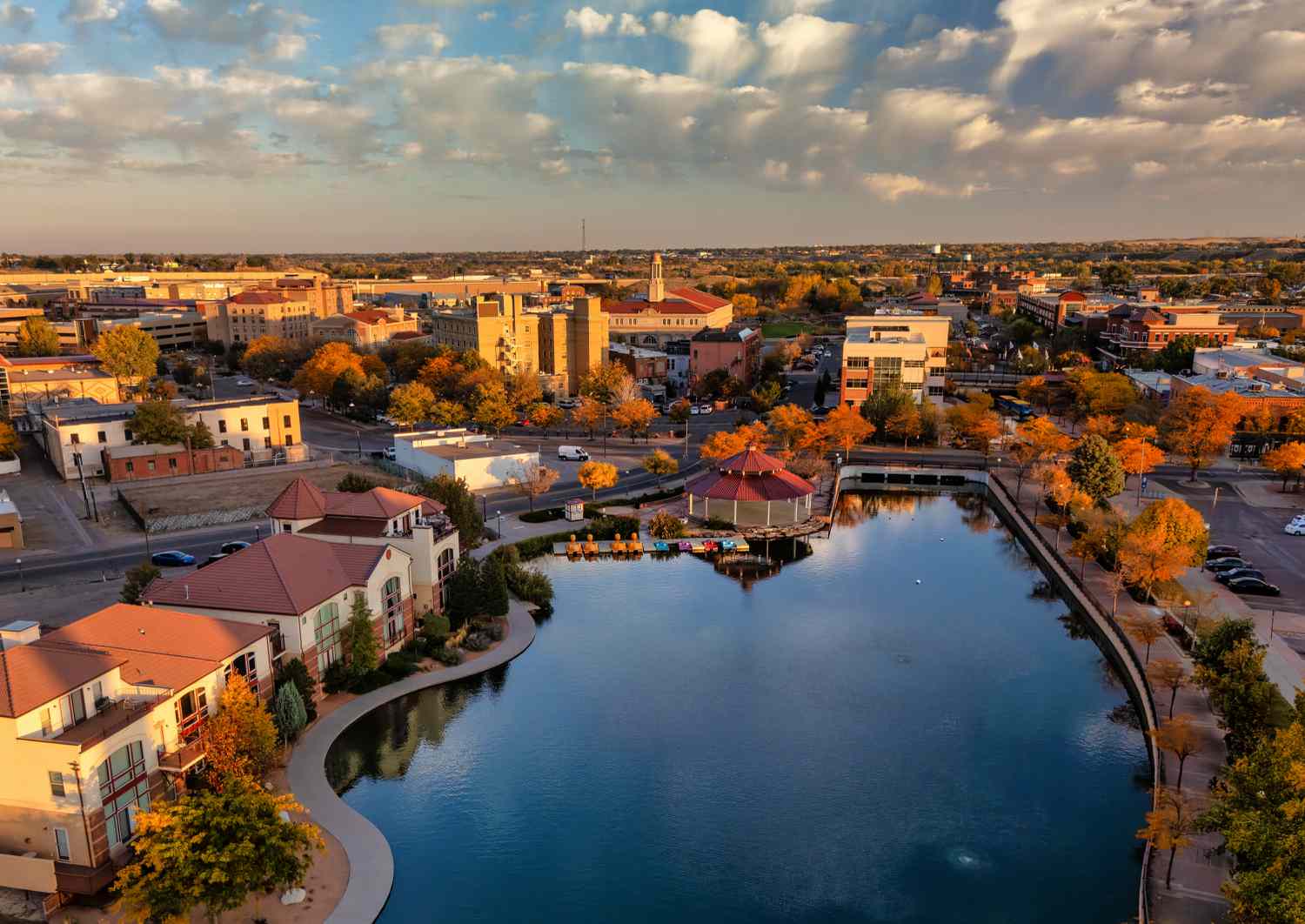
The Arkansas Riverwalk is Pueblo’s most significant investment in its own revitalization, attracting restaurants, arts venues, and residential development to the historic city center
2026 Economic Outlook
- Xcel Energy steel manufacturing facility conversion creating 200+ clean energy jobs
- CSU-Pueblo enrollment growing with expanded nursing and healthcare programs
- Arkansas Riverwalk Phase 4 development adding mixed-use residential and hospitality
- Pueblo Creative Corridor attracting arts businesses and residential development to historic buildings
- Remote work migration accelerating as Front Range affordability crisis deepens
The Pueblo Investment Thesis: Colorado’s Cash Flow Market
Understanding why Pueblo is different from other Colorado investment markets requires appreciating one fundamental distinction: Pueblo is the only major Colorado city where the primary investment case is current income rather than future appreciation. This is not a criticism. It is a specific and valuable characteristic that makes Pueblo accessible to a completely different investor profile than Boulder, Denver, or even Colorado Springs.
Genuine Cash Flow Today
At $275,000 median and $1,450/month typical rent, Pueblo’s rent-to-price ratio of 0.53% monthly is the highest of any major Colorado city. With a 25% down payment and 6.75% financing, many Pueblo properties achieve neutral to positive cash flow, a combination found nowhere else in Colorado’s large cities.
Emerging Appreciation Story
Pueblo appreciated 7 to 10% annually during the 2020 to 2022 run and has held those gains better than expected through the 2023 to 2024 normalization. The combination of improving economic fundamentals, remote worker migration, and arts district investment suggests the appreciation story is early rather than concluded.
Lowest Entry in Colorado
At $275,000 median, Pueblo allows investors to enter the Colorado market with $70,000 to $90,000 in total capital. This is the only major Colorado market accessible to investors who cannot deploy $150,000 or more. The low entry point allows portfolio diversification across multiple Pueblo properties for the capital cost of one Denver property.
Diversification Catalyst
Pueblo’s economy is diversifying for the first time in decades. The cannabis industry has added 3,000+ jobs. The arts community is growing. CSU-Pueblo’s healthcare programs are expanding. These are early-cycle demand improvements that precede broader price appreciation. Investors who recognize early-cycle signals benefit most.
Historical Performance and Honest Assessment
⚠️ Honest Risk Disclosure
Pueblo carries real investment risks that must be understood. The city’s economic base is narrower than Front Range metros. Vacancy rates are higher than Denver or Colorado Springs. Tenant quality in lower-price neighborhoods can vary significantly. Appreciation has historically been slower than Front Range markets. Investors should view Pueblo as a cash flow-first market with appreciation as a secondary benefit, not a primary expectation. Budget for 8 to 12% vacancy and conservative rent growth when underwriting any Pueblo acquisition.
| Period | Market Driver | Avg Annual Appreciation | Key Event |
|---|---|---|---|
| 2010-2016 | Post-recession flatness, steel legacy drag | 2-4% | Colorado cannabis legalization begins transforming Pueblo County economy |
| 2017-2019 | Cannabis industry growth, early investor discovery | 5-8% | Pueblo County cannabis tax revenue exceeds $15M; Arkansas Riverwalk improvements begin |
| 2020-2022 | Pandemic affordability migration, remote work | 10-16% | Pueblo discovered by Front Range affordability migrants; prices rise dramatically from low base |
| 2023-2024 | Rate normalization | 2-5% | Market softened but held gains better than many expected given income levels |
| 2025-2026 | Continued affordability migration, arts district momentum | 5-8% (projected) | Creative corridor development and remote worker migration sustaining demand growth |
📚 New to real estate investing? Master the fundamentals with our professional course Learn more →
2. Neighborhood Hotspots
Pueblo Investment Neighborhood Map
Interactive map of Pueblo’s investment neighborhoods. Green stars mark top hotspots, blue circles show established markets, and orange circles highlight emerging areas.
Core Investment Neighborhoods
Detailed Submarket Analysis
| Neighborhood | Price Range | Cap Rate | Primary Driver | Best Strategy |
|---|---|---|---|---|
| Riverwalk / Downtown | $200K-$450K | 6.5-9.0% | Arts revitalization, remote workers, Riverwalk development | Long-term hold, early-cycle appreciation |
| Bessemer / East Side | $175K-$290K | 8.0-11.0% | Parkview Medical, healthcare workers, affordability | Cash flow maximum, BRRRR |
| University District | $180K-$310K | 7.5-10.0% | CSU-Pueblo students and faculty | Student housing, academic-year leasing |
| Pueblo West | $280K-$450K | 5.5-7.0% | Affordability migrants, remote workers, newer construction | Remote worker rental, appreciation hold |
| Northside | $160K-$270K | 7.5-9.5% | Working-class rental, highway access | Cash flow, value-add, affordable hold |
| South Side / Mesa Junction | $190K-$310K | 7.0-9.0% | Healthcare workers, dual hospital proximity | Healthcare worker housing, stable hold |
| Historic District / Mineral Palace | $150K-$280K | 8.5-12.0% | Arts migration, Victorian character, gentrification early stage | Value-add Victorian renovation, early gentrification play |
| Belmont / East Pueblo | $165K-$260K | 8.0-10.5% | Working-class demand, affordable housing | Highest yield focus, affordable buy-and-hold |
Expert Insight: “Pueblo is where I tell investors to build their cash flow base before going after appreciation markets. You can buy three Pueblo properties for the down payment cost of one Denver property. Those three Pueblo properties generate $600 to $1,200/month combined positive cash flow. That income then subsidizes the negative carry on a Denver or Colorado Springs property. The investors I know who are building serious portfolios are doing exactly this: cash flow in Pueblo, appreciation in the Front Range. Pueblo pays for the rest of the portfolio while you wait for the other markets to do what they do.” – Carlos Mendez, Southern Colorado Investment Properties
3. Property Types
| Investment Goal | Best Property Type | Best Areas | Minimum Capital |
|---|---|---|---|
| Maximum Cash Flow | Small multi-family or affordable SFH | Bessemer, Northside, Belmont | $50,000+ |
| Best Appreciation | Riverwalk adjacent SFH or Pueblo West | Downtown, Riverwalk, Pueblo West | $65,000+ |
| Highest Upside | Victorian renovation in Historic District | Historic District, Mineral Palace | $55,000+ |
| Quality Tenants | Healthcare worker housing near hospitals | South Side, Bessemer adjacent | $55,000+ |
Our Complete Renovation and Remodeling Cost Guide covers 400+ pages of project breakdowns. Note that Pueblo contractor costs run 15 to 25% below Denver metro rates, improving renovation economics meaningfully.
4. Cost Analysis
Acquisition Cost Breakdown (Pueblo)
| Expense Item | Typical Cost | Example ($250,000 Property) | Notes |
|---|---|---|---|
| Down Payment | 25% | $62,500 | All Pueblo purchases qualify for conventional conforming; no jumbo financing needed |
| Closing Costs | 2-3% | $5,000-$7,500 | Among the lowest closing costs of any Colorado market given lower price point |
| Inspection | $350-$550 | $425 | Pueblo inspectors charge lower rates than Front Range; sewer scope essential for older homes |
| Radon Testing | $150-$250 | $175 | Pueblo County elevated radon zone. Mitigation $700 to $2,000 at lower contractor rates. |
| Initial Repairs | 3-15% depending on condition | $7,500-$37,500 | Older Pueblo homes often need significant work; budget generously. Contractor costs are lower than Front Range. |
| Reserves | 6 months | $8,000-$12,000 | Higher vacancy than Front Range requires slightly larger proportional reserves |
| TOTAL MINIMUM ENTRY | ~30-35% | $83,600-$120,100 | Colorado’s lowest investment capital requirement for any major urban market |
Sample Cash Flow Analysis: Bessemer 3BR SFH (Positive Cash Flow Example)
| Item | Monthly | Annual | Notes |
|---|---|---|---|
| Gross Rent | $1,500 | $18,000 | 3BR, Bessemer, renovated |
| Less Vacancy (8%) | -$120 | -$1,440 | Conservative Pueblo vacancy budget |
| Property Taxes | -$130 | -$1,560 | ~0.55% of $285K total cost; Pueblo tax rate lower than Denver |
| Insurance | -$110 | -$1,320 | Lower insurance rates than Front Range markets |
| Property Management (10%) | -$150 | -$1,800 | Pueblo management rates 8 to 11% |
| Maintenance and CapEx (10%) | -$150 | -$1,800 | Budget generously for older Pueblo homes; systems may be aged |
| Net Operating Income | $840 | $10,080 | Before mortgage |
| Mortgage ($245K purchase, 25% down, 6.75%, 30yr) | -$1,191 | -$14,292 | P and I on $183,750 financed |
| CASH FLOW | -$351 | -$4,212 | Slightly negative but much better than any other major Colorado city |
| Cap Rate | 3.54% | NOI / total cost |
The positive cash flow path: The above example is slightly negative because we used conservative 8% vacancy and full 10% CapEx. Investors who self-manage (saving $150/month), achieve 5% vacancy on a well-maintained property, and reduce CapEx to 7% through targeted upgrades at acquisition can achieve positive $150 to $300/month on a similar Pueblo property. This is the calculation that makes Pueblo genuinely different from every other Colorado urban market.
✅ Positive Cash Flow Scenario (Self-Managed, Lower Vacancy)
Same property, same rents, self-managed with 5% vacancy and 7% CapEx:
NOI: $1,038/month | Mortgage: $1,191/month | Cash Flow: -$153/month
With a slightly cheaper property at $220,000 (25% down, same rent): mortgage drops to $1,069/month and cash flow turns positive at approximately +$100/month. This is the Pueblo cash flow proposition.
Pueblo vs Colorado Comparison: The same $62,500 down payment that buys you a $250,000 Pueblo property generating near-neutral to positive cash flow would be the down payment on a $250,000 condo in Denver that generates negative $800 to $1,200/month in a market already at higher prices. The capital efficiency argument for Pueblo is compelling: the same investor dollar deployed in Pueblo generates income rather than consuming it. For investors building financial independence rather than speculative equity, this distinction is decisive.
5. Legal Framework
✅ Pueblo Regulatory Environment
Pueblo follows Colorado state landlord-tenant law with no Denver-style municipal overlays. There is no just cause eviction ordinance, no first-in-time rule, no STR primary residence requirement, and no occupancy limitations beyond Colorado’s basic habitability standards. Pueblo is among the most landlord-friendly environments in Colorado, making it particularly accessible for investors who want operational simplicity alongside cash flow returns.
Colorado State Regulations (Pueblo)
- Eviction Process: 10-day notice for non-payment. File with Pueblo County Court after notice period. Uncontested evictions typically complete in 2 to 4 weeks, one of the fastest in Colorado. The lower income tenant base means eviction proceedings are more common in Pueblo than in Front Range markets; having an established relationship with a local eviction attorney is practical for active investors.
- No Just Cause Requirement: Pueblo landlords can non-renew leases at expiration without qualifying cause. Maximum operational flexibility.
- Rent Increase Notice: Colorado state 60-day notice requirement. No Pueblo-specific overlay.
- Security Deposit: Return within 60 days with itemized accounting. Failure triggers double deposit liability.
- Source of Income: Colorado statewide protection applies. Section 8 voucher holders cannot be refused if otherwise qualified.
- Section 8 Opportunity: Pueblo has a meaningful Section 8 voucher population. Properly managed Section 8 rentals provide government-backed income with the Housing Authority of Pueblo administering the program. Many experienced Pueblo investors specifically seek Section 8 tenants for payment reliability.
- STR: Pueblo has STR regulations requiring a license but is more permissive than Denver’s primary residence requirement. Confirm current regulations for specific neighborhoods before acquiring for STR purposes.
Pueblo-Specific Management Considerations
Managing Pueblo rentals requires specific practices not typically needed in Front Range markets:
- Tenant Screening Rigor: Pueblo’s lower income base means more applicants with credit challenges, prior evictions, or income irregularities. Develop specific written screening criteria, apply them consistently, and do not deviate. Verify income carefully: Pueblo has more self-employed, gig economy, and cannabis industry workers whose income verification requires additional documentation.
- Section 8 Navigation: If accepting Housing Choice Vouchers, get familiar with Pueblo’s Housing Authority inspection process and timing. Voucher properties must pass habitability inspection before occupancy. Units in poor condition will fail and delay income start.
- Eviction Preparedness: Have a local eviction attorney relationship established before you need it. In Pueblo’s market, evictions occur more frequently than in Front Range premium markets. A streamlined eviction process is a practical operational necessity, not an emergency measure.
- Maintenance Response Time: Tenant retention in Pueblo’s market is partly driven by landlord responsiveness. Tenants with multiple housing options will leave for better-maintained properties. Same-day response to habitability issues (heat, water) and 48 to 72 hours for non-emergency repairs reduces turnover significantly.
- Move-in Documentation: Thorough photo and video documentation at move-in is essential. Security deposit disputes are more frequent in lower-income markets. Good documentation protects your deposit retention rights.
Useful Pueblo Resources
- Pueblo County Court (evictions): pueblocourts.gov
- Housing Authority of Pueblo (Section 8): hapueblo.com
- City of Pueblo STR info: pueblo.us/licensing
- Colorado Apartment Association: caahq.org
6. Step-by-Step Pueblo Investment Playbook
Choose Your Pueblo Strategy
Cash Flow Maximum
Buy affordable SFH or small multi-family in Bessemer, Northside, or Belmont. Target healthcare workers and cannabis industry employees. Self-manage or use a low-cost Pueblo manager. Maximize monthly income. Portfolio-building vehicle for active investors.
Appreciation with Income
Target Riverwalk adjacent and Pueblo West for better appreciation potential while still generating positive or near-neutral cash flow. Best risk-adjusted total return in Pueblo for investors with 7+ year horizons.
Historic Renovation Play
Purchase Victorian or historic homes in the Historic District for renovation and repositioning. Highest upside potential if Pueblo’s gentrification continues but also highest execution risk. For experienced active investors with renovation capability.
Portfolio Foundation Strategy
Build multiple Pueblo properties as the cash-flow base of a broader Colorado portfolio. Use Pueblo income to subsidize Front Range negative carry. Scale to 4 to 6 Pueblo properties for $400 to $800/month net portfolio income before acquiring Front Range assets.
Build Your Pueblo Team
- Pueblo Investor-Focused Agent: Must understand Pueblo’s distinct submarkets and be able to evaluate properties on cash flow metrics, not just comparable sales. Ask specifically about their experience with cash-flow property transactions in Bessemer and north Pueblo.
- Pueblo Property Manager: Critical for out-of-state investors. Select a manager with specific Pueblo experience. Verify their eviction policy and timeline, their tenant screening standards, and their maintenance response protocols. Pueblo management requires more active attention than Front Range markets.
- Local Contractor: Pueblo contractor rates are 15 to 25% below Front Range. Establish relationships with reliable local contractors before acquiring properties that need work. Ask your property manager for referrals, as established managers have vetted local contractor networks.
- Eviction Attorney: Establish a relationship with a Pueblo County eviction attorney before you need one. In Pueblo’s market, the likelihood of needing eviction services over a 5-year holding period is higher than in premium Colorado markets. Having an attorney relationship in place reduces the timeline and stress significantly.
- Colorado Lender: All Pueblo properties qualify for standard conventional conforming loans. Local Pueblo community banks (Pueblo Bank and Trust, Rio Grande Credit Union) sometimes offer better investment property terms for local buyers than national lenders.
Pueblo-Specific Due Diligence
Physical Checks
- Radon test mandatory in Pueblo County elevated zone
- Sewer scope essential for any pre-1980 property
- Roof condition critical: Pueblo gets hail but replacement costs lower than Denver
- HVAC age and condition. Pueblo’s temperature range requires reliable systems.
- Foundation check: some Pueblo areas have expansive soil similar to Colorado Springs
- Plumbing condition: galvanized pipe common in older Pueblo homes; replacement often needed
- Electrical panel age: older Pueblo homes frequently have outdated electrical that affects insurability
Market and Condition Checks
- Verify flood zone status; some Pueblo Creek and Arkansas River adjacent properties have flood risk
- Research neighborhood crime statistics by specific block; Pueblo has significant variation within neighborhoods
- Check for any environmental contamination from legacy steel industry in east Pueblo corridors
- Confirm cannabis facility proximity for any commercial-adjacent residential purchase
- Review rental comparables from actual leases, not just listings; Pueblo’s rental market moves slowly and listings may be aspirational
- Confirm any outstanding code violations through City of Pueblo records
Managing the Pueblo Rental Business
Pueblo requires a more active management approach than premium Colorado markets:
- Screen aggressively: Set minimum income of 2.5 to 3 times monthly rent. Verify with paystubs and bank statements, not verbal confirmation. In Pueblo’s labor market, income can be irregular. A tighter screening standard upfront reduces vacancy and eviction risk substantially.
- Price competitively: Pueblo’s rental market is price-sensitive. Overpricing by even $75/month can significantly extend vacancy time. Research actual recently-leased comparables carefully and price at or just below market to minimize time on market.
- Condition premium: Well-maintained, updated properties in Pueblo attract significantly better tenants than dated ones. A property with a modernized kitchen, updated bathrooms, and reliable HVAC rents faster and to better tenants than equivalent unconditioned inventory. The upgrade costs are lower in Pueblo; the tenant quality return on investment is proportionally high.
- Section 8 evaluation: The Housing Authority of Pueblo administers Housing Choice Vouchers. Section 8 properties require a Housing Quality Standards inspection and approval, but once a voucher tenant is placed, rent is paid directly by the HA to the landlord. For investors who want payment reliability without income verification, Section 8 is worth evaluating. Current Pueblo voucher payment standards align reasonably with market rents in most neighborhoods.
7. Financing Options for Pueblo
| Loan Type | Down Payment | Rate Premium | Best For | Pueblo Note |
|---|---|---|---|---|
| Conventional Investment | 25% | +0.5-0.75% | All Pueblo purchases; every property well below conforming limit | Standard financing for all Pueblo investment properties; no jumbo complexity |
| DSCR Loan | 25-30% | +1.5-2.5% | Self-employed or non-W2 income investors | Pueblo is one of Colorado’s best DSCR markets; cap rates of 7 to 11% regularly achieve 1.0x coverage even at premium DSCR rates |
| House Hacking FHA | 3.5% | Standard plus MIP | First investors owner-occupying a duplex | Exceptional for house hacking Pueblo duplexes at $180K to $280K; 3.5% down on $250K is $8,750 total down payment |
| Portfolio Loan | 20-25% | +1-1.75% | Scaling to 5+ Pueblo properties | Local Pueblo lenders and Colorado community banks offer portfolio products; Pueblo’s cap rates make portfolio loan math work |
| Hard Money Bridge | 15-25% | 9-13% rate | BRRRR acquisitions, Victorian renovation projects | Pueblo BRRRR can work well: buy distressed Victorian at $140K, renovate for $60K, ARV $240K, refinance at 75% LTV and pull $120K out |
| USDA Rural Loan (Pueblo County) | 0% | Below market | Owner-occupants in eligible rural Pueblo County areas | Some Pueblo County areas outside city limits qualify for USDA rural loans; verify eligibility on USDA map tool for specific property address |
Pueblo’s Financing Advantage: Pueblo is the best DSCR market in Colorado. Because cap rates of 7 to 11% generate NOI that covers debt service at current rates, investors with non-traditional income who cannot qualify for standard investment loans in Denver or Boulder can access Colorado real estate through Pueblo’s market. A self-employed investor who earns excellent income but cannot document it conventionally can purchase multiple Pueblo properties on DSCR loans that legitimately qualify. The FHA house hacking path is equally compelling: $8,750 down on a $250,000 Pueblo duplex, live in one unit, rent the other. Nowhere else in Colorado can you access investment real estate ownership at a $8,750 entry cost in a real city.
8. Frequently Asked Questions

Knowledge Quiz: Pueblo Colorado Real Estate
Open Quiz
5 quick questions on what you just learned about Pueblo investing
1) What makes Pueblo Colorado fundamentally different from all other major Colorado investment markets?
Answer: C
Pueblo’s $275,000 median price and $1,450/month typical rent generate a rent-to-price ratio of 0.53% monthly, the highest of any major Colorado city. At a 25% down payment and 6.75% financing, many Pueblo properties achieve neutral to positive cash flow, something not achievable with conventional financing in Denver, Boulder, Colorado Springs, Fort Collins, or any other large Colorado city. This cash flow characteristic is Pueblo’s defining investment distinction.
2) What is the Portfolio Foundation Strategy described in the guide and how does it work?
Answer: B
The Portfolio Foundation Strategy uses multiple Pueblo cash-flowing properties as the income base of a broader Colorado portfolio. The guide’s expert quote captures it perfectly: “You can buy three Pueblo properties for the down payment cost of one Denver property. Those three generate $600 to $1,200/month combined positive cash flow. That income subsidizes the negative carry on a Denver or Colorado Springs property.” Pueblo pays for the rest of the portfolio while the Front Range markets do what they do best: appreciate.
3) What are the honest risk factors investors must budget for in Pueblo that differ from Front Range markets?
Answer: D
The guide is explicit about Pueblo’s honest risks: vacancy of 6 to 10% (budget 8 to 10% in your model), lower median income of $48,000 versus Colorado’s $84,000 average requiring tighter screening, higher eviction frequency (budget one eviction per 8 to 12 tenancy-years at $2,000 to $4,000 per event), and appreciation of 4 to 7% annually versus 9 to 11% for Denver over 20 years. These risks are manageable but must be priced correctly rather than using Front Range benchmarks.
4) How does the Pueblo BRRRR strategy work and what makes it viable here?
Answer: A
Pueblo’s BRRRR works because the spread between distressed acquisition prices ($130K to $160K) and post-renovation values ($220K to $280K) is wide enough to support equity extraction after renovation. Pueblo contractor costs run 15 to 25% below Denver rates, improving renovation economics further. The Historic District and Mineral Palace area have the best spreads for BRRRR execution. Budget a 20% contingency on all Pueblo renovation projects given contractor supply constraints.
5) Why is Pueblo one of Colorado’s best DSCR loan markets?
Answer: C
DSCR loans require rental income to cover debt service at 1.0x or higher. Pueblo’s cap rates of 7 to 11% generate NOI that regularly achieves this threshold even at DSCR loan interest rates that are 1.5 to 2.5% above conventional rates. In Denver (cap rates 3.5 to 5%) or Boulder (cap rates 3 to 4%), DSCR rarely qualifies because NOI falls well short of debt service. Pueblo is one of the few Colorado urban markets where self-employed and non-traditional income investors can access real estate through DSCR financing.
Work With a Local Expert in Pueblo
We are building a verified network of real estate professionals across every market we cover.

About Our Expert Network
Pueblo specialists in our network bring specific expertise in cash flow underwriting, Section 8 program navigation, BRRRR strategy execution, and the local contractor and management ecosystem that makes Pueblo investment operations viable for out-of-state investors.
- Cash flow underwriting expertise specific to Pueblo’s market characteristics
- Section 8 Housing Choice Voucher program navigation with Pueblo Housing Authority
- Historic District renovation and BRRRR strategy execution experience
- Established local contractor and property management referral network
- Full transaction support from cash-flow-optimized property selection through closing
Get Connected or Join Our Network
Looking for a Pueblo expert? Contact us and we will connect you with the right professional.
Contact us at support@buildsandbuys.com
Find Specialized Pueblo Real Estate Professionals
Ready to Invest in Pueblo?
Pueblo is not for investors seeking the familiar Colorado narrative of premium prices, aspirational lifestyles, and appreciation-first thinking. It is for investors who want a business that generates income, a market that is genuinely accessible without Front Range capital requirements, and a city whose improving fundamentals suggest that the early investors will be well-rewarded as Pueblo’s transformation from steel city to arts, cannabis, and healthcare center continues. Colorado’s best kept investment secret is 2 hours south of Denver on I-25. The window to enter at these prices will not remain open indefinitely.
Continue Your Research
Colorado State Guide
See how Pueblo compares to Denver, Colorado Springs, and Colorado’s full investment market range.
Colorado Springs Guide
Compare Pueblo’s cash flow thesis to Colorado Springs’ military market just 45 minutes north.
144-Lesson Course
University-level real estate education covering BRRRR strategy, cash flow analysis, Section 8, and portfolio building.
For further guidance, explore our State-by-State Investor guides, browse our expert articles, or follow our Step-by-Step Investment Guide.



