Eagle Mountain Real Estate Investment Guide For 2026
A comprehensive resource for investors looking to capitalize on one of Utah’s fastest growing cities, where new master planned development, major data center investment, and the most attainable price points in northern Utah County combine to create some of the strongest growth potential in the state
Quick answers: Top 5 most searched Eagle Mountain investment questions ▼
Migration data: Where buyers are coming from to Eagle Mountain ▼
In This Guide
Click on any section to navigate directly to that content
1. Eagle Mountain Market Overview
Market Fundamentals
Eagle Mountain sits in the western reaches of Utah County, having transformed over the past two decades from a sparsely populated area into one of the fastest growing cities in the United States. Its growth has been driven by master planned development that has filled in vast tracts of previously undeveloped land, combined with major employer investment including significant data center projects from Facebook/Meta and Google. This combination of attainable new construction and major capital investment has positioned Eagle Mountain as one of Utah County’s most dynamic growth markets.
Key economic indicators that define Eagle Mountain’s investment case:
- Population: Approximately 65,000 residents, representing one of the fastest population growth rates of any city in the United States over the past 15 years
- Major Employer Investment: Significant data center developments from Facebook/Meta and Google represent substantial capital commitments to the area
- Median Home Price: Approximately $500,000, among the lowest new construction price points in northern Utah County
- Employment Access: Pony Express Parkway and connections toward Saratoga Springs provide access to the broader Utah County employment base, including Silicon Slopes
- Housing Stock Age: Predominantly built since 2005, with the vast majority of homes constructed within the last 10 to 15 years
- Build Out Status: Significant remaining buildable land suggests continued active development for years to come
Eagle Mountain’s economy has historically been closely tied to the broader Utah County and Salt Lake Valley employment base, with most residents commuting via Pony Express Parkway and connecting routes toward Saratoga Springs, Lehi, and beyond. The arrival of major data center investments represents a notable shift toward direct local employment generation, both during construction phases and in ongoing facility operations.
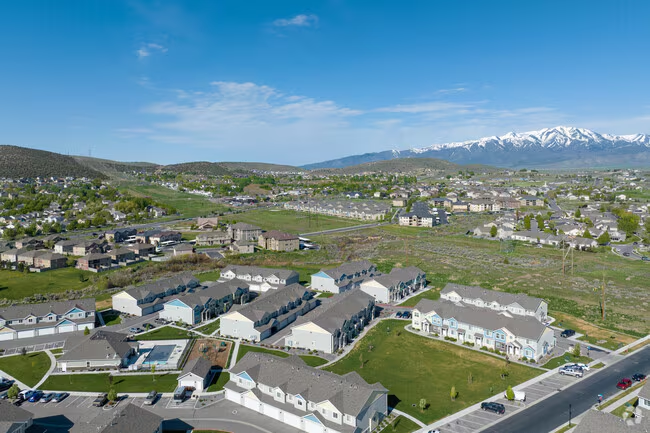
Eagle Mountain’s rapid growth and major employer investment, including significant data center projects, continue to attract families seeking the most attainable new construction in northern Utah County
2026 Market Outlook
- Continued active new construction across multiple builders and master planned communities
- Data center construction activity continuing to bring jobs and investment to the area
- Eastern growth corridor toward Saratoga Springs remains the primary area for newest development
- Strong family demographic continuing to drive demand for 3-5 bedroom single family homes
- Continued spillover demand from buyers priced out of Lehi, American Fork, and Saratoga Springs
Investment Climate
Eagle Mountain’s investment environment rewards buyers who understand the city’s growth trajectory and the unique role major employer investment plays in its long-term trajectory. Successful Eagle Mountain investors tend to share a few characteristics:
- Affordability-focused positioning recognizing that Eagle Mountain offers the lowest new construction prices in northern Utah County, often $50,000 to $100,000 below comparable homes in Lehi or American Fork
- Long growth runway awareness understanding that significant remaining buildable land means Eagle Mountain’s growth story has years left to play out, though this also means appreciation may be more gradual than in land-constrained markets
- Data center investment monitoring tracking how major employer investments translate into local employment and housing demand over time
- Family tenant targeting given Eagle Mountain’s strong demographic skew toward young families and first-time homebuyers
- Cap rate prioritization recognizing that Eagle Mountain’s combination of low entry prices and solid rents produces some of the strongest cap rates in Utah County
Eagle Mountain represents one of the clearest examples in Utah of a market where major employer investment and rapid population growth are occurring simultaneously. While the sheer volume of available new construction means individual property appreciation may track somewhat below more supply-constrained markets, the combination of low entry costs, strong cap rates, and a long growth runway gives investors multiple ways to benefit from the city’s continued expansion.
Demographic Trends Driving Demand
- Data Center Employment Growth – Major data center investments from Facebook/Meta and Google bring both substantial construction phase employment and ongoing operational jobs, signaling long-term confidence in the area
- Affordability-Driven Migration – Buyers priced out of Lehi, American Fork, and increasingly Saratoga Springs continue to look toward Eagle Mountain for the most attainable new construction
- Young Family Formation – Eagle Mountain’s demographic profile skews heavily toward young families, supporting demand for 3-5 bedroom single family homes with yards
- Eastern Growth Corridor Expansion – Continued development toward Saratoga Springs represents the primary source of new housing supply and investment opportunity
- Regional Infrastructure Investment – Continued improvements to Pony Express Parkway and connecting routes are gradually improving commute access to broader Utah County and Salt Lake Valley employment centers
📚 New to real estate investing? Master the fundamentals with our professional course Learn more →
2. Neighborhood Hotspots
Eagle Mountain Investment Neighborhood Map
Interactive map of Eagle Mountain’s investment areas. Green stars show top hotspots, blue circles mark established markets, and orange circles highlight emerging or growth-corridor areas.
Core Investment Areas
Detailed Submarket Analysis: All Eagle Mountain Areas
| Area | Price Range | Cap Rate | Growth Drivers | Best Strategy |
|---|---|---|---|---|
| The Ranches | $450K-$625K | 5.5-6.5% | Established amenities, mature community | Long-term family rental |
| Silverlake / Eastern Growth Corridor | $425K-$600K | 6.0-6.5% | Newest construction, Saratoga Springs proximity | New construction growth play |
| Pony Express | $425K-$600K | 5.5-6.5% | Parkway access, school proximity | School-driven family rental |
| Cedar Pass | $425K-$575K | 5.5-6.5% | Commercial proximity, established community | Balanced cash flow and appreciation |
| SilverCrest | $400K-$575K | 6.0-6.5% | Retail proximity, mixed housing | Convenience-focused rental |
| Mid Valley | $425K-$600K | 5.5-6.5% | Central location, established infrastructure | Family-focused buy and hold |
| Northern Growth Areas | $400K-$575K | 6.0-6.5% | New construction, competitive pricing | Value-oriented new construction |
| Data Center Corridor Vicinity | $425K-$600K | 5.5-6.5% | Major employer proximity, construction activity | Long-term employment-driven hold |
Expert Insight: “What sets Eagle Mountain apart right now is the scale of employer investment happening alongside the residential growth. We’re talking about some of the largest single capital projects in Utah County’s history with the data center developments. Even if those facilities don’t employ thousands of people day to day, the construction phases alone bring significant short and medium term employment, and the long-term presence of major tech companies sends a signal about confidence in the area that ripples through to housing demand. For investors, Eagle Mountain offers a combination you don’t often see: rock-bottom entry prices relative to the broader Silicon Slopes corridor, plus genuine catalyst events happening in real time.” – Marcus Holloway, Investment Specialist, Utah County Growth Properties
3. Property Types
| Investment Goal | Best Property Type | Best Areas | Minimum Capital |
|---|---|---|---|
| Maximum Cap Rate | New construction townhome | SilverCrest, Eastern Growth Corridor | $75,000+ down |
| Established Community Premium | Master planned SFH | The Ranches, Pony Express | $85,000+ down |
| Growth Corridor Positioning | New construction SFH | Silverlake, Eastern Growth Corridor | $80,000+ down |
| Lowest Entry Cost | Townhome | SilverCrest | $70,000+ down |
Don’t guess the costs. Our Complete Renovation & Remodeling Cost Guide covers 400+ pages of project-by-project breakdowns with real contractor pricing ranges.
4. Cost Analysis
Acquisition Cost Breakdown (Eagle Mountain)
| Expense Item | Typical Cost | Example ($500,000 Property) | Notes |
|---|---|---|---|
| Down Payment | 20-25% (investment) | $100,000-$125,000 | Conventional investment property financing |
| Closing Costs | 2-3% of price | $10,000-$15,000 | Title, escrow, lender fees, recording |
| Inspection | $400-$650 | $500 | Standard residential inspection, often minimal findings on newer construction |
| Initial Repairs/Updates | 0.5-2% of price | $2,500-$10,000 | Lower than older housing stock given recent construction |
| Reserves (6 months) | 6 months expenses | $11,000-$15,000 | Mortgage, taxes, insurance, maintenance reserve |
| TOTAL MINIMUM ENTRY | ~25-33% of value | $124,000-$165,000 | Assumes conventional investment financing |
Sample Cash Flow Analysis: Silverlake New Construction SFH
| Item | Monthly | Annual | Notes |
|---|---|---|---|
| Gross Rental Income | $2,300 | $27,600 | 3BR new construction SFH |
| Vacancy (5%) | -$115 | -$1,380 | Conservative estimate for strong Eagle Mountain family rental demand |
| Property Management (8%) | -$184 | -$2,208 | Standard long-term rental management fee |
| Property Taxes | -$233 | -$2,800 | Approximately 0.56% of assessed value for non-primary residence |
| Insurance | -$90 | -$1,080 | Landlord policy for new construction SFH |
| Maintenance Reserve (1% annually) | -$42 | -$500 | Lower than older housing stock given new construction |
| HOA Dues | -$60 | -$720 | Typical master planned community HOA |
| Net Operating Income | $1,574 | $18,888 | Before mortgage |
| Mortgage ($500K purchase, 25% down, 6.75%, 30yr) | -$2,433 | -$29,196 | Principal and interest on $375,000 loan |
| CASH FLOW | -$859 | -$10,308 | Before appreciation and equity paydown |
| Cap Rate | 3.78% | NOI / Total Cost | |
| Total Return (11% appreciation) | ~11-13% | Including appreciation and equity paydown |
This example illustrates that even Eagle Mountain’s relatively higher cap rate properties run modestly negative on a pure cash flow basis with standard financing, though the gap is among the smallest of any Utah County submarket given the low acquisition cost. Total returns including appreciation and equity paydown remain attractive given Eagle Mountain’s above-average price growth. Investors with larger down payments, or those purchasing townhomes in SilverCrest with even lower acquisition costs relative to rents, can often achieve closer to breakeven or positive cash flow.
Expert Insight: “Eagle Mountain is where the math works best for investors who are capital constrained but still want exposure to genuine Utah County growth. We’re talking about a roughly 25 to 30 percent lower entry price compared to a similar new home in American Fork, for a property renting maybe 10 percent less. On a per-dollar-invested basis, that’s a meaningful edge. The data center investments add another layer that most investors aren’t fully pricing in yet: when companies of that scale make multi-decade commitments to an area, it tends to support both employment and property values over the long run, even if the immediate effect on day-to-day housing demand takes time to materialize.” – Jennifer Tran, Senior Investment Advisor, Northern Utah County Realty Group
5. Legal Framework
Eagle Mountain and Utah Landlord-Tenant Basics
Investors in Eagle Mountain operate under Utah’s statewide landlord-tenant framework, which is generally considered landlord-friendly relative to many other states. Key points include:
- Eviction Process: Utah allows a 3-day notice to pay or vacate for non-payment of rent, with a relatively efficient court process for uncontested cases.
- Security Deposits: No statutory cap on security deposit amounts, though deposits must be itemized and returned within 30 days of move-out along with any required documentation.
- Lease Terms: Standard 12-month leases are most common in Eagle Mountain given the family-oriented tenant base targeting school year stability.
- Property Tax Exemption: Utah’s primary residence exemption reduces taxable value by 45% for owner-occupied homes; investment properties are taxed on full assessed value.
- HOA Considerations: Most Eagle Mountain master planned communities are subject to HOA rules, which may include rental registration requirements or architectural guidelines for exterior modifications.
Eagle Mountain-Specific Considerations
Beyond the statewide framework, Eagle Mountain investors should be aware of:
- HOA CC&R Review: Given the predominance of master planned communities, HOA documents should be reviewed for any rental restrictions, registration requirements, or caps on the percentage of units that can be rented.
- New Construction Warranty Considerations: For Silverlake and eastern growth corridor purchases, verify builder warranty terms and any transferability provisions for rental properties.
- Infrastructure Completion Verification: In newer development phases, some infrastructure elements such as final road paving, sidewalks, or landscaping may be pending at time of purchase; verify completion timelines with the builder.
- Continued Development Impact: Properties near active construction zones may experience temporary noise or access considerations as Eagle Mountain’s rapid development continues.
Useful Eagle Mountain Resources
- Eagle Mountain City: eaglemountaincity.org
- Utah County Assessor: utahcounty.gov
- Alpine School District: alpineschools.org
- Utah State Tax Commission: tax.utah.gov
| Regulation | Eagle Mountain / Utah County Requirement | Utah State Baseline | Investor Impact |
|---|---|---|---|
| Eviction | Follows Utah state process | 3-day notice for non-payment, relatively landlord-friendly | Favorable compared to many other states |
| Security Deposits | No specific local cap | No statutory cap; return within 30 days | Flexibility for landlords on deposit amounts |
| HOA Rental Restrictions | Common across most Eagle Mountain master planned communities | N/A | Review CC&Rs before purchase, particularly for rental caps |
| Property Tax | Utah County assessment applies | 45% primary residence exemption does not apply to rentals | Investment properties taxed on full assessed value |
6. Step-by-Step Eagle Mountain Investment Playbook
Define Your Eagle Mountain Strategy
Eagle Mountain’s growth trajectory and attainable housing stock support several distinct investment strategies:
Growth Corridor Positioning
Purchase new construction in Silverlake or the eastern growth corridor toward Saratoga Springs, targeting the strongest cap rates in the city with continued development providing appreciation upside.
Established Community Hold
Buy in The Ranches for properties with proven rental history, mature amenities, and established community identity, targeting long-term tenant stability.
School-Driven Family Rental
Target single-family homes in Pony Express near good school access, appealing to families prioritizing school quality at the most attainable price points in northern Utah County.
Maximum Cap Rate Townhome
Purchase a townhome in SilverCrest for the lowest entry cost in Eagle Mountain, appealing to tenants seeking attainable rent at convenient retail proximity.
Build Your Eagle Mountain Team
A strong local team helps investors navigate Eagle Mountain’s rapidly developing submarkets:
- Eagle Mountain-Familiar Real Estate Agent: Should understand the distinction between established communities and active development phases, as well as which builders are currently active and their typical pricing and incentive structures.
- Property Manager with Northern Utah County Experience: Familiar with the family-oriented tenant pool and standard 12-month lease cycles common throughout Eagle Mountain.
- Utah Real Estate Attorney: For entity structuring and HOA document review, particularly important given the predominance of master planned communities.
- Local Lender Familiar with New Construction Financing: Can help navigate builder financing programs and any investor-specific incentives in active development areas.
- Home Inspector with New Construction Experience: For Silverlake and eastern growth corridor purchases, an inspector familiar with builder warranty processes is valuable.
Expert Tip: Given the number of active builders in Eagle Mountain at any given time, it’s worth visiting multiple model homes and sales offices to compare not just pricing, but also lot premiums, included features, and any current incentives. Pricing and promotions can vary significantly between builders even within the same general area, and these differences directly affect the cap rate calculation for an investment purchase.
Eagle Mountain-Specific Due Diligence
Physical Due Diligence
- New construction warranty status and what remains transferable to a renter-occupied property
- Verification of completed infrastructure (roads, sidewalks, landscaping) in newer development phases, as some elements may be pending at time of purchase
- HVAC and water heater specifications, particularly important given Eagle Mountain’s elevation and seasonal temperature swings
- Verification of utility connections and service levels for properties in the newest development phases
Regulatory and HOA Due Diligence
- HOA CC&Rs review for rental restrictions or registration requirements, particularly important given the predominance of master planned communities
- Confirmation of any pending special assessments related to ongoing community development
- School boundary verification for the specific property address, particularly relevant given Eagle Mountain’s family-oriented tenant base
- Verification of any planned future development near the property, including proximity to data center facilities or other major projects
Competing in Eagle Mountain’s Market
- Abundant new construction inventory: Unlike more land-constrained submarkets, Eagle Mountain typically has multiple active builders with available inventory, reducing the urgency of competitive bidding compared to more supply-constrained Utah County cities.
- Builder phase release timing: Builders release new phases of lots periodically; investors should establish relationships with builder sales offices to be notified of upcoming releases and any phase-opening incentives.
- Out of state investor competition: Increased out of state investor activity has added some competition for the strongest cap rate properties, particularly in Silverlake and the eastern growth corridor.
- Spring market timing: Like much of Utah County, listings tend to be more competitive in spring as families aim to move before the new school year, though the abundance of new construction means this effect is somewhat muted compared to more built-out markets.
Property Management in Eagle Mountain
Long-Term Rental Management Essentials
- Tenant screening focused on income verification given the family-oriented tenant base and attainable rent levels
- Lease timing aligned with the school year to minimize vacancy and tenant turnover disruption
- HOA compliance monitoring, particularly important given the predominance of master planned communities with active HOAs
- Coordination with builder warranty processes for newer construction properties during the warranty period
Typical Eagle Mountain Management Fees
- Long-term rental management: 8-10% of monthly rent
- Leasing fee: 50-100% of one month’s rent
- Lease renewal fee: $150-$300
- Maintenance markup: 10-15% on contracted repairs through management company
7. Financing Options for Eagle Mountain
| Loan Type | Down Payment | Rate Premium | Best For | Eagle Mountain Note |
|---|---|---|---|---|
| Conventional Investment Loan | 20-25% | +0.5-0.75% | Most Eagle Mountain purchases, well under conforming limits | Eagle Mountain’s below-median pricing keeps virtually all properties within conventional limits |
| Builder Financing / New Construction | 5-20% reservation deposit, then standard financing | Varies, sometimes below market with builder incentives | Silverlake and eastern growth corridor purchases | Many builders offer in-house lender incentives, particularly during slower sales periods or new phase openings |
| DSCR Loan | 20-25% | +0.5-1.0% | Investors qualifying based on rental income rather than personal income | Eagle Mountain’s strong rent-to-price ratios support DSCR qualification |
| FHA (Owner-Occupant House Hack) | 3.5% | Standard FHA terms | Buyers willing to live in the property initially | Eagle Mountain’s low entry prices make FHA financing particularly accessible for first-time investor-occupants |
Eagle Mountain Financing Reality: Eagle Mountain’s below-median pricing makes it one of the most financing-accessible cities in Utah County, with virtually all properties qualifying for conventional terms and FHA financing remaining a viable option for many buyers. New construction buyers should always inquire about builder-affiliated lender incentives, which can meaningfully reduce effective interest rates during active sales periods, and should compare offers across multiple active builders given the competitive new construction landscape.
8. Frequently Asked Questions

Knowledge Quiz: Eagle Mountain Real Estate Investment
Open Quiz
5 quick questions on what you just learned about Eagle Mountain investing
1) What is the primary factor that keeps Eagle Mountain’s prices among the lowest in northern Utah County?
Answer: C
Eagle Mountain’s significant remaining buildable land allows continued active new construction across multiple builders, keeping prices among the most attainable in northern Utah County.
2) What major employer investments are highlighted as significant for Eagle Mountain’s investment case?
Answer: B
Major data center investments from Facebook/Meta and Google represent some of the largest capital commitments in Utah County’s history and are highlighted as significant factors in Eagle Mountain’s growth trajectory.
3) Why might Eagle Mountain’s appreciation be more gradual than land-constrained markets like Draper or Park City?
Answer: A
Unlike land-constrained markets where limited new supply can amplify price increases, Eagle Mountain’s substantial available buildable land means new supply can continue to meet demand, leading to more gradual, predictable appreciation.
4) What demographic group makes up the bulk of Eagle Mountain’s tenant pool?
Answer: D
Eagle Mountain’s tenant pool skews heavily toward young families and first-time homebuyers prioritizing the lowest available rent for newer construction with good commute access.
5) According to the guide’s sample cash flow analysis for a Silverlake new construction property, what is the most accurate takeaway?
Answer: B
The sample analysis shows modestly negative cash flow (-$859/month) on standard financing, one of the smallest gaps of any Utah County submarket given the low acquisition cost, with total return including 11% appreciation reaching roughly 11-13%.
Work With a Local Expert in Eagle Mountain
We are building a verified network of real estate professionals across every market we cover.

About Our Expert Network
We are finalizing partnerships with verified real estate professionals across every market featured on Builds and Buys. Each expert in our network is selected for their hands-on investment experience, local market knowledge, and commitment to helping buyers and investors make sound decisions.
Our local specialists offer:
- Proven experience with investment and income-producing properties
- Deep knowledge of local pricing, rental yields, and neighborhood dynamics
- Guidance on financing, legal structure, and due diligence
- Access to off-market and pre-market opportunities
- Full transaction support from search through closing
- Ongoing portfolio and property management referrals
Services Covered
- Property sourcing and acquisition
- Investment analysis and underwriting
- Buyer representation
- Market comparables and valuations
- Short-term and long-term rental strategy
- Value-add and renovation guidance
- Legal and title referrals
- Financing and lender connections
- Property management referrals
- Insurance and inspection referrals
- 1031 exchange coordination
- Exit strategy planning
Get Connected or Join Our Network
Looking for a local expert to help with your investment? Reach out and we will connect you with the right professional for your market and strategy.
Are you a real estate professional with a track record working with investors? We are always expanding our network of verified local experts.
Contact us at support@buildsandbuys.com
Find Specialized Eagle Mountain Real Estate Professionals
Ready to Invest in Eagle Mountain?
Eagle Mountain represents one of Utah County’s clearest combinations of attainable pricing, strong cap rates, and a long-term growth runway backed by major employer investment. With the lowest new construction prices in northern Utah County, cap rates consistently in the 5.5 to 6.5 percent range, and significant capital commitments from companies like Facebook/Meta and Google signaling long-term confidence in the area, Eagle Mountain offers investors multiple paths to participate in one of the state’s most dynamic growth stories. While the abundance of remaining buildable land means appreciation may be more gradual than in land-constrained neighboring markets, this same characteristic provides investors with continued access to new construction at attainable prices for years to come, whether the strategy is growth corridor positioning in Silverlake, an established community hold in The Ranches, or maximizing cap rate with a townhome in SilverCrest.
Continue Your Research
For further guidance, explore our State-by-State Investor guides, browse our expert articles, or follow our Step-by-Step Investment Guide.