Oregon City / Canby Oregon Real Estate Investment Guide For 2026
A comprehensive resource for investors targeting the southern Portland metro’s most historically significant and undervalued corridor, where Oregon’s first territorial capital and the agricultural heartland of the northern Willamette Valley offer Clackamas County regulatory advantages, entry prices 15-25% below comparable Portland neighborhoods, and a distinct investment case built on heritage, agriculture, and Portland overflow demand
Quick answers: Top 5 most searched Oregon City investment questions ▼
Migration data: Where people are moving from to Oregon City ▼
In This Guide
Click on any section to navigate directly to that content
1. Oregon City / Canby Market Overview
Market Fundamentals
Oregon City and Canby form the southern Portland metro’s most historically rooted and agriculturally grounded investment corridor. Oregon City — Oregon’s first incorporated city, first territorial capital, and the documented end of the Oregon Trail — sits on bluffs above the Willamette River approximately 13 miles south of downtown Portland, fully connected to the metro via I-205 and the Portland TriMet bus network. Canby sits another 10-15 miles south, at the heart of the northern Willamette Valley agricultural belt, with its own distinct identity built on farming, nurseries, and a community character that no suburban development can replicate.
Key market fundamentals:
- Oregon City Population: 40,000+ growing at 2-3% annually; Clackamas County seat
- Canby Population: 18,000+ growing at 2-3% annually
- Oregon City Median Home Price: $450,000 — 15-20% below comparable Portland neighborhoods
- Canby Median Home Price: $420,000 — 20-25% below comparable Portland neighborhoods
- Major Oregon City Employers: Clackamas County government, Providence Willamette Falls Medical Center, Clackamas Community College, Oregon City School District
- Vacancy Rate: Under 4.5% both cities — consistent family rental demand
Both cities benefit from the same structural advantage: Clackamas County’s regulatory independence from Portland city ordinances. Investors who serve the southern Portland metro rental market access Portland’s employment base at lower prices and with materially simpler compliance requirements, the same value proposition that has made Gresham attractive on the east side of the metro.
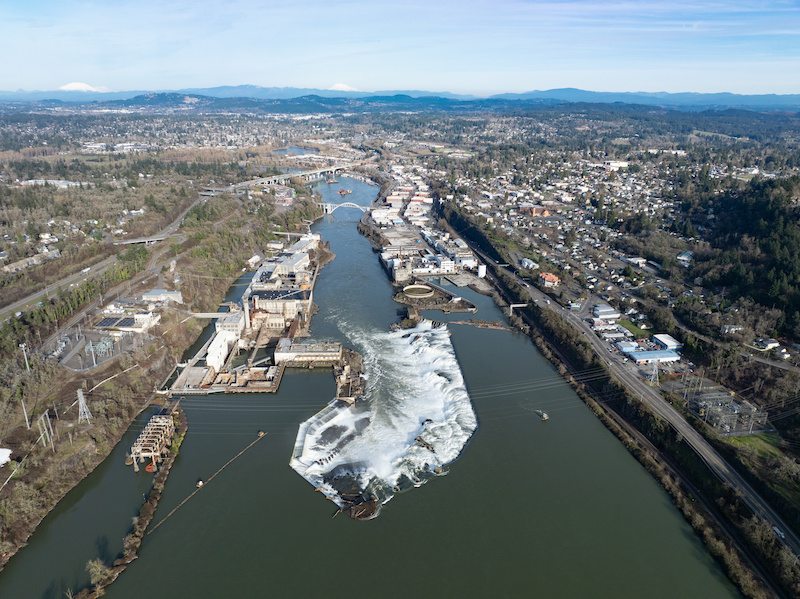
Oregon City’s historic blufftop setting above Willamette Falls, combined with its status as Oregon’s first city, creates a character premium and heritage tourism draw unlike any other Portland suburb
2026 Economic Outlook
- Willamette Falls Legacy Project public access development driving heritage tourism
- Oregon City downtown revitalization investment improving walkability
- Clackamas County government expansion and healthcare employment growth
- Portland overflow continuing as southern metro prices remain below Portland
- Canby agricultural economy stable; nursery industry a consistent employment anchor
The Clackamas County Advantage — No Portland Ordinances
Oregon City and Canby share with Gresham and West Linn the single most important structural advantage for Portland metro investors: full independence from Portland city landlord ordinances. Both cities are in Clackamas County, not Multnomah County, and neither is subject to Portland’s regulatory framework. This is material and ongoing:
- No Portland 2-month relocation assistance: Portland requires 2 months of rent when raising rents 10%+ or issuing no-cause terminations. Oregon City and Canby do not.
- No Portland first-in-time screening rule: Portland landlords must offer tenancy to the first qualified applicant. Oregon City and Canby landlords can select among qualified applicants using standard fair housing criteria.
- No Portland RRIO rental registration: Portland requires annual registration and inspection of all rental units. Oregon City and Canby have no comparable program.
- Oregon SB 608 still applies statewide: Rent control (7% + CPI cap), just-cause eviction after 12 months, and habitability requirements apply in both cities as Oregon law. The advantage is the absence of Portland’s additional layers, not an absence of regulation entirely.
- Clackamas County Circuit Court: Evictions and landlord-tenant matters are handled by Clackamas County Circuit Court in Oregon City — the same court that serves Lake Oswego and West Linn, generally considered more accessible than Multnomah County’s larger court system.
Oregon City — Heritage Character and Willamette Falls
Oregon City’s investment case includes something that few Portland metro suburbs can offer: a genuine historical identity that supports premium character appreciation independent of pure price overflow from Portland. Key heritage elements:
- End of the Oregon Trail: The federally recognized End of the Oregon Trail Interpretive Center sits in Oregon City, drawing heritage tourism from across the United States. This creates a distinct visitor economy small for a suburb of its size.
- Willamette Falls: Directly below Oregon City, Willamette Falls is the second largest waterfall by volume in North America. The Willamette Falls Legacy Project is developing public access infrastructure that will significantly increase tourist and recreational traffic to Oregon City’s historic downtown.
- Oregon City Municipal Elevator: One of only four outdoor municipal elevators in the world, the Oregon City Elevator connects the lower riverside commercial district to the upper blufftop residential neighborhoods. This infrastructure is unique in Oregon and creates a distinct urban experience that supports premium property values in both upper and lower Oregon City.
- Historic Districts: McLoughlin and Canemah historic districts protect the character of Oregon City’s oldest neighborhoods, preventing the type of infill density that erodes the premium character of historic neighborhoods elsewhere.
Canby — Agricultural Identity and Community Character
Canby’s investment case is built on a different but equally distinctive foundation: genuine agricultural community identity in the northern Willamette Valley that no suburban development can replicate.
- Willamette Valley nursery capital: The Canby area has one of the highest concentrations of wholesale nursery operations in the United States, creating stable agricultural employment and a distinctive landscape of cultivated fields and greenhouses that defines the community’s visual character.
- Canby Tulip Festival: Each spring (typically April), the Canby Tulip Festival draws thousands of visitors to the fields surrounding Canby, creating a tourism economy and community identity element that exceeds what most agricultural towns of Canby’s size generate.
- Canby Ferry: The Canby Ferry is one of Oregon’s last operating cable ferries, crossing the Willamette River between Canby and the west bank. This historic infrastructure creates a distinctive transportation character and recreational tourism draw that contributes to Canby’s community identity.
- Excellent school district: Canby School District is consistently well-regarded in Clackamas County, attracting families who prioritize school quality at a more accessible price point than Lake Oswego or West Linn.
Historical Performance
| Period | Market Driver | Avg Annual Appreciation | Key Event |
|---|---|---|---|
| 2010-2014 | Recovery, county seat stability, healthcare growth | 3-5% | Oregon City recovers steadily as county government and healthcare employment holds |
| 2015-2019 | Portland overflow, I-205 corridor growth, heritage tourism building | 6-10% | Portland overflow accelerates; Clackamas County captures families priced out of inner Portland |
| 2020-2022 | Pandemic migration, space demand, inventory shortage | 12-18% | Families seeking space and Clackamas quality of life drive both cities; prices rise but hold discount to Portland |
| 2023-2024 | Rate normalization, market rebalancing | 2-4% | Market pauses; continued Portland overflow and county employment sustain fundamentals |
| 2025-2026 | Rate stabilization, Willamette Falls Legacy Project, sustained Portland overflow | 4-6% (projected) | Willamette Falls public access development, healthcare expansion, Portland overflow |
📚 New to real estate investing? Master the fundamentals with our professional course Learn more →
2. Neighborhood Hotspots
Oregon City / Canby Investment Neighborhood Map
Interactive map of Oregon City, Canby, and surrounding southern Portland metro markets. Green stars show top hotspots, blue circles mark established markets, and orange circles highlight emerging areas.
Core Investment Neighborhoods
Detailed Submarket Analysis: Oregon City and Canby Neighborhoods
| Neighborhood | Price Range | Cap Rate | Growth Drivers | Best Strategy |
|---|---|---|---|---|
| McLoughlin Historic District | $430K-$750K | 5.0-6.5% | Heritage tourism, river views, elevator access, character premium | Best OC appreciation, heritage character, long-term hold |
| Canemah Historic District | $400K-$680K | 5.0-6.5% | Oregon’s oldest neighborhood, river, irreplaceable character | Historic preservation play, long-term appreciation |
| Beavercreek / South OC | $400K-$560K | 5.5-7.0% | Newer stock, family demand, school access | Family LTR, balanced yield and appreciation |
| North OC / I-205 Corridor | $380K-$520K | 6.0-7.5% | I-205 commute, Portland access, value-add stock | Value-add, workforce housing, commuter rental |
| Canby Downtown / Core | $380K-$550K | 6.0-7.5% | Downtown revitalization, Tulip Festival, school access | Best Canby appreciation, walkable revitalization play |
| Canby NE / Newer Developments | $390K-$540K | 6.0-8.0% | Newer stock, family demand, best Canby cash flow | Best cash flow in corridor, family LTR, school district |
| Gladstone (North OC adjacent) | $370K-$510K | 6.0-7.5% | Clackamas River access, Portland connectivity, lower prices | Value entry, river proximity, Portland commute |
| Aurora Historic Arts Colony | $420K-$650K | 5.0-6.5% | National Register arts colony, antique destination, unique character | Character premium hold, arts and antiques tourism adjacency |
| Molalla (South Canby) | $340K-$470K | 7.0-9.5% | Most affordable in metro, growing remote worker demand | Highest cap rates, workforce and remote worker housing |
Expert Insight: “Oregon City is a market that sophisticated investors have been accumulating in quietly for five years while everyone else focuses on Beaverton and Lake Oswego. The Willamette Falls Legacy Project is going to be transformative for Oregon City’s lower district. When that public waterfall access opens fully, Oregon City is going to experience what Astoria experienced when its own waterfront revitalized — a surge of interest, restaurant openings, and price appreciation in the surrounding neighborhoods. The investors who bought in Canemah and lower Oregon City before that opening will do very well.” – Mark Jansen, Clackamas County Investment Realty
3. Property Types
| Investment Goal | Best Property Type | Best Location | Minimum Capital |
|---|---|---|---|
| Best Cash Flow | Canby NE newer SFH | Canby NE / Arlene developments | $98,000+ |
| Best Appreciation | McLoughlin / Canemah historic SFH | Oregon City Historic Districts | $108,000+ |
| Value-Add / BRRRR | Older SFH in north OC or Gladstone | North Oregon City, Gladstone | $93,000+ |
| Lowest Capital Entry | FHA house hack on duplex | Oregon City core, near CCC | $15,000+ |
Don’t guess the costs. Our Complete Renovation & Remodeling Cost Guide covers 400+ pages of project-by-project breakdowns with real contractor pricing ranges.
4. Cost Analysis
Acquisition Cost Breakdown (Canby NE — 3BR Family SFH)
| Expense Item | Typical Cost | Example ($420,000 Property) | Notes |
|---|---|---|---|
| Down Payment | 25% (investment) | $105,000 | All Oregon City and Canby properties under conforming limit; standard conventional financing |
| Closing Costs | 2-3% of price | $8,400-$12,600 | Title, escrow, lender fees, recording |
| Home Inspection | $350-$550 | $430 | Clackamas County inspectors; historic OC properties require thorough inspection for lead paint, old wiring |
| Sewer Scope | $175-$300 | $225 | Recommended for all pre-1985 Oregon City and Canby homes; clay lines common in older stock |
| Initial Repairs | 0-7% of price | $0-$29,400 | Highly variable; newer Canby stock requires less; older OC historic homes can have significant deferred maintenance |
| Reserves (6 months) | 6 months expenses | $8,000-$12,000 | Family tenants have lower turnover; standard 6-month reserve appropriate |
| TOTAL MINIMUM ENTRY | ~28-33% of value | $122,055-$159,655 | Accessible entry for the Portland metro; lower than Lake Oswego, West Linn, and Beaverton/Hillsboro |
Sample Cash Flow: Canby NE 3BR SFH — Portland Overflow Family Tenant
| Item | Monthly | Annual | Notes |
|---|---|---|---|
| Gross Rent | $2,100 | $25,200 | 3BR Canby NE, newer build, Canby School District, Portland overflow family tenant |
| Vacancy (4%) | -$84 | -$1,008 | Family tenants chosen for school district stay 3-5 years; low vacancy |
| Property Taxes | -$294 | -$3,528 | ~0.84% of $420K (Clackamas County) |
| Insurance | -$125 | -$1,500 | Landlord policy; Clackamas County rates comparable to outer Portland |
| Property Management (10%) | -$210 | -$2,520 | Oregon SB 608 compliant; Clackamas County manager |
| Maintenance + CapEx (9%) | -$189 | -$2,268 | 9% for newer Canby stock; family tenants maintain properties well |
| Net Operating Income | $1,198 | $14,376 | Before mortgage |
| Mortgage ($420K, 25% down, 6.5%, 30yr) | -$1,994 | -$23,928 | P&I on $315,000 loan |
| CASH FLOW | -$796 | -$9,552 | Moderate negative carry; better than Oregon City equivalent and much better than Portland |
| Cap Rate | 3.42% | NOI / Purchase Price; better than most Portland metro comparables | |
| Total Return (5% appreciation) | ~17% | Including equity, appreciation on $420K, principal paydown |
The Canby family rental model produces better cash flow than comparable Oregon City properties due to lower entry prices, and significantly better than any inner Portland comparable. Adding a DADU at $90,000-$140,000 cost would generate $950-$1,350/month in additional income with a 15-year rent control exemption, moving this property toward cash flow neutrality — a realistic goal in Canby that is more difficult to achieve in higher-priced Portland metro markets.
Southern Portland Metro Comparison: Inner Portland vs. Oregon City vs. Canby
| Item | Inner Portland (SE) | Oregon City | Canby |
|---|---|---|---|
| Purchase Price (3BR) | $530,000 | $450,000 | $420,000 |
| Monthly Gross Rent | $2,500 | $2,200 | $2,100 |
| Monthly Mortgage | $2,517 | $2,136 | $1,994 |
| Monthly Cash Flow | -$1,250 (est.) | -$930 (est.) | -$796 |
| Down Payment Required | $132,500 | $112,500 | $105,000 |
| Portland City Ordinances Apply | Yes — RRIO, first-in-time, 2-month relocation | No — Clackamas County | No — Clackamas County |
Expert Insight: “The conversation investors don’t have often enough is the comparison between inner Portland and Canby. In Canby, you pay less for the house, less for the mortgage, and you operate under Clackamas County rules rather than Portland city rules. The family tenant demographic is excellent — these are Portland professionals who chose Canby for the schools and the space. They stay for years. I have investors who have had the same family tenant for 6 years in their Canby property and never had a late payment. That is the Canby investment profile at its best.” – Rachel Thompson, Clackamas County Rental Properties
5. Legal Framework
⚠️ Oregon Statewide Compliance — Clackamas County Court Venue
Oregon SB 608 rent control and just-cause eviction requirements apply in Oregon City and Canby. Neither city has Portland’s additional local ordinances. Evictions and landlord-tenant matters are handled by Clackamas County Circuit Court in Oregon City — a different venue than Multnomah County. Confirm current local permit requirements for historic property renovations in Oregon City’s historic districts before any renovation project. Always consult an Oregon-licensed attorney before acquiring rental properties in either city.
Oregon Statewide Law (Applies in Both Cities)
- SB 608 Rent Control: Annual increases capped at 7% plus prior year CPI. New construction within 15 years of certificate of occupancy is fully exempt. New DADUs receive their own 15-year clock.
- Just Cause Eviction (after 12 months): Documented cause required after one year of tenancy.
- Relocation Assistance (State): One month’s rent in certain qualifying no-cause termination scenarios.
- Security Deposit Return: 31 days from move-out with itemized accounting.
- Source of Income: Oregon statewide law prohibits discrimination based on housing vouchers. Both cities have Housing Choice Voucher participants, particularly in Oregon City.
- No Portland City Ordinances: No RRIO registration, no first-in-time rule, no 2-month relocation assistance, no Portland Renter Services Office jurisdiction.
Oregon City and Canby Specific Considerations
- Clackamas County Circuit Court: All landlord-tenant matters for both cities are handled in Clackamas County Circuit Court in Oregon City. Different court than Multnomah County; generally a more accessible process for evictions than Portland’s court system.
- Oregon City Historic District Regulations: McLoughlin and Canemah historic districts have specific design review requirements for exterior modifications. Any renovation to properties in these districts requires compliance with historic preservation standards. Interior renovations typically do not require design review but confirm with Oregon City’s planning department.
- Canby Agricultural Zoning: Rural Canby properties adjacent to agricultural zones may have specific use restrictions. Confirm zoning for any Canby acreage purchase to ensure intended residential use is permitted.
- Oregon City Municipal Elevator: Properties in upper Oregon City that market elevator access should verify current elevator operating hours and any fee structure — the elevator is municipal infrastructure that could be subject to service changes.
- Flood Zones: Some Oregon City properties near the Willamette River and Clackamas River confluence are in FEMA flood zones. Check flood zone designation before purchasing any lower Oregon City or Canemah property near the river.
Key Resources
- Oregon Rental Housing Association: oregonrentalhousing.com
- City of Oregon City Planning: orcity.org
- City of Canby: canbyoregon.gov
- Clackamas County Circuit Court: courts.oregon.gov/clackamas
| Regulation | Oregon City / Canby | Portland (for comparison) | Investor Impact |
|---|---|---|---|
| Rent Increases | 7% + CPI cap (SB 608) | Same cap + 2-month relocation at 10%+ | OC/Canby landlords increase to cap without relocation cost |
| Screening | Standard fair housing; no first-in-time rule | First-in-time rule, mandatory written criteria | Simpler screening; can select among qualified applicants |
| Rental Registration | No RRIO or city registration required | RRIO registration required | No registration burden in either city |
| Court Venue | Clackamas County Circuit Court | Multnomah County Circuit Court | Different court; Clackamas generally more accessible for landlords |
| Historic District Rules | OC McLoughlin/Canemah: design review for exterior modifications | Various historic district requirements in Portland | Critical due diligence item for historic OC properties before renovation plans |
6. Step-by-Step Oregon City / Canby Investment Playbook
Choose Your Strategy
OC Historic Appreciation
Buy in McLoughlin or Canemah historic district. Target the history-conscious tenant who specifically values Oregon City’s heritage character. Accept lower current yield in exchange for the strongest appreciation in the southern metro corridor, driven by the developing Willamette Falls Legacy Project and historic district protections limiting supply.
Canby Family Cash Flow
Buy in Canby NE or Canby core and target the Portland overflow family demographic. Best cash flow in the southern metro corridor. Canby School District access and agricultural character attracts stable long-tenancy family renters who chose Canby specifically. Lower entry prices than Oregon City improve the return profile.
OC Value-Add / BRRRR
Buy dated 1970s-1990s SFH in north Oregon City or Gladstone at $370,000-$490,000. Renovate to increase rent and ARV. Clackamas County contractor availability is strong, and the labor market is less competitive than inner Portland. BRRRR math works in this corridor for disciplined investors.
Willamette Falls Legacy First-Mover
Buy near the lower Oregon City and developing Willamette Falls Legacy Project area now, before the public access opening transforms the waterfront. Properties that will benefit most from the tourism and revitalization driven by the falls access are in lower OC and Canemah. This is a 3-7 year patience play for the infrastructure investment to drive appreciation.
Build Your Team
- Clackamas County Investment Specialist Agent: Must understand Oregon City’s distinct submarket dynamics (upper vs. lower OC, historic vs. non-historic) and Canby’s agricultural community market. An agent who primarily works in Portland proper may not understand the Clackamas County character premium or the Canby farming community dynamics that affect tenant demand.
- Clackamas County Property Manager: Verify Oregon Rental Housing Association membership. Ask specifically about their experience with historic Oregon City properties and Canby family rental management. The management intensity and tenant demographics differ meaningfully between the two cities.
- Oregon-Licensed Real Estate Attorney: Clackamas County experience specifically. For historic Oregon City properties, confirm the attorney understands Oregon City’s historic district review process for renovations.
- Clackamas County Contractor: Labor market is strong in Clackamas County. For historic OC properties, seek contractors with specific historic preservation experience who understand the design review process for exterior work.
- Oregon CPA: Depreciation strategy for both older historic properties (higher short-life component allocation) and newer Canby homes; entity structuring for Clackamas County investment property portfolios.
Expert Tip: The Oregon City Municipal Elevator is a genuine marketing differentiator for properties in upper Oregon City. “Walking distance to the world’s only outdoor municipal elevator” is a distinctive listing hook that attracts attention from renters who specifically value the historic and walkable character of upper Oregon City. The elevator connects directly to the historic commercial district, coffee shops, and restaurants below — a genuine walkability amenity that most Portland suburbs lack entirely.
Due Diligence Specifics
Oregon City Physical Due Diligence
- Historic property inspection: Lead paint, knob-and-tube wiring, and structural issues are common in pre-1940 Oregon City homes
- Sewer scope for all pre-1985 homes; older Oregon City neighborhoods have clay line risk
- Flood zone check for any lower Oregon City or Canemah property near the Willamette
- Historic district design review requirements: confirm before any planned exterior renovation
- Slope and foundation review for blufftop properties with drainage concerns
- Verify Oregon City municipal elevator service status for properties marketed with elevator proximity
Canby Due Diligence
- Sewer scope for all pre-1985 Canby homes
- For rural Canby acreage: confirm water system (city water or well), septic system, and zoning for intended residential use
- Agricultural adjacent zoning: confirm no spray buffer or agricultural use restrictions that affect residential quiet enjoyment
- Canby Tulip Festival timing for any STR-adjacent strategy: confirm permit requirements
- Flood plain check near Molalla River for south Canby properties
- Verify Oregon SB 608 new construction exemption status for newer Canby NE developments
Competing for Properties
- Historic OC off-market outreach: McLoughlin and Canemah homeowners who have held for 20+ years are the best source of off-market acquisition opportunities. Many of these owners do not want the disruption of a full listing process. Direct mail to long-term owners in these historic districts produces results.
- Canby long-term owner outreach: Canby has families who have owned properties for 30-40 years. The agricultural community is relationship-oriented — connecting through local community events, the Canby Tulip Festival, and agricultural community networks produces off-market leads unavailable to investors who only search MLS.
- Willamette Falls Legacy Project timing: The best time to acquire properties near the developing Willamette Falls Legacy Project is before the public access opening creates a significant price surge. Properties in lower Oregon City and Canemah that will benefit from the tourism economy developing around the falls access should be acquired now rather than after the opening generates visible appreciation.
- Canby NE new development monitoring: New phases of northeast Canby residential development create opportunities to purchase newly built homes before the neighborhood reaches full occupancy and price discovery. Builders in newer Canby development phases often negotiate on pricing and upgrades during slow sales periods.
- Clackamas Community College proximity: Properties near CCC in Oregon City benefit from consistent student and staff rental demand. Monitoring the college’s enrollment trends and housing-adjacent listings produces consistent pipeline for affordable entry point acquisitions.
Property Management
Oregon SB 608 Compliance (Same for Both Cities)
- Check Oregon OEA annual publication each October for the new allowable rent increase cap
- Provide written rent increase notice 90 days before the effective date
- Track each tenancy’s start date for just-cause eviction threshold (12 months)
- Document all repairs, notices, and communications in property files
- For historic OC properties: document move-in condition thoroughly — older properties have more ambiguous baseline conditions that require careful documentation
Typical Management Fees in Both Cities
- Single-family management: 9-11% of monthly rent
- Multi-family management: 8-10% of monthly rent
- Leasing fee: 50-75% of one month’s rent
- Lease renewal: $150-$275
- Historical property management premium: some managers charge 1-2% above standard for older historic OC homes requiring more intensive maintenance coordination
7. Financing Options
| Loan Type | Down Payment | Rate Premium | Best For | Oregon City / Canby Note |
|---|---|---|---|---|
| Conventional Investment | 25% | +0.5-0.75% | Primary tool for both cities | Every OC and Canby investment property is under the $806,500 conforming limit; full conventional financing with no complications |
| FHA (House Hack) | 3.5% | Standard + MIP | Owner-occupying one unit of a duplex | Oregon City duplexes near CCC are accessible house hack targets; as little as $13,000-$16,000 down on qualifying properties |
| DSCR Loan | 20-25% | +1.5-2.5% | No income verification investors | Canby’s better cap rates can approach 1.0x DSCR for northeastern Canby properties; more viable than inner Portland markets |
| Portfolio Loan | 20-30% | +1-2% | Multiple properties, complex income | Umpqua Bank, Washington Federal, and Clackamas County community banks active in southern metro corridor |
| Hard Money / Bridge | 15-25% | 9-12% rate | Value-add BRRRR acquisitions | Oregon and Pacific Northwest hard money lenders active in Clackamas County; OC north and Gladstone BRRRR use cases |
Financing Advantage: Every Oregon City and Canby investment property falls under the $806,500 conforming limit, making standard conventional investment loans the primary tool with no jumbo complexity. The same lenders who serve the Portland metro serve Clackamas County with identical rates and terms, and DSCR loans are viable for better-yielding Canby properties in ways that rarely work for inner Portland’s lower cap rate market. FHA house hacking on Oregon City duplexes near CCC is one of the lowest-capital entry strategies in the Portland metro at $13,000-$16,000 down.
8. Frequently Asked Questions

Knowledge Quiz: Oregon City / Canby Real Estate Investment
Open Quiz
5 quick questions on what you just learned about investing in Oregon City and Canby
1) What is Oregon City and Canby’s most important shared regulatory advantage over investing in Portland proper?
Answer: C
The guide identifies Clackamas County independence from Portland city ordinances as the primary regulatory advantage for Oregon City and Canby investors. Portland’s 2-month relocation assistance for large rent increases, the first-in-time screening rule, and the RRIO rental registration program do not apply in either city. Oregon’s statewide SB 608 rent control still applies, but the compliance environment is materially simpler than Portland. The guide draws a direct parallel to Gresham’s east-side advantage, calling this the “same value proposition” for the southern metro corridor.
2) What is the Willamette Falls Legacy Project and why does the guide identify it as a first-mover investment opportunity?
Answer: B
The guide’s Willamette Falls Legacy Project FAQ explains that the falls have been inaccessible to the public for over 150 years due to industrial occupation of the surrounding land. The Legacy Project is restoring public access, creating a heritage tourism and waterfront revitalization catalyst for Oregon City’s lower district. The guide compares this to Astoria’s waterfront revitalization and Portland’s Pearl District transformation, both of which drove significant appreciation in surrounding neighborhoods. The guide identifies Canemah and lower Oregon City as the primary beneficiary areas and recommends acquiring before the opening drives visible appreciation — a 3-7 year patience play.
3) What makes Oregon City’s Municipal Elevator a property value consideration for investors?
Answer: D
The guide’s elevator FAQ explains that Oregon City’s unique geography divides the city into upper blufftop neighborhoods and lower commercial and waterfront areas. Without the elevator, the connection requires a significant walk around the bluff. The elevator (one of four outdoor municipal elevators in the world, operated free by Oregon City) bridges this gap, making the 10th-14th Street corridor near the upper landing genuinely walkable to the lower district. The guide identifies this as a property premium for elevator-adjacent properties and recommends it as a marketing differentiator in rental listings.
4) How does the guide describe the investment difference between Oregon City’s McLoughlin/Canemah historic districts and typical Portland metro suburban neighborhoods?
Answer: A
The guide’s historic district FAQ describes three key characteristics: historic designations prevent infill development that dilutes neighborhood character (supply protection); genuine significance (Oregon’s first city, McLoughlin House National Historic Site, pre-statehood Canemah buildings) attracts a specific affluent and history-conscious tenant demographic; and the practical limitation is that pre-1940 properties require higher maintenance budgets and exterior renovations require historic design review board approval. The guide recommends budgeting conservatively for maintenance on any pre-1940 Oregon City property and understanding the design review process before any planned exterior renovation.
5) According to the guide’s cash flow comparison table, what is the primary reason Canby produces better monthly cash flow than inner Portland despite lower rents?
Answer: C
The guide’s three-way cash flow comparison shows that Canby ($420K purchase price, $2,100 monthly rent) produces -$796/month cash flow while inner Portland ($530K, $2,500 rent) produces approximately -$1,250/month. The key driver is the same one the guide identifies in the Salem vs. Portland and Redmond vs. Bend comparisons: lower purchase prices reduce the mortgage more than the rent reduction reduces income. The $110K price difference creates approximately $520/month mortgage savings, more than offsetting the $400/month rent difference, producing a net $454/month better cash flow for Canby. Additionally, Canby has no Portland city ordinances (no RRIO, no first-in-time rule, no 2-month relocation assistance), reducing regulatory risk.
Work With a Local Expert in Oregon City / Canby
We are building a verified network of real estate professionals across every market we cover.

About Our Expert Network
We are finalizing partnerships with verified real estate professionals across every market featured on Builds and Buys. Each expert in our Oregon City and Canby network is selected for their hands-on Clackamas County investment experience, historic Oregon City property knowledge, and understanding of the Canby agricultural community dynamics that drive tenant demand in the southern metro corridor.
- Proven experience with Oregon City historic district properties and Canby family rental market
- Oregon City historic design review process familiarity for renovation planning
- Willamette Falls Legacy Project positioning knowledge for lower Oregon City acquisitions
- Canby agricultural community networks for off-market property access
- Clackamas County Circuit Court landlord-tenant process knowledge
Services Covered
- Historic OC property sourcing
- Canby family rental sourcing
- Willamette Falls positioning
- Value-add and BRRRR guidance
- Historic preservation compliance
- Off-market agricultural network access
- Legal and title referrals
- Financing and lender connections
- Clackamas County property management
- Insurance and inspection referrals
- 1031 exchange coordination
- Exit strategy planning
Get Connected or Join Our Network
Looking for an Oregon City or Canby expert to help with your investment? Reach out and we will connect you with the right professional.
Contact us at support@buildsandbuys.com
Find Specialized Oregon City / Canby Real Estate Professionals
Ready to Invest in Oregon City / Canby?
Oregon City and Canby are the Portland metro’s southern corridor story that is not yet fully priced in. Oregon City brings heritage character, the Willamette Falls Legacy Project catalyst, and historic district protections that support long-term scarcity in its most desirable neighborhoods. Canby brings agricultural community identity, the Canby School District, and entry prices that produce the best cash flow in the southern Portland metro. Both offer what Gresham delivers on the east side: full Portland metro connectivity, Clackamas County regulatory simplicity versus Portland, and a genuine community identity that supports appreciation well beyond pure price overflow dynamics. The investors who recognize this corridor before it achieves the visibility that Gresham and Beaverton already have will be rewarded as the southern metro narrative continues to develop.
Continue Your Research
Oregon State Guide
See how Oregon City and Canby compare to Portland, Gresham, Lake Oswego, and other Oregon markets.
Step-by-Step Invest
Complete framework for building a real estate investment strategy from scratch.
144-Lesson Course
University-level real estate education covering financing, law, strategy, and management.
For further guidance, explore our State-by-State Investor guides, browse our expert articles, or follow our Step-by-Step Investment Guide.