
🏠 Attic Stairs Installation Cost Guide 2026
Access your attic space safely and conveniently
💰 Attic Stairs Cost Overview
Pull-Down Stairs
Fixed Stairs
Disappearing
Average Install
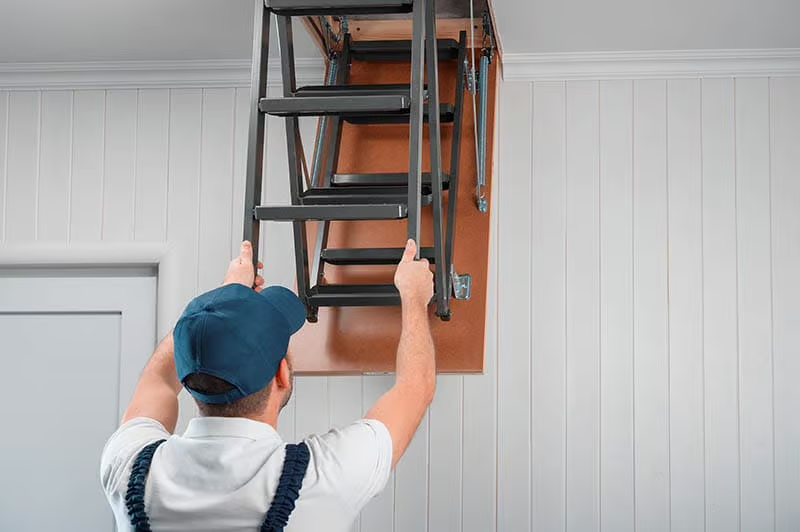
Professional Attic Stairs Installation Example
Attic Stair Types & Complete Installation Costs
Compare different attic access solutions and their total investment
Complete Attic Stair Options
| Stair Type | Unit Cost | Installation Cost | Total Cost | Best Use Case |
|---|---|---|---|---|
| Basic Pull-Down Wood | $150 – $300 | $350 – $700 | $500 – $1,000 | Storage access only |
| Insulated Pull-Down | $300 – $600 | $400 – $800 | $700 – $1,400 | Energy efficiency priority |
| Aluminum Folding | $400 – $800 | $400 – $700 | $800 – $1,500 | Frequent use, lightweight |
| Heavy-Duty Steel | $600 – $1,200 | $500 – $800 | $1,100 – $2,000 | Commercial/high traffic |
| Telescoping Ladder | $200 – $400 | $300 – $600 | $500 – $1,000 | Minimal space available |
| Electric/Automatic | $1,000 – $2,000 | $500 – $1,000 | $1,500 – $3,000 | Convenience, elderly users |
| Fixed Wood Stairs | $1,500 – $4,000 | $1,000 – $3,000 | $2,500 – $7,000 | Finished attic access |
| Ship’s Ladder | $800 – $1,500 | $700 – $1,500 | $1,500 – $3,000 | Limited space, steep angle |
Critical Safety & Code Requirements
Opening size: Minimum 22.5″ x 54″ for code compliance. Weight capacity: Must support 300 lbs minimum. Ceiling height: 7-10 feet standard, extended models for higher. Fire rating: 30-minute fire rating required in garages. Insulation: R-value of 5+ recommended for energy efficiency.
Space Requirements & Installation Factors
Understanding what affects your attic stair installation
Space & Clearance Requirements
| Stair Type | Opening Size Needed | Swing Clearance | Landing Space | Installation Difficulty |
|---|---|---|---|---|
| Standard Pull-Down | 22.5″ x 54″ | 5-6 feet arc | 5′ x 5′ minimum | Moderate – DIY possible |
| Compact Pull-Down | 22″ x 47″ | 4-5 feet arc | 4′ x 4′ minimum | Moderate |
| Large Pull-Down | 25″ x 60″ | 6-7 feet arc | 6′ x 6′ ideal | Moderate to difficult |
| Telescoping | 14″ x 24″ | Straight down | 2′ x 2′ minimum | Easy – DIY friendly |
| Fixed Stairs | 36″ x 80-120″ | None – permanent | 3′ x 10′ typical | Professional required |
| Ship’s Ladder | 24″ x 48″ | 2-3 feet | 3′ x 3′ minimum | Moderate to difficult |
Installation Process & Labor Costs
What’s involved in attic stair installation
Installation Steps & Timeline
Opening Preparation
Time: 2-4 hours
Cost: $200-500
• Locate ideal position
• Check for obstructions
• Cut ceiling opening
• Frame opening properly
• Most critical step
Framing Work
Time: 2-3 hours
Cost: $150-400
• Install headers
• Reinforce joists
• Create finished opening
• Critical for support
• Must meet code
Stair Installation
Time: 1-2 hours
Cost: $150-300
• Position unit
• Secure to frame
• Adjust springs/hardware
• Test operation
• Fine-tune alignment
Finishing Work
Time: 1-2 hours
Cost: $100-300
• Install trim/molding
• Weatherstripping
• Paint/stain to match
• Insulation seal
• Final adjustments
Additional Installation Considerations
Structural Issues
Joist modification: +$200-500
Truss system: May be impossible
Load transfer: Engineer needed
Old homes: Often need reinforcement
Electrical Work
Light installation: +$150-300
Switch wiring: +$100-200
Outlet in attic: +$150-250
Code compliance: Required
Energy Efficiency
Insulated door: +$150-300
Weatherstripping: +$50-100
Air sealing: +$100-200
Saves: $100-300/year on energy
Real Estate Investment Analysis
ROI potential for attic access improvements
Primary Residence
Best option: Insulated pull-down
Investment: $700-1,400
Value add: $500-1,000
Benefits:
• Storage accessibility
• Energy savings
• Safety improvement
Rental Property
Best option: Basic sealed unit
Investment: $500-1,000
Priority: Tenant safety
Lock recommended: Liability
• Prevents unauthorized access
• Reduces liability
• Maintenance access only
Fix & Flip
Best option: Quality pull-down
Investment: $800-1,500
Impact: Shows finished
Inspector friendly: Important
• Adds perceived value
• Storage selling point
• Shows attention to detail
Pull-Down vs Fixed Stairs Comparison
Choosing the right attic access for your needs
Detailed Comparison
| Factor | Pull-Down Stairs | Fixed Stairs | Winner |
|---|---|---|---|
| Cost | $500-2,000 | $2,500-10,000 | Pull-Down ✓ |
| Space Used | Only when deployed | Permanent floor space | Pull-Down ✓ |
| Safety | Less stable, weight limits | Very stable, code compliant | Fixed ✓ |
| Convenience | Must pull down each use | Always accessible | Fixed ✓ |
| Energy Efficiency | Can be well-sealed | Harder to seal opening | Pull-Down ✓ |
| Home Value | Minimal impact | Significant if attic finished | Fixed ✓ |
| Load Capacity | 250-375 lbs typical | No practical limit | Fixed ✓ |
| Installation | Half-day project | Multi-day project | Pull-Down ✓ |
Energy Efficiency & Insulation
Preventing energy loss through attic access
Insulation Options & Energy Savings
Standard Door (R-5)
Heat loss: Significant
Annual cost: +$200-400
Best for: Unconditioned attics
• Basic 1/4″ plywood
• No insulation value
• Cheapest option
Insulated Door (R-15)
Add cost: +$150-300
Saves: $100-200/year
Payback: 1-3 years
• Foam core door
• Weatherstripping included
• Worth the upgrade
High-Performance (R-30+)
Add cost: +$300-500
Saves: $150-300/year
Best for: Extreme climates
• Thick insulated door
• Gasket seal system
• Professional grade
Tent/Cover Options
Add cost: +$50-150
DIY friendly: Yes
Adds: R-15 to R-25
• Insulated tent/box
• Covers stair opening
• Removable for access
DIY vs Professional Installation
When to tackle it yourself vs hiring a pro
Installation Comparison
DIY Installation
Cost: $150-600 (unit only)
Time: 4-8 hours
Skill needed: Intermediate
Tools required:
• Saw (circular/reciprocating)
• Drill and bits
• Level and square
• Basic framing skills
Best for: Replacement units
Professional Installation
Cost: $500-1,500 labor
Time: 2-4 hours
Includes:
• Structural assessment
• Proper framing
• Code compliance
• Warranty on work
• Finishing touches
Best for: New openings
When to Hire a Professional
• Truss roof systems: Complex modifications needed • No existing opening: Structural work required • Electrical work: Adding lights/switches • Heavy units: Fixed stairs or commercial grade • Permit required: Many areas require licensed contractor • Safety concerns: Working at height or structural doubts
Cost-Saving Tips
How to reduce attic stair installation costs
Buy the Unit Yourself
Save 20-30% markup. Shop sales at big box stores. Compare online prices. Consider scratch/dent units.
Replace vs New Opening
If opening exists, simple swap saves $500-1,000. Standard sizes mean easy replacement. Upgrade insulation while at it.
Prep Work Yourself
Clear attic area saves time. Remove old insulation. Have materials ready. Mark opening location.
Standard Sizes
22.5″ x 54″ most common. Avoid custom sizes. Stock units cheaper. Easier to find replacements.
Off-Season Installation
Winter pricing 10-20% lower. Contractors less busy. Better negotiation position. Indoor work year-round.
Skip the Extras
Basic models work fine. Electric unnecessary for most. Add insulation later. Simple trim sufficient.
Common Problems & Solutions
Troubleshooting attic stair issues
Installation & Operation Issues
Wrong Opening Size
Problem: Unit doesn’t fit
Solution: Enlarge or reduce opening
Cost: +$200-500
Prevention: Measure twice, cut once
Ceiling Too High/Low
Problem: Stairs don’t reach
Solution: Extension kits available
Cost: +$100-300
Prevention: Check height range
Squeaking/Noise
Problem: Annoying sounds
Solution: Lubricate hinges/springs
Cost: $10-20 DIY
Prevention: Annual maintenance
Air Leaks/Drafts
Problem: Energy loss
Solution: Add weatherstripping
Cost: $50-150
Prevention: Buy insulated model
Spring Tension Issues
Problem: Hard to open/close
Solution: Adjust spring tension
Cost: Free if DIY
Prevention: Follow weight guidelines
Sagging/Bouncing
Problem: Feels unsafe
Solution: Reinforce framing
Cost: $200-500
Prevention: Proper installation
Frequently Asked Questions
Expert answers to common attic stair questions
🏠 Ready to Install Attic Stairs?
Find the right installer for safe attic access

Knowledge Quiz: Attic Stairs Installation Cost Guide
Open Quiz
5 quick questions - see how much you learned!
1) What is the typical total cost range for installing basic pull-down wood attic stairs?
Answer: B
The “Complete Attic Stair Options” table lists basic pull-down wood stairs at $500–$1,000 total (unit plus installation), making it the most common attic access solution.
2) CRITICAL: What is the minimum opening size listed for code compliance for attic stairs?
Answer: C
The critical requirements section states a minimum 22.5″ x 54″ opening for code compliance. Cutting and framing this opening correctly is the most important step for safety and stability.
3) Which attic stair option is typically the most expensive overall, based on the guide’s totals?
Answer: D
Fixed wood stairs are listed at $2,500–$7,000 total (and can be higher depending on finishing and framing), making them the most expensive common attic access option.
4) CRITICAL: What is the minimum weight capacity requirement stated for attic stairs?
Answer: A
The safety requirements state attic stairs must support at least 300 lbs minimum. This includes the person plus anything being carried—never exceed the manufacturer’s rating.
5) What upgrade typically pays back in 1–3 years through energy savings, according to the guide?
Answer: B
The energy efficiency section states an insulated door (around R-15) typically costs +$150–$300 and saves about $100–$200 per year, producing a 1–3 year payback in many climates.
🪜 More Stairs & Railings Project Guides
Explore our complete stairs & railings renovation cost guide library
View All Stairs & Railings Guides (15) ▼
🪜 Complete Staircase Systems
🔧 Staircase Components & Parts
🛡️ Railing Systems & Finishes
Last updated: Jan 2026
Sources: National Association of Home Builders, Werner Ladder Company, Louisville Ladder, Energy Star, Builds and Buys Research Team



